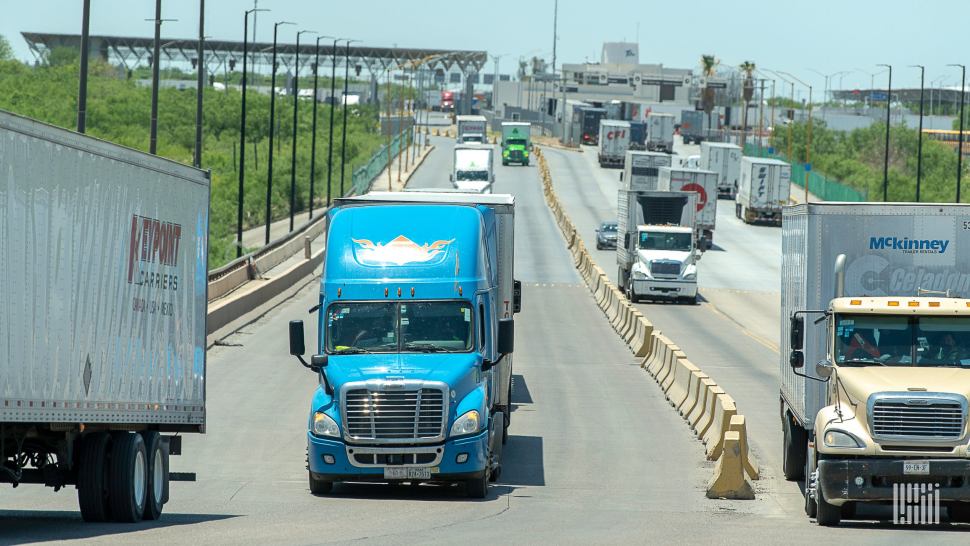
More than 7,000 commercial truck drivers have been placed out of service this year for failing to meet federal English Language Proficiency (ELP) standards, U.S. Transportation Secretary Sean Duffy announced Thursday on X (formerly Twitter).
In his post, Duffy said 7,248 drivers have been sidelined as of October 2025, citing real-time violation data from the Federal Motor Carrier Safety Administration (FMCSA). The figure represents a sharp increase from 1,500 drivers reported in July — reflecting heightened roadside enforcement since the rule was reinstated over the summer.
“The U.S. Department of Transportation requires commercial truck drivers to speak and understand English to operate a big rig — or they will be taken out of service,” Duffy said in the post.
According to FMCSA’s national inspection database, at least 5,006 ELP-related out-of-service violations were recorded through October — a number that has continued to rise in recent months as more states ramp up enforcement.
Related: Texas stops issuing CDLs to non-citizens to comply with feds
The surge stems from a White House executive order issued in June, which reinstated English proficiency as an out-of-service violation for commercial drivers. The order repealed a 2016 FMCSA memo that had instructed officers not to remove drivers solely for failing to meet English requirements.
Under the updated policy, the Commercial Vehicle Safety Alliance (CVSA) formally re-added English proficiency to its North American Standard Out-of-Service Criteria on June 25, making noncompliance grounds for immediate sidelining
While federal officials say the policy improves safety, the rule has faced criticism from industry groups and carriers along the southern border, who argue it disproportionately impacts bilingual or Spanish-speaking drivers.
Texas has the largest total issuance of non-domiciled commercial driver’s license — a commercial driver’s license held by a foreign driver legally operating in the U.S. — since 2015 among states that supplied data to a report by Overdrive.
Since 2015, Texas has issued over 3.2 million total CDLs, including 51,993 CDLs to non-domiciled drivers. In 2024, Texas issued 6,265 CDLs to non-citizens.
Texas and Arizona have reported some of the highest out-of-service counts under the revived rule, according to FMCSA data.
Carrier executives say the sudden enforcement shift has caused operational disruptions and driver shortages, particularly among cross-border fleets.
“We have drivers who’ve been safely operating for years, but now they’re being put out of service because they can’t respond in English fast enough during a roadside stop,” Adalberto Campero, CEO of Pharr, Texas-based Unimex, told FreightWaves in an interview. “It’s not a safety issue — it’s a communication style issue. These drivers know the regulations, the routes, and the customers, but now they’re sidelined over language perception.”
Brokerage Compliance Symposium
The day before F3. Every compliance issue you face - fraud exposure, carrier liability, FMCSA rules, cargo theft, insurance gaps - navigated by attorneys and operators defining best practices in a changing industry.
F3 Awards Dinner
The night before F3. FreightTech100 companies honored. FreightTech 25 and Shipper of Choice winners revealed live. Cocktail reception into dinner and live music - 300 industry leaders in one purpose-built room.
F3: Future of Freight Festival
Industry-defining keynotes, rapid-fire technology demos, and industry leaders networking in experiences across Chattanooga - plus the inaugural F3 Awards Dinner featuring the FreightTech and Shipper of Choice reveals.
The day before F3. Every compliance issue you face - fraud exposure, carrier liability, FMCSA rules, cargo theft, insurance gaps - navigated by attorneys and operators defining best practices in a changing industry.
The Signal at Chattanooga Choo Choo • Chattanooga, TN Register NowThe night before F3. FreightTech100 companies honored. FreightTech 25 and Shipper of Choice winners revealed live. Cocktail reception into dinner and live music - 300 industry leaders in one purpose-built room.
The Signal at Chattanooga Choo Choo • Chattanooga, TN Register NowIndustry-defining keynotes, rapid-fire technology demos, and industry leaders networking in experiences across Chattanooga - plus the inaugural F3 Awards Dinner featuring the FreightTech and Shipper of Choice reveals.
The Signal at Chattanooga Choo Choo • Chattanooga, TN Register Now