Forward Air may terminate Omni deal even as court steps aside

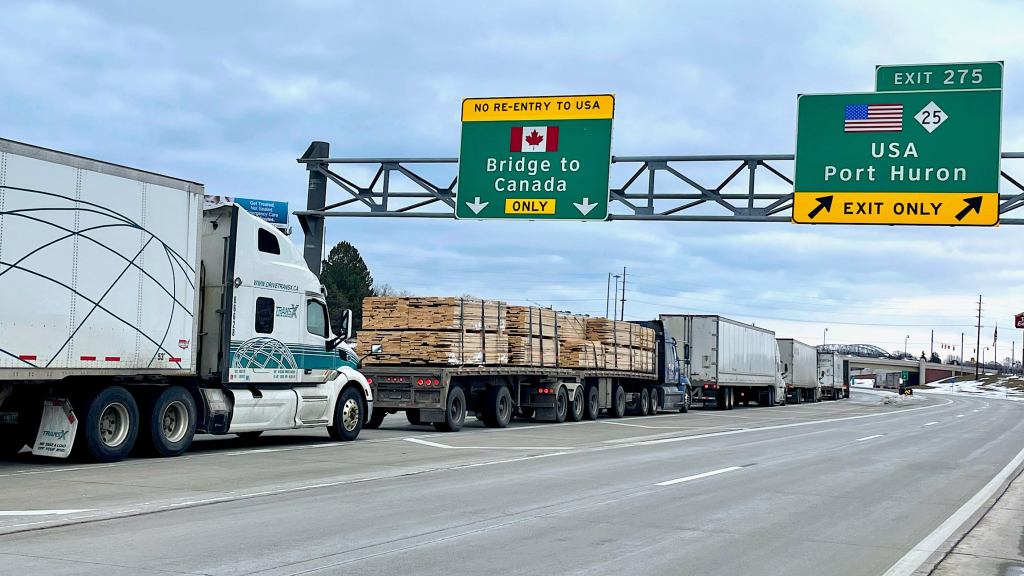
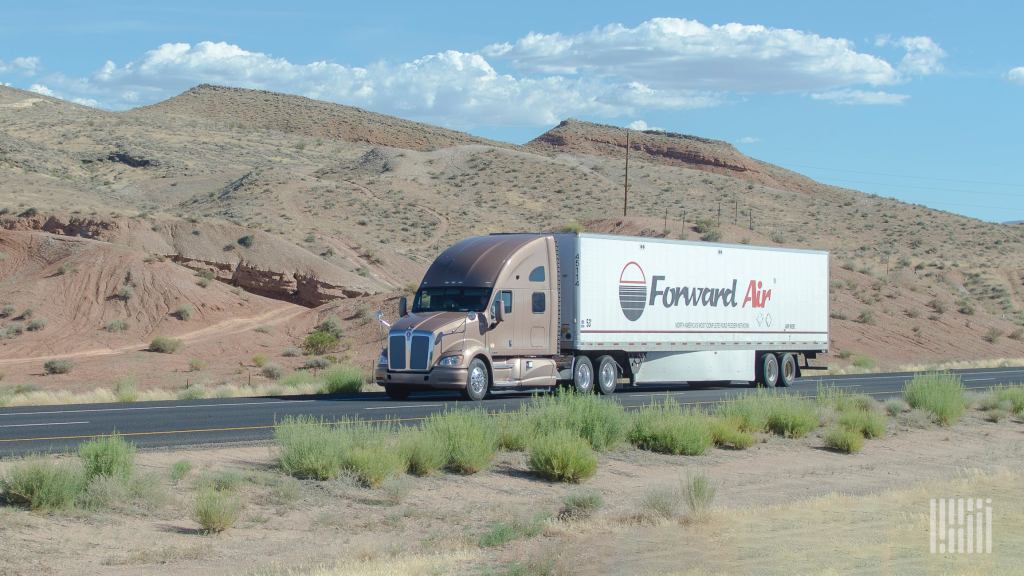
A sleeper cab pulling a white Forward Air dry van trailer

Forward Air said Thursday it may terminate its planned merger with Omni Logistics even though a Tennessee court cleared the path for the company to proceed with the deal.

Citing Omni’s failure to comply with certain obligations of the merger agreement and the likelihood closing conditions won’t be satisfied, Forward said it’s not obligated to carry through with the transaction. Forward’s statement said Omni has failed to comply with the “pre-closing access to information; confidentiality” and “financing” sections of the contract.

“As a result, Forward is considering its rights and obligations under the Merger Agreement, including potentially exercising its right to terminate the Merger Agreement,” a news release said.

Three current shareholders, who are also former employees of Forward (NASDAQ: FWRD), filed a complaint with the 3rd District Chancery Court in Greeneville, Tennessee, where Forward is headquartered, saying their shareholder rights were violated when they weren’t allowed to vote on the acquisition. The plaintiffs said the deal structure, which would transfer all of the company’s assets to a subsidiary and result in more than 20% dilution to existing shareholders, requires a vote under Tennessee law.

The court granted a temporary restraining order at the end of September and then extended the order for another 15 days on Oct. 11 to contemplate further injunctive action, which could have ultimately resulted in a hearing to determine if shareholders were due a vote. However, on Wednesday the court denied a motion for a temporary injunction blocking the deal and dissolved the existing temporary restraining order.

The shareholder plaintiffs filed an appeal on Thursday.

A Thursday news release from Omni said the company has “fully complied with all the required provisions” and “any attempt by Forward Air to suggest otherwise is unfounded and has no basis.”

“Omni believes the Merger Agreement is legally binding and intends to enforce the Merger Agreement and close the transaction as expeditiously as possible,” the statement read.

Other shareholders apply pressure to kill deal

Institutional holders like P. Schoenfeld Asset Management and ClearBridge Investments previously asked the company to terminate the deal. Most recently, activist investor Ancora Holdings Group said it would look to oust the current board and Chairman, President and CEO Tom Schmitt if the court ruled in favor of shareholders.

Other than being upset about not getting a chance to vote on the proposed transaction, shareholders also took issue with the purchase price, the amount of leverage Forward needs to take on to fund the deal and a perceived shift in voting control away from existing shareholders, among other things.

The announced purchase price of $3.2 billion includes only $150 million in cash, requiring Forward to give Omni stakeholders a 38% equity position and assume its $1.4 billion in net debt. The deal price is roughly 18 times adjusted earnings before interest taxes, depreciation and amortization and net leverage at closing would be roughly four times EBITDA, although Forward has said it will cut that in half within two years of closing.

The terms of the transaction also provision four board seats to Omni’s stakeholders as well as the role of president. Omni and its private equity backers, Ridgemont Equity Partners and EVE Partners, would end up with 38% of the voting rights if the transaction proceeds.

However, Forward has contended that shareholders have a vote in the matter as they will be asked to approve the conversion of nonvoting preferred shares issued to voting common stock after the deal closes. 

Omni is due just 16.5% of the company’s equity at closing, with the remaining equity interest to be issued in the form of preferred shares. Existing Forward shareholders will have the last say on whether or not those units are converted. However, if the shares aren’t converted, Forward will be required to pay their holders a steep dividend.

Further, even if the conversion is voted down, Omni’s stakeholders would still control the largest voting block at Forward. Omni’s new equity stake would also require them to vote in favor of any board-chosen directors at future elections.

Members of Ancora’s executive team provided a more conciliatory tone on Thursday.

“Given that the proposed transaction has faced legal challenges and overwhelming market opposition, the Board of Directors is right to be diligent in holding Omni accountable for any and all non-compliance with the agreement’s terms,” said Frederick DiSanto, Ancora’s chairman and CEO, and James Chadwick, president of Ancora Alternatives, in a joint statement. “We urge the Board of Directors to take whatever steps are needed to protect the long-term interests of the enterprise while restoring and preserving shareholder value. In our view, terminating the prospective transaction with Omni is a logical and necessary step at this point in time.” 

What’s the fallout for Forward?

No breakup fee is specified in the agreement, which requires mutual consent for termination unless one of the parties breaches deal terms. If Forward is able to terminate the deal, it will have to appease more than just its shareholders.

Some of Forward’s customers are upset with the transaction. Omni is a freight forwarder and a competitor to Forward’s existing customers. Some have concerns over how they will fit into Forward’s future plans and if they will be competing on a level playing ground if Forward is both partner and competitor.

In addition to due diligence, legal and other deal costs, Forward has been incurring interest expenses as it closed on a debt package to fund the acquisition in early October.

Court filings show Forward is paying $100,694 per day in net interest expense on $725 million of notes issued. The funds are being held in an interest-bearing escrow account until the deal closes, but the interest earned is much lower than the interest accrued on the 9.5% debt.

Filings also show retention of lender commitments for a $1.1 billion term loan began accruing interest expense of $70,313 per day on Monday.

The Thursday news release didn’t speak to how quickly the company will look to unwind these debt facilities. In the release, Forward said it has withdrawn its 2024 adjusted EBITDA guidance for the combined entity.

“We believe today’s news that FWRD wants to exit the Omni deal after stridently defending it for months materially raises the probability of the Omni deal being canceled, and should drive FWRD shares materially higher today,” Susquehanna Financial Group analyst Bascome Majors said in a Thursday note to clients.

Shares of FWRD gapped more than 40% lower shortly after the transaction’s announcement from a pre-deal price of $110. Shares opened Thursday up more than 5% but were up just 2.4% to $74.76 at 10:31 a.m. EDT. The S&P 500 was down 0.6% at the time.

More FreightWaves articles by Todd Maiden

Nearshoring underscores value of North American cross-border partnerships

North American manufacturing and retailers have been focused on moving their operations out of China — and closer to home — over the past few years. This shift has ramped up trade activity between the U.S. and its neighboring countries. In fact, trade between the U.S. and Canada surpassed $900 billion in 2022.

U.S. goods exports to Canada grew over 15% between 2021 and 2022, according to the Office of the U.S. Trade Representative. U.S. imports from Canada were up over 22% during that same time period.

This increased focus on trade between the neighboring countries should prompt U.S. companies to expand their relationships with Canadian transportation and logistics solutions providers. As companies explore these new partnerships, however, they should be cognizant about pairing up with the right players. 

Canada-based Andy boasts a proven track record of reliability and efficiency in the transportation industry over its 21-year lifespan. 

“Our extensive fleet of trucks and trailers, along with our network of well-vetted carrier partners, ensures that we can meet the demands of any supply chain operation,” according to Tammy Gauthier, vice president and general manager of Andy Logistics

In addition to its reputation for reliability, the company has worked hard to build a strong presence in both Canada and the United States, becoming standout cross-border experts in the process.

“We have strategically located terminals and warehouses, allowing for efficient cross-border operations,” Gauthier said. “Our extensive knowledge of customs regulations and procedures ensures that goods can flow smoothly between the two countries.”

The company did not garner its high-quality reputation from its cross-border knowledge and carrier network alone, however. At its core, Andy is a customer-centric organization dedicated to solving each partner’s unique challenges while still focusing on issues that impact the greater good, including sustainability and diversity.

“Andy is committed to sustainability and environmental responsibility. We have implemented various initiatives to reduce our carbon footprint, such as investing in fuel-efficient vehicles and optimizing our routes to minimize mileage,” according to Gauthier. “By partnering with us, U.S. supply chain companies can align themselves with a socially and environmentally conscious transportation provider.”

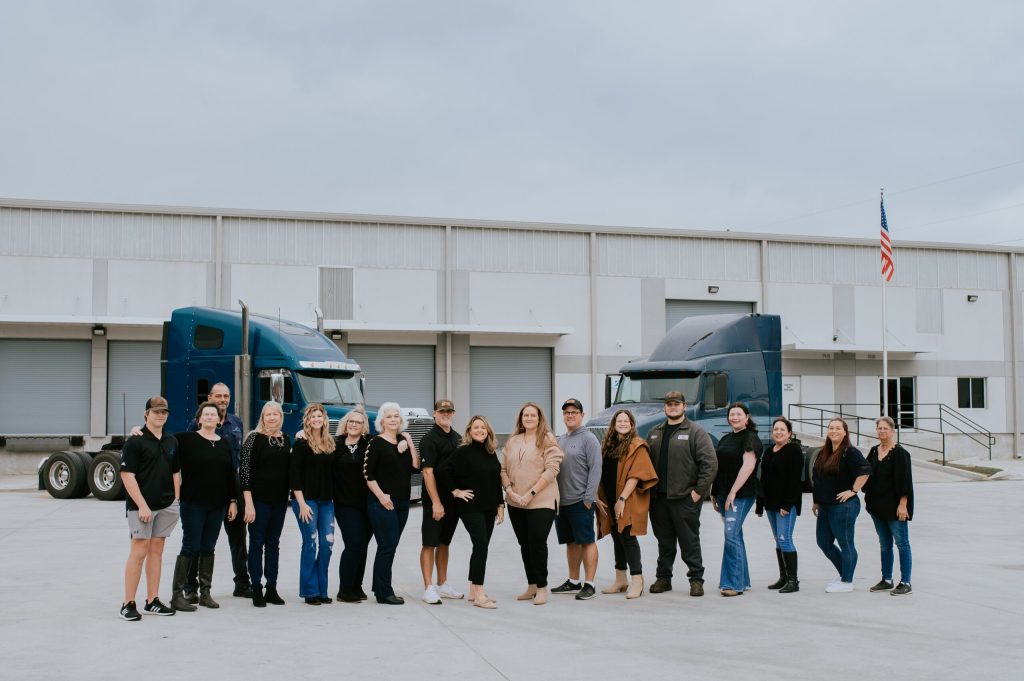
Photo: Andy Transport

Andy’s leaders attribute much of the company’s success to being women-owned and women-led, creating a diverse perspective — and a natural emphasis on nurturing relationships — that helps it stand out in a crowded marketplace.

“Being women-owned has inspired us to be trailblazers and push the boundaries of what is possible,” Gauthier said. “We constantly seek innovative solutions and embrace emerging technologies to stay ahead of industry trends.”

In addition to fostering a spirit of innovation, this relatively rare gender diversity has allowed Andy to tap into a wider talent pool. The company has been able to attract and retain talented women who bring a set of valuable and unique skills to the business.

The logistics industry has, historically, had a difficult time recruiting and retaining women. By putting their expertise at the forefront, Andy has overcome this challenge and created an environment that prizes diversity and rewards fresh mindsets.

“As women leaders, we are passionate about promoting and advocating for diversity and equal opportunities within the transportation and logistics sector,” according to Gauthier. “We actively support initiatives that aim to empower women in the industry, whether through mentorship programs, networking events or educational opportunities.”

While it is natural for Andy to recruit and attract women, the company values all forms of diversity, and its leaders believe that the company can contribute to a more inclusive and progressive industry as a whole.

In summary, Andy’s reliability and expertise — coupled with its dedication to diversity and inclusion — make the company a top-notch choice for U.S. supply chain organizations looking to expand their Canadian footprint.

Click here to learn more about Andy.

Sick leave agreement between CSX and railroad signalmen ratified

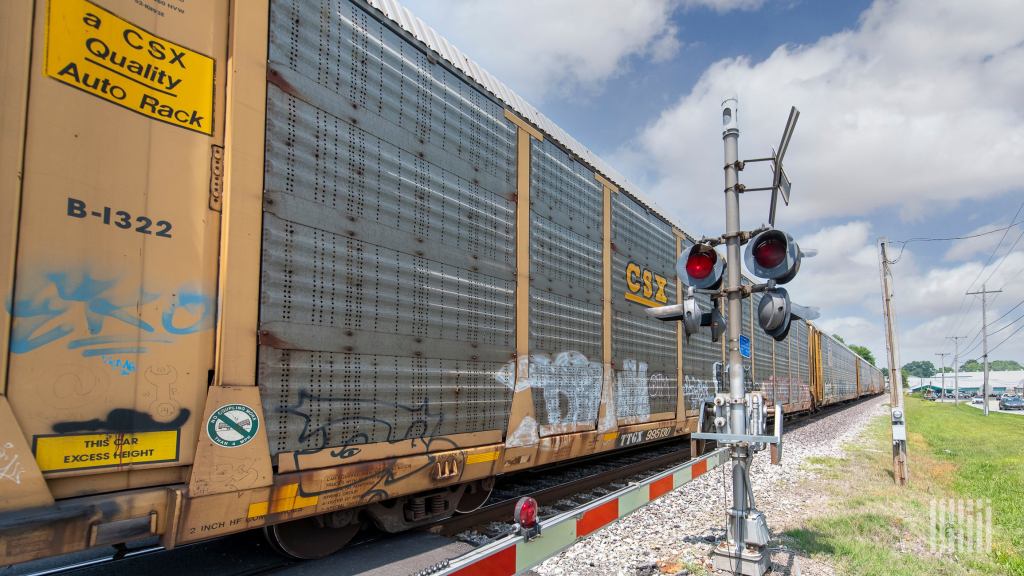
CSX and another division of union members with the Brotherhood of Railroad Signalmen have ratified a sick leave agreement.

This agreement covers approximately 200 employees working on CSX’s Louisville & Nashville (L&N) property.

Earlier this month, CSX (NASDAQ: CSX) said that a sick leave agreement at the Seaboard Coast Line (SCL) property for BRS had been ratified. The agreement covered nearly 400 employees.

“We greatly value our employees represented by the Brotherhood of Railroad Signalmen for their contributions to running a safe, reliable railroad,” CSX President and CEO Joe Hinrichs said in a Wednesday news release. “We’re committed to improving the employee experience at CSX, and paid sick leave is one way we’re continuing to create a work environment that prioritizes employee welfare.”

CSX also said it reached sick leave agreements with other unions, including the Brotherhood of Railway Carmen; International Association of Sheet Metal, Air, Rail, and Transportation Workers-Transportation Division; International Association of Machinists and Aerospace Workers; National Conference of Firemen and Oilers; and International Brotherhood of Electrical Workers. 

“We’re glad to see continued progress as more of our hard-working members obtain the paid sick leave benefits that BRS has pursued since the conclusion of national agreements in December 2022,” L&N General Chairman Andy Webb said.

Subscribe to FreightWaves’ e-newsletters and get the latest insights on freight right in your inbox.

Click here for more FreightWaves articles by Joanna Marsh.

CPKC cautious heading into 2024

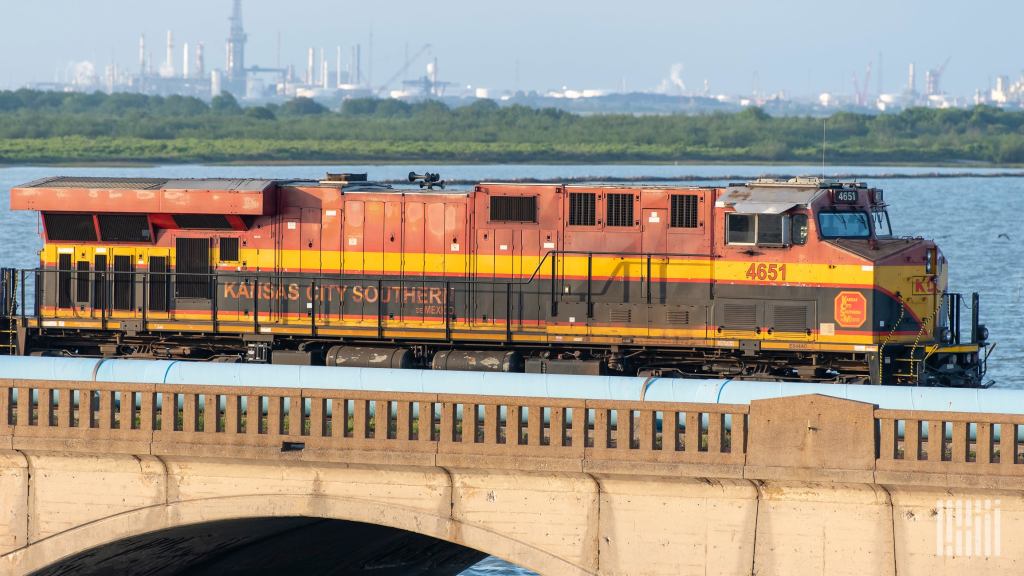
A freight train crosses over a bridge.

The uncertain macroeconomic environment, including when North American consumer sentiment will rebound and higher inflation might abate, has made Canadian Pacific Kansas City more cautious as it heads into 2024, according to comments during the railway’s third-quarter 2023 earnings call.

“I feel good about the synergies [resulting from the April merger of Canadian Pacific and Kansas City Southern] and the ramp-up as we look to next year. I do believe this pricing environment continues to be favorable as I look to next year,” CPKC President and CEO Keith Creel told investors during Wednesday’s call. But “it’s all about the macro in the base and how the intermodal business and some of these very heavy consumer-driven areas rebound or not. We’re just going to be very prudent about how we look at those volumes into 2024.”

Executives on the earnings call noted a number of challenges that CPKC (NYSE: CP) faced in the third quarter, which in turn dented the railway’s revenue and profit. 

Besides “a softer demand environment,” according to Creel, CPKC also experienced volume setbacks from the strike at the Port of Vancouver. CPKC Chief Marketing Officer John Brooks noted that the strike at Vancouver as well as continued equipment failure at Canpotex’s Portland terminal led potash volumes to fall 28% in the third quarter.

“To say this has been a challenging supply chain year for our export potash volumes with Canpotex is a true understatement,” Brooks said.

Supply chain headwinds could persist into the fourth quarter and into 2024, executives continued.

Although the merger with Kansas City Southern has resulted in CPKC being “not as reliant on Canadian grain,” according to CPKC CFO Nadeem Velani, with the U.S. grain markets now making up more than half of the railway’s grain revenues, it has revised its forecast for Canadian grain downward. 

And Brooks said while the railway anticipates opportunities to expand service out of the ports of Saint John in Atlantic Canada and Lázaro Cárdenas in Mexico, “we expect near-term headwinds as ocean carriers continue to blank sailings and rightsize their capacity in reaction to softer demand.” 

Despite the macro uncertainties, CPKC expects to continue to move forward with its capital projects, including building a $75 million bridge at Laredo, Texas, expanding the yard at Bensenville, Illinois, and adding more sidings to the network, Brooks said.

However, CPKC could take a look at how it sources materials for these projects or finetune its long-term strategy for its locomotive fleet, Brooks said. 

“We’re realists. We’re not immune to the macro challenges that we’re all facing with this economy,” Creel said in closing remarks. “But I can tell you, we’re focused on controlling what we can control. And that’s to operate safely always, efficiently and continue to sell to what is a very unique three-nation network that we’ve created that’s allowing us to grow uniquely at a macro level — be it share shift, be it customer solutions with new markets, be it take trucks off the road — in spite of the macroenvironment. And when the macro comes back and turns favorable, now it gets exciting.”

CPKC’s Q3 financial results

CPKC reported net profit of CA$780 million (US$565 million) in the third quarter of 2023, down 12% year over year (y/y) from CA$891 million. Diluted earnings per share in the third quarter was US84 cents, compared with 96 cents a year ago. (All figures except earnings per share are in Canadian dollars.)

Overall revenue totaled CA$3.3 billion in the third quarter, compared with CA$2.3 billion in the same period in 2022. The third-quarter 2023 revenue figure represents the financial results of a combined CP and Kansas City Southern against CP’s results alone in the third quarter of 2022. If calculating what a combined CP and KCS financial result would look like for the third quarter of 2022, revenue would be down 4% and total nearly CA$3.4 billion.

Operating expenses were CA$2.2 billion in the third quarter, compared with nearly CA$1.4 billion. That figure represents CP’s expenses for the third quarter of 2022. Combined operating expenses for the third quarter of 2023 would be CA$2.2 billion.

Subscribe to FreightWaves’ e-newsletters and get the latest insights on freight right in your inbox.

Click here for more FreightWaves articles by Joanna Marsh.

Weathering the market highs and lows in a career in freight

Freight broker agents play a critical role in the supply chain, connecting shippers with carriers and facilitating freight movements. Carrier agents work on behalf of a trucking company to find and schedule loads for drivers and equipment and ensure on-time deliveries. While their roles are very different, both are concerned with the movement of freight, and brokerages and motor carriers endure many of the same industry challenges.

Joe Taylor, a freight broker agent for Quaker Transportation, Inc., and Teresa Gifford, a carrier agent for Falcon Transport, Inc., two of four businesses that are part of PFQ Companies, agree that the freight market has been full of obstacles in recent years.

The rise in lawsuits and nuclear verdicts, government regulations, double brokering fraud and inflation have all contributed to a markedly different environment than when both began their careers as a freight broker agent and carrier agent. 

At Falcon Transport and Quaker Transportation, both agents have been able to build long-lasting businesses that have been able to weather the market’s highs and lows. 

PFQ Companies consists of four businesses. Three are carriers specializing in intermodal transportation — Pioneer Transport, Falcon Transport and Quaker Transport. Each company has multiple offices well-positioned at several port locations in the southern U.S., including Texas and New Orleans. The carriers have also started offering flatbed and dry van services as the demand has grown.

The fourth company, Quaker Transportation — not to be confused with Quaker Transport — represents the brokerage side of the business. Its broker agents can connect shippers with necessary capacity and equipment, including van, reefer, flatbed, hotshot, dump hopper trailers, walking floors and more.

Taylor joined Quaker Transportation in 2002 and since then has enjoyed success as his business has expanded.

“We’ve gotten bigger contracts because Quaker Transportation has got good backing and good credit, which has allowed us to get a high volume of loads,” Taylor said.

Quaker Transportation fosters an environment of integrity and reliability, which is demonstrated through the values Taylor lives every day. He focuses on freight with strong rates and makes an effort to price fairly for carriers.

“We know what it costs to run trucks. That’s our first priority. We want to keep these trucks running because they’re our bread and butter,” Taylor added.

Quaker Transportation has also provided him with tools. This includes load board access, allowing him to reach a broad network of carriers. He even receives a listing with Produce Blue Book, which is an especially useful way for him to reach customers in his niche, as his focus is on agricultural and bulk commodities. 

Gifford has had a similar positive experience with Falcon Transport over many years. She describes the atmosphere at the carrier as familial and has been with the company since graduating high school.

“Falcon has been a constant, reliable company that has exceeded our expectations. Being in a family environment is the reason we have grown our company over the years. Falcon has proved that family stays together through good times and bad. Our constant relationship with everyone at the home office is indescribable,” she said

Falcon Transport helps agents stay up to date on ever-changing technology and on top of current transportation topics to help them constantly stay informed with the fast-paced market. It also provides agents with contacts and sales leads on a weekly basis.

“There is no other company like Falcon. They are honest, loyal and dedicated to their agents and drivers. They go above and beyond to make sure the agent as well as the driver are happy and will work with the agents to resolve any issues we may have,” Gifford said.

Click here to learn more about a career as an independent freight broker or carrier agent at PFQ Companies. 

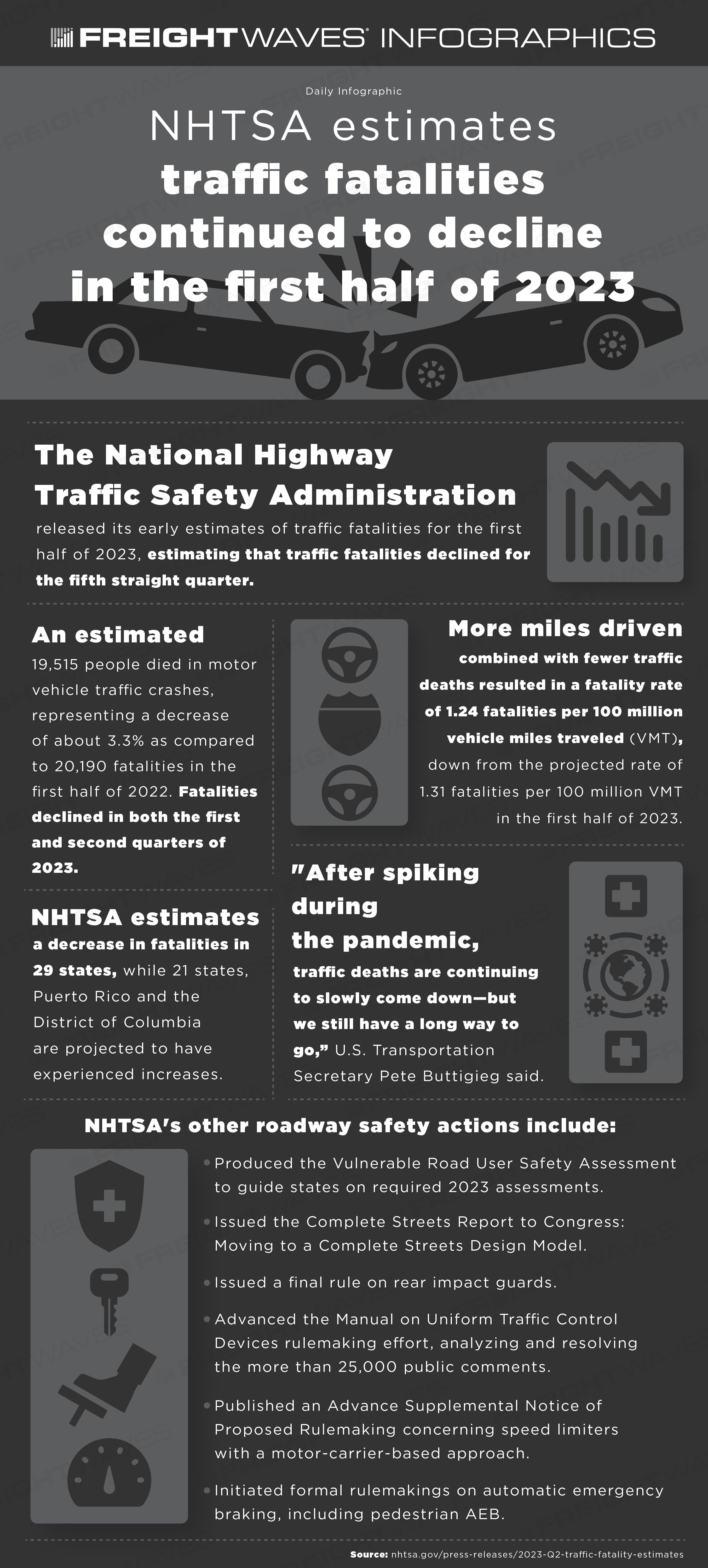
Daily Infographic: NHTSA estimates traffic fatalities continued to decline in the first half of 2023


To view more FreightWaves infographics, click here

Former Polar Air Cargo exec pleads guilty to swindling employer

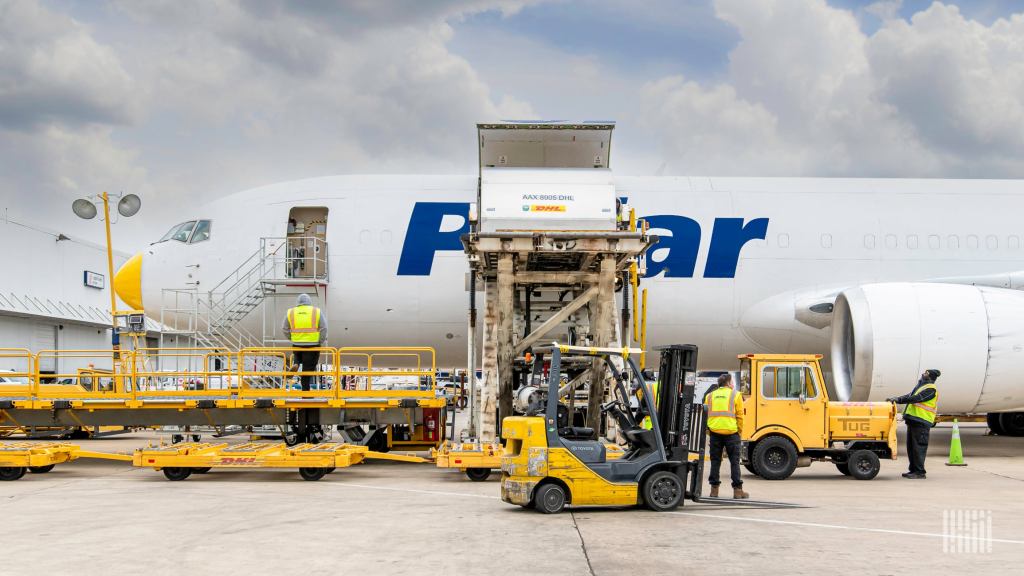
A white Polar air cargo jet gets loaded with a container through a side door.

A former executive at Polar Air Cargo pleaded guilty on Tuesday to defrauding the company by illegally accepting kickbacks from vendors in exchange for favorable contracts and shipping rates, priority cargo space on company aircraft, and other benefits.

Robert Schirmer, 58, was senior director of customer service for the Americas at Polar Air Cargo. He entered a guilty plea in the U.S. District Court for the Southern District of New York to one count of conspiracy to commit wire fraud and one other fraud charge. He originally was charged with four violations of the law.

Schirmer’s plea comes with a potential maximum sentence of five years in prison. The air cargo executive also agreed to forfeit more than $983,000 and repay Polar Air Cargo $9.3 million.

U.S. District Judge Jesse M. Furman will determine Schirmer’s sentence at a hearing scheduled for Feb. 13.

The Department of Justice indicted Schirmer and nine co-defendants last April for colluding in a corruption scheme that cost Polar Air Cargo about $52 million over more than a decade.

The biggest fish in the alleged pond of corruption is Lars Winkelbauer, who was chief operating officer for three years until July 2021 and held various leadership roles at DHL and Polar Air Cargo over a 16-year period. Winkelbauer was arrested in Thailand and extradited to the United States.

Polar Air Cargo is a joint venture between all-cargo airline Atlas Air and parcel delivery giant DHL Express. Atlas Air operates the aircraft. Most of the space is reserved for DHL, which determines the flight network. Atlas markets the rest of the capacity to freight forwarders. The airline has a fleet of 15 large Boeing cargo jets: six 747-8s; two 767-300s; and seven 777s, according to aircraft database Planespotters.net.

According to court documents, Winkelbauer, Schirmer and two other colleagues accepted millions of dollars in under-the-table payments from six co-conspirators who owned or operated ground handling, trucking and freight forwarding companies that provided services to Polar Air Cargo, or were customers, in exchange for the sweetheart deals. The Polar Air executives also had secret ownership interests in some of the supplier companies.

To conceal the kickbacks and conflicted ownership interests from Polar, Winkelbauer and the others often directed that the kickbacks and ownership distributions be paid to limited liability companies with nondescript names that they, in fact, controlled. In total they pocketed about $23 million, according to prosecutors.

Court documents gave various examples of how the kickback scheme worked., including one of how A-1 Handling replaced Polar Air Cargo’s existing airport services partner at Los Angeles International Airport in 2019 despite internal opposition from Polar employees and parent airline Atlas Air. In 2021, A-1 Handling bid to provide warehousing services in Chicago despite never having operated in the area. Winkelbauer and other executives shared information with the company’s co-owner about what was required to win the contract. Although A-1 Handling was among the highest cost bidders for the Chicago ground handling contract, A-1 Handling was selected by Polar based largely on Llewellen’s recommendation, according to the indictment.

The remaining defendants are headed to trial next year. Judge Furman this week granted the defense until Jan. 18 to file motions, with all government responses to be filed by Feb. 22.

Legal news site Law360 first reported Schirmer’s guilty plea.

Click here for more FreightWaves and American Shipper articles by Eric Kulisch.

Contact Reporter: ekulisch@www.freightwaves.com

RECOMMENDED READING:

Atlas Air snags ex-Etihad cargo chief for C-suite role

Convoy’s shutdown exposes the desperate state of trucking

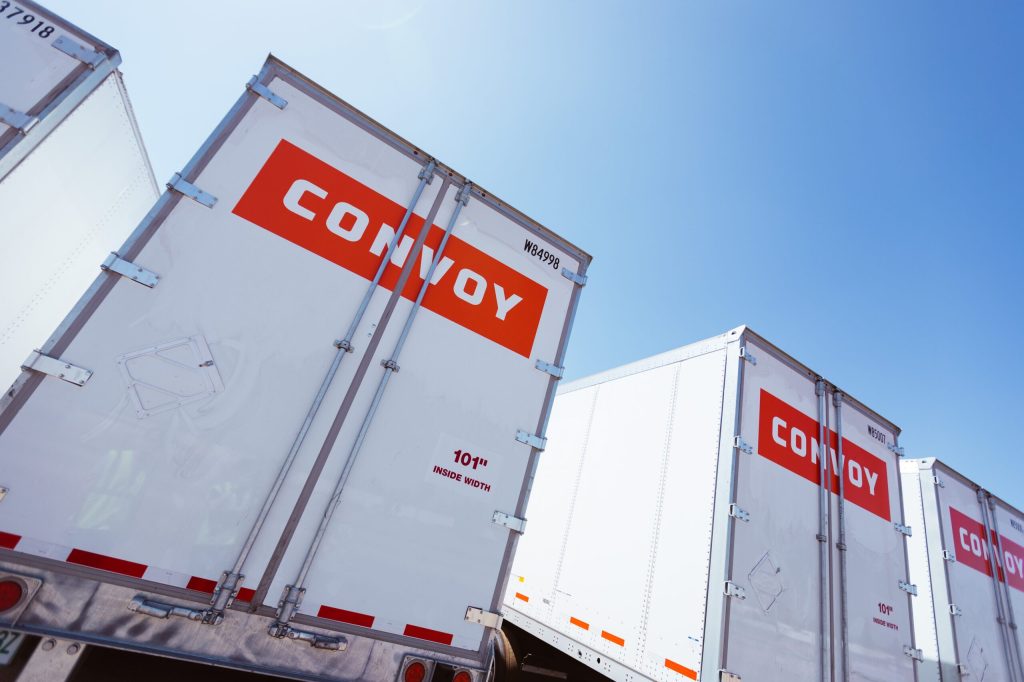
convoy trucks

In my earliest days on the trucking beat, it seemed to me that there was a massive showdown brewing. On one side, I saw stodgy freight brokerages headquartered in places like Northwest Arkansas and Cincinnati. Their opponents: Sleek startups, based in Seattle and San Francisco, who pledged to change trucking. They would transform the freight brokerage process from phone calls and fax machines to automated pairing of drivers and loads, thanks to big bucks from genius venture capitalists and tech gods. 

As it turns out, though, the business case for swapping out humans for computers in the freight brokerage world is shaky. It’s also not as easy to fix trucking as a slide deck might make it seem. The recent shutdown of Convoy, a digital freight brokerage established in 2015, shows that. 

Convoy enjoyed all the trappings of a runaway tech success. Its two co-founders, Dan Lewis and Grant Goodale, had Amazon and Ivy League credentials. Convoy counted Jeff Bezos, Bill Gates and (bizarrely) Bono among its investors. Convoy had more than 1,000 employees at its peak. Just 18 months ago, the Seattle-based startup was valued at $3.8 billion. But maybe more importantly than cash and caché, Convoy seemed keen on making trucking better – more efficient and more just. 

Everyone suspected that there would eventually be a washout of FreightTech startups, but it seemed like the moral, well-capitalized and buzzy Convoy would be immune to that. Instead, the Seattle-based company is the first major startup closure of our ongoing trucking bloodbath. (As of publishing time, an unknown buyer has acquired Convoy’s tech stack. Convoy declined to comment on this story.)

There are many serious inefficiencies in trucking, and it seemed like the freight startups like Convoy were the only ones that cared to fix them  

In the halcyon days of, let’s say, 2015 to 2019, it seemed like everyone and their mothers (as long as they were venture capitalists) wanted to invest in a trucking startup. The industry seemed ripe for disruption and ripe for making a ton of money. It’s huge ($875 billion, to be exact) and bizarrely antiquated. While the technology situation has mostly improved today, massive public truckers were often run on fax machines and Excel spreadsheets less than a decade ago. 

Sprucing up a few processes with a little automation and a little mobile technology seemed like an easy way to make this crucial industry work a lot better. One issue that digital freight brokers like Convoy were particularly keen on addressing were empty miles. By better matching drivers and loads, Convoy pledged to slash deadhead. That would in turn reduce carbon output, boost driver pay, and make the physical economy more efficient.  

Trucking has a lot of issues. For a while, it seemed like only the flashy, coastal startups cared to address them. (Photo: Jim Allen/FreightWaves)

With the power of technology, it seemed like the coastal trucking startups were going to fix everything wrong with trucking – double brokering, sexism, truck stops with no restrooms, detention pay, delayed deliveries, lack of capacity, lack of drivers, and so on. From my perspective, the rest of trucking had given up on making the industry better. It would require a beginner’s mindset to see that trucking was deeply flawed, but still fixable. 

Over the years, my perspective changed. I think the perspective of the startup guys changed too. It became clear that the issues in trucking have been around for so long not because the longtimers were ignorant or uncaring. It’s because those problems are complex.

The digital freight brokerage industry has a lot of issues

These companies all had high ideals in terms of what their roles in trucking would be. Unfortunately, many of them seemed to forget that the main point of a company is to, um, make a profit. 

The funding environment for these companies, which almost all came about in the late 2010s, essentially made it so they would never be forced to figure out their own financials. Convoy was particularly overfunded, as my boss Craig Fuller wrote about on Monday. Many of the issues in digital freight brokerage – and especially at Convoy – come down to the practice of “blitzscaling.” That term was coined by Reid Hoffman, co-founder of LinkedIn and, yes, Convoy board member. 

“When you have not had the benefit of raising a lot of money … you have to figure out how to get [financially] sustainable and you need to do that rather quickly,” Santosh Sankar, co-founder and managing partner of Chattanooga, Tennessee-based venture capital fund Dynamo said. “I’ve had a lot of founders actually tell me, ‘By not taking that additional million, it forced us to be more creative and address problems in a more thoughtful, efficient way.’”

With less cash, Sankar said, teams are forced to delve into trying to make the fundamentals work. For a freight broker, that might mean carefully deciding on lanes to develop, learning how to mature those lanes, and figuring out how much margin each lane can provide.

That’s not the idea behind blitzscaling, which calls for dumping a ton of money into a problem and growing as fast as possible. 

This practice is a particularly bad fit for the freight brokerage industry, said Leonard Sherman, who is an adjunct professor of marketing and management at the Columbia Business School. To successfully pull off blitzscaling, one needs factors like network effects, economies of scale, high customer switching costs and high barriers to entry. Sherman said freight brokerage is decidedly lacking in all of those areas.

Low barriers to entry and no switching costs are core to the trucking industry as a whole. Compare that to, say, a social media app. You probably don’t need two companies to serve the same role that Facebook does, but a carrier representative might consult a dozen brokers a day. 

Convoy was valued at $4.8 billion just last year. (Courtesy of Convoy)

That pretty much cancels out the most core practices in blitzscaling, like undercutting the market. Digital freight brokers were infamous for trying to shore up market share with low rates. Convoy appeared to do that as well, as my FreightWaves colleague Mark Solomon reported on Monday. In part because of these low rates, Convoy was only able to achieve breakeven or slightly positive margins during hot times in trucking, a source told Solomon.

The Ubers of the world might be able to undercut rates to get people on their platform, only to jack up the cost later to make the financials work. However, players in the trucking industry are able to take advantage of low rates when they’re offered and then jump ship to any other provider when the situation changes. 

These trucking startups also came on the scene when every random company was branded as a tech company – whether you were selling mattresses, office space, or used designer clothing. As The Information reported, Convoy employees were baffled as to whether the company was a trucking company or a technology company. That’s a common critique leveled against many freight brokerage startups. 

Jonathan Geurkirk, a senior analyst at Pitchbook Data, said the way Convoy shut down was more indicative of an asset-heavy company with fixed costs galore than a technology player. That’s in spite of the $3.8 billion valuation, which is more fitting of a tech firm.

Despite it all, Convoy did manage to bring massive efficiencies into freight brokerage. It said in 2022 that the startup has automated more than 90% of the brokerage journey, such as pricing, shipment tracking, carrier payment and so on. Sankar, the Chattanooga venture capitalist, said Convoy’s engineering efforts around load matching, reducing empty miles, and identifying backhaul opportunities were commendable. 

These feats didn’t, unfortunately, translate to profits.

It turns out the major industry players weren’t ignoring these issues — they’re just kind of hard to fix

The digital freight brokerages seemed to promise that they would revolutionize trucking like other West Coast techy creations. Amazon changed retail, Facebook changed human connection, Google changed information gathering and so on. So too could Convoy, Uber Freight, Transfix, Loadsmart and the like overhaul America’s $875 billion trucking industry. 

And frankly, the industry – especially its truck drivers – needed someone to pledge to save the day. Maybe it seemed unrealistic, but it was a nice idea.

What it looks like to use the Convoy app as a driver. An undisclosed buyer has acquired Convoy’s full tech stack, including its driver-facing app. (Courtesy of Convoy)

Ultimately, the superhero plot didn’t work out. As of now, the tech bros haven’t fixed trucking and neither have the fuddy-duddy incumbents. This year, a record number of trucking companies will shutter. The costs of running a trucking fleet keep spiraling upward while rates slump. And we still have deadhead miles, unpaid detention time and every other trucking issue. 

But throwing our collective hands up is not the solution either. Perhaps some combination of newbies and old-timers will fix trucking’s many, many issues yet — and Convoy’s foray into this arena shan’t be forgotten. 

“They shone a light on the opportunity the industry has when you apply technology to it,” Sankar said. “Along with that, they drew attention from strong engineering talent, sales and operations talent and investment that this is an important segment of the economy. It deserves enduring attention similar to what you might find in fintech.”

What do you think of Convoy’s shutdown? Will we ever Make Trucking Great Again? Email rpremack@www.freightwaves.com with your viewpoint and please subscribe to the MODES newsletter for weekly updates.

Covenant Logistics Group sees Q3 revenue slip in weak freight market

Covenant Logistics Group said its third quarter results were hampered by a weak freight market, but executives said they remain optimistic about the company’s “resilient operating model.”

Chattanooga, Tennessee-based Covenant (NASDAQ: CVLG) reported adjusted earnings per share of $1.13 in the quarter, 1 cent shy of the consensus estimate.

The truckload transportation services provider posted third-quarter revenue of $288.7 million, missing analysts’ revenue prediction of $293 million for the period.

“The company’s steady performance in a weak freight market has been encouraging and reflects progress on our strategic plan,” David Parker, chairman and CEO, stated in a news release. “Entering 2024, we believe our more resilient operating model, together with the steps we are taking to reduce costs and inefficiencies, will continue to position Covenant to generate attractive returns and mitigate volatility across economic and freight market cycles.”

Total revenue for the third quarter fell 7.4% on a year-over-year (y/y) basis, while EPS declined 26% y/y. The company’s total freight revenue decreased 5% y/y to $253.3 million.

“For the quarter, total revenue in our truckload operations decreased 8.3% y/y, to $193.7 million, while averaging 192 fewer tractors, compared to 2022,” Paul Bunn, Covenant’s president and COO, said in a statement. “The revenue decrease consisted of $7.8 million lower freight revenue and $9.8 million lower fuel surcharge revenue. The decrease in freight revenue primarily related to the ongoing execution of our capital allocation program, including reduction of tractors associated with less profitable contracts, growth of units allocated to the AAT business unit acquired in 2022, and the acquisition of Lew Thompson and Son Trucking in the second quarter of this year.”

Freight revenue per tractor per week increased 3.9% to $5,677. The expedited truckload segment revenue increased 0.1% to $91.6 million, and the dedicated segment revenue dipped 10.5% to $66.9 million.

Covenant’s managed freight segment saw revenue of $69.7 million in the third quarter, a decrease of 11% from the same time last year. The warehousing segment saw revenue of $25 million during the quarter, a 14.8% y/y increase.

“While we are pleased with our model as it stands today, we are also optimistic about our ability to continue making incremental progress to improving it through our capital allocation program,” Parker said. “For the fourth quarter, we expect our revenue and earnings to experience a modest decline sequentially due to a cyber-attack on a major customer in our expedited division and the impact of the United Auto Workers strike in our dedicated division, which has temporarily depressed load volumes and revenue per truck.”

Covenant will hold a conference call to discuss results with analysts on Thursday at 10 a.m.

Covenant Logistics GroupQ3/23Q3/22Y/Y % Change
Total revenue$288.7$311.8(7.4%)
Truckload combined:
Total revenue$193.6$211.2(8.3%)
Freight revenue (ex fuel)$158.6$166.4(4.6%)
Average tractors2,1262,318(8.2%)
Revenue per total mile$2.33$2.46(5.2%)
Revenue/tractor/week$5,677$5,4623.9%
Adjusted OR %91.9%92.1%(0.2%)
Managed freight:
Revenue$69.7$78.3(10.9%)
Adjusted operating income$3.8$8.6(55.8%)
Adjusted OR %89%94.5%(5.8%)
Expedited freight:
Revenue (ex fuel)$91.68$91.630.05%
Adjusted operating income$8.5$10.7(20.5%)
Adjusted OR %90.7%88.2%2.8%
Dedicated freight:
Revenue (ex fuel)$66.9$74.7(10.4%)
Adjusted operating income$4.2$2.382%
Adjusted OR %93.6%96.8%(3.3%)
Adjusted earnings per share$1.13$1.52(25.6%)
Revenue and operating income in millions.

Click for more FreightWaves articles by Noi Mahoney.

More articles by Noi Mahoney

Borderlands: Cargo theft trends changing as supply chains shift to border regions

Texas DPS ends truck safety inspections after $1.9B impact

Tesla’s electric vehicle factory in Mexico could be delayed

Trucking congestion costs hit record $94.6B

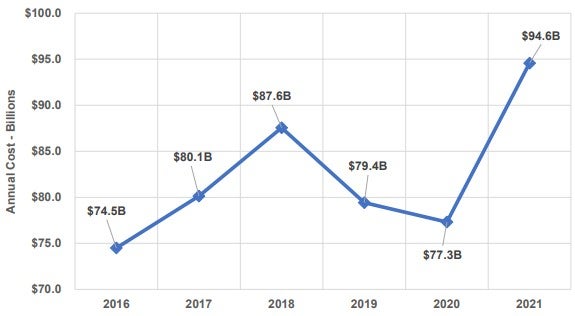
Congestion cost trucking companies a record $94.6 billion in 2021, according to a new study published by the American Transportation Research Institute, with Nevada, Louisiana, Georgia and California seeing the biggest rate increases from a 2016 baseline.

“Whether it is recurring congestion or incident-related, the result is reduced capacity and a slowdown in vehicle speeds, which adds time to a trip,” stated ATRI, a nonprofit trucking research group, in its first congestion study update since 2018.

“These delays increase the trucking industry’s operational costs. Traffic congestion increases direct industry costs such as driver compensation, fuel, and repair and maintenance. It also generates indirect and/or societal costs such as supply chain disruptions, inefficient use of fuel and diminished air quality.”

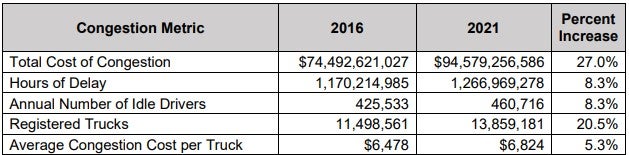
ATRI’s 2021 congestion costs — based on the cost-per-hour to operate a truck, average truck highway speeds and the most recent truck volume data — were 22.4% higher than 2020’s and 27% higher than the 2016 baseline. During that same five-year period, the Consumer Price Index, a measure of inflation, increased 12.9%, ATRI noted.


Cost of congestion, 2016-2021. Source: ATRI

“Thus, congestion costs for trucks rose at more than twice the rate of the CPI as a result of increased industry costs, congested roadways and a record high national truck VMT [vehicle miles traveled] in 2021.”

Rapidly increasing diesel prices between 2020 and 2021, along with increases in trucking rates and volumes, were significant contributing factors to the record-high cost of congestion, the group stated.

The four most populous states — California, Texas, Florida and New York, respectively — also had the highest congestion costs, ranging from $4.9 billion for New York to $9 billion for California in 2021.

But Nevada, Louisiana and Georgia saw the highest percentage increases compared with 2016, at 117.2%, 83.3% and 81.3%, respectively. California was fourth, with congestion costs there increasing 77.9%. Alaska had the lowest state-wide congestion costs ($62 million), while Alaska, Wyoming, and Hawaii had the largest percent decreases since 2016 (20%, 18.2%, and 9.4%, respectively).

The study pointed out that when the overall congestion cost is distributed across the country’s registered tractor-trailers, the average annual cost per truck is $6,824 — equal to 3% of the average annual revenue generated per truck in the truckload sector in 2021, according to ATRI.


Cost of congestion statistics, 2016 vs. 2021. Source: ATRI

The group plans to update the study annually, making it a tool to help Congress gauge the need for infrastructure investments.

“While the federal fuel taxes have not been raised since 1993 and most states have been forced to dramatically reduce infrastructure spending relative to needs, the 117th U.S. Congress did pass a landmark infrastructure spending bill that generates more than $350 billion dollars in dedicated transportation spending,” according to the study.

“By the end of Year 2 of the five-year IIJA [Infrastructure Investment and Jobs Act] program, transportation projects totaling more than $74 billion had been awarded or announced, ostensibly focused on congestion reduction, road safety and/or freight transportation priorities.”

Click for more FreightWaves articles by John Gallagher.