Old Dominion says Yellow freight redistribution not settled

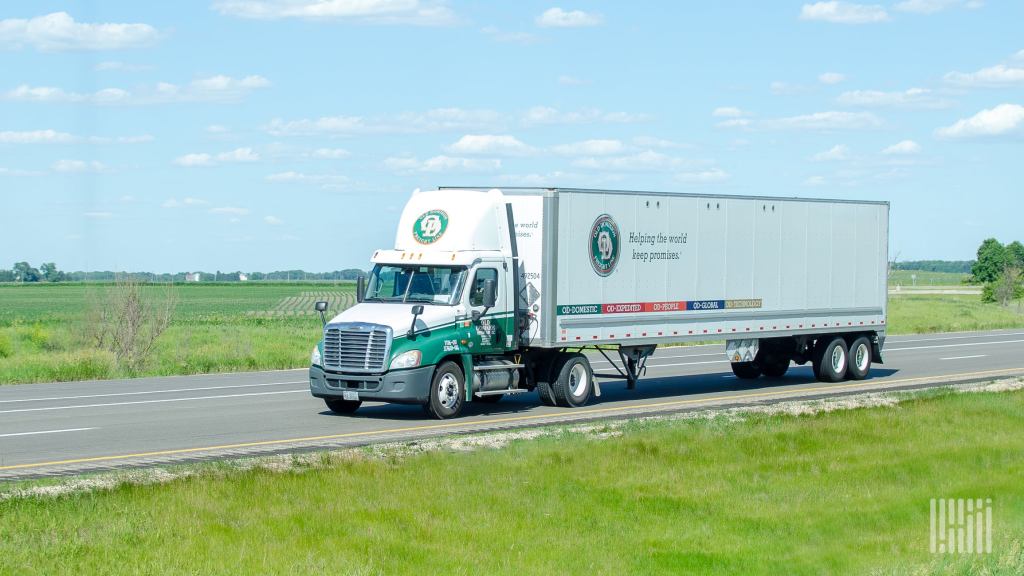
An Old Dominion tractor pulling two pup trailers

Carrying excess capacity through the downcycle allowed Old Dominion Freight Line to minimize impacts to service as it onboarded Yellow’s abandoned shipments.

The less-than-truckload carrier beat third-quarter expectations Wednesday, posting earnings per share of $3.09. The result was 18 cents above consensus but 27 cents lower year over year (y/y).

“Investing ahead of the curve” remains the company’s strategy. It views the incremental cost of holding latent capacity, which allows it to be proactive when market inflections occur, as necessary to avoid the negative impacts some carriers experience when they are forced to scramble to respond to market upswings.

Old Dominion (NASDAQ: ODFL) has invested $2 billion in real estate over the past decade, which has allowed it to grow door capacity by 50%.

The company processed nearly 50,000 shipments daily during the third quarter, an increase of 2,600 shipments from the first half of the year when Yellow was still in business. The increase in volumes was attributed to Yellow’s exit as well as a cybersecurity attack at private carrier Estes. Excluding those events, management said the freight market continues to be soft but noted that it is winning market share at some accounts.

Old Dominion currently has 25% to 30% excess door capacity in the network, compared with 30% at the time of its July call. It said while Yellow’s freight has been redistributed, some of it is likely to come back to the market given service issues at competitors.

“We’re hearing it every day,” said CFO Adam Satterfield. “We’re hearing about competitors that are missing pickups. They don’t have the people part of the capacity equation solved and maybe took on too much freight and are starting to have negative implications from their overall service product.”

A recent Morgan Stanley (NYSE: MS) survey showed that 35% of shippers and 3PLs that worked with Yellow are still looking for a permanent home for their LTL freight. Satterfield said shippers are likely to reassess their carrier relationships over the next six months as the industry sees a normal seasonal slowdown.

Old Dominion expects to continue to take market share. It recently rebooted hiring initiatives in some markets and ramped efforts at its driver training schools.

Asked if the market will become oversupplied as Yellow’s idled terminals hit the auction block next month, Satterfield said some of the facilities will likely be repurposed away from LTL operations and cautioned potential suitors that the freight has already been absorbed.

“All of those shipments … it’s been several months now, they’ve found a new home,” Satterfield said. “If you’re someone on the strategic side that might be investing, you got to look and think about how that would make sense. How much incremental capacity do you want to buy … and how would you use it?”

Third-quarter reports from companies with LTL exposure show Yellow’s impact as well.

TFI International (NYSE: TFII) reported Monday that shipments in its U.S. LTL segment increased 5% sequentially from the second quarter to the third, with tonnage up 10% over that period. The company grew volumes sequentially even though it has an ongoing campaign to weed out undesirable freight from its network. Revenue per hundredweight, or yield, was down 2.2% excluding fuel surcharges. However, the metric was dragged down by a 4.6% increase in weight per shipment, implying actual pricing was likely 2.4% higher sequentially.

Third-quarter numbers from Knight-Swift Transportation (NYSE: KNX) last week showed a 4% sequential increase in shipments at the company’s nearly $1 billion LTL operation. Yield (excluding fuel surcharges) increased 5% sequentially, but the metric was aided by a 1.5% decline in average shipment weight.

Table: Old Dominion’s key performance indicators

Q3 results and Q4 expectations

Old Dominion’s revenue declined 6% y/y to $1.52 billion as tonnage per day was off 7%, which was partially offset by a 3% increase in yield. Excluding fuel surcharges, yield was 9% higher y/y. The metric benefited from a 4% decline in weight per shipment.

Compared to the second quarter, Old Dominion’s tonnage increased 4% as shipments were up 6% and weight per shipment declined 2%. The company’s shipment count usually increases just 1.8% on average from the second to the third quarter. Shipments were down month over month by 1.5% in July before climbing 4.7% in August and again by 2.7% in September.

Yield excluding fuel was 3% higher but only slightly positive when accounting for the lower shipment weights.

Management expects revenue per day in October to increase 1.5% to 2% y/y even though tonnage is expected to decline 2% to 2.5%. The company is facing an easier comparison to the year-ago quarter when tonnage was down 9%.

The carrier posted a 70.6% operating ratio in the quarter, 150 basis points worse y/y.

Salaries, wages and benefits expense as a percentage of revenue increased 170 bps y/y even as head count declined 9%. Depreciation and amortization expense was up 130 bps given prior network investments. Operating supplies, mostly diesel fuel costs, were 160 bps lower in the quarter. Retail diesel prices were off 15% y/y but increased more than 20% from the beginning to the end of the period.

The third-quarter OR improved 170 bps from the second quarter.

The fourth-quarter OR is expected to deteriorate by 160 to 200 bps from the third quarter. Normal deterioration is 200 to 250 bps given seasonally weaker revenues and an annual wage increase every September. The company reiterated a long-term goal of pricing freight 100 to 150 bps above costs.

Old Dominion generated $429 million in cash flow from operations in the quarter, $1.1 billion in the first nine months of 2023, which was 15% lower y/y. It increased capital expenditures guidance by $20 million, to $720 million in total. The capex plan includes $260 million in real estate investments, $385 million for tractors and trailers (a $20 million increase from the prior guide) and $75 million for IT projects.

Shares of LTL carriers were off Wednesday at 2:10 p.m. EDT, with Old Dominion leading the move lower, down 3.6%. By comparison, the S&P 500 was down 1.4%.

Deutsche Bank (NYSE: DB) analyst Amit Mehrotra said “the outlook for ODFL shares rarely ever relies on how shares respond on the day of earnings,” in a Wednesday afternoon note to clients.

He noted that over the last 11 years Old Dominion’s shares are down on the day it reports earnings about half of the time, but end up recording gains in the month following the report more than 70% of the time.

“We find nothing in today’s release that is anything less than highly impressive, and this has very positive implications when there is a broader recovery in freight,” Mehrotra said.

More FreightWaves articles by Todd Maiden

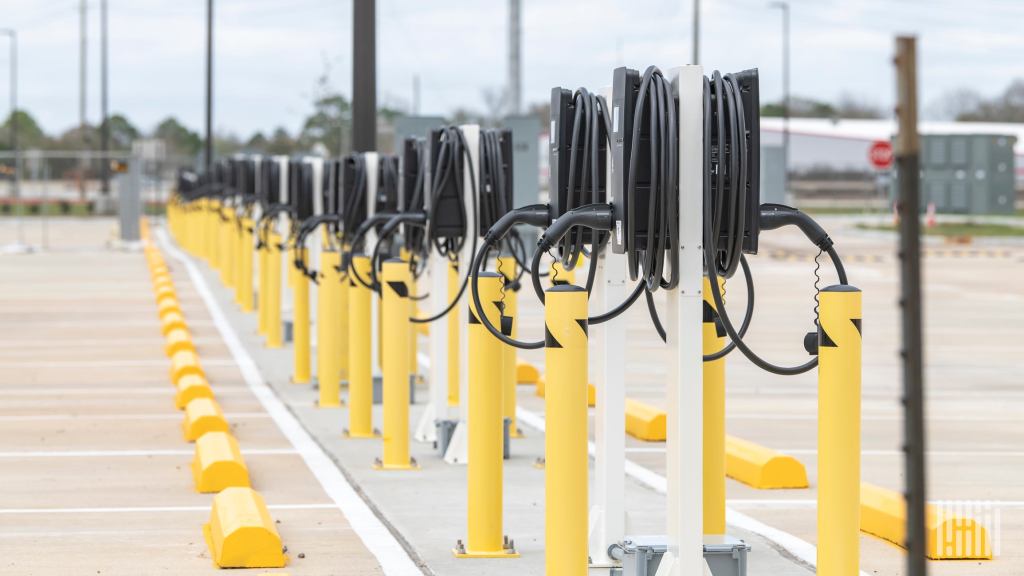
EV investments ramp up across the American South

Electric vehicle manufacturing efforts have been marching south. In fact, EV manufacturing investments in the Southeast alone reached $54.6 billion in 2022 –– a 128% year-over-year increase, according to the Southern Alliance for Clean Energy.

In the last two quarters of 2022, Georgia, North Carolina, South Carolina and Tennessee all saw significant EV-related investments.

In west Tennessee, just outside of Memphis, Ford is building its new EV facility. This mega campus is envisioned to be a sustainable automotive manufacturing ecosystem. The $5.6 billion battery and vehicle manufacturing campus will be the largest in the Ford world — built for the next century.

While this shifting geographic concentration isn’t without its challenges, the change offers a range of benefits for both manufacturers — plentiful space and available infrastructure — and residents — employment opportunities and economic mobility. 

“The American South has been working for decades to attract automakers, laying veins of waterways and electrical lines and shoveling heaps of dirt to prepare the land for potential new factory megasites,” The Wall Street Journal reporter Nora Eckert noted in a recent article. “Local governments and technical institutes have partnered to train a new generation of manufacturing workers, including in automotive, even before some of the first construction beams were erected.” 

This southward shift will also continue to have noticeable effects on former manufacturing strongholds, both in the United States and abroad, as well as an anticipated shift in logistics patterns for the East and Gulf coasts and cross-border operations. 

“We are experiencing shifting economic power — and shifting freight patterns — within the United States,” said Bill Dunavant of Dunavant Logistics.

“We anticipate that the impact on our Southeast port locations will be significant in a positive way,” said Chrissy Geibel, COO of Dunavant. “We also see a positive impact on our cross-border Mexico operations as near-shoring continues to grow significantly as well.”

Several ports on the East Coast and in Mobile, Alabama, have already announced aggressive expansion plans to respond to the shifting manufacturing and logistics dynamics of today. 

Additionally, the movement of EV-related manufacturing operations is also poised to quicken legislative efforts to make electric vehicle infrastructure and commercial ownership more accessible across the South. 

“With all the EV-related manufacturing coming to the region, pressure is mounting in state houses to pass legislation that removes barriers and supports the expansion of EV charging infrastructure and EV ownership for consumers and fleet operators, so the products that companies are increasingly making in the Southeast can be purchased and driven by consumers and companies in the Southeast,” Stan Cross, electric transportation policy director for the Southern Alliance for Clean Energy, said in a recent blog post

Several Southern states have already hinted at their openness to adopting EV-friendly regulations in the near term. These efforts will support the nationwide adoption of these vehicles as fleets across the nation work to prepare for impending zero-emission regulations in other regions of the country.

As the adoption of EVs continues to grow, the evolution of electric transport at scale increases, but given the load needs required for that to be realistic, the importance of proximity and location to facilities becomes even more apparent.

“The only constant in logistics is change,” continued Dunavant. “In order to be an effective solution for our clients, we remain flexible, adaptable and prepared for the ever-changing landscape.” 

Click here to learn more about Dunavant.

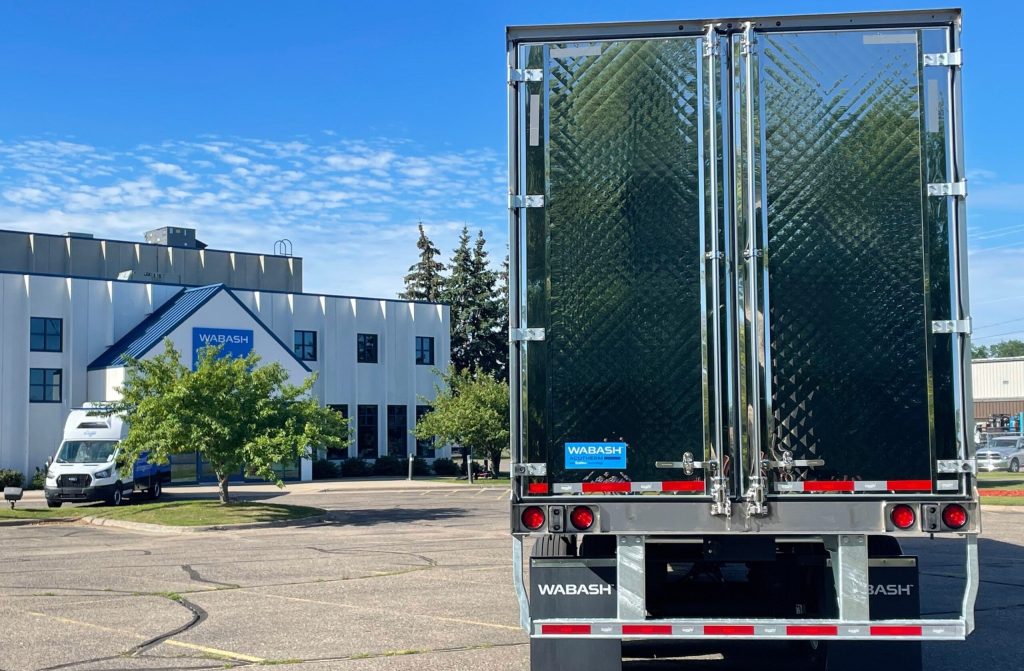
Wabash Q3 profits rise as revenue falls

Wabash trailer

A favorable product mix and strong results from parts and services, tanks and truck bodies helped Wabash post solid third-quarter earnings while dry van sales fell as consumer spending on goods slowed.

Wabash is realizing efficiencies from the multiyear reorganization of its business into two units — one for van and body production across first- to final-mile products and one that focuses on growing parts and service revenue.

Long-term supply deals like one Wabash announced with J.B. Hunt Transport Services in January protects against economic swings that result in canceled orders. Those agreements allow Wabash to sign suppliers to longer terms like a multiyear agreement in September with Rockland Flooring for laminated wood trailer flooring.

Wabash in August completed the conversion of a former refrigerated van factory capable of 5,000 units a year to produce 10,000 dry vans, demand for which has slowed since peak demand during the pandemic.

“As we navigate softer near-term demand conditions within the dry van market, we expect the strength of our first to final mile portfolio to be apparent as truck bodies, tank trailers and parts and services support our results leading to what we anticipate will be our best-ever trough performance in 2024,” CEO Brent Yeagy said in a news release.

Those are the same factors the company cited in reporting record Q2 earnings. Wabash expects orders to come toward the later end of typical seasonal patterns for the industry.

Revenue falls as profits rise

Wabash reported quarterly revenue of $632.8 million, down 3.4% from the year-ago quarter. The company lowered full-year revenue guidance to about $2.6 billion.

The company reported Q3 operating income of $78 million with a 12.3% margin. Gross profit of $123 million equaled 19.4% of sales. Both exceeded earlier expectations.

Quarterly diluted earnings per share (EPS) were $1.16 compared to 73 cents a year ago. Wabash raised its full-year earnings per share estimate by 20 cents to $4.65, the midpoint of a $4.60-$4.70 range.

Through the first three quarters of 2023, Wabash outpaced its 2025 EPS goal of $3.50, Yeagy said. 

“We are raising the bar considerably for the peak earnings potential of Wabash. We are also poised to generate significant free cash flow in 2023 even while making meaningful investments in our operations.”

The Lafayette, Indiana-based company said its total backlog of orders to build fell 20% to $1.9 billion compared with the July-September period in 2022. Backlogged orders shipped over the next 12 months should amount to about $1.4 billion.

Wabash reports record Q2 earnings 

Wabash cuts multiyear trailer supply deal with J.B. Hunt

Big bet raises Wabash dry van capacity by 20%

Click for more FreightWaves articles by Alan Adler. 

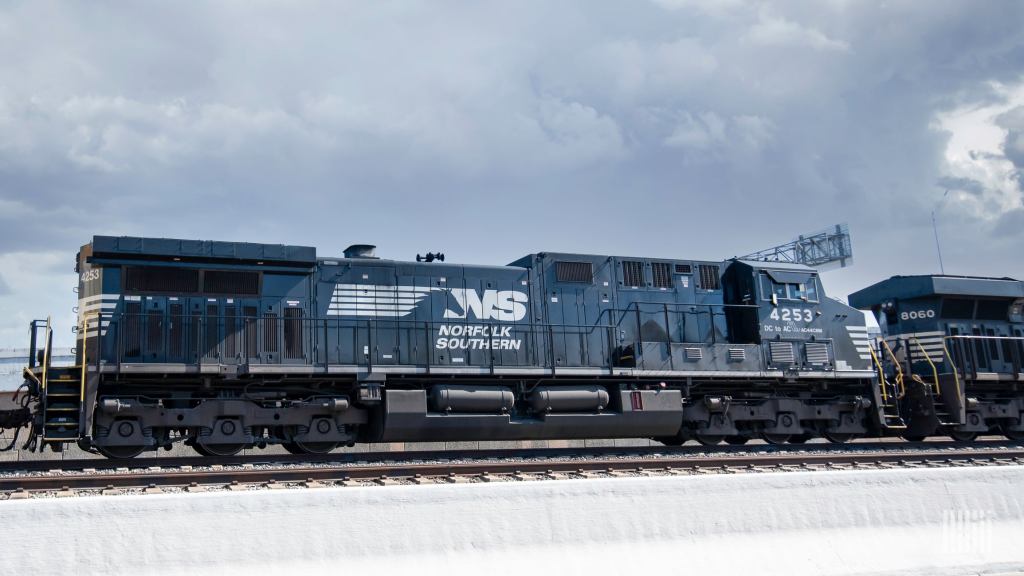
Norfolk Southern says higher costs will pay off in long term

Norfolk Southern defended the rationale behind its elevated costs to investors during its third-quarter 2023 earnings call Wednesday morning, saying the higher costs reflect investments that will result in greater long-term yields, including improved service and greater market share.

Some Wall Street analysts on the call questioned whether NS (NYSE: NSC) could do more to cut costs and improve its margins, particularly as its competitors have been reporting better margins.

NS’ third-quarter operating ratio, a metric that investors sometimes use to gauge the financial health of a company, was 74.6%, compared to 62% in the third quarter of 2022. A lower OR implies improved financial health.

The third-quarter OR accounts for a $163 million charge for site remediation efforts following the Feb. 3 derailment of an NS train in East Palestine, Ohio. That incident included the derailment and subsequent venting of rail cars carrying vinyl chloride. Excluding that charge, NS’ OR would have been 69.1%.

But NS President and CEO Alan Shaw defended his company’s strategy on tackling costs.

“We’re committed to industry-competitive margins. We’ve said that from the get-go. We’ve also said that returns follow the investment. We’re invested over the long term. We’re not going to chase short-term OR targets,” Shaw said.

NS had forewarned during its investor day last December that during times of an economic trough, the railroad’s margins could “get a little worse as we invest in the long term,” Shaw said Wednesday. “But as you evaluate this through an economic cycle, this is the better way forward for Norfolk Southern to invest in long-term growth, deliver top-tier growth [and] industry-competitive margins and drive long-term shareholder value.”

Shaw said last December that while a market downturn might result in higher operating costs associated with a slower network, the option of furloughing employees can cost the railroad much more in the long term. That is because when freight rail demand bounces back, the railroad can’t meet that demand and therefore loses that service to trucking, he said. Service disruptions could also arise because there are not enough crews to run the trains. 

On Wednesday, Shaw said NS is “not happy with our cost structure right now, [but] as we drive operational discipline into our network, as we refresh our operations team, as we drive a high degree of plan compliance, it allows us to continue to iterate the plan for productivity and service.”

NS CFO Mark George divided the railroad’s costs into two categories: one reflecting short-term costs and the other reflecting expenses that NS hopes will improve the resiliency of the rail network long term.

The first category includes costs associated with two technology-related service disruptions that occurred in the third quarter, as well as labor costs that should “unwind over the next couple of quarters” as new train and engine employees make their contributions at critical locations on NS’ network and help improve network fluidity, said George, who added that these labor efforts should also help reduce reliance on overtime. 

Meanwhile, the structural expenses “are really around developing and building resiliency,” with some of those costs related to the quality-of-life initiatives in NS’ labor agreements, as well as to investments in locomotives, George said, pointing out that these expenses could moderate heading into 2024, although NS will provide more guidance when the railroad reports fourth-quarter 2023 earnings in January. 

Shaw alluded to NS’ improving service metrics in the third quarter. Among them, terminal dwell fell 10% to 23.2 hours year-over-year (y/y), while train velocity increased by 7.3% to 20.5 miles per hour.

“With respect to the resiliency costs, some of that has to do with predictable work schedules. Some of that has to do with the historic wage increase that the rail industry and labor came to agreement on last year. Some of it has to do with investing in additional resources,” Shaw said. “As a result of that, what you’re seeing is third-quarter service that is better year over year and better sequentially. Our safety figures improved in the third quarter. … Our volumes [and weekly carloadings in] the last four weeks are at levels that we haven’t seen [since] the second quarter of last year. So we’re making progress. We’re doing exactly what we said we were going to do. This is the better way for Norfolk Southern to drive long-term shareholder value.”

By improving service through these investments, NS will “have greater opportunity to eliminate the service recovery costs, we’ll have greater opportunity to drive productivity throughout our organization as we standardize our operating practices, we’ll have greater opportunities to generate more volume, and we’ll have greater opportunity to generate more price reflecting the value of the products that we sell,” Shaw said. “All of those things will contribute to improvements in our margins and [create] industry-competitive margins, and I think we’re going to see improvement in that next year.”

NS Chief Operating Officer Paul Duncan also pointed to continued efforts to minimize car dwell and maximize network velocity, which should result in improved fuel efficiency, particularly as more tonnage goes onto the network. 

“Disciplined terminal execution … starts with strict adherence to the operating plan to ensure trains are arriving on plan to balance terminal flows and both our merchandise yards and intermodal facilities,” Duncan said in prepared remarks. “We’re minimizing dwell by switching cars within six hours of arrival.”

NS’ Q3 financial results

NS’ third-quarter net income plunged by 50% in large part because of the $163 million charge resulting from the Feb. 3 train derailment in East Palestine.

Net income was $478 million, or $2.10 per diluted share, for the third quarter of 2023, compared with net income of $958 million, or $4.10 per diluted share, for the third quarter of 2022.

In addition to the $163 million charge, the third-quarter 2023 amount includes initial insurance recovery of $25 million. The primary driver of those charges was site remediation efforts, NS told FreightWaves.

George said during the earnings call that of the over $900 million in NS’ anticipated expenses and cleanup costs so far that are related to the East Palestine derailment, half of that has already been paid in the first, second and third quarters. The remaining $450 million could be spent in the fourth quarter and in 2024. 

“The situation remains fluid and we will continue working through these issues for many quarters to come. We expect that there will be additional costs that have not yet been incurred related to future settlements, fines and penalties, as well as legal fees,” George said.

Subscribe to FreightWaves’ e-newsletters and get the latest insights on freight right in your inbox.

Click here for more FreightWaves articles by Joanna Marsh.

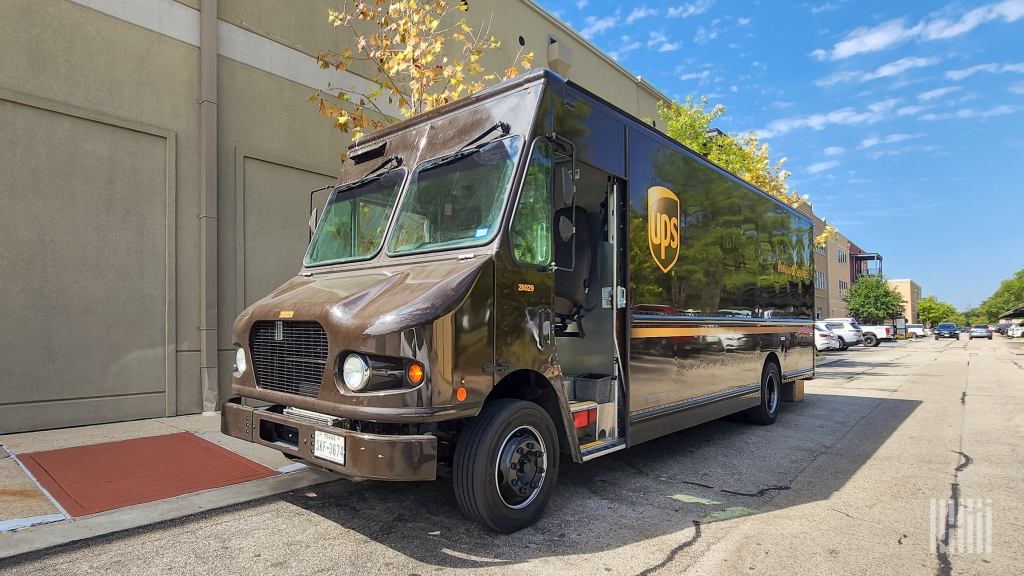
UPS sets holiday cutoffs for air, 3-day services

UPS Inc. has published its recommended holiday delivery cutoff times for U.S. packages moving by air as well as its three-day delivery service.

Packages moving by next-day air should be shipped by Dec. 21 for arrival no later than Dec. 23, said UPS (NYSE: UPS). Next-day air packages can be shipped on Dec. 22, which falls on a Friday, if Saturday delivery is stipulated, UPS said. 

Packages moving via second-day air service should be shipped by Dec. 20 in order to arrive by Dec. 23. Second-day air parcels can be shipped by Dec. 21 if Saturday delivery is stipulated, UPS said.

Shipments moving via UPS’ three-day delivery services, known as 3-Day Select, should ship by Dec. 19 for expected arrival by Dec. 23. Christmas Eve falls on a Sunday, and UPS does not pick up or deliver on Sundays.

The timetable for shipments moving via UPS’ domestic ground network will vary by the geographic zones that the packages travel through. To obtain appropriate cutoff dates, customers should enter planned shipping information in the tool on UPS’ website, the company said.

Traton raises 2023 earnings target after solid Q3

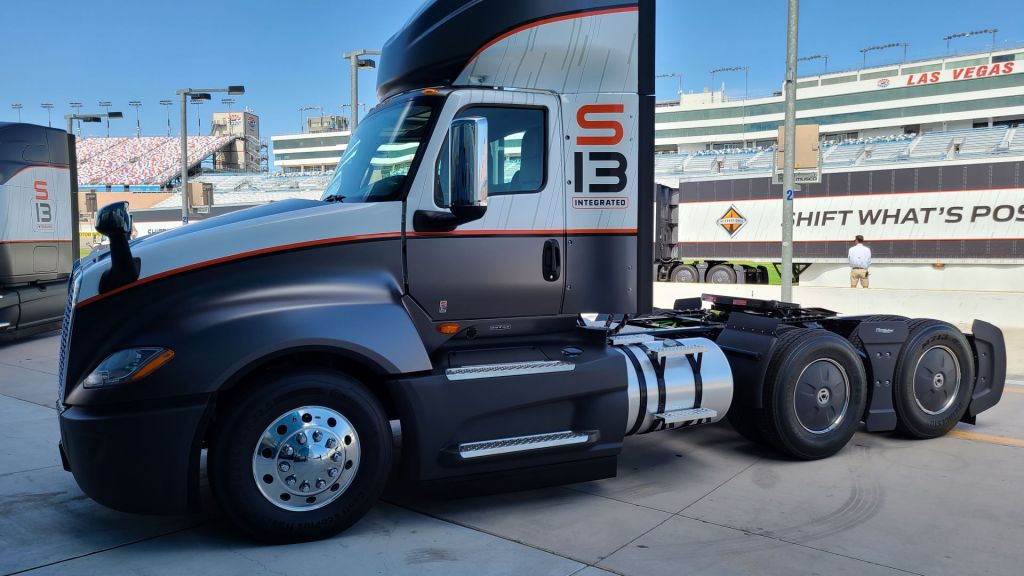
Navistar S13 in Las Vegas in August 2022

Traton Group, the parent of Navistar International, raised its full-year earnings guidance Wednesday after reporting solid deliveries for the third quarter.

Munich-based Traton reported 15% higher sales in the first nine months at 249,500 vehicles compared to 217,000 in the first nine months of 2022. Improving supply chains helped increase production. Volvo Group and Paccar Inc. both reported solid Q3 results earlier. They are cautioning of a slowdown next year, especially in over-the-road tractor orders.

“We have seen very positive developments in our business in the third quarter of this year, which is making us more optimistic for 2023 as a whole,” Traton Group CEO Christian Levin said in a news release.

Revenue rose by 20% to 34.2 billion euros ($36.2 billion) compared to 28.5 billion euros in the first nine months of 2022. Adjusted operating results more than doubled to nearly 3 billion euros ($3.2 billion) with a return on sales rising 3.9 percentage points to 8.6%. 

A richer product mix, higher prices and more services revenue all helped offset higher prices for energy, raw materials and components.

Traton raised its full-year adjusted operating return on sales to a range of 7.5-8.5% from its previous forecast of 7-8%. The Volkswagen AG-owned truck holding company includes Scania, MAN, Navistar and the Volkswagen Truck and Bus brand in Brazil.

Incoming orders fall and backlog moderates

Incoming orders for the nine months fell 26% to 189,600 from 256,200 a year earlier. The decline reflects a return to normal after two years of pandemic-fueled pent-up demand. Higher interest rates also made new truck financing more difficult.

Traton Financial Services is supporting customers, including a relaunch of new and used vehicle lending at Navistar.

Traton’s backlog, or book-to-build ratio, fell to a healthy 0.8% from an overheated 1.2%. That means finished vehicles are being delivered faster than new orders are replacing them.

Navistar is still restricting incoming orders even as it begins production of the Scania-based S13 integrated powertrain. It will be the company’s last internal combustion engine.

Navistar orders fall but deliveries helped strong Q2 at parent Traton 

Navistar’s new internal combustion engine will be its last

Traton takeover brings changes at Navistar

Click for more FreightWaves articles by Alan Adler.

Convoy finds buyer for tech stack, source says

Convoy Inc. has found a buyer for its tech stack, which would include the digital freight company’s driver app and automated freight matching and pricing engines, according to a person familiar with the matter.

The source confirmed the deal but declined to identify the buyer, citing confidentiality issues. Dan Lewis, Convoy’s co-founder and CEO, posted on LinkedIn on Wednesday morning that he was working on a deal that will include the company’s “tech/services” and members of the Convoy team.

Read more: Death from overfunding: An obituary for Convoy

The Seattle Times first reported news of the impending sale.

FreightWaves reported last week that at least two large incumbent logistics providers were bidding on Seattle-based Convoy’s tech stack, which would include the engineering and product teams that support the software. Its driver app has a large installed base, while sophisticated auctioneering algorithms on the back end kept freight moving across the country with a minimum of human intervention.

Over the years, Convoy built software for small fleet dispatchers and transportation management system portals for its customers in order to bring as much of the transaction on-platform as possible so that it could be automated.

The company announced last Thursday that it shut its freight brokerage arm, laying off all employees associated with that part of the business. It was reported that Convoy would retain some employees to assist with managing the transition of its IT operations.

This is a developing story.

Cyberattack response plans need to be in place to avoid chaos

HOUSTON — Much of the first day and a half of a cybersecurity conference sponsored by a leading less-than-truckload trade group focused on preventing cyberattacks. But that left the question of what happens if you get hit by one.

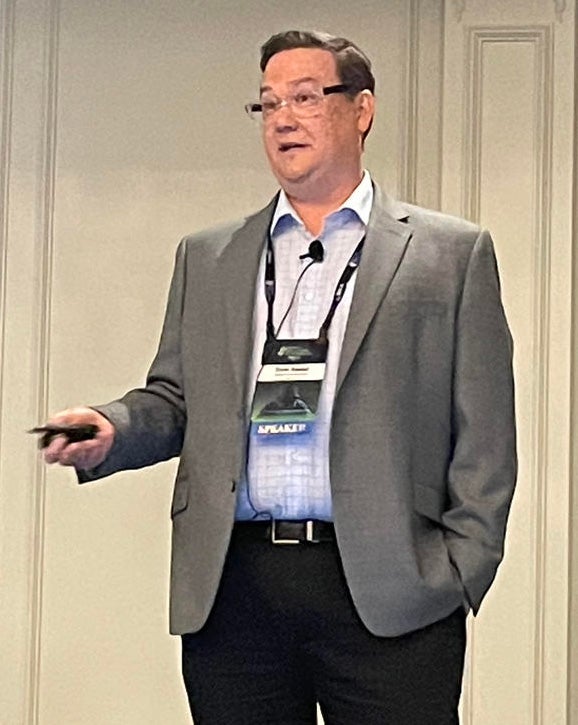
Steve Hankel, the vice president of information technology at Johanson Transportation Service, had that job Tuesday, the second day of the Digital Solutions Conference in Houston sponsored by the National Motor Freight Traffic Association (NMFTA). Hankel went through a lengthy list of steps that he said need to be prepared in advance and then implemented when a company gets hit with a cyberattack. Most of them could be applied to almost any type of company facing the job of dealing with the chaos that accompanies a technology shutdown from an outside attack.

Steve Hankel (Photo: John Kingston/FreightWaves)

At the heart of Hankel’s blueprint for dealing with a cyberattack is a business continuity plan. 

“Business continuity provides a framework for building organizational resilience and a capability for effective response,” Hankel said. Without it, “it doesn’t matter what you do, to go through all your tests, due diligence, cyber resilience and everything, but if you don’t know what to do when something happens, then all bets are off.”

Communication will extend out to the customers of a company that gets hit with a cyberattack. The demand for that communication is coming from the customers themselves, Hankel said. “A lot of our larger customers are starting to ask us and tell us, ‘You need to notify us if you have a data privacy breach, a ransomware breach or if you have any kind of cyberattack that would put us at risk.’” 

It isn’t just a request, Hankel added. Spelling out the necessary communication is showing up in contracts. 

Not surprisingly, implementing a solid approach toward readiness all starts at the top, he said. Support for a robust business continuity needs support up and down — “upper management, the executive team, your management chain. You have to make it clear that this is something that the business needs to focus on. You can’t do it on your own.”

When “new fancy firewalls” are installed, it provides the opportunity for the team leading the battle against cyber bad guys to show management the effectiveness of the new tools. Company logs can record that the system was attacked “90 times a day or whatever,” Hankel said, “and you can show that to your executive team and say, ‘These are all the things that we have prevented because of tools X, Y and Z.’”

Communication with the outside world is important, he said. Who is going to communicate for the incident response team and “who do they need to contact and why?” That includes using such tools as texting because “voice channels may be clogged up in an emergency.”

Hankel ripped off a list of obvious contacts: law enforcement (including the FBI), vendors and, maybe the most obvious one of all, employees. “You want them to understand what’s going on,” he said. Not being upfront with communications creates the possibility of rumors flying around social media, “and you want to get a handle on them.”

Clear lines of control need to be established going into a cyberattack, Hankel said, and it is likely to mean that the CEO or other top brass are not in charge. 

“Make sure that you address that beforehand, that ‘I know you’re the CEO and we love you to death but please stand back and let us do our job,’” Hankel said. It’s a normal situation for “managers and executives who want to jump in and run it but don’t know what’s supposed to happen.”

Incident response needs to be clear on numerous issues, according to Hankel. “How are you responding? Who is responding? Who is communicating and how are you doing all that?” And if those questions are not answered before the attack hits and an attempt to tackle them is made when chaos is reigning, “the time it takes to respond can greatly affect the severity and outcome of a cyber incident or other disasters. … Make sure everybody knows who is in charge and what their role is.”

Despite the fact that Estes Express, an LTL carrier, was hacked just a few weeks ago and the full restoration of all services coincided with the final day of the NMFTA conference, its name was rarely heard from any of the speakers. But in private discussions, attendees at the conference from the LTL industry commended Estes for how it handled the communication aspect of its ransomware attack, including the rapid establishment of a portal separate from the compromised systems in which customers could communicate with Estes, and the videos on the company’s progress featuring Webb Estes, the company’s president and COO.

Another key need is to set recovery time objectives (RTOs) and recovery point objectives (RPOs). Although Hankel did not define them, RPOs have been defined elsewhere as “a planning objective that defines how often data needs to be backed up to enable recovery.” RTOs can be defined as “the duration of time and a service level within which a business process must be restored after a disaster in order to avoid unacceptable consequences.” 

Among the questions that Hankel said would fall under those parameters: “Do you need to restore data from three days ago? Or would you rather have it so that you’re doing a backup every 15 minutes?” But these and other questions can’t be answered in a vacuum, Hankel said. A company needs “to look upstream and downstream” to both its customers and technology vendors to determine what can and needs to be done. 

The complexity of putting together a business continuity plan tied smoothly into one of the final sessions of the meeting, at which Ben Gardiner, NMFTA’s senior cybersecurity researcher, laid out some of the initiatives internally and externally that have been undertaken to combat cyberattacks on trucking.

Day one of the conference seemed at times to be at an elementary but necessary level. Stopping cyberattacks, the attendees were often told, can involve simple steps like frequent password changes, constructing those passwords with some rules of complexity and trying very hard to get staff not to click on links in emails that come from shady addresses.

But the Gardiner session showed just how technically complicated the challenge can be to shut off all possible avenues into a company’s system.

A key argument made by Gardiner is that thinking in terms of a hack just coming in through a network doesn’t capture the risk from trucks connected to the cyber world through telematics. 

The list is long. Trucks that are satellite connected bring a special set of risks; old cellular-based systems that haven’t been updated to the latest technology are another vulnerability. And then there’s the issue of tablets working on the docks at LTL facilities, and the list goes on to even include the possibility of a hack coming through a forklift at a terminal. 

There are plenty of smart people working on these issues, and many of them are young. The NMFTA is the lead sponsor of the CyberTruck Challenge, in which students from a wide range of schools attempt to hack into trucks. This year’s version was in June outside Detroit. 

More articles by John Kingston

TriumphPay’s EBITDA loss narrows, volume increases, factoring invoices stay flat

California Trucking Association sues to block Advanced Clean Fleets rule

Stock-battered e2open now has activist investor Elliot as big shareholder

Ohio derailment charge slams Norfolk Southern’s Q3 profit

A train with the letters N S written on its side sits in a rail yard.

Norfolk Southern’s third-quarter net income plunged by 50% in large part because of a $163 million charge resulting from the early February train derailment in East Palestine, Ohio.

Rail cars carrying hazardous materials were among those that derailed on Feb. 3, raising concerns from residents in East Palestine and from surrounding communities in Ohio and Pennsylvania about adverse environmental impacts. Shortly following the derailment, NS and public officials vented the derailed rail cars carrying vinyl chloride because of concerns that those rail cars could explode.

Net income was $478 million, or $2.10 per diluted share, for the third quarter of 2023, compared with net income of $958 million, or $4.10 per diluted share, for the third quarter of 2022.

The third-quarter 2023 amount includes a $163 million charge associated with the eastern Ohio accident, NS (NYSE: NSC) said. That figure also includes initial insurance recovery of $25 million. The primary driver of those charges were site remediation efforts, NS told FreightWaves.

Income from railway operations was $756 million, compared with $1.3 billion in Q3 2022. 

Excluding the incident charge, income from railway operations was $919 million, while diluted earnings per share was calculated at $2.65.

Operating revenue was $2.97 billion in the third quarter, down 11% y/y. Meanwhile, operating expenses rose 7% to $2.2 billion on higher materials and other expenses, as well as the East Palestine incident charge. 

“In the third quarter, we continued to invest in our people and our assets to lay the foundation for our innovative strategy,” NS President and CEO Alan Shaw said in a Wednesday news release. “Part of charting a better way forward for Norfolk Southern is building solid operational disciplines that move us toward consistency, all to enable productivity enhancements and growth in the quarters ahead. We are building the safe, reliable, and resilient railroad our customers and shareholders expect, and we have an incredibly bright future.”

Subscribe to FreightWaves’ e-newsletters and get the latest insights on freight right in your inbox.

Click here for more FreightWaves articles by Joanna Marsh.

Old Dominion holds Yellow volume bump in Q3

An Old Dominion tractor-trailer on a highway

Old Dominion Freight Line handled nearly 2,600 more shipments each day in the third quarter than it did in the first six months of the year. The lift in volumes was tied to Yellow’s exit as broader trends “reflect continued softness in the domestic economy.”

The less-than-truckload carrier reported third-quarter earnings per share of $3.09 Wednesday before the market opened. The result was 18 cents better than the consensus estimate but 27 cents lower year over year (y/y).

“We responded to the increase in market share during the quarter by continuing to provide our customers with superior service at a fair price, which remains the foundation of our business model,” stated Marty Freeman, Old Dominion president and CEO. “We were well-positioned to respond to the inflection in volumes due to our consistent investment in service center capacity, equipment, technology, and most importantly, our people.”

Link to full story – Old Dominion says Yellow freight redistribution not settled

Table: Old Dominion’s key performance indicators

Revenue was down 6% y/y to $1.52 billion as a 7% tonnage decline was partially offset by a 3% increase in revenue per hundredweight, or yield (yield was up 9% excluding fuel surcharges). The yield metric benefited from a 4% decline in weight per shipment.

With daily shipments just under 50,000, the Old Dominion held the 6% lift in volumes it has seen since Yellow’s departure.

Yellow ceased operations at the end of July but many shippers and 3PLs began looking for alternative capacity options weeks before, meaning Yellow’s shutdown positively impacted results for carriers for the bulk of the third quarter.

Compared to the second quarter, Old Dominion’s (NASDAQ: ODFL) tonnage increased 4% as shipments were up 6% and weight per shipment declined 2%. Yield excluding fuel was 3% higher but only slightly positive when accounting for the lower shipment weights.

The company posted a 70.6% operating ratio in the quarter, 150 basis points worse y/y. In addition to the revenue decline, the company called out higher employee benefits and depreciation costs as the detractors.

“Maintaining excess capacity during slower economic environments comes at a cost, but we believe having available capacity for our customers when they need it is a critical element of our value proposition,” Freeman said.

The third-quarter OR improved 170 bps from the second quarter.

The company will host a call at 10 a.m. Wednesday to discuss third-quarter results.

Link to full story – Old Dominion says Yellow freight redistribution not settled

More FreightWaves articles by Todd Maiden