Friday marked a turn of events for Flock Freight, a provider of shared truckload solutions, as the company decided to reduce its workforce by 54 individuals. The company last reported layoffs in April of 2023.
This strategic move was aimed at recalibrating the company’s trajectory towards profitability. The positions affected were primarily back office roles, focusing on enhancing automation for Flock’s operational efficiencies.
“The people supporting our customers and carriers and those building the IP have not been affected,” Oren Zaslansky, co-founder and CEO of Flock Freight, told FreightWaves. “These moves have put us in a position where our path to profitability can be measured in months not years.”
Flock’s most recent round of funding came in 2021 with its Series D, led by Softbank Investment Advisers with participation from Google Ventures, GLP Capital Partners, Eden Global Partners Susquehanna Private Capital and SignalFire for $215 million and a valuation of $1.3 billion, according to Pitchbook data.
The raise was done to focus on its shipment-pooling algorithms and machine learning technology, which Zaslansky emphasized is showing results in improving the shared truckload experience.
“If a customer is looking to buy a half truckload from LA to Chicago, there are three types of guesses that go into finding that cost. The first, which any good broker makes, is can I get a truck on it. … The second guess, a tier one or two broker or digital freight matcher can find out what is going to be the cost. But what Flock does that no one else does is we make a third guess. We guess that if you want to buy a half truck on that lane, we can price the risk of another customer going to rideshare with you somewhere along that route,” he said.
To price that risk, the company has developed and secured patents for its methods and systems. Zaslansky explained it as Flock’s Pooling Probability Index (PPI).
“Prices will move up and down based on if there’s a low or high risk of finding another shipment on these lanes. This is what will make Flock, Flock and that’s how we talk internally. Solving shared truckload and all the logistics and pricing complexity that goes into it.”
Other FreightTech providers have caught on to what Flock is offering. In September, the company announced a multiyear strategic partnership with e2open (NYSE:ETWO) to offer the software provider’s transportation management system users real-time ratings for shared truckload services.
Groups lose latest court attempt to block California’s AB5 from state’s trucking sector
In a sweeping decision, a federal judge in California on Friday rejected arguments that the state’s independent contractor law, AB5, should be barred from regulating California’s trucking industry.
Judge Roger Benitez of the U.S. District Court for the Southern District of California not only failed to order a new injunction, he also tossed out the case brought by the California Trucking Association (CTA) and the Owner-Operator Independent Drivers Association (OOIDA), with state Attorney General Rob Bonta and the Teamsters as the defendants. Benitez handed down the New Year’s Eve 2019 preliminary injunction that kept AB5 out of the state’s trucking sector for several years.
“Remedying complexities and perceived deficiencies in AB5 are the kind of work better left to the soap box and the ballot box than to the jury box,” Benitez wrote in his decision. “If sufficient political or economic pressure can be brought to bear by [CTA and OOIDA] and their supporters, the more onerous provisions of the statute can be amended. The courts, on the other hand, are not the proper bodies for imposing legislative amendments.”
Benitez expressed little sympathy with the CTA and OOIDA arguments in his decision. The basis for Benitez’s 2019 preliminary injunction blocking AB5 was that it conflicted with the provisions of the Federal Aviation Administration Authorization Act (FAAAA), an argument that was later rejected by a three-judge appellate panel of the 9th Circuit.
Benitez reviewed some of the arguments regarding FAAAA’s preemption of state action that impacts a carrier’s “prices, routes or service.” It is that phrase in the FAAA that originally led Benitez in 2019 to block implementation of AB5 in 2019.
But the judge ultimately comes back to the conclusion of the appellate court: “That the FAAA does not explicitly preempt AB5 was resolved earlier in this case.” And that decision, the judge writes, “is binding on this court.”
The CTA and OOIDA also argued that there was an “implied preemption” in the FAAAA that would block AB5. “Implied preemption might have a place,” Benitez wrote. But an argument that it is impossible to comply with the FAAAA because of AB5 falls short. “It is not impossible for truck drivers to comply with both federal and state law because there is simply no federal standard of classification requiring compliance. The FAAAA does not dictate that truck drivers must be classified as independent contractors or that drivers are not subject to state wage and hour laws.”
An argument that AB5 works to set up a “patchwork quilt” of regulations is inadequate as well, he added. “The particular regulations about which Congress is concerned are those addressing carrier’s prices, routes and services. Congress does not appear to be concerned with a patchwork quilt of truck driver classification for purposes of wage and hour protection.”
Benitez rejected the argument that AB5 conflicts with the dormant Commerce Clause of the Constitution, which regulates state intrusion in interstate commerce. The plaintiffs “object to the employee classification approach as burdening independent drivers everywhere,” Benitez wrote. “Yet even plaintiffs acknowledge that California has no interest in applying its labor laws to out-of-state workers and gains no benefit from classifying those workers.”
Citing a precedent in another case, Benitez said the dormant Commerce Clause is not “a roving license for federal court to decide what activities are appropriate for state and local governments to undertake.” Another precedent is cited by the 9th Circuit, which said that “laws that increase compliance costs … do not qualify as a significant burden on interstate commerce.”
If there is an individual winner in the Benitez decision, it is former California Assemblywoman Lorena Gonzalez. Her statements about AB5 and trucking were cited in the case as evidence that the plaintiffs were targeted by Gonzalez and her allies and that there was “animus” directed at the trucking industry.
Again citing a precedent, Benitez writes that “the statements of a single legislator do not necessarily represent the reasons motivating other legislators who vote to pass a bill into law. The statements of Assemblywoman Gonzalez alone are insufficient to prove legislative animus for an Equal Protection violation.”
There were other arguments rejected by Benitez as well. One involved an exemption in AB5 granted to trucks in the construction industry that the plaintiffs said was not “rationally related to a legitimate governmental interest.” Another involves a complex argument regarding the 12-point business-to-business exemption — a difficult test to reach that does pave the way for utilization of independent contractors — and whether it conflicts with federal leasing laws.
In a brief comments, a spokeswoman for OOIDA said the organization “disagrees with Judge Benitez’s ruling and the reasoning behind it and is exploring all options moving forward-including an appeal.” An email sent to the CTA had not been responded to by publication time.
How we got here
• AB5 is passed and signed in the first half of 2019. It sets the ABC test to determine who is legitimately an independent contractor.
• The B prong of the ABC test is particularly problematic for trucking. It says an independent contractor is one who “performs work that is outside the usual course of the hiring entity’s business.” That could be a difficult test to meet for trucking companies that hire independent owner-operators to move freight.
• The CTA filed suit against AB5, citing preemption by the FAAAA. The defendants are then-Attorney General Xavier Becerra, a position later held by Bonta, and the Teamsters union.
• On New Year’s Eve 2019, Benitez hands down a preliminary injunction blocking AB5 from enforcement against trucking, citing the FAAAA argument.
• In April 2021, a 9th Circuit appellate court overturns the injunction on a 2-1 vote.
• CTA appeals to the U.S. Supreme Court for review, but that request is denied on June 30, 2022, kicking the case back to the lower court. AB5 goes into effect against the state’s trucking sector.
• In September 2022, the OOIDA is added as a plaintiff.
• Oral arguments are heard in early November 2023.
• Benitez rejects the request for a new injunction on March 15, 2024, and rules in favor of the defendants: Bonta and the Teamsters.
Louisiana trucker charged with negligent homicide in 168-vehicle pileup
A Louisiana truck driver has been charged with negligent homicide for his role in a crash last year that killed a Missouri man. The crash was one of several that killed eight people.
On Oct. 23, Ronald Britt of Lafayette was driving his 80,000-pound truck around 60 mph on Interstate 55 during a “severe fog” that had spurred multiple crashes. Authorities determined after a multimonth investigation that Britt “was operating at a negligent speed given the driving conditions” and crashed into a vehicle operated by James Fleming.
Fleming, 60, died in the St. John the Baptist Parish crash, and his wife, Barbara Fleming, 69, was severely injured. The Missouri man had stopped his vehicle without crashing, but road congestion prevented him from leaving the roadway, state police said.
The “super fog” was caused by dense fog mixed with marsh fire smoke, so thick that visibility was limited.
Britt was arrested on Monday and charged with negligent homicide, negligent injuring, reckless operation and other traffic offenses.
Eight people died and 63 were injured in the pileup, which involved at least 168 vehicles. Part of the crash scene caught fire.
The views expressed here are solely those of the author and do not necessarily represent the views of FreightWaves or its affiliates.
Global supply chains have faced many disruptions the past few years, and weather has been a huge part of those. In 2021 we had the Texas freeze, causing the worst unplanned blackout in U.S. history. It crippled Texas’ power grid, halting factory production and causing widespread transportation disruptions.
In 2023, we have seen heavy rainsand flooding in California, a major transportation hub, disrupt shipments and cause an estimated 20%-30% decrease in deliveries in some areas. That same year, we saw droughts in Panama cause huge interruptions and delays of container ships going through the Panama Canal. Droughts in Taiwan, a major chip producer, coupled with extreme weather events elsewhere, have exacerbated the ongoing chip shortage, impacting various industries.
The first quarter of 2024 hasn’t been kind to global supply chains. Early winter storms likely caused lingering transportation disruptions. February saw record high temperatures in Texas and more floods in California. However, the biggest disruptions so far stem from lingering effects of 2023’s extreme weather. And things will not improve in 2024 as El Niño will further cripple supply chains around the world.
El Niño is a climate pattern in the Pacific Ocean that can significantly impact global weather patterns. Predictions for the 2024 El Niño suggest potential disruptions in several regions. In North America, it will cause warmer and drier conditions in California, which could further strain water resources and potentially impact agricultural production.
Conversely, some areas might experience increased flooding risks. Heavier rainfall could lead to landslides and flooding in countries like Peru and Bolivia, disrupting transportation infrastructure and agricultural yields. Increased typhoons and monsoons in Southeast Asia could damage infrastructure and disrupt manufacturing.However, drier conditions in Australia could impact crop yields. Increased drought conditions in East Africa could exacerbate food insecurity and humanitarian crises.
These weather events and El Niño’s potential influence can have cascading effects on supply chains.
Floods, snowstorms and hurricanes can disrupt road, air and maritime transportation, leading to delays and increased shipping costs. Power outages and extreme weather can force factories to halt production, causing shortages of raw materials and finished goods. Disruptions to agricultural production due to droughts or floods can lead to price hikes for food and other commodities. Extreme weather events that trigger humanitarian crises lead to a surge in demand for relief supplies, straining already stressed logistics networks.
As the year progresses, the combined effects of recent weather events and the potential impacts of El Niño pose significant challenges for global supply chains. Companies need to be proactive in their planning, implementing risk mitigation strategies and exploring alternative sourcing options to minimize disruptions and ensure business continuity. Technology solutions such as supply chain visibility and risk management solutions can help to better control and mitigate these weather disruptions.
Look for more articles from me every week on FreightWaves.com.
About the author
Bart De Muynck is an industry thought leader with over 30 years of supply chain and logistics experience. He has worked for major international companies, including EY, GE Capital, Penske Logistics and PepsiCo, as well as several tech companies. He also spent eight years as a vice president of research at Gartner and, most recently, served as chief industry officer at project44. He is a member of the Forbes Technology Council and CSCMP’s Executive Inner Circle.
Running on Ice: A partnership for the ages
All thawed out
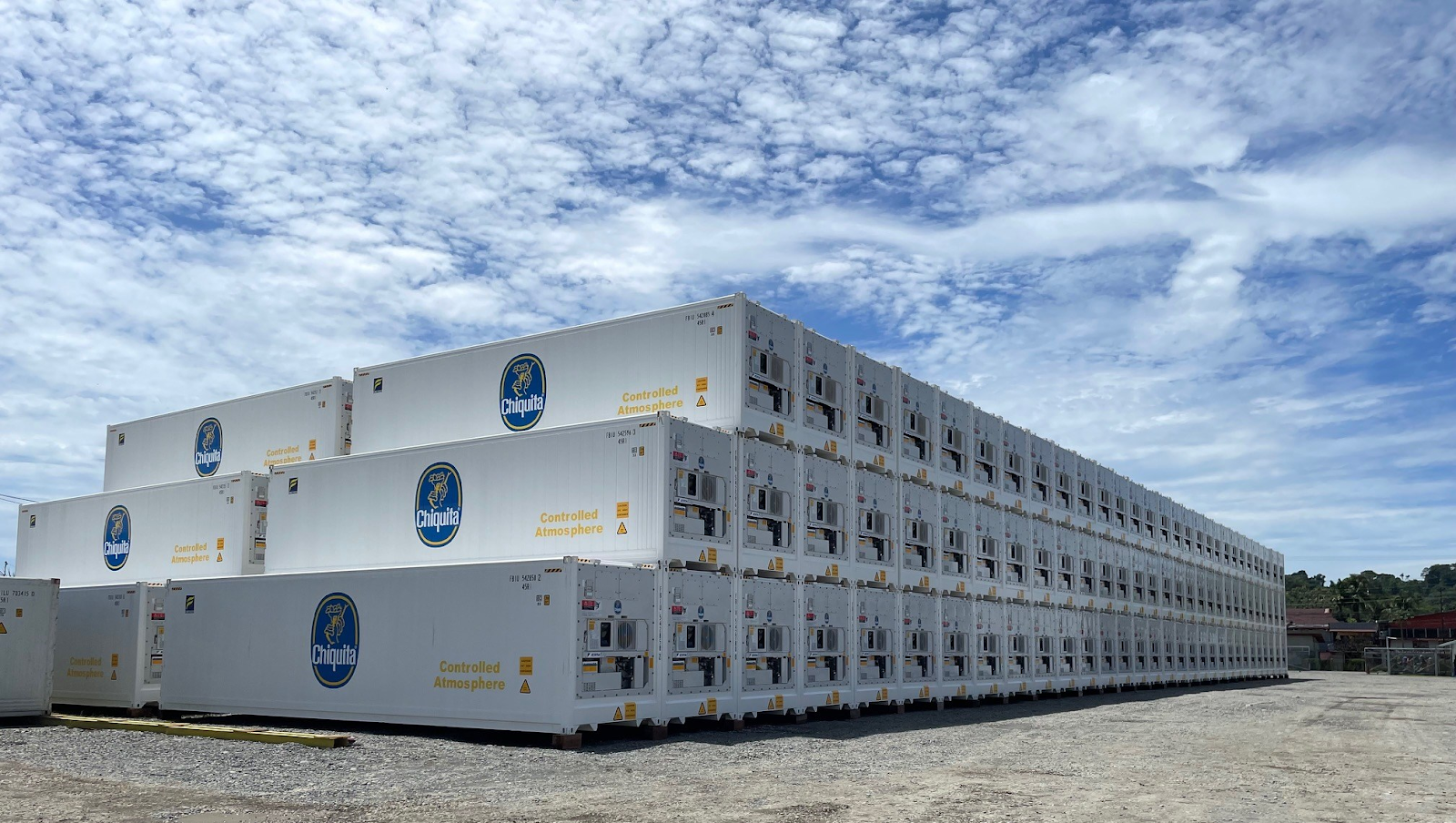
(Photo: Chiquita Brands International)
Bananas for all is something that Chiquita takes very seriously. Its ongoing partnership with Daikin Reefer has been holding strong since 2018. That’s nearly six years of collaboration to give bananas to the world, more specifically North America. Chiquita uses Daikin’s ZeSTIA reefer units, which Chiquita says are unmatched for reliability and performance. As a bonus, the units help reduce carbon dioxide emissions while preserving the bananas’ freshness.
According to a news release, “Bananas, ranked as the world’s fourth most crucial food crop, are highly susceptible to changes in their environment and require meticulous cold supply chain conditions during transportation. Recognizing this, Chiquita has progressively expanded its fleet of Daikin Reefer units. Presently, about half of the ZeSTIA units in Great White Fleet’s equipment are supported with Daikin CA (controlled atmosphere) technology.”
Chiquita operates a shipping fleet through ocean carrier Great White Fleet.
Temperature checks
(Photo: Shutterstock/TAW4)
Big developments are coming to the cold storage warehouse world. Conveyco has created a new line of frozen, chilled and ambient autonomous mobile robots (AMRs). These robots provide order fulfillment, replenishment, transportation, and storage and retrieval for environmentally controlled warehouses. The robots are designed to save on labor, forklifts and floor space – a huge jump into the world of automation.
Not all cold storage warehousing is created equal. With varying temperatures and products under one roof, there is finally a solution that should work for them all. Whether a robot is going from frozen to refrigerated, this is a way to help staff not have to go through the different environments.
According to the news release: “The technology [can] operate in frozen environments as low as minus 13 degrees Fahrenheit (minus 25 degrees Celsius) and in ambient temperatures up to 104 degrees Fahrenheit (40 degrees Celsius) while carrying loads up to 2,645 pounds (1,200 kilograms). Additionally, the robotic solutions integrated by Conveyco can move in and out of varying temperatures without condensation build up.”
Food and drugs
(Photo: National Frozen & Refrigerated Foods Association)
Since there is a special day for everything, such as World Plumbing Day, National Dream Day or the Ides of March, it’s only fitting that frozen food, a $365 billion industry, gets an entire month. March is National Frozen Food Month. Frozen Food Day, which was March 6, was first proclaimed in 1984 by President Ronald Reagan. The purpose is a day to learn about the history of frozen foods as well as eat some frozen food.
The goal behind this observance is to help educate consumers about the benefits of frozen food. A common misconception is that frozen food isn’t good for you or is even wildly unhealthy. That isn’t the case. Nothing is stopping you from buying a frozen Pepperidge Farm Cake and eating it in one sitting, but more commonly there are frozen fruits and vegetables and other convenience foods that are a healthier alternative to an entire frozen cake.
Not only that, but frozen foods help reduce food waste. Americans waste 25% of the food they buy, and given that grocery prices haven’t hit the ceiling, that’s painful to hear. Plus, 40% of all food is wasted. Since every special month deserves a celebration, I’m off to the freezer aisle.
Cold chain lanes
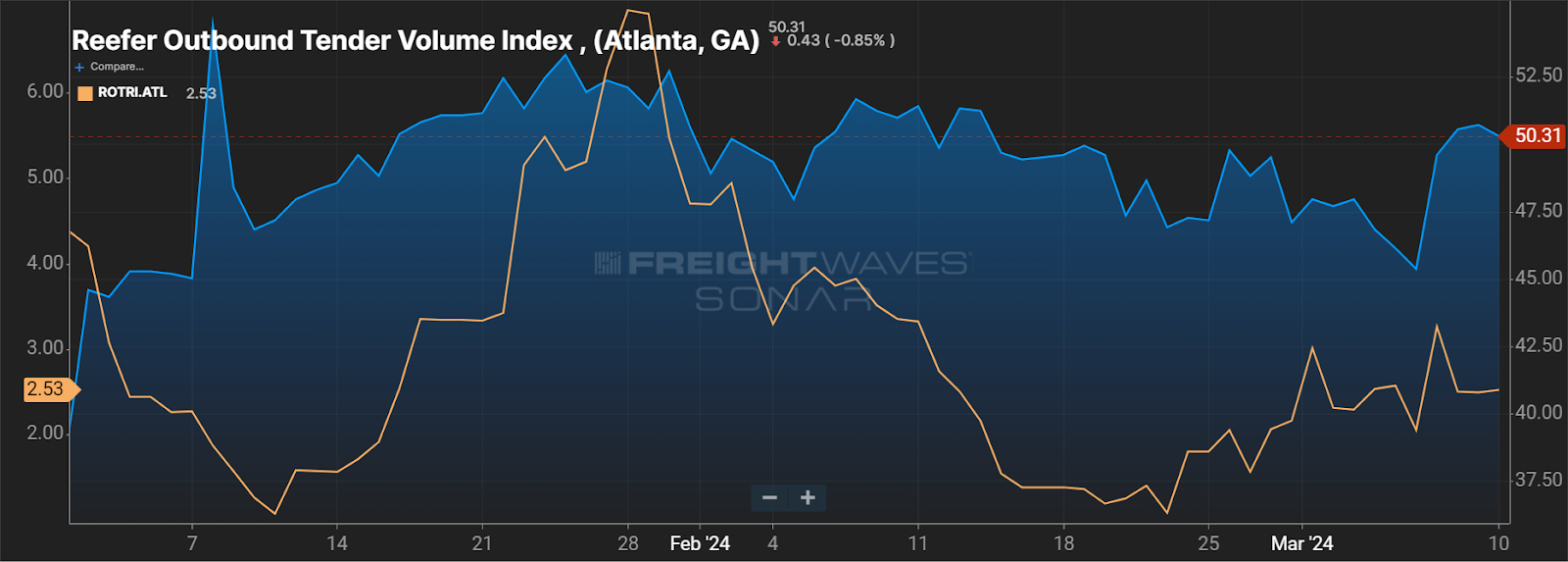
SONAR Tickers: ROTVI.ATL, ROTRI.ATL
This week, our focus turns to Atlanta, known as the birthplace of Coca-Cola and a bustling hub of freight activity. Despite its reputation as a dynamic market, Atlanta’s reefer outbound tender volumes have shown remarkable stability, with a decrease of less than 1% compared to the previous week. This steadiness extends to capacity, with no significant fluctuations, and reefer rejection rates have remained almost unchanged week over week.
This data suggests that Atlanta’s market has reached equilibrium, exhibiting flat rejection rates and a stable flow of reefer outbound tender volumes. This indicates a market that has settled into a state of calm and predictability.
Despite being one of the busiest markets in the U.S., Atlanta currently boasts readily available capacity and relatively low spot rates. This scenario aligns with the market’s stable conditions, reflecting a balance between supply and demand.
Wanna chat in the cooler? Shoot me an email with comments, questions or story ideas at moconnell@www.freightwaves.com.
See you on the internet.
Mary
If this newsletter was forwarded to you, you must be pretty chill. Join the coolest community in freight and subscribe for more at www.freightwaves.com/subscribe.
After minimum pay rule passes, Uber and Lyft threaten to leave Minneapolis
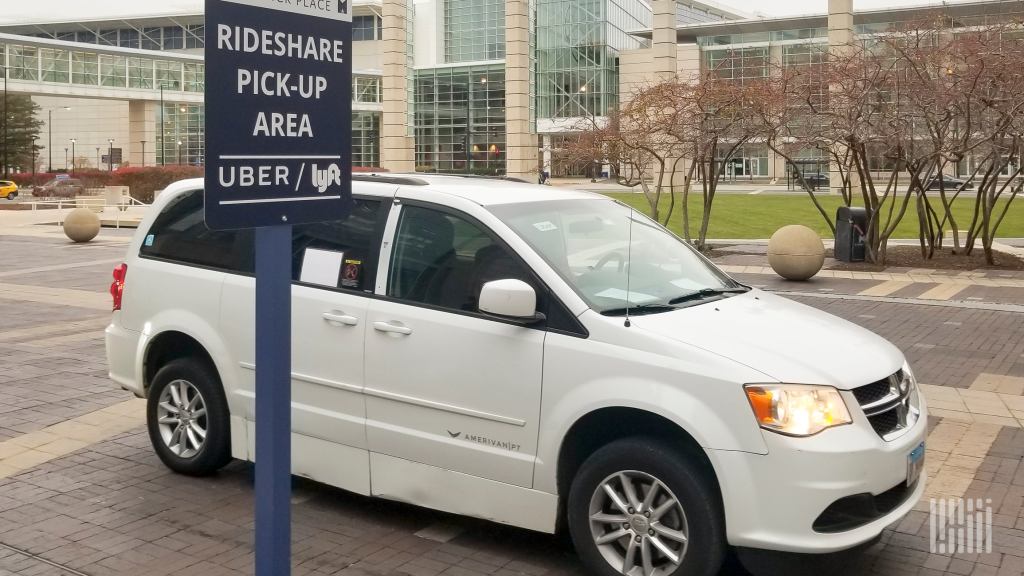
The clock is ticking on a threat by Uber and Lyft to pull out of Minneapolis on May 1 after the City Council this week overrode a mayoral veto of an ordinance laying out minimum compensation requirements for app-based drivers.
The current measure has few substantive differences from a plan that died last year after it was vetoed by Mayor Jacob Frey.
Last year’s veto override vote was 5-5 with three abstentions. This time, the vote was a veto-proof 10-3 in favor. There have been changes in the Council lineup since the earlier vote to sustain Frey’s first veto.
Lyft rapidly put out an unambiguous response about its plans.
“We are shutting down operations in Minneapolis when the law takes effect on May 1,” the statement provided to FreightWaves said. “We will continue to advocate for a statewide solution in Minnesota that balances the needs of riders and drivers and hope to return to Minneapolis as soon as possible.” There is legislation at the state level that would provide minimum pay levels, according to media reports in the city.
Several news agencies reported they had received a similar response from Uber, stating that Minneapolis will find itself as the only major city in the U.S. without Uber service on May 1.
Supporters celebrated online. Jamal Osman, a member of the City Council and a sponsor of the legislation, declared on X, formerly Twitter, that “[d]rivers are human beings with families, and they deserve dignified minimum wages like all other workers. Today’s vote showed Uber, Lyft, and the Mayor that the Minneapolis City Council will not allow the East African community, or any community, to be exploited for cheap labor.”
Drivers are human beings with families, and they deserve dignified minimum wages like all other workers. Today’s vote showed Uber, Lyft, and the Mayor that the Minneapolis City Council will not allow the East African community, or any community, to be exploited for cheap labor. pic.twitter.com/XCprZb3LIt
The office of the city auditor released a study in early February that put the cost of the mandate at approximately $15.57 an hour.
But that figure is not specified in the auditor’s report. Rather, the report calculated it on the basis of other numbers in the current ordinance as well as the one last fall when a veto was sustained.
Key provisions require that a driver for what the proposal called a “transportation network company (TNC)” be paid at least $1.40 per mile and 50 cents per minute for the time spent transporting a rider. That rate would be subject to annual revision.
If the calculation comes in at less than $5, the driver would be paid that minimum.
The law also mandates payment of $1.81 per mile if the driver is behind the wheel of a wheelchair-accessible vehicle, as well as the 51-cents-per-minute requirement or the $5 minimum.
A cancellation would require that 80% of the cancellation fee go to the driver. Tips would not be counted against the minimum compensation.
Various groups have been lining up in favor of or against the ordinance for weeks. In an opinion article published earlier this month in the Minneapolis Star Tribune, Dan Meyers spoke against the proposal from the perspective of disabled people. He said in the article that he had worked on a task force that sought to put together a minimum compensation package for TNCs.
“The ordinance the council proposes could nearly double the price of rides, making rideshare rides more expensive than a taxi in Manhattan and a luxury that only the wealthiest can afford,” Meyers wrote. “That would be devastating to the disability community, who often rely on rideshare to get to work, to medical appointments, to the grocery store. Rideshare services are critical for people with disabilities to enjoy full participation in the economy and in our communities.
In a report on the Uber and Lyft threats from Fox 9 in Minneapolis, a driver expressed skepticism about the threats.
“We’ve heard that many, many times. Different cities, different states,” driver Said Mohamed, according to the TV station. “They will never leave. Even if it was $5 per mile, they would never leave. They make enough money in this state and every other state.”
The auditor’s report did note that Seattle and New York City have minimum pay ordinances for TNC drivers, and have not stopped operating in either of those cities.
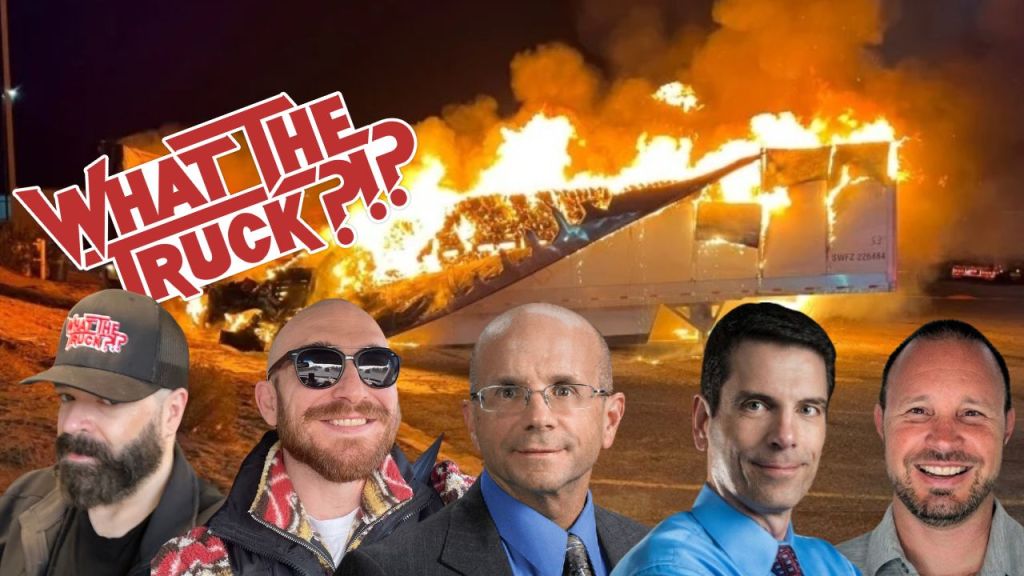
Trailer arsonist, CDL fraudsters and NHL bobblehead cargo thieves – WTT
On Episode 694 of WHAT THE TRUCK?!?, Dooner is talking about a wild week in freight that saw a Swift trailer arsonist convicted, a shipment of Pittsburgh Penguins bobbleheads stolen and another CDL school busted for fraudulent testing.
Airbus’ distinctive new airline is ready to haul whale-size loads, and FreightWaves’ Eric Kulisch is here to tell us all about it. It most recently helped move a SpaceX Falcon 9 rocket. Kulisch will also tell us if more airline incidents are happening than normal.
Feeling sleepy, driver? J.J. Keller’s Mark Schedler talks about whether hours-of-service rules are really helping to prevent accidents.
What skill sets will the next generation of freight brokers need? Tai Software’s Walter Mitchell tells us why the future freight slinger will be a techy.
Industry consultant Aaron Hatfield just got back from Modex. We’ll find out how it went. We’ll also learn about carrier mix and when to make the jump to consulting.
To learn more about FreightWaves SONAR, click here.
California gets another pot of money for ZEV and other cleaner trucks, courtesy of Volkswagen
More than $109 million of California’s share of the money for cleaner vehicles funded by the giant settlement in the Volkswagen diesel scandal will be used to buy, among other things, zero-emissions vehicles (ZEVs) for drayage.
The South Coast Air Quality Management District (AQMD) announced earlier this month that it was releasing about $109.3 million for two categories of cleaner-energy vehicle purchases. The first is for “combustion freight and marine projects,” which comprises a wide range of vehicles including Class 7 and 8 trucks as well as ZEV locomotives.
The second category — zero-emission drayage trucks — has the potential to impact implementation of the state’s Advanced Clean Fleets (ACF) rule and has garnered the most short-term attention. The ACF rule requires that any new drayage vehicle registered with the state after Jan. 1 2024 must be zero-emission, though enforcement of that rule has been put on hold by the California Air Resources Board (CARB) while legal issues are sorted out.
Funds released under the Volkswagen Environmental Mitigation Trust under the category of ZEV Class 8 trucks can be used for vehicles besides drayage, including dump trucks and concrete mixers.
Applicants were able to start putting in for the funds starting March 5. South Coast AQMD said the window for funding will remain open until the funds are all spoken for. A spokeswoman said the agency expects this round of funding will be obligated by 2028.
While this is not the first time South Coast AQMD has released funds from the Vokswagen trust for clean vehicle purchases, including ZEVs, a spokeswoman said the previous release disbursed $41 million, so the latest round is far bigger.
The $109 million is what remains under the two funds that were allotted by the state to AQMD for the vehicle purchases.
The funding for ZEVs can include other trucks, but the primary ZEV push in California has been in drayage, owing in part to the ACF rule that, when ultimately implemented, will bar the addition of non-ZEV trucks from the state’s drayage registry.
The Bay Area AQMD was allocated $80 million under the Volkswagen disbursement, with $70 million of that to go to freight- and marine-related projects. The San Joaquin Valley Air Pollution Control District got $130 million, but that is all targeted at buses. CARB has an additional $63 million in reserve.
The maximum amount that can be used for a drayage vehicle is $240,000 per truck.
Under the combustion freight and marine projects funding, the limit is $102,000 for a replacement vehicle, whether it’s what the state calls a freight truck or other types of trucks. The limit is $60,000 for a repower. The California Air Resources Board defines repower as “(replacing) the engine in a vehicle with another engine meeting a subsequent engine emissions standard.”
Funding under this category can also go to such applications as tugboats and locomotives.
The funding from the Volkswagen set-aside joins other ZEV and clean vehicle incentives in California. In particular, $140 million is available for drayage trucks under the California Hybrid and Zero Emission Truck and Bus Voucher Incentive Project, known more widely as HVIP. Of that $140 million, California is directing $60 million to the Ports of Long Beach and Los Angeles, though there are limits to how much the incentives will pay.
The latest funding release from South Coast AQMD is part of an overall $423 million that California has received from the Volkswagen trust. It is part of the nearly $2 billion in funding that Volkswagen is providing after reaching a settlement with the federal government, in 2016 and 2017, for Volkswagen’s efforts to avoid unsuccessful emissions tests on its diesel engines sold in the U.S.
When the EPA announced the settlement with Volkswagen, it said that almost 600,000 vehicles between model years 2009 and 2016 were equipped with “defeat devices … designed to cheat on federal emissions tests.” Evading limits on nitrous oxide emissions was the primary goal of the scheme.
After numerous rides in autonomous trucks monitored by safety drivers in case of a mishap, I found it almost surreal to climb into Aurora Innovation’s Class 8 driverless truck, buckle up, hear the engine rumble to life and the air brakes disengage, and feel the truck move under its own power — with no one in the driver’s seat.
While two of three Americans still fear autonomous vehicles, according to AAA’s latest survey released Thursday, my three-quarter-mile ride around an Aurora test facility southeast of Pittsburgh was in no way frightening. It was exhilarating.
I kept my iPhone camera trained on the steering wheel. It moved without prompts. Brakes slowed the tractor and empty 53-foot trailer into turns. The throttle engaged seamlessly, accelerating out of them.
Passenger cars and trucks pulled alongside and passed the truck, simulating real-world traffic. The Aurora Driver’s “big brain,” as Veer Nairyani, director of Aurora Driver, called it, anticipated their approach. Its 25 sensors calculated their moves and the truck’s reaction in nanoseconds.
The Peterbilt 579 equipped with the latest Aurora Driver system performed flawlessly. It held to the track-appropriate speed of 35 mph. Aurora tests semis at 65 mph on other tracks. It hauls scores of freight loads weekly on Interstate 45 between Dallas and Houston with safety drivers.
Showcase of roadway hazards
In a showcase of the truck’s constant computing of possible hazardous situations, Nairyani and Lia Theodosiou-Pisanelli, Aurora vice president of operations, narrated a series of possibly catastrophic events that could lead to a crash. The truck navigated aggressive cut-ins by other vehicles; a trash can and a tire littering the roadway; a pickup truck losing a mattress from its cargo bed in front of the truck; and a pseudo-pedestrian along the side of the road.
The show-and-tell ended with the truck striking a spike strip and blowing a tire. It stayed in control, pulling over to wait for help.
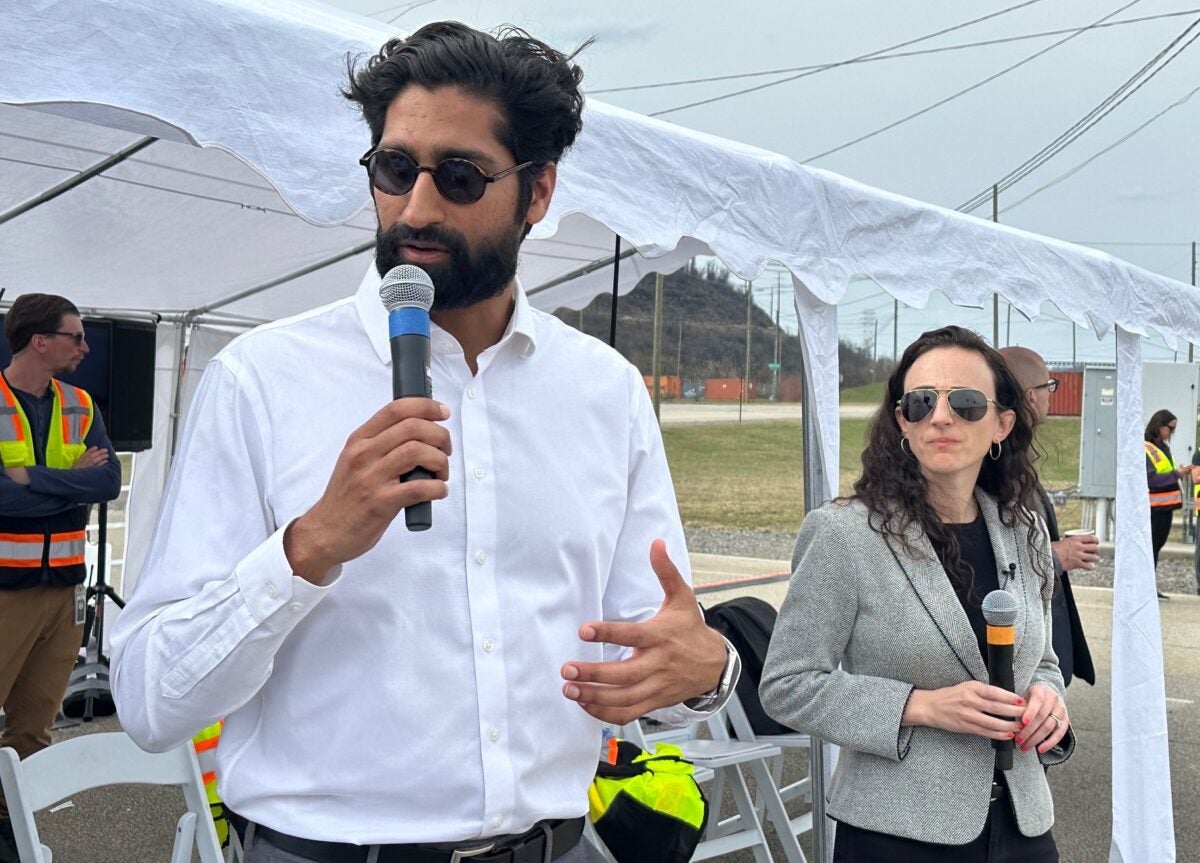
Veer Nairyani, director of the Aurora Driver program, and Lia Theodosiou-Pisanelli, Aurora vice president of operations, narrate a series of autonomous trucking hazard scenarios on Thursday at an Aurora facility southeast of Pittsburgh. (Photo: Alan Adler/FreightWaves)
Analysts get their ride of a limetime
About 30 Wall Street analysts attended Aurora Investor Day on Thursday morning,. They climbed in and out of two trucks for their own ride of a lifetime. Aurora executives said the financial community is an important audience it needs to convince of the viability of autonomous trucking.
The Pittsburgh-based startup plans to field up to 20 driverless trucks on I-45 by the end of the year as it presses a leadership advantage bolstered by non-exclusive but deep partnerships with Paccar Inc., the parent of Peterbilt and Kenworth; and Volvo Group, which showed analysts a VNL chassis ready for Aurora Driver integration with integrated and centralized controls for braking, steering and propulsion.
If the thought of a loaded, 80,000-pound driverless truck sharing the road is scary — or perhaps unbelievable — take comfort in knowing it is neither.
It is cliche to write “Look Ma, no hands,” about the experience inside a moving Aurora Driver-equipped autonomous truck. But it is one appropriate expression for the wow factor of a three-quarter-mile ride with no human at the wheel.
Navistar reaches back for its autonomous trucking future
This week’s announcement that Traton Group brands Navistar, Scania and MAN are looking to Plus as the supplier of driverless technology for hub-to-hub operations shouldn’t be surprising.
The links between the two precede Navistar’s once industry-leading tie-up with TuSimple that ended in December 2022. Navistar has been testing the Plus Level 4 SuperDrive technology stack for about a year in Texas. A commercial pilot is planned late this year. For now, a human safety driver remains behind the wheel.
Work that Traton’s Scania brand had been doing in Sweden with TuSimple has flipped to Plus.
The wind down of TuSimple’s efforts in the U.S. to focus on China, Japan and Australia, and Plus’ U.S. emphasis on enhanced Level 2 driver assist features in recent years, cooled a rivalry that included some verbal skirmishing and some PR one-upmanship.
In August 2021, Plus released a video of a 20-mile driverless pilot it had conducted on a Chinese highway in June. That diverted attention from TuSimple’s anticipated “driver-out” experiment conducted on an 80-mile stretch of Interstate 10 between Phoenix and Tucson, Arizona, in December.
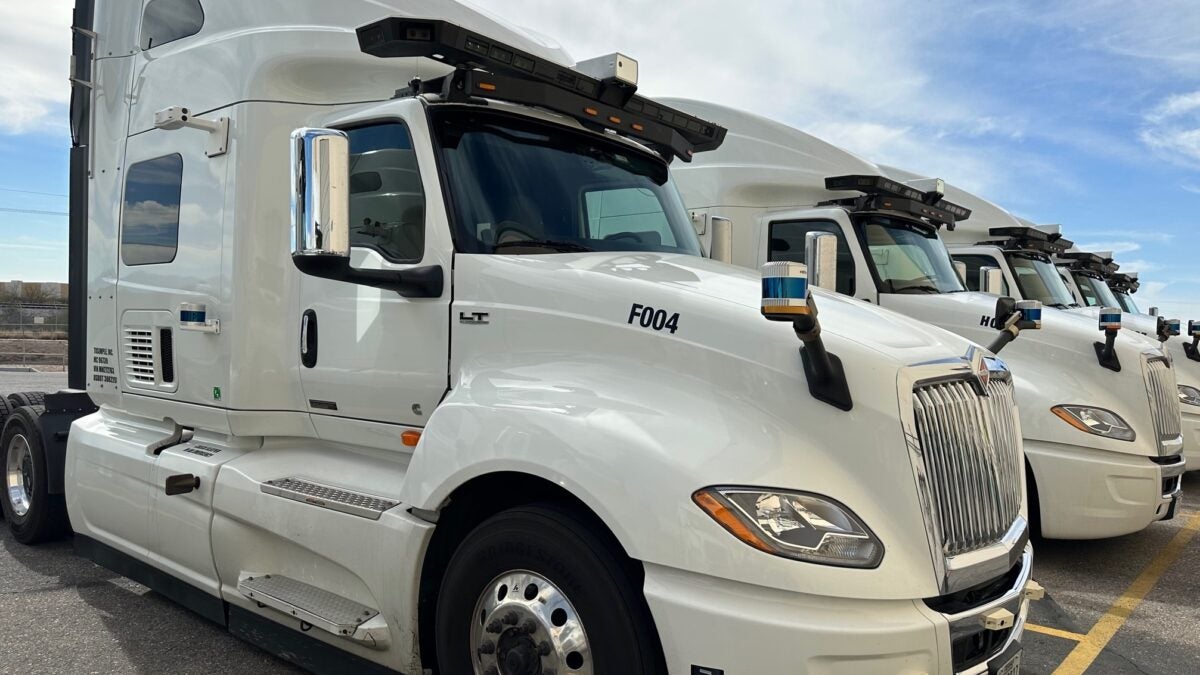
The original “Ghost Rider” International LT from Navistar that ran 80 miles without a human in the cab during a December 2021 TuSimple pilot between Phoenix and Tucson, Arizona. (Photo: Alan Adler/FreightWaves)
An early leg up
Ironically, Plus had an early leg up on TuSimple for the work it has now secured. Five years ago, then-Navistar CEO Persio Lisboa rode in an early version of a Plus-developed autonomous truck. That was before Traton acquired Navistar for $3.7 billion in October 2020.
As long ago as 2018, Denny Mooney, then-Navistar group vice president of product development, couldn’t contain his enthusiasm at saving 40% or more of fleet operating costs with robots taking over for human drivers.
Mooney left Navistar and became an adviser to Plus in 2020. In February 2021, he took the role of chief platform officer. His background likely helped Plus win the Navistar business. Navistar’s arrangement with TuSimple imploded around the time of a messy boardroom fracas at TuSimple.
The company was well along in developing a redundant chassis — backup brakes, steering and power required without a human driver to take control in case of a problem. TuSimple once held thousands of $500 deposits from fleets for an autonomous International LT-branded Class 8 truck.
Back in the game, but trailing the leaders
Toward the end of their 2 ½-year partnership, Navistar wasn’t communicating much with TuSimple, Jim Mullen, formerly TuSimple’s chief administrative and chief risk officer, told me.
While the Plus supply agreement gets Navistar back in the game, it trails Aurora Innovation, Kodiak Robotics and Torc Robotics in commercial readiness. Navistar is the fourth major truck maker to align with an autonomous developer. A shakeout last year sidelined Embark Trucks and Waymo Via.
Aurora has non-exclusive partnerships with Paccar Inc. and Volvo Group. Torc is an independent subsidiary of Daimler Truck. Each plans to install autonomous trucking hardware and software on its assembly lines. Navistar will integrate the Plus SuperDrive system in its factories later this decade.
With its global presence, Traton had its choice of suppliers for an autonomous system. Kodiak would have loved a tie-up since it relies on retrofitting its autonomous system on Kenworth T680s. It plans a commercial launch later this year in Texas.
“This is a nice deal for Plus to get the Navistar and Traton business,” Mullen said. “But if Navistar is looking at commercialization in 2030, they will be well behind the curve.”
Navistar is back in the autonomous trucking game, but it trails leaders ready to hit the road without a human in the cab as soon as this year. (Photo: Navistar)
Workhorse on the bubble
During the months Workhorse Group CEO Rick Dauch paused electric step van production in Union City, Indiana, while engineers developed a new W56 model from scratch, the company never laid off any workers.
Instead, they worked as painters and applied skilled trades to complete a $34 million makeover of the out-of-date factory. The plant rises from farm fields near the Ohio-Indiana border. Many of its workers came from farming families. Steady employment is a blessing.
This week, the reality of a slowdown in electric vehicle sales, partially due to a delay in implementing California’s Advanced Clean Fleets rule, led Workhorse to reverse its no-layoffs policy.
About 20% of the company’s employees were furloughed in a cash-saving move. Executives deferred 20% of their cash compensation until Q2. Workhorse included a notice of going concern — a warning that it might not make it through the next 12 months — in its 10-K filing with the Securities and Exchange Commission.
Alarm bells ring about Workhorse’s survivability
The alarm bells ring as the plant readies for single-shift production of 5,200 vehicles a year. Its EVs qualify for California’s generous vouchers.
“We have the products, supplier and dealer partners, engineering capabilities, business systems, and manufacturing processes in place to emerge as a winner in the Class 4 to 6 segment,” Dauch said on the company’s fourth-quarter conference call Tuesday. “But that only happens if fleet customers both large and small start buying our products in 2024.”
Workhorse had just $25 million in cash on hand at the end of 2023. The company is negotiating to sell the plant for $34.5 million and lease it back for $3.4 million a year for 20 years, according to its 10-K.
Workhorse is trying to raise money to scale the business. In addition to the W56, it upfits Greenpower Motors vehicles as the W750 chassis and has a contract to build Bulgarian-designed Tropos Class 1 delivery vehicles in the 100% manual operation.
“There’s no question that the transition to a new generation of powertrain technology is coming,” Dauch said. “The question is really when will it come.”
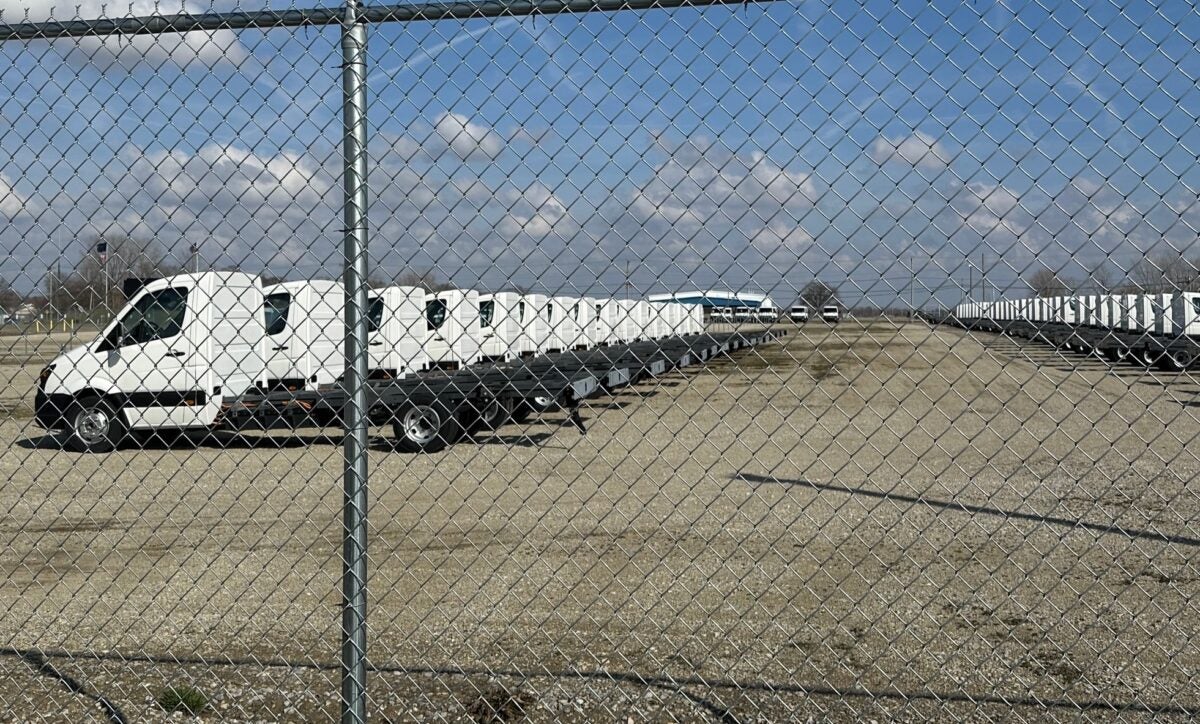
An inventory of W750 chassis cabs awaits shipment on the grounds of the Workhorse plant in Union City, Indiana.(Photo: Alan Adler/FreightWaves)
Editor’s note: Tune in to the “Truck Tech” podcast on FreightWaves’ YouTube channel on Wednesday, March 20, for a behind-the-scenes look at Workhorse’s plant.
Tales from the archives … the engine that saved Cummins
A company that survives 105 years has a few bumpy moments along the way. One of these came for Cummins Inc. during the early months of the Great Depression. In “Five minutes with Bruce Watson,” the Cummins Heritage Center archives manager tells the story of the four-cylinder marine engine that saved the company from likely insolvency just a decade after its founding in 1919.
Yard tractor maker Kalmar and Forterra (formerly RRAI) have signed a joint developmentagreement for autonomous terminal tractors.
Volvo Group has formalized its letter of intent to establish a joint venture with Westport Fuel Systems for global adoption of Westport’s High Pressure Direct Injection fuel system technology for long-haul and off-road applications.
Truck Tech episode No. 58: Up close with Cummins CEO Jennifer Rumsey
With 20 months behind her as CEO of Cummins Inc., Jennifer Rumsey shares the high and lowlights of the global engine business and her balancing of legacy products with a Destination Zero strategy toward making the company carbon-neutral by 2050.
That’s it for this week. Thanks for reading and watching. Your feedback and suggestions are always welcome. Write to aadler@www.freightwaves.com.