China’s DJI, facing US bans, launches global sales of delivery drone

This originally ran on Flyingmag.com.

The company responsible for an estimated seven out of every 10 consumer drone sales worldwide is throwing its hat in the drone delivery ring.

China’s DJI, the market leader in consumer drones since 2015, this week announced that its recently unveiled FlyCart 30 model is now available globally. The company kicked off sales in China in August. But the international expansion marks its true entry into the drone delivery space.

Prior to last year, DJI made drones almost exclusively for hobbyists or industrial customers. Most of these are camera drones, equipped with features such as high-definition lenses and video recorders. Others are designed for surveillance and inspection, with thermal or infrared sensors, mapping software and advanced communications systems.

Despite the Chinese government’s alleged involvement in DJI, the company’s ascent has largely been organic, fueled by its reputation for low-cost, high-quality products. Its drones have been used to film high-profile TV shows such as “Game of Thrones,” “The Amazing Race,” “Better Call Saul” and “American Ninja Warrior,” and have developed a following among American users. They’ve also been discovered on the battlefield in Eastern Europe and the Middle East, often in modified forms.

DJI’s presence in the U.S. has drawn the ire of lawmakers, who have decried the company’s products as “TikTok with wings” and leveled accusations of spying, without concrete evidence. Bans at the federal and state levels have taken aim at it and other Chinese manufacturers. In December, lawmakers successfully included sweeping restrictions in the recently passed defense policy bill.

However, with the exception of a few states, the restrictions only hamper DJI at the federal level. American companies will still be able to purchase the buzzing aircraft, though the manufacturer will compete for business with established U.S. players such as Zipline and Google parent Alphabet’s Wing.

The specs

DJI says FlyCart 30 can be deployed for a variety of use cases: last-mile delivery, mountain or offshore transportation, emergency rescue, agriculture, construction, surveying, and more. This week’s announcement did not list a price tag, but the model is on sale in China for $17,000.

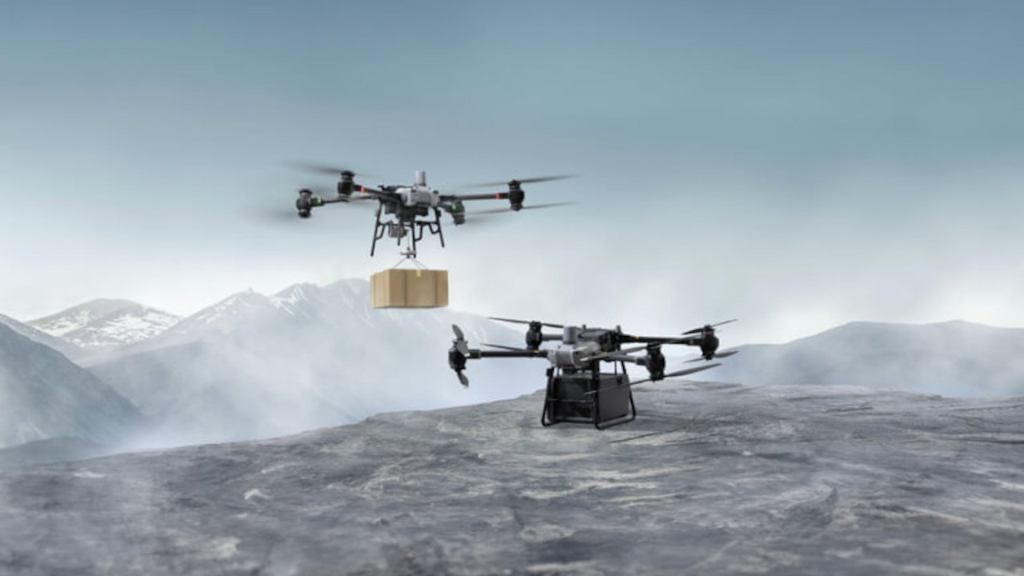
FlyCart 30 is a multirotor design featuring eight blades connected by four shared axes. Carbon fiber propellers, powered by a pair of built-in-house batteries, provide lift. Measuring 9-by-10-by-3 feet, the model enters the market as one of the largest short-range delivery drones.

Despite its size, the drone tops out at about 45 mph (39 knots). With both batteries installed, it can carry a 66-pound payload over a distance of about 8.6 nautical miles, remaining airborne for only 18 minutes. In emergency single-battery mode, the payload rises to 88 pounds but range is cut in half.

However, FlyCart 30 is more durable than the average delivery drone. It has an IP55 rating, meaning it protects against dust and moderate rain, and can fly in winds as fast as 27 mph. The drone can also operate in temperatures as high as 122 degrees or as low as minus 4 degrees Fahrenheit — its batteries heat themselves, maintaining performance even in the freezing cold.

In addition, the drone’s propellers are optimized to fly at up to 19,600 feet above ground level, or up to 9,800 above ground level with a 66-pound payload — far higher than the 400-foot altitude occupied by most delivery drones today. This will allow FlyCart 30 to serve China’s mountainous landscape and hard-to-reach locations in other countries.

For beyond-visual-line-of-sight (BVLOS) flights, FlyCart 30 can communicate with a remote controller as far as 12 miles away. But its unique Dual Operator mode extends that range by allowing pilots to transfer control of the drone with the push of a button.

During flight, a suite of sensors and visual systems can detect obstacles in multiple directions, in all weather conditions, day or night. A built-in ADS-B receiver alerts crewed aircraft of the drone’s approach. And in emergencies, an integrated parachute can deploy at low altitude for a soft landing — or the drone can automatically pick an alternate landing site.

FlyCart 30 comes in two configurations, both of which can fold down for transport in a “standard-sized vehicle.” In cargo mode, payloads are placed in a 70-liter case built from material commonly found in the reusable packaging industry. Capable of being installed or removed in under three minutes, the case includes weight and center-of-gravity sensors to prevent swaying in the air.

Customers can also opt for winch mode, which is ideal for deliveries to inconvenient landing sites. A winch crane can carry up to 88 pounds of cargo, releasing it automatically at the delivery location on a 65-foot cable. Augmented reality projection is used to guide the cable to the landing point.

A FlyCart 30 purchase comes with the aircraft, batteries, charging hub with cables, and DJI’s RC Plus remote controller. In addition, FlyCart can be linked with the company’s DeliveryHub software, which provides operation planning, status monitoring, team resource management, and data collection and analysis.

Viewable on the RC controller is Pilot 2, another software that displays real time information on flight status, cargo status, battery power level and more. Pilot 2 also alerts operators of potential risks along the flight path and generates alternate landing points in case of extreme weather or other abnormal conditions. From the controller, users can even view flights live through the drone’s first-person-view gimbal camera.

The outlook

DJI has held the pole position in consumer drones for nearly a decade. The company could continue to bring in billions of dollars in annual revenue by specializing in that area. But the launch of drone delivery signals the firm’s ambitions run deeper.

Rather than selling exclusively to individual hobbyists, DJI can now reach enterprise customers such as retailers or medical organizations. That segment is less susceptible to macroeconomic swings and could help the company stabilize revenue. Skydio, the largest consumer drone company in the U.S., recently shuttered its consumer business entirely, electing instead to pursue enterprise customers.

Working in DJI’s favor is its already established international network of dealers and customers. The firm has become a trusted brand in the consumer drone space, and many companies and organizations — which could become drone delivery customers — are already familiar with DJI systems and interfaces. Some of them already use the company’s other drones.

A potential concern, however, is FlyCart 30’s niche. The drone doesn’t fit neatly into a single category: Its limited range and flight time suggest it will home in on the last mile, but its size and weight make it better suited to deliver heavy cargo rather than food and groceries. Medical payloads could be a good fit (DJI has said as much), but the company would need to compete with Zipline, whose drones can fly 190 miles on a single charge. As of January, Zipline has completed nearly 900,000 deliveries worldwide.

In addition, FlyCart 30’s 143-pound empty weight with both batteries installed would exceed the FAA’s limits for small unmanned aircraft systems (sUAS). To fly in the U.S., DJI would require type certification or an exemption to Section 44807 of Title 49 of the U.S. Code. The European Union and New Zealand, two other emerging drone delivery markets, have similar rules.

DJI may be able to overcome those restrictions in other foreign countries, but breaking into the U.S. market could be challenging. For years, American lawmakers have targeted it and other Chinese manufacturers with bans, though these only restrict the technology at the federal level. However, a few states have already shown willingness to pass their own bans.

Further, U.S. lawmakers are pushing legislation that would extend DJI bans to the consumer level, restricting hobbyists and potentially even businesses from flying the drones. But DJI has made one thing very clear: Global scale, not regional, is the objective.
Forward Air-Omni merger dustup heads to trial Friday

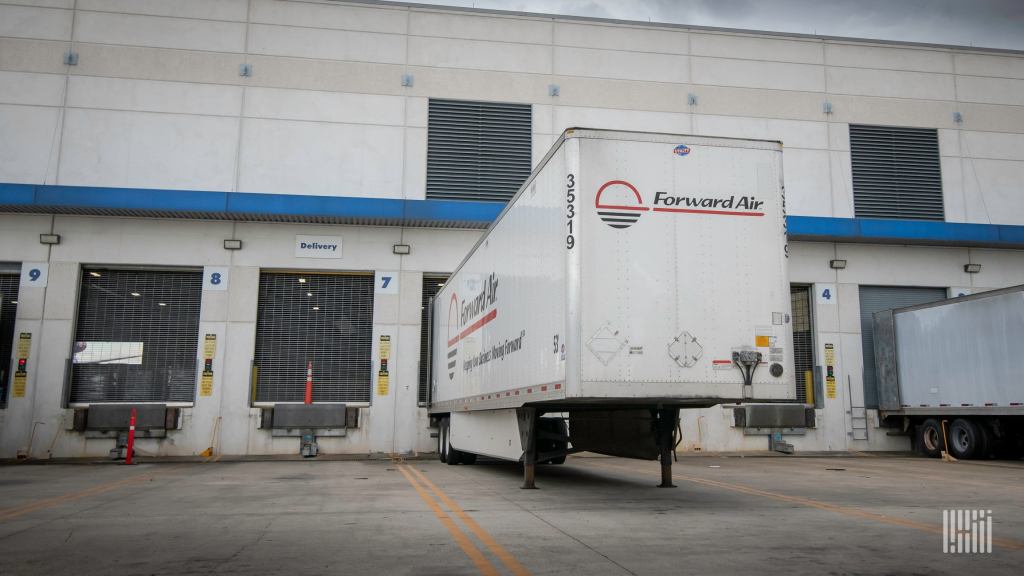
A white Forward Air trailer at a warehouse

A merger dispute between Forward Air and Omni Logistics will finally be heard in a courtroom on Friday. The Delaware Court of Chancery will be tasked with determining if Omni breached the deal agreement by failing to meet certain pre-closing conditions and if it misrepresented financial projections as Forward has alleged.

Omni filed suit against Forward at the end of October, saying the less-than-truckload company was seeking to unjustifiably terminate the merger because of the backlash it had received from investors, who were miffed they wouldn’t be afforded a vote on the deal prior to closing. Shortly after the Aug. 10 deal announcement, shares of Forward dropped more than 40% and are now just half the pre-deal value.

Omni claims Forward (NASDAQ: FWRD) has manufactured an alleged breach of contract by falsely accusing it of dragging its feet in response to requests for financial information. It also said Forward has misrepresented earnings projections it provided. It maintains it has acted in good faith and completed all pre-deal requirements.

Forward alleges Omni failed to provide timely disclosure of financial updates and that its 2023 projections are below those previously reaffirmed with lenders. Citing the alleged breaches, Forward has asked the court to let it out of the deal.

Dispute over EBITDA forecasts; Omni’s ‘delays’ produce ‘inadequate’ deal financing

Much of the trial will center on financial projections and whether Omni was delinquent in providing required financial updates to Forward.

Forward told its lending group that it expected Omni to generate $167 million in adjusted earnings before interest, taxes, depreciation and amortization during 2023. The projection was reaffirmed to lenders on Oct. 2 as Forward was closing on a $725 million notes issuance, which is part of the $1.85 billion debt package needed to fund the transaction. However, Forward claims Omni CEO J.J. Schickel showed Forward Air CEO Tom Schmitt a slide displaying a 2023 EBITDA projection of just $111.2 million at a breakfast one day later.

Omni maintains it presented the Oct. 2 forecast as a “what-if” scenario with the expectation of “no growth” in the back half of the year. It said the slide also showed a projection of $147.2 million, which included $36 million in pro forma levers tied to various performance and cost-reduction scenarios. It said Forward has intentionally misrepresented the exchange as a way out of the deal.

Forward said the slide was presented without any disclaimer at the in-person meeting and that on Oct. 4 Omni sent the slide via email with the language added. Forward holds the $111.2 million number as Omni’s true forecast as the company had produced just $73 million in adjusted EBITDA during the first three quarters of the year. It said Omni revised numbers on Nov. 1, raising the amount it made in the first three quarters to $115 million, to make the bridge to its new full-year forecast of $160 million look more achievable.

Forward also claims Omni was slow in delivering July and August financial results despite numerous requests. It said Omni informed it on Oct. 12 that it wouldn’t be providing any further financial information until the deal closed. At the same time, it said Omni began to withhold “access to its data, facilities and personnel” from a third-party company tasked with integrating the two companies. Omni would later retract that refusal, court filings showed.

Omni said it made several inquiries to Forward, seeking help in determining how to prepare its financial results and forecasts as it had no experience as a public company. It also sought guidance on how to divide the anticipated EBITDA synergies the deal would produce. It said Forward never provided that guidance, which was the reason for the delay in producing financials.

Forward claims the reason for the delay was that Omni’s prior projections “had been misleading.”

Omni said it notified Forward on Oct. 26 that all conditions had been met and that the deal should close the next day. However, the same day, Forward made it public that it may terminate the transaction due to the alleged breaches even though it had just won a hearing in a Tennessee court where shareholders were attempting to block the deal.

Forward said Omni knew in September, when commitments with lenders were being cemented, that its full-year 2023 estimate needed to be reduced. It claims the delay in receiving financial data led to an “inadequate” financing structure as it will now be limited on what can be drawn on a $400 million revolving credit facility. That revolver was only intended to backstop the transaction, and its real intent was to provide future working capital to the combined entity.

Forward said the delays also resulted in unfavorable deal pricing and noted that it now potentially faces a credit downgrade, impairing its ability to obtain additional funds for the transaction if needed.

Omni denied the allegations in court filings, saying it “never misrepresented anything to the lenders” and that it stood by its prior EBITDA forecasts.

Other items of interest expected to be uncovered at trial

The deposition of Omni Chief Financial Officer Zhuo Chen may shed light on the alleged deal breaches. Forward filed a motion on Dec. 15 to depose Chen, who it said is “the gatekeeper of the financial information.” Forward said it was Chen who “was responsible for responding ­— or, in this case, not responding — to Forward Air’s requests.”

Forward also said Chen was the one reaffirming Omni’s $167 million EBITDA projection on due diligence calls. However, it said Chen didn’t show for the Oct. 2 call and that it was Omni’s general counsel that confirmed there were “no changes” to the forecast.

“In hindsight, Mr. Chen’s absence — whether deliberate or otherwise — was convenient for Omni. By October 2, Mr. Chen would undoubtedly have known that the previous projection of $167 million in adjusted EBITDA for FY 2023 was materially incorrect and required downward revision,” Forward alleged in the filing.

Forward said Omni offered only one day for Chen to be deposed, which was soon after Omni produced 70% of its required documents, leaving Forward’s counsel no time to prepare.

The trial will also likely provide more details around Omni’s claims that Schmitt withheld and destroyed requested documents tied to board meetings discussing the transaction. Omni claims the documents would have provided details on Forward’s efforts to avoid the transaction. It said some of the items continued to be destroyed after a litigation hold notice was issued.

Omni has also asked for production of Schmitt’s personal Blackberry and iPhone, which Forward has said is not required to be produced and that its search has revealed no work-related texts.

Forward said it has provided hundreds of text strings and more than 1,300 pages of Schmitt’s handwritten notes and other items pertaining to the merger. It noted that some of the requested documents centered on conversations with its investment bankers and were “prepared in anticipation of litigation” with Omni, protecting them from disclosure.

Also, Forward has not issued an update on interest and fees incurred as part of the deal’s financing. Interest expense, after netting out interest earned in an escrow account, on its 9.5% notes was expected to be roughly $100,000 per day. Fees to retain lender commitments for the $1.125 billion term loan facility were set to increase to nearly $310,000 per day after Nov. 23.

Shareholders revolt

Forward shocked Wall Street in August when it announced the merger with freight forwarder Omni. An initial price tag of $3.2 billion deal (roughly 18 times trailing adjusted EBITDA excluding deal synergies) drew the ire of investors, who weren’t allowed to vote on any part of the transaction until after it closed.

The debt-and-equity transaction would be 38% dilutive to existing shareholders and push Forward’s debt leverage (net debt-to-trailing 12 months’ adjusted EBITDA) to roughly four times at closing. The deal price is currently closer to $2.4 billion given the sell-off in Forward’s shares.

Large, institutional shareholder ClearBridge Investments openly criticized the merger, and court filings highlighted similar complaints from P. Schoenfeld Asset Management. Activist investor Ancora Holdings Group said it would look to remove the board and Schmitt as the deal was “intentionally structured to avoid a pre-closing shareholder vote.”

Two-thirds of the shares allocated at closing to Omni’s stakeholders — primarily private equity backers Ridgemont Equity Partners and EVE Partners — are nonvoting preferred shares, keeping the voting stock issued under the 20% threshold requiring a shareholder vote in Tennessee where Forward is headquartered. Forward’s shareholders will be allowed to vote on converting those shares into voting common stock after the transaction closes. However, if the conversion is declined, those units would be due a dividend of approximately 13%, defined as 3.5% above the yield on its most junior debt.

Further, if shareholders agree to convert the shares, Omni’s stakeholders will hold 38% of the voting rights. That voting block would also be required to vote in favor of board-nominated directors at future elections. Investors have also taken issue with Omni getting four seats on Forward’s board and the designation of Schickel as president and second in command.

A group of smaller shareholders, led by the company’s former chief financial officer, have attempted to block the deal in a Tennessee court, claiming damages and saying they should be given a vote. A temporary restraining order pausing the deal was dissolved in late October, but Forward’s management team has said the matter is still ongoing.

Forward originally said the acquisition of Omni, one of its current forwarding customers, would allow it to remove the middle man and boost margins. Some of Forward’s longtime customers initially questioned the deal’s impact as it positions Forward as both linehaul service provider and direct competitor. However, Forward said it has been able to grow volumes with those legacy forwarders since the announcement.

More FreightWaves articles by Todd Maiden

Daily Infographic: EIA expects relatively flat crude oil prices in 2024 and 2025


To view more FreightWaves infographics, click here

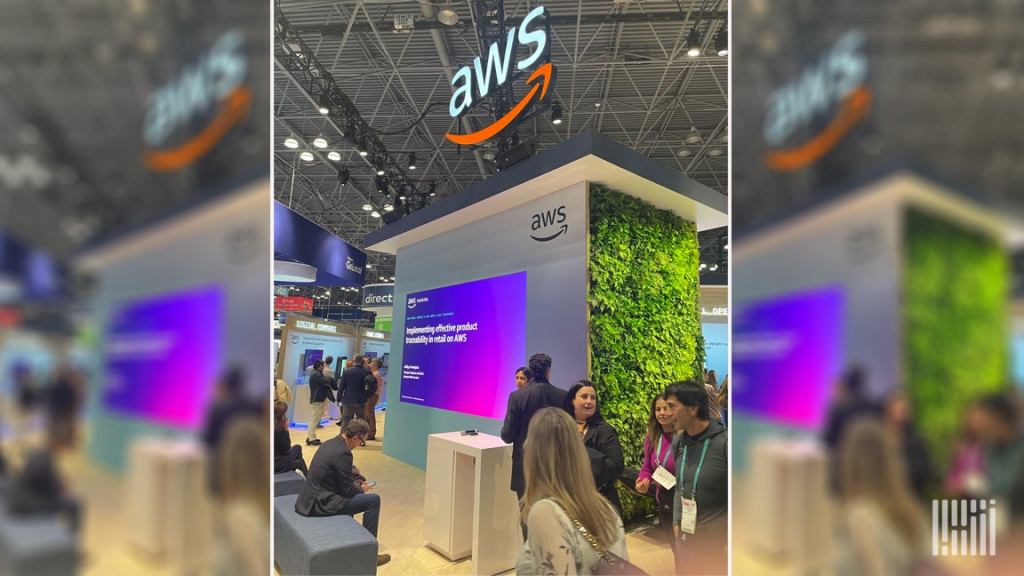
3 supply chain software providers tell their latest stories at NRF

NEW YORK — The National Retail Federation is not a supply chain conference per se. But it might as well be. 

A walk through the gigantic two main exhibition floors at the Jacob K. Javits Center brings the NRF attendees to a line of displays, many of them enormous, that seem to focus heavily on a definition of supply chain that encompasses not just getting products to retail outlets, but also to the final mile and final handling that put a product into the hands of consumers.

That is why three heavyweights of the supply chain — Manhattan Associates, Blue Yonder and the newly created AWS Supply Chain segment of Amazon Web Services — set up shop on those floors to tout their offerings, some of which have recently gone through significant additions or overhauls.

Two companies visited by FreightWaves at the NRF meeting have new initiatives: Blue Yonder through its acquisition in October of Doddle, a U.K. company that specializes in reverse logistics; and AWS Supply Chain, launched early last year primarily as an inventory management tool.

Also in one of the larger booths, Manhattan Associates (NASDAQ: MANH) is a supply chain software provider that is publicly traded and that in the past 52 weeks has seen its stock soar by more than 76%.

Blue Yonder: Tackling the tricky issue of returns

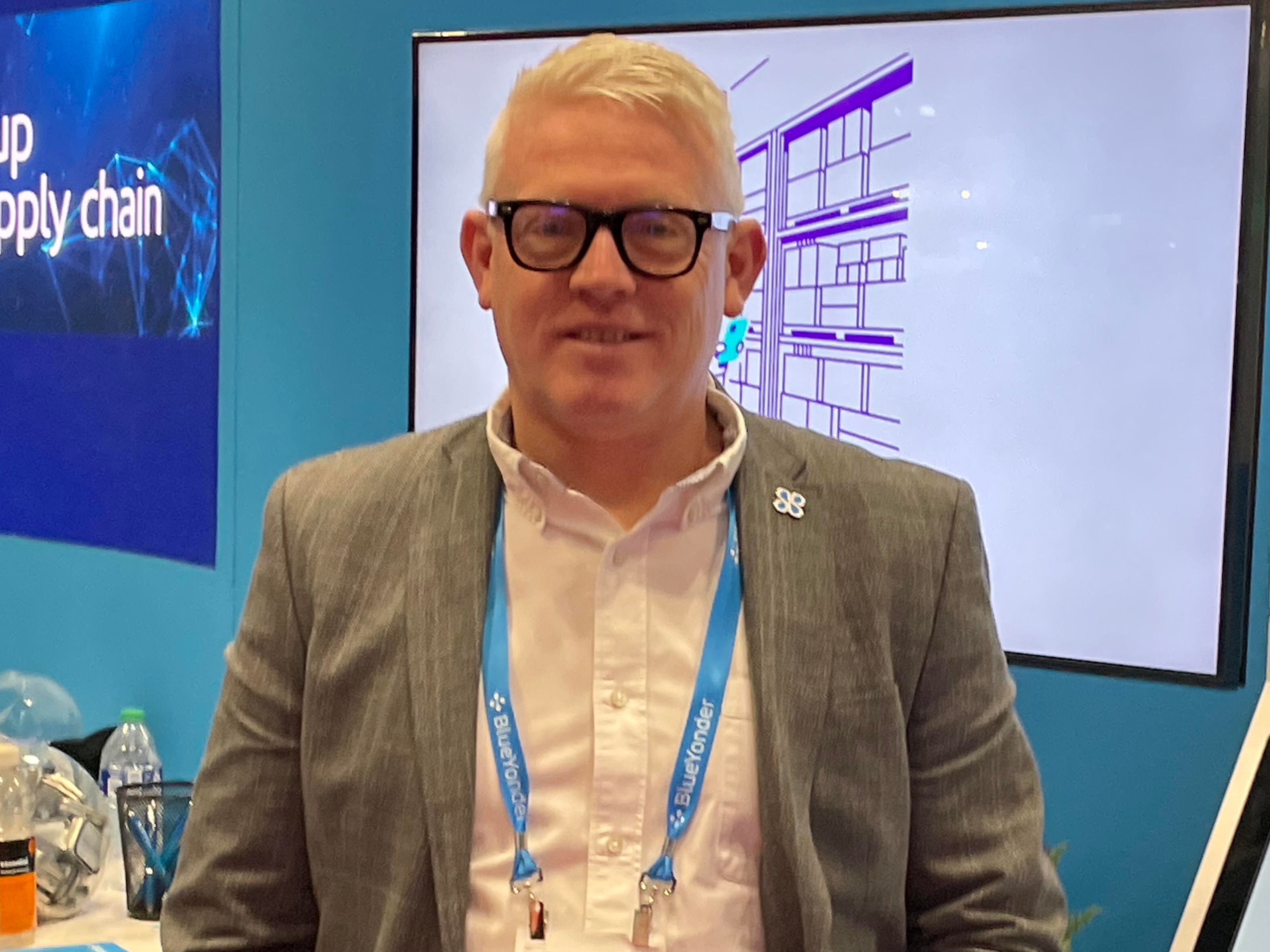
The Blue Yonder acquisition of Doddle was notable on several fronts, in particular the fact that this supply chain software behemoth is now going to be interacting with a part of commerce it hadn’t previously dealt with directly: the buyer or gift recipient of a product he or she no longer wants. That sort of one-to-one contact point didn’t exist before in the Blue Yonder world, according to Tim Robinson, the co-founder and CEO of Doddle and now a vice president with Blue Yonder.

Robinson described a process in most supply chains in which handling of returns was generally somewhat disorganized, enough to disrupt other parts of the supply chain that might otherwise have been well structured. That returns are an issue in the supply chain could easily be discerned from walking through the NRF floor; numerous companies touted returns services.

“In the vast majority of cases, consumer returns are arriving back at warehouses blind,” Robinson said. A consumer likely took a label off the initial packaging, slapped it on some sort of packing and  sent it off via FedEx, UPS or the U.S. Postal Service. Before receipt of the package, there is no data or signal to the warehouse that the return is on its way. For a well-oiled supply chain, this is a significant instance of throwing a wrench in the gears.

“It’s just a hugely inefficient way of running warehouses,” Robinson said. So from the perspective of a freight company looking downstream from its perch on its supply chain, returns might seem miles away from the company’s own issues, but Robinson painted a picture in which reverse logistics can back up into broader operations. 

Tim Robinson of Blue Yonder

One example is how the method of returns impacts supply chain costs. Robinson said if a return is sent back to the warehouse through a company like FedEx, it costs far more than if it is sent back to a retail outlet where it is easier to inject it into a supply chain that includes a warehouse.

Blue Yonder is looking to Doddle to help customers find ways to direct returns into those lower-cost channels, if possible, because that then has an impact on overall inventory levels. 

The data that comes from the Doddle/Blue Yonder returns interface that will now be supplied to their customers will provide a stream of information that makes more efficient processes possible, Robinson said. Beyond finding a way to get a product back to a warehouse more efficiently, Robinson said that interface can also help the supply chain determine “where the item sits in its lifespan.” “If this is an item that has a six-week sales cycle, we know we don’t need to rush that item back in 24 hours,” he said.

Robinson contrasted the system of returns in most warehouses with Blue Yonder’s other offerings. “We have transport management tools which say you’re at the point where you’ve now decided where you’re going to put these products, then we can schedule trucks on docks, the drivers and the workforce to be able to make that happen,” he said.

What Blue Yonder didn’t have, he added, was “the tool that deals with the return and reverse logistics.” Hence the Doddle acquisition.

Manhattan Associates: Post-COVID, companies look to upgrade 

Rob Schaefer is the vice president of transportation management sales at Manhattan Associates. Schaefer said Manhattan’s TMS offering among its enormous suite of supply chain products is targeted toward larger companies with an annual freight-under-management figure of $25 million.

“We’re looking at higher freight spends, and we’re looking for complexity,” Schaefer said of the average Manhattan client. “And what I mean when I say complexity is I’m looking for all modes of transportation. I’m looking for ocean, air, truckload, LTL, intermodal. I want inbound and outbound.”

Manhattan Associates’ solutions are built on its Manhattan Active Platform.

Schaefer said the company is seeing an increase in potential TMS clients who found themselves trying to get through COVID with more antiquated systems, including spreadsheets. These companies weren’t reaching out to Manhattan Associates during the pandemic because “they’re just trying to get capacity going ‘and I don’t care what it costs.’ So the uptick is post-COVID.”

But with COVID in “the rearview mirror, now is when we’re seeing a lot more happening with our TMS system,” Schaefer said.

In that review of how supply chains handled COVID, Schaefer said many companies realized that “all the systems we had didn’t talk to each other. That wasn’t good.” Another realization was that some parts of a supply chain might still have been on spreadsheets.

“So now they’re looking at it from a holistic perspective,” he added. The Active system bills itself as that type of “single solution.” “We’re not writing the integration between things,” he said, with tools that bring together different systems; Manhattan’s approach would be to put everything on the one Active platform.

Manhattan Associates also used the occasion of the NRF conference to announce several initiatives. One is a Fulfillment Experience Insights dashboard, giving real-time updates on fulfillment. A second is a Point of Sale application for use in a store. The third is a joint venture with e-commerce platform Shopify (NYSE: SHOP). The capabilities of the two companies will work in tandem to serve the e-commerce needs of retailer clients.

AWS Supply Chain: A new initiative from the giant

AWS Supply Chain hasn’t been around even a year. Its formation under the banner of Amazon Web Services (NASDAQ: AMZN) was announced in late 2022, and it commenced operations in April 2023.

The announcement was boilerplate. AWS Supply Chain “helps businesses increase supply chain visibility to make faster, more informed decisions that mitigate risks, save costs, and improve customer experiences.” What that doesn’t reveal is that its focus is very much on inventory.

Diego Pantoja-Navajas, vice president of AWS Supply Chain, said at the NRF meeting that “what we have learned the most from our customers is that they were either overstocking themselves or understocking themselves.” Pantoja-Navajas also said AWS customers found that they often had just-in-time inventory practices, which may have worked for years but were a disastrous policy in the post-pandemic months when there were short supplies of so many items.

The basic process used by AWS Supply Chain is to take disparate data that an enterprise is generating through its potentially multiple enterprise resource planning (ERP) software systems and aggregate what the data is showing about inventories.

Pantoja-Navajas used SAP as an example of a company whose processes a warehouse or intermediate supplier of goods might be using for various ERPs. The customers for Amazon Supply Chain, Pantoja-Navajas said, “would have all their supply chain data in SAP, the vendors, the facilities, the products, the purchase orders, the inventory and all that,” he said. What Amazon Supply Chain does is provide a “connector” to SAP “and extracts all the information from SAP into AWS Supply Chain. That data is then fed into a “data lake which is created to store any supply chain data.”

A demonstration of the system at the AWS booth at NRF showed a mockup of a screen with inventory levels and notifications of possible excesses and shortages. “It’s going to look at inventory throughout your network wherever it is deployed,” Pantoja-Navajas said. “That’s whether it’s a warehouse or distribution center of a manufacturing facility.”

AWS Supply Chain already has rolled out new services in its product. Announced in late November, the products bring generative AI to the Supply Chain product, data on carbon emissions of shipments, and two forecasting tools: Supply Planning and N-Tier Visibility.

In much the same way that Schaefer talked about post-pandemic analysis driving customer behavior at Manhattan Associates, Pantoja-Navajas was asked what took AWS so long to produce a product when the need seemed obvious. “I think that more than anything, COVID left a lot of companies wanting to get better and build a much more resilient supply chain for their own use,” he said.

And with the extensive reach of AWS, “data was there from the relationship with partners; relationships with partners existed, so we learned a lot from that event.”

More articles by John Kingston

From pandemic chaos to AI, supply chain panelists have seen it all lately

Supreme Court rejects review in broker liablity case, leaving the issue unresolved

SoCal warehouse emissions rule and possible impact on trucks upheld by judge

TIA warns Congress of rampant fraud in trucking

Truck on highway

WASHINGTON — Rampant fraud in trucking has become an $800 million problem and the Federal Motor Carrier Safety Administration is not addressing the problem, according to the lobby representing 3PLs and brokerage firms.

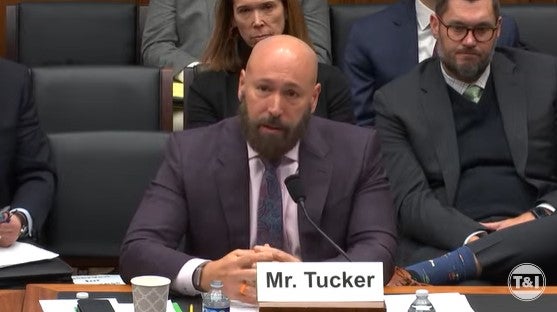
“There’s a surge of malicious actors engaging in illegal activity, registering with FMCSA as carriers and perpetrating fraud, theft and holding freight hostage in situations without any legal consequences,” said Jeffrey Tucker, testifying on behalf of the Transportation Intermediaries Association at a hearing before the U.S. House Transportation and Infrastructure Committee on Wednesday.

“While this is obviously an economic problem, hurting consumers and businesses alike, it also raises safety and security concerns. Unfortunately, FMCSA is failing to enforce the law or investigate the tens of thousands of fraud complaints lodged with it.”

Tucker testifying on Wednesday. Credit: House T&I Committee

Asked during the hearing the types of fraud he sees being committed, Tucker, who is also CEO of Tucker Company Worldwide, a New Jersey-based freight brokerage, said the problem is criminals masquerading as brokers as well as trucking companies.

“It shouldn’t be seen as either carrier fraud or broker fraud. These are just criminals,” Tucker said.

He pointed to similar cases of fraud involving dispatch services that are often based in another country but are not required by FMCSA to obtain a license or registration, as is the case with U.S.-based services.

“FMCSA must stop dabbling in non-safety commercial considerations like what dollar amount a performance bond should be or what commercial terms are included inside a private contract between two parties. Until there are effective measures to address and enforce solutions for this issue, the continued dysfunctionality of the supply chain and its adverse impact on the broader economy will persist.”

Driver shortage?

In addition to freight fraud, Tucker addressed the contention made by sectors within the trucking industry as well as within the Biden administration that there is a driver shortage.

“There is no driver shortage nor has there been one,” Tucker testified. “That is a false narrative that may lead to unintended consolidation in the industry and to weakening America’s supply chain. A more than doubling of American carriers and an increase of 1 million drivers has occurred over the last 10 years. We must have a more nuanced conversation about this.”

U.S. Rep. Mike Bost, R-Ill., a former trucking company owner, challenged Tucker.

“If you’re out there dealing with it every day, there is” a driver shortage, Bost said, adding that the increasing legalization of marijuana among individual states is exacerbating the problem.

“You may have a lot of people who may be good drivers, but they prefer to smoke dope on the weekend and they can’t get clean by Monday. It’s not like having a beer on Sunday during a football game.”

Red Sea supply chain costs

Lawmakers were also concerned about the recent attacks on cargo vessels in the Red Sea by Houthi rebels and the ripple effect on the global supply chain.

“The initial impact is the delay of vessels arriving both in Asia and coming back to the United States,” testified Stephen Edwards, CEO of the Virginia Port Authority.

“So ocean carriers are rescheduling all of those ships and detouring around Africa” instead of going through the Suez Canal, he said, which will settle into a pattern of ships bound for the U.S. East Coast taking an extra seven days in transit.

“You can take the view … that the extra seven days could be offset by the loss of the Suez Canal fees. But that is not true for [vessels moving from] Asia to the Mediterranean or Asia to North Europe.”

Tucker added that another concern is special fees related to the disruption and delays that the U.S. Federal Maritime Commission is allowing ocean carriers to charge their customers.

“There is concern that maybe those fees are not applicable to the situation, and shippers would like to see more oversight on it,” Tucker said. 

Click for more FreightWaves articles by John Gallagher.

Car carrier WWL Vehicle Services Americas laying off 63 Houston workers

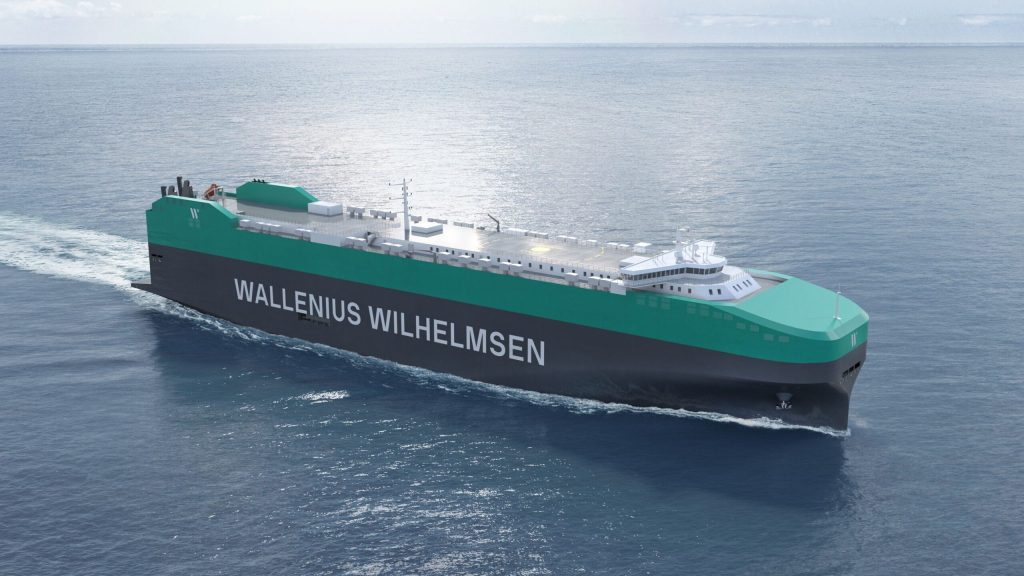
WWL Vehicle Services Americas is permanently closing a Houston logistics operation and laying off dozens of employees, according to a filing with the Texas Workforce Commission.

WWL Vehicle Services Americas is a subsidiary of global shipping and logistics giant Wallenius Wilhelmsen. The Norwegian company specializes in receiving new cars shipped from overseas and preparing them for distribution throughout the U.S. 

The layoffs will begin March 14 at the facility at 131 East Loop North and be completed by March 31, company officials said. Volkswagen Group of America was the former tenant at the location.

“We expect the layoffs and closing of the facility to be permanent in nature,” Julian N. Krol, legal counsel for Wallenius Wilhelmsen group of companies, said in the state filing. “The closing of the facility will involve cessation of all operations and termination of all employees at the site unless the employees seek to relocate to our new worksite facility located in Freeport, Texas.”

In 2022, Volkswagen announced that Port Freeport would be its new hub for imports and delivery of vehicles to auto dealers across the United States. Freeport is about 60 miles southeast of Houston along the Texas Gulf Coast.

More articles by Noi Mahoney

Canadian authorities suspend two more trucking companies after crashes

Mexico top US trade partner in November, Laredo No. 1 gateway

GXO to shut down Memphis facility, lay off 211 workers

Prologis sees occupancy dipping through Q2 before sustained rebound

Closed loading doors at a Prologis facility

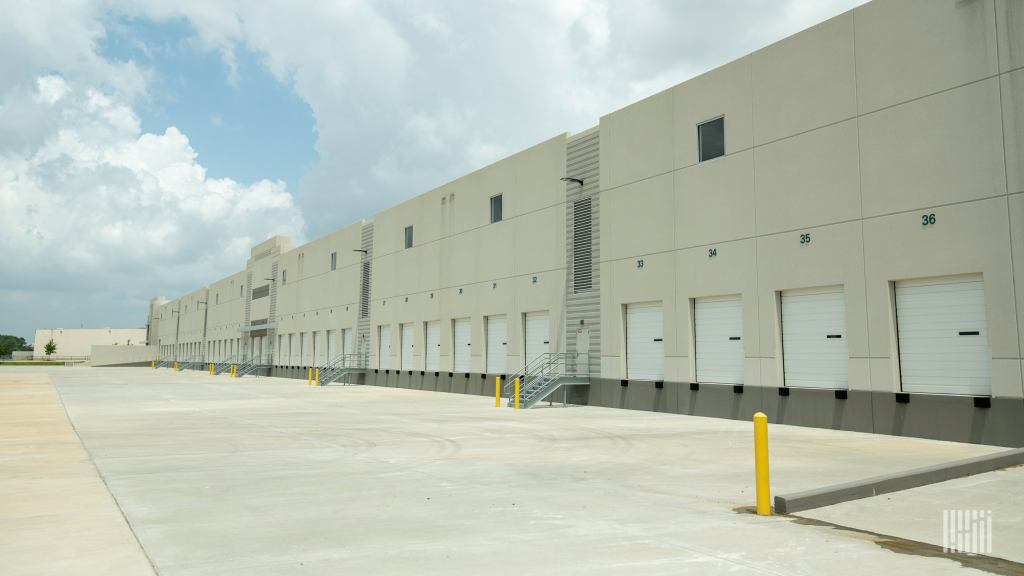
Logistics facility owner Prologis provided a positive outlook for 2024 on Wednesday but noted that facility occupancy will likely trend lower through the second quarter before climbing in the back half of the year.

The company’s 1.2 billion square feet of space remains largely occupied currently, but new facilities continue to come online across the market, creating relative looseness following a stretch of record leasing fundamentals for industrial landlords.

The San Francisco-based operator reported core funds from operations (FFO) of $1.26 per share for the fourth quarter on Wednesday. The result was 2 cents better year over year (y/y) and in line with the consensus estimate. Rental revenue stepped 10.4% higher y/y to $1.76 billion, pushing consolidated revenue up 7.9% to $1.89 billion.

Occupancy across its portfolio was 97.1% in the quarter, in line with the prior quarter but 90 basis points lower y/y. Management’s 2024 outlook calls for occupancy to be between 96.5% and 97.5%, with vacancy rates rising to 6% through the second quarter. That said, 45% of its currently available facilities already have proposals from potential tenants.

Prologis (NYSE: PLD) commenced leases representing 43.7 million square feet of space in the period, a 2.8% increase from the year-ago quarter. Net effective rent change (over the entire lease term) was 74.1%.

Table: Prologis’ key performance indicators

Prologis estimates that facility development starts across the industry are off roughly two-thirds from the peak.

“The supply cliff will converge with normalized demand later this year, delivering an environment conducive to strong market rent growth,” said Tim Arndt, Prologis chief financial officer, on a Wednesday call with analysts.

The company is forecasting annual rent growth between 4% and 6% over the next three years but with rents in 2024 only slightly positive.

Hamid Moghadam, Prologis co-founder and CEO, is confident that retailers will need to add inventory to their networks. He said better-than-expected retail and e-commerce sales during the recent holiday season left some sellers short on merchandise again.

“The point is, people thought COVID was the big unknown factor, and now that COVID is over the world is going to go back to a stable, predictable, just-in-time type of inventory strategy,” Moghadam said. “I think each one of these things — whether it’s Panama, whether it’s Suez, whether it’s … the Middle East, will remind people that they generally need to have a more conservative inventory strategy and that’s the big long-term driver, which is going to be a tailwind for demand that we haven’t really seen play out just yet.”

Prologis’ lease mark to market across the entire portfolio stood at 57% in the quarter as new supply added in Southern California has made leasing very competitive. Also, the region is up against tough comparisons due to exorbitant rent growth, up 110% since 2020.

Prologis issued 2024 FFO guidance of $5.42 to $5.56 per share compared to the consensus estimate of $5.52. The number is expected to be 9% higher y/y at the midpoint of the range when excluding promote expense. The guidance also includes development starts ranging between $3 billion and $3.5 billion, which is $500 million higher than its 2023 guidance at both ends of the range.

Prologis grew earnings by double-digit percentages for a fourth straight year in 2023.

More FreightWaves articles by Todd Maiden

PS Logistics acquires flatbed segment from ELS

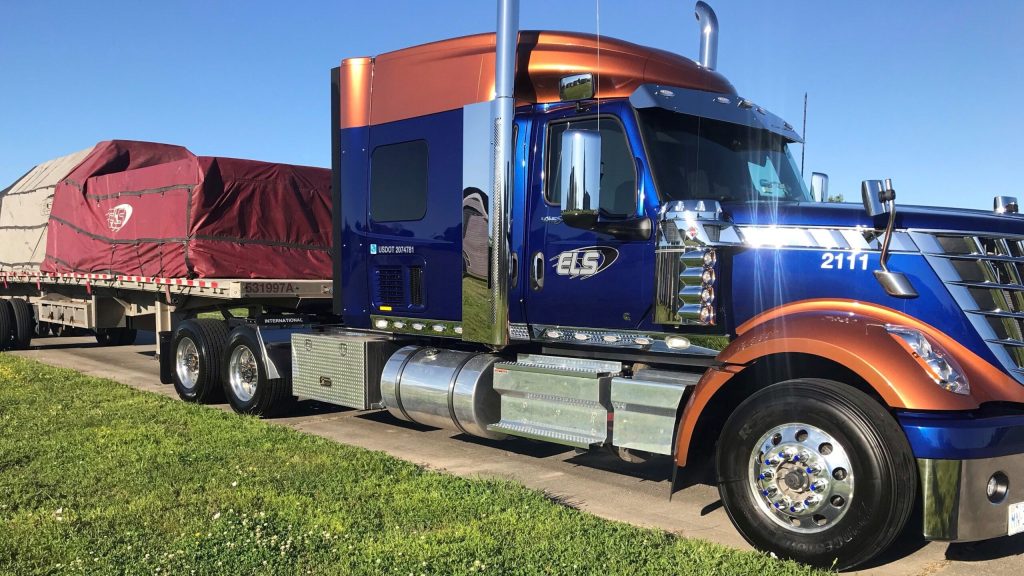
A blue ELS tractor with a covered load on a flatbed trailer

PS Logistics announced Wednesday that one of its subsidiaries acquired the flatbed fleet of ELS, which includes more than 90 tractors and over 240 over-length trailers.

Kenly, North Carolina-based ELS is a 15-year-old carrier mostly hauling steel, lumber and building products. ELS will retain and continue to operate its heavy-haul and intermodal segments. The acquisition of the flatbed operation pushes PS Logistics’ fleet to more than 500 power units and 1,250 over-length flatbed trailers.

Financial terms of the transaction were not disclosed. The ELS flatbed unit will operate as part of PS Logistics’ subsidiary, Blair Logistics, which inked the deal.

“The ELS flatbed division will be complementary to our existing over-length operations and allow us to provide enhanced geographic coverage and service offerings to our customers while simultaneously providing greater opportunities to drivers,” said Scott Smith, PS Logistics co-founder and CEO.

Birmingham, Alabama-based PS Logistics provides asset-based transportation as well as nonasset offerings like brokerage, third-party logistics and managed transportation. The company focuses on acquiring family-owned flatbed trucking and logistics businesses. It has executed 30 acquisitions since 2016.

Last week, it added Buddy Moore Trucking and its flatbed and dry van fleets consisting of roughly 250 tractors.

“ELS has worked in similar geographies and with similar customers as PS Logistics’ operating companies for many years, and we’ve been able to see firsthand how well they service customers and set up drivers for success,” said Tim Butts, ELS founder and owner.

More FreightWaves articles by Todd Maiden

Will your next logistics assistant be AI? – WTT

On episode 670 of WHAT THE TRUCK?!?, Dooner is talking to Happyrobot co-founder Pablo Palafox about the company’s AI assistant for the logistics industry. Happyrobot connects to your TMS to handle load updates, capacity requests, check calls or appointment scheduling. We’ll find out how it works.

FreightWaves’ Justin Martin dives deep on the latest issues in trucking. He’s looking at driver assist technology, carrier safety ratings, helping other drivers out in the cold, logistics horror stories and how to search your freight broker’s room.

It’s National Dairy Day so we’re talking to Cambridge Security Seals’ Claudia Coetzer. We’re going to learn all about the seals that keep milk safe during transport.

Traveler’s Craig Leinauer shares important contract considerations for freight brokers. 

Plus, Red Sea conflict escalates; trucker wins $1 million on a scratch ticket; Forward Air Omni merger gets a court date; and more. 

Watch on YouTube

Subscribe to the WTT newsletter

Apple Podcasts

Spotify

More FreightWaves Podcasts

European cargo airline Cargolux launches aerial firefighting unit

A yellow, single-engine seaplane sits in a hangar.

Freighter operator Cargolux, the eighth-largest all-cargo operator by traffic, is diversifying with a new firefighting business line.

The Luxembourg-based airline announced Friday that the new venture, called Aquarius Aerial Firefighting, will operate a fleet of 12 Air Tractor AT-802F Fire Boss aircraft. The single-engine air tankers, a mix of single and double-seaters, will be acquired over a three-year period. The first three aircraft have already been delivered and are expected to be deployed in May. 

Cargolux is investing $72 million in the new aircraft, said spokeswoman Moa Sigurdardottir. The firefighting division will have about 40 to 45 employees.

Cargolux, which operates 30 Boeing 747 freighters, also offers third-party maintenance services for 747s at its home base. Firefighting represents a good opportunity because there is a shortage in Europe, and other regions, of aerial capacity to drop water and retardants on forest fires.

Wildfires have exploded in number and intensity across North America and Europe during the past five years, fueled by extreme weather patterns and global warming.

“Over the past years, we have witnessed wildfires becoming a growing global issue that requires a rapid response. Not only do such fires emit significant amounts of CO2 but they pose a significant danger to lives and livelihoods. As a responsible corporate citizen I see it as our responsibility to help tackle this problem. I look forward to Aquarius Aerial Firefighting becoming an integral part of the solution,” said Cargolux CEO Richard Forson in a news release.

The Fire Boss tanker is designed to attack wildfires while they are still small and contain their spread. Its agility allows it to operate in terrain – mountain areas, narrow flight corridors and urban-rural interface zones – where larger aircraft can’t maneuver, or effectively impact a fire, according to the Olney, Texas-based manufacturer. The tanker is able to come in low and slow to pinpoint the drop of water or flame retardant.

The Fire Boss can be configured with an amphibious water scooper, allowing the plane to resupply from nearby water sources and make more drops. Powered by a Pratt & Whitney PT6A-67AG turbine engine, the plane can hit top speeds of 200 mph.

Sustainable aviation fuel

Cargolux’s shareholders are Luxembourg flag carrier Luxair, Henan Civil Aviation Development and Investment Co. in China, and two state-controlled Luxembourg banks. The government of Luxembourg owns 8.3% of the airline.

In 2022, the company generated a record profit of $1.6 billion.

Meanwhile, Cargolux has committed to a long-term purchase agreement with Norsk e-Fuel for sustainable aviation fuel, the companies announced Wednesday.

Norsk e-Fuel is building a production facility in Mosjøen, Norway, and will start to provide fossil-free fuels to the aviation industry after 2026. Norsk e-Fuel is made by capturing carbon dioxide and using electricity from renewable sources.

Cargolux will also provide capital support for construction of two more facilities by 2030.

 Click here for more FreightWaves/American Shipper articles by Eric Kulisch.

Contact reporter: ekulisch@www.freightwaves.com 

Cargolux reports record $1.6B profit in 2022