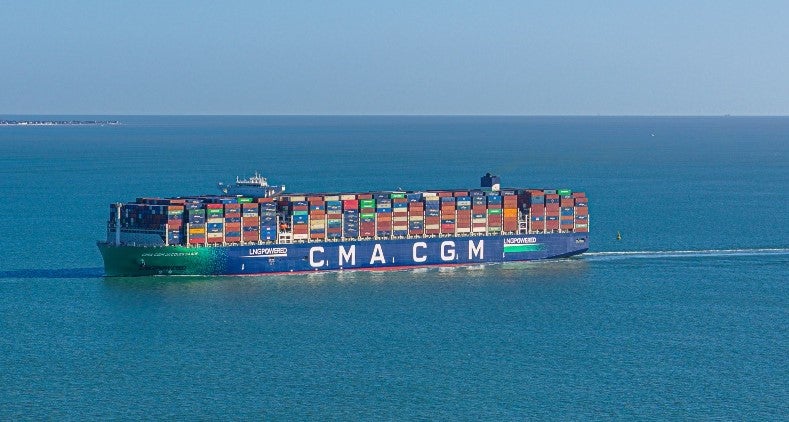
CMA CGM investing in US infrastructure to control its destiny

CMA CGM is the latest carrier to report on the challenging environment and the massive loss of revenues. According to a recent CNBC Supply Chain survey of logistics leaders C.H. Robinson, DHL, Seko Logistics, OL USA and ITS Logistics, manufacturing orders are expected to be soft for the majority of 2024. In the face of such headwinds, maritime and logistics professionals need to find ways to diversify their profits into seaport terminals, trucking, air cargo and warehousing operations.

CMA CGM and other carriers ate away at their large historic revenues to order a record number of new container ships. As we have seen in the past boom and bust cycles of maritime, the demand has evaporated at the time these new vessels are coming to port.

In a recent interview with American Shipper, Peter Levesque, CMA CGM North America president and CEO, said it still sees demand in North America and is investing in its physical infrastructure to capture that need.

“We see Savannah as being a valuable piece to the overall CMA infrastructure for how we call the United States, both in imports and exports,” said Levesque. “The development of warehouse distribution fulfillment centers around Savannah plays a role as we continue to see the migration of e-commerce. Being able to go from ship to fulfillment center to customer makes a heck of a lot of sense.”

Levesque said he hopes to replicate this with CMA CGM’s recent purchase of a terminal at the Port of New York and New Jersey.

“There is tremendous opportunity there,” said Levesque. “The investment in New York, I think, really said a lot about CMA’s commitment to the U.S. consumer. Not only are we seeing it, but we are willing to invest in it in order to be able to basically control our own destiny there.”

CMA CGM is working with the New York Economic Development Commission and companies that do infrastructure build-outs. Artificial intelligence will be a key part in the company’s build-out. Levesque said CMA CGM has already seen the benefits of AI in the reduction of unproductive moves in the terminal and how that can increase terminal capacity.

“That sustainability in a terminal reduces costs and increases productivity,” said Levesque. “Look at what it can do in terms of route optimization on vessels. That’s why I think in the next five to 10 years, when we start really seeing how AI can apply to traditional cost structures, it’s going to be fascinating.”

Lowering the costs of logistics on the water, land and in storage is key for navigating today’s container trade. Levesque said taking the middle person out of the equation at the port in New York and New Jersey will give the company more control and provide a much better service.

In order to achieve this, the company is investing $600 million in Port Liberty.

“That will bring it up to over 2 million TEUs,” said Levesque. “Being able to have containers move in and out as quickly as possible, that’s big dollars and allows us to provide a much better service.”

To keep up with the rest of the world, U.S. infrastructure needs to be strengthened. Terminals up and down the East Coast and the Gulf are growing their capacity to welcome more containers and move the boxes more efficiently.

“It’s going to be interesting to see what happens with Louisiana International Terminals as that gets built out,” said Levesque. “We see that as a huge growth area.”

Expanding to respond to the increase in container capacity, CMA CGM recently launched a new service with Marfret out of Port Houston. The rotation is Houston; Veracruz, Mexico; Manzanillo, Panama; Moin, Costa Rica; Algeciras, Spain; Malta; Livorno and Genoa, Italy; Marseille, France; and Barcelona and Valencia, Spain.

Ocean carrier investments in ports and terminals are a long-game approach to growth. Hundreds of millions of dollars are invested, infrastructure is built out and it takes time to see that return on investment.

Part of the equation when making that decision to invest is looking at a country’s government infrastructure investments.

“Friend shoring from Mexico is here,” said Levesque. “Mexico is big time on the radar screen. We see major investments going into Mexico.”

Levesque said CMA CGM recently had a contingent from Marseille go and spend a week in Mexico to look at all the opportunities.

“It’s still in the early stages. It’s a huge opportunity both on water and road,” said Levesque.

The other country CMA CGM is looking seriously at is India.

“In the next five to 10 years, that is going to be a major area of growth, not only for our company, but for the world,” said Levesque. “I can’t get into specifically what we’re going to do, but you can bet that that’s on the radar.”

Levesque explained India’s infrastructure is coming to fruition and the roadblocks have been taken out.

“Modi is really pushing for this infrastructure development and then we hear from major customers, including some very high-tech customers, that they’re looking at India,” said Levesque.

Capturing the growing trade between the U.S. and India will be key for ocean carriers looking to get in on the ground floor. CMA CGM Group Chairman and CEO Rodolphe Saade recently visited the country. Levesque is scheduled to visit India in the coming months.

Regional Rail to acquire 2 Midwestern short lines

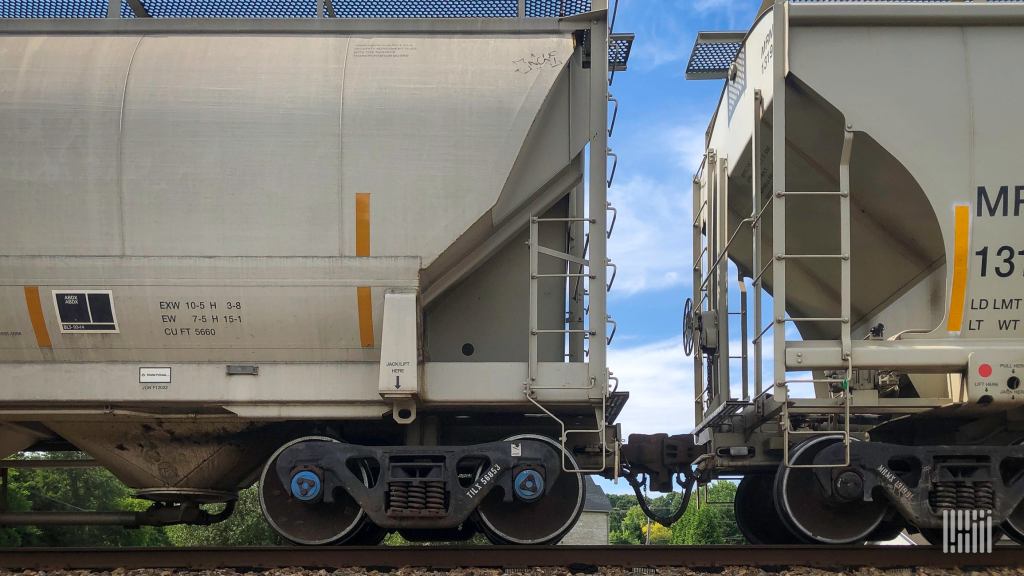
Short-line operator Regional Rail, with support from its backer, infrastructure investment firm 3i, plans to acquire two short-line railroads in Ohio and Indiana.

The two lines are the Indiana Eastern Railroad and the Ohio South Central Railroad, which operate on a combined 107 miles. Customers include those serving industrial end markets, including food, agriculture and chemicals. 

The planned acquisitions will boost Regional Rail’s presence in the Midwest, the Kennett Square, Pennsylvania-based company said Friday. Regional Rail acquired in December 2022 the Effingham Railroad Co. in Illinois, the South Point & Ohio Railroad in Ohio, and the Illinois Western Railroad Company in Illinois, and it has been handling freight rail operations at the Port of Indiana-Burns Harbor since October 2022.

According to its website, Regional Rail also operates short lines in the Mid-Atlantic region as well as in Florida and the Saskatchewan province in Canada.

“We are excited to partner with the existing teams at the Indiana Eastern Railroad and Ohio South Central Railroad to expand our operations in the Midwest and look forward to building on the companies’ track records of providing a high-quality service to their customers and driving additional growth,” Regional Rail President and CEO Al Sauer said in a Friday release.

Said George Andres, CEO of Indiana Eastern Railroad and Ohio South Central Railroad: “We are proud of what we have established and built with these railroads over many years and believe that Regional Rail is the perfect partner to continue our legacy and support our employees and customers going forward.”

Regional Rail and 3i have been partnering to operate short lines since July 2019. Regional Rail also provides car storage and transportation services, while its Diamondback Signal subsidiary offers railroad crossing signal design, construction, inspection and maintenance services to industrial short-line companies.

Subscribe to FreightWaves’ e-newsletters and get the latest insights on freight right in your inbox.

Click here for more FreightWaves articles by Joanna Marsh.

F3 recap; Trucker For Troops; hero dogs; holiday fulfillment – WTT

On today’s episode of WHAT THE TRUCK?!? Dooner is joined in the studio by FreightWaves’ Rachel Premack. They’re recapping what went down at F3 and talking about freight’s great meme war.

Over the past 17 years, OOIDA has raised more than $750,000 and sent over 3,270 care packages, serving more than 39,275 members of the military. We’ll learn all about its Truckers For Troops program from Norita Taylor. Plus, bipartisan lawmakers have introduced a bill that would give America’s 2.19 million truck drivers the right to overtime pay. We’ll find out if OOIDA thinks it’s a win.

Project K-9 Hero is on a mission to ensure the best quality of life for our nation’s retired military working dogs and police K-9 heroes by providing assistance with medical costs, food, rehabilitation, adoption and end-of-duty services. Its founder, Jason Johnson, and a 13-year-old service dog named Rip tell us all about the upcoming Performers for Paws event.

Fulfill.com’s Joe Spisak talks about holiday warehouse fulfillment and what shippers can expect. We’ll also learn how he sold his trivia game, OK, Booker.

Hot Seat Services’ Charles Gracey shares the latest in driver recruiting and promotes his new FreightWavesTV show, Sense Per Mile.

Watch on YouTube

Visit our sponsor

Subscribe to the WTT newsletter

Apple Podcasts

Spotify

More FreightWaves Podcasts

Cargojet founder Virmani passes torch to co-CEOs

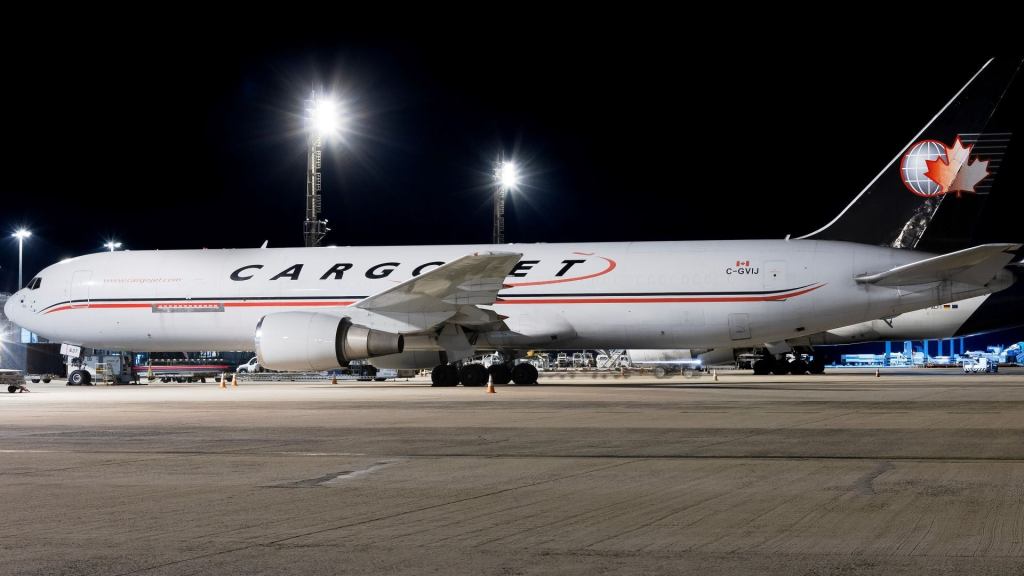
A large Cargojet plane on the tarmac at night.

Canada’s Cargojet announced Monday that founder Ajay Virmani is vacating his role as CEO, effective Jan. 1, with Pauline Dhillon, the chief corporate officer, and Jamie Porteous, chief strategy officer, taking over as co-CEOs.

The news marks the third time the leader of a North American cargo airline has been replaced in the past six weeks. 

Dhillon and Porteous have been part of Virmani’s executive team since he founded the all-cargo airline 22 years ago.

“Their complementary skill set, long-standing dedication to our organization along with unwavering focus on our team, customers, and stakeholders makes them the ideal strategic successors to lead us into a new era of innovation and growth while continuing to provide a seamless service to our customers,” said Virmani, who will transition to executive chairman. 

In his new role, Virmani will focus on strategic planning, including aircraft acquisitions, and help train the next generation of company leaders.

Virmani is well recognized for building out Cargojet’s capabilities. Under his leadership, Cargojet (TSX: CJT) has grown into Canada’s largest cargo airline, with 39 aircraft and with compound annual growth in core operating profit of 20% over the past two decades. The company operates an overnight freight network. It also provides outsourced cargo transport – in which the customer assumes the risk for fuel, booking shipments at market rates, and other operating fees – as well as charter services. Blue-chip customers include Amazon, DHL, Purolator, UPS and Canada Post, as well as freight forwarders. 

CEO Ajay Virmani (Photo: Cargojet)

The company’s stock has enjoyed an 18% compound annual return since its initial public offering in 2005.

“Everything we have done at Cargojet has been against odds. Starting an airline after 9/11; convincing global package delivery brands that it is more efficient to abandon their own aircraft fleets in favor of Cargojet’s network; surviving the 2007-08 global financial crisis, and more recently tackling once in a 100-year pandemic,” said Virmani in a statement.

Cargojet last week reported revenue in the third quarter declined 8% to $155 million, partially due to lower fuel surcharges, and adjusted earnings before accounting measures fell 17% to $50.6 million year over year, as the air cargo sector craters from the pandemic peak in 2021 when shippers were desperate for airlift to bypass supply chain congestion. 

The airline flew 8.8% fewer hours during the period versus last year.

In response to continued contraction in business, the company is targeting a $325 million reduction in capital expenditures, including the already completed divestment of three large Boeing 777 freighters and abandoning purchase plans for a fourth aircraft. Management last week said it also plans to sell four newly converted Boeing 757 freighters and put the brakes on converting some used 767 aircraft to freighters. 

Air Transport Services Group (NASDAQ: ATSG), an Ohio-based freighter lessor and operator, last week fired CEO Rich Corrado for not meeting investor expectations for stock growth despite solid operating performance. In early October, Amerijet parted ways with CEO Tim Strauss as the airline struggles to cover costs amid a sharp reduction in revenue. 

Dhillon has had various levels of corporate responsibility, including marketing, government relations, human resources, legal, facilities and commercial operations. She currently oversees all aspects of support functions as well as ground operations globally.

Porteus has led sales, customer relations, commercial strategy, operations, network planning and design, and investor relations during his time at Cargojet.

Walter Spracklin, an equity analyst at Royal Bank of Canada Capital Markets, praised the promotion of Dhillon and Porteous, saying in a client note that they are strong leaders who have helped Cargojet be successful.

Last week, Virmani was appointed to the Order of Ontario, the highest honor the province bestows on civilians for demonstrations of excellence in any field. The

Globe and Mail newspaper honored Virmani as the CEO-Strategist of the year in 2020.

More FreightWaves/American Shipper stories by Eric Kulisch.

Write to Eric Kulisch at ekulisch@www.freightwaves.com.

RELATED NEWS:

Cargojet to sell new B757 freighters, pause 767 conversions

Air Transport Services Group replaces Corrado, names Hete CEO

Air Canada cancels Boeing order for 777 freighters

Fillogic closes $13M Series A, grabs third spot on FreightTech 25

Logistics platform Fillogic announced it has closed its $13 million Series A funding round led by Revelry Venture Partners (RVP) with participation from existing investors including XRC Ventures, Closed Loop Partners, Venture 53, Groundbreak Ventures and Green Egg Ventures.

Fillogic leverages what it has coined “channel-free logistics,” a competing fulfillment model to the traditional omnichannel experience.

According to the company, shifting the focus from channels to a channel-free approach enhances a collective effort to deliver products the way the customer wants them delivered. Fillogic achieves this through its extensive network of middle-mile logistics centers and its proprietary software.

Funding detailsFillogic
Funding amount$13 million
Funding roundSeries A
Lead investorRevelry Venture Partners (RVP)
Secondary investor(s)XRC Ventures, Closed Loop Partners, Venture 53, Groundbreak Ventures and Green Egg Ventures
Business goals for the roundAccelerate product development and expand its network of fulfillment centers.
Total funding$16.7 million*
*According to PitchBook

Fillogic’s Hub Network places customer inventory in proximity to consumers, housed in strategically located centers within premium shopping areas. This helps streamline the picking, packing and shipping operations to facilitate delivery through various channels, including pickup at a store, curbside, parcel locker or long-haul transport. 

“So, our customers, right now, that we do full wholesale and retail fulfillment for, it’s all done off the same inventory. I have no interest whatsoever in having multiple groups of inventory because that’s what uses more capacity. Same thing when we store inventory in a location. We can store multiple SKUs because of how it’s picked, packed, scanned, and shipped. We just need the inventory that the customers are buying. We don’t care where they are doing the buying as long as we can track it all,” Bill Thayer, Fillogic’s founder and chief executive officer, wrote in a blog on the company’s channel-free approach.

The company is looking to use the new funds to accelerate product development of its proprietary technology while growing the number of middle-mile logistics centers to expand its hub network. 

Based on Fillogic’s data, this method has brought customers’ logistics costs down by 50%, enabling the company to grow 300% in 2023. 

This acceleration in growth, along with customer satisfaction, earned the company the third spot on the FreightWaves 2024 FreightTech 25 list, announced at the F3: Future of Freight Festival on Thursday.

“If we were to design a national logistics network today, it wouldn’t resemble the traditional systems filled with costly hubs, planes and trucks. It would exploit technology and APIs to harness the existing infrastructure’s full potential. Fillogic’s explosive customer and revenue growth is a testament to the value it has created for its ecosystem,” said Peter Liu, RVP managing partner.

As part of its funding announcement, Liu will join the company’s board as director. Herb Shear, founder and executive chairman at G2 Reverse Logistics, and Gene Spiegelman, vice chairman and principal at Ripco Real Estate, also will join the Fillogic board.


The unsung FreightTech disruptors innovating supply chains

CargoX consortium leads development of Uganda’s trade facilitation platform

Aifleet raises $14M to continue improving driver utilization rates

What recent brokerage failures tell us

The freight industry has seen a wave of brokerage bankruptcies in recent months, and that surge is causing significant disruptions for carriers, undermining their financial and operational stability.

Rachel Premack, editorial director at FreightWaves, and Clayton Griffin, chief strategy officer and EVP at OTR Solutions, spoke on current challenges during a fireside chat Wednesday at FreightWaves’ F3: Future of Freight Festival. Their conversation centered on obstacles faced by freight brokerages during a market downturn and the impact these failures are having on carriers, shippers and lenders.

When a brokerage goes belly-up, Griffin explained, carriers typically go unpaid and must navigate complex legal terrain to recover their payments.

“They’re certainly not getting paid in short order,” he said.

Brokers are under severe stress in the current market, Griffin said, in large part due to past investments in technology and human resources. The same aggressive expansion strategies that enabled hypergrowth stories before 2023 often now leave a brokerage deeply unprofitable with fewer avenues to raise money.

The consequence is a dangerous imbalance between cash flow and financial commitments. Freight brokers, with shrinking margins and escalating costs, are yielding to a market that has lost the fallback cushion of venture capital and equity funding.

“It’s important to understand how unique the situation is that we’re in right now,” Griffin said.

The old model and its failings

As a result, carriers are vulnerable. They not only contend with postponed or missing payments but also find themselves tangled in legal battles with murky outcomes regarding their claims in broker bankruptcies.

This gray area also affects shippers, who are caught between traditional practices of paying carriers directly and the legal formalities that may redirect those payments to bankruptcy estates.

Brokers often lean on asset-based lending (ABL) as a financial lifeline, but this dependence can become problematic when the market falters. It convolutes the compensation process for carriers. 

The legalities surrounding the payment channels further compound the issue. ABL arrangements, meant as short-term solutions for brokers to manage cash flow, end up entangling funds they owe to carriers, muddying the waters of financial distribution when a broker becomes insolvent.

With no clear-cut legal framework delineating the carriers’ claims in bankruptcy cases, a vigorous debate ensues about their rightful place in the reimbursement hierarchy. Are they to be considered strategic creditors, entitled to a higher claim on assets, or partners bearing the risks alongside the brokers?

This new wave of financial distress forces a tripartite struggle as carriers, shippers and lenders grapple for payment. The established protocol, in which carriers directly approached shippers for payment following a broker’s collapse, is now being scrutinized under the harsh light of Chapter 11 proceedings. 

Shippers face a dilemma: to support the broker’s restructuring process or uphold the customary practice of paying carriers directly.

The conversations taking shape around these challenges are not merely about immediate survival but also about forging strategies that will shield the industry from similar disruptions in future economic downturns. The companies that make it through this freight recession will have the kind of scar tissue that makes them better equipped down the road.

“The brokers that have made those types of decisions [like layoffs and capital expenditure reductions] will be in a much better go-forward position,” Griffin said. “You certainly have seen the number of new entrants from a brokerage perspective reduce, [but] when the market picks up I’m sure people will take advantage of the opportunity and jump into the fray.”

The overarching theme was a call for industry stakeholders to reassess relationships and strategies in the face of shifting market dynamics. As is often the case in freight and elsewhere, diversification is perhaps the best safeguard. 

When markets go south, overreliance on any one company has the potential to sound the death knell for yours.

Mexico remains top US trade partner, Laredo No. 1 gateway

Mexico was the United States’ top trade partner in September, with two-way commerce totaling $67 billion.

It’s the eighth time in the past nine months that Mexico ranked No. 1, according to the most recent data from the U.S. Census Bureau.

In September, Canada ranked No. 2 at $64.7 billion, while China was third at $52.1 billion.

Mexico’s trade with the U.S. totaled $600 billion through the first nine months of 2023, a year-over-year (y/y) increase of 2% from the same period in 2022, according to a WorldCity analysis of Census Bureau data.

Port Laredo, Texas, was the No. 1-ranked U.S. trade gateway with Mexico, totaling $26.9 billion in September. It was the eighth straight month the Laredo border crossing was the country’s top-ranked international commercial trade port.

The Port of Los Angeles ranked No. 2 with $25.9 billion and Chicago O’Hare International Airport was No. 3, reporting $23.5 billion in trade during September.

The top three imports from Mexico to the U.S. through Laredo were auto parts ($2.2 billion), passenger vehicles ($1.5 billion) and heavy-duty trucks ($953 million), according to WorldCity.

The top exports from the U.S. to Mexico through Laredo were auto parts ($1.3 billion), gasoline ($327 million) and diesel engines ($237 million).

Exports, production of Mexican-built cargo trucks rebound in October

Production and exports of Mexican-built heavy-duty trucks bounced back in October, according to the latest data from Mexico’s National Association of Bus, Truck and Tractor Producers (ANPACT).

Members of ANPACT reported a 1.8% y/y increase in exports with 14,470 units and a 8.5% y/y rise in production with 18,756 tractors.

It was an improvement compared to September, when monthly production and exports declined after seven consecutive months of y/y growth, according to data from Mexico’s National Statistics Agency (INEGI). 

Truck manufacturing companies in Mexico also sold 4,651 wholesale units during October, which was a 31% y/y increase compared to the same year-ago period.

Miguel Elizalde, ANPACT’s president, said all signs point toward its members having a record year.

The 10 truck makers and two engine producers in Mexico that are members of ANPACT are Freightliner, Kenworth, Navistar, Hino, International, DINA, MAN SE, Mercedes-Benz, Isuzu, Scania, Cummins and Detroit Diesel.

“After leaving the pandemic behind, it is a great advance for the industry to observe that the increases reported to date are maintained; [exports, production and wholesale] will exceed what was achieved in 2019, when we reached historic results,” Miguel Elizalde, president of Anpact, said during a videoconference on Friday.

Freightliner was the top truck producer and exporter in Mexico in October. The company produced 11,209 trucks, a 12% y/y increase, and exported 9,721 units, a 7% y/y increase.

International Trucks Inc. was the No. 2 producer and exporter, manufacturing 4,901 trucks in October, a 6% y/y decline. The truck maker exported 4,243 units during the month, an 8% y/y decrease. 

Click for more FreightWaves articles by Noi Mahoney.

More articles by Noi Mahoney

FreightWise acquires TMS provider Kuebix from Trimble

5 takeaways from XPO’s Brad Jacobs at Future of Freight Festival

Convoy’s collapse, legacy tied to ushering tech into volatile freight markets

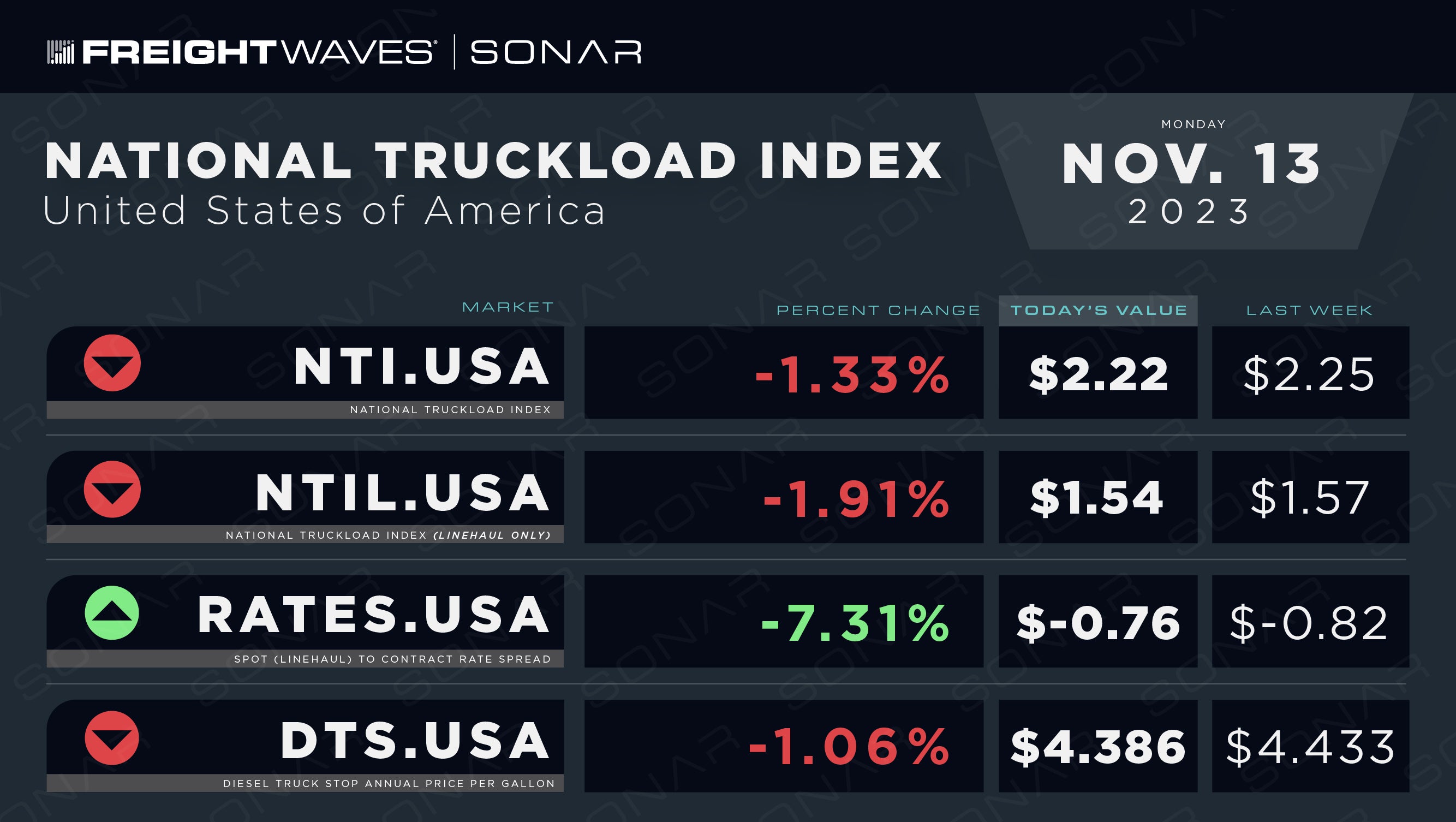
Weekly NTI Update: November 13, 2023


Learn more at SONAR.FreightWaves.com

Forward files counterclaim against Omni, seeks path out of merger

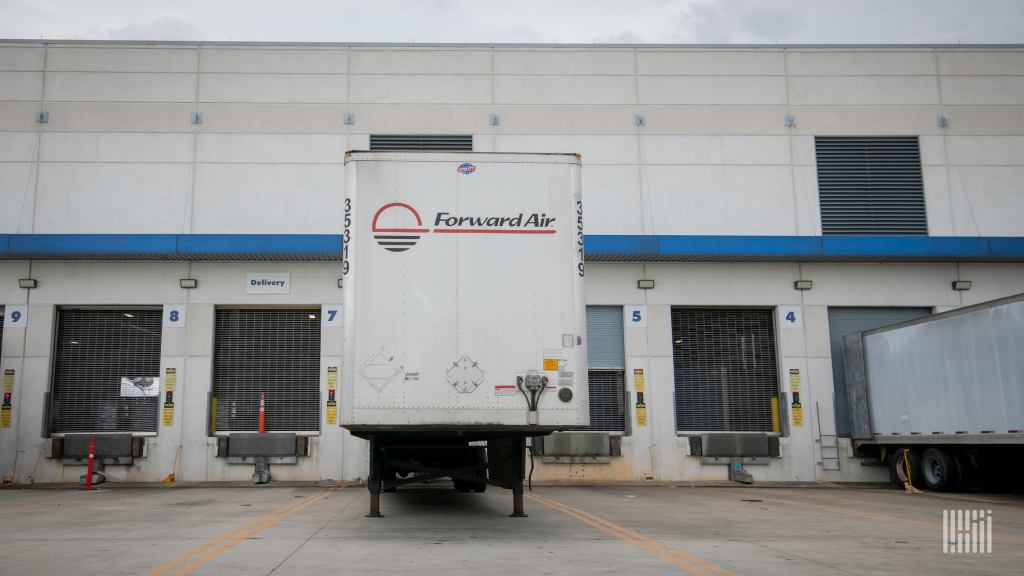
A white Forward Air trailer at a terminal

Forward Air said Monday it responded under seal to Omni Logistics’ lawsuit calling on a Delaware court to make it carry through with a planned merger between the two companies. Forward also said it filed a counterclaim against Omni and has asked the court to rule that it is not required to close on the deal as it alleges Omni has failed to meet certain pre-closing conditions.

“Forward believes that Omni has not complied with certain of its obligations under Sections 7.03 and 7.14 of the Merger Agreement,” a news release said. “Because of Omni’s continuous delays and repeated misrepresentations, Forward no longer believes Omni to be acting in good faith with respect to the Merger Agreement.”

A public version of the filings is expected to be provided by Friday the news release said.

At the end of October, Forward (NASDAQ: FWRD) said it may not carry through with the merger as Omni hadn’t provided it with timely access to information and failed to meet other pre-closing conditions. The comments followed the dissolution of a temporary restraining order blocking the deal, which was issued by a Tennessee court on behalf of a group of shareholders that claimed they would be harmed if the transaction proceeded.

Omni’s lawsuit was filed at the end of October. It claims Forward now has cold feet following pushback from shareholders, which were upset they weren’t given the opportunity to vote on the deal. Shareholders have publicly criticized the $3.2 billion price tag and the amount of debt leverage Forward will incur to fund the transaction, among other things.

Since the deal was announced on Aug. 10, shares of FWRD are off more than 40%.

Omni’s claim said Forward made “repeated overtures” to “renegotiate the deal in its favor or cancel it altogether” following backlash from investors. Omni also said that Forward’s claim it had breached the deal agreement was a misrepresentation of an exchange of information between the two parties.

In the filing, Omni said it provided Forward with fourth-quarter projections as requested, but that it sought advise as to how to divide the expected deal synergies the business combination would produce. It said Forward didn’t provide any assistance and that it is now representing Omni’s “what if” scenario against it, claiming the estimates are “substantially lower than what Omni had reaffirmed at due diligence meetings.”

“Omni categorically denies the claims made in Forward Air’s Counterclaim,” a Monday response from the company stated. It said it “has complied with all the required provisions” of the merger agreement.

“Omni has also worked diligently and cooperatively with Forward throughout the merger process to close the deal,” the statement read. “Any attempt by Forward Air to suggest otherwise is baseless. Omni believes the Merger Agreement is legally binding and intends to enforce the Merger Agreement and close the transaction as expeditiously as possible.”

The company has asked the court for a trial date on the matter before the agreement expires on Feb. 10.

More FreightWaves articles by Todd Maiden

Two charts explain why we’re in a freight recession

The freight market is suffering from very challenging conditions and few dispute that the freight market is in recession. 

The root cause of the current freight recession has been the imbalance of supply and demand. 

Let’s break down demand first: 

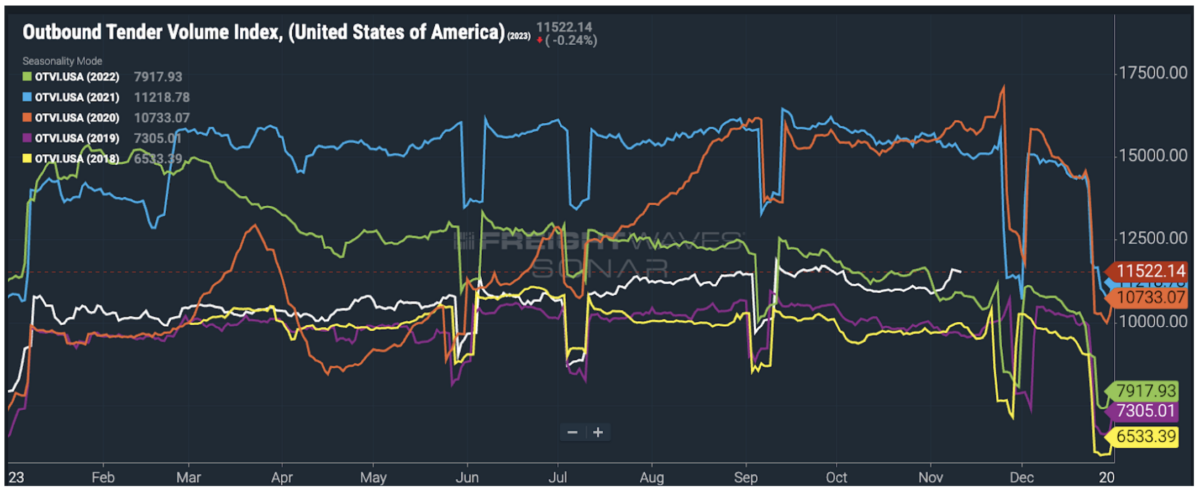
According to SONAR’s Outbound Tender Volume Index, or OTVI, freight volumes are currently up 16% over 2019 levels. Volumes are at some of the highest levels of the year to date. 

SONAR: Outbound Tender Volume Index. To learn more about FreightWaves SONAR, click here.

Although the peak season began slowly, over the past week, things appear to be turning. To date, peak season certainly has not been robust, but it also has not been abysmal. 

The macro outlook, capacity and OTRI

Next up, we need to look at capacity. 

While there are good datasets that track total aggregate capacity, the data painfully lags the market because it is government generated. So, there’s no precise measurement of the total number of trucks currently available for dispatch.

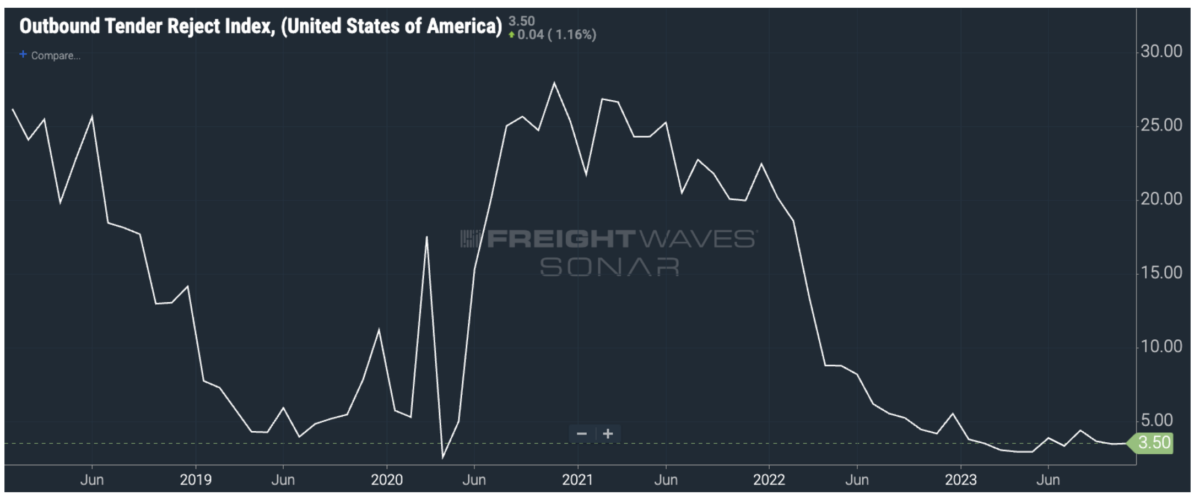
To address this issue, FreightWaves developed the Outbound Tender Rejection Index, or OTRI. The index measures the number of truckload orders rejected during the previous week.

And whatever the state of the economy, there has always been and will always be a level of rejection in the market. 

But with the data OTRI provides, there is an indicator for how full the truckload order book is at any moment in time. 

Since FreightWaves first published the OTRI in 2018, it has ranged from 2.5% to 30%. 

SONAR: Outbound Tender Rejection Index. To learn more about FreightWaves SONAR, click here.

Currently, SONAR’s OTRI is at 3.5% — low by historical standards. 

Like airlines, trucking companies strive to overbook their capacity. So, trucking companies reject a percentage of loads every day, just like airlines bump passengers from their airplanes when a flight is too full. 

These rejections happen electronically via computer messages called “EDI” or “API” message protocols. These messages are sent from trucking companies in response to orders for capacity from shippers of all kinds — retailers, manufacturers and industrial firms. 

In SONAR, all of the data that would identify a specific company is stripped, so no one ever knows which specific company ordered a truck or which carrier rejected a specific load. This is done to protect the confidentiality of SONAR participants. 

When gauging the health of the U.S. freight market as a whole, SONAR data is focused on the market’s breadth, not what takes place at individual companies.  

The freight economy at road level

Since its inception, FreightWaves has reported the good and bad news about the freight economy. We also report what is happening at the companies that make up the freight economy, because these companies and their employees are the key to moving the nation’s goods. 

And despite the industry’s importance to the overall economy, at the company level, bankruptcies, closures and downsizings have occurred at large and small companies for more than a year and a half. 

Overcapacity is the primary problem

But while there are certainly a number of problems, the “freight recession” is due primarily to too much capacity — or for the layperson, too many trucks for the amount of freight being moved. 

Freight volumes are more robust than would be expected had there been a sharp economic recession, but there are real problems stemming from too much capacity in the market. 

And while the goods economy is not nearly as robust as it has been in previous years, the softness in freight is a capacity issue, not a demand issue.

Interested in the data presented in this article? Sign up for a demo of SONAR by FreightWaves.