
A move this week by the state of Texas to mandate cuts in oil production is “dead” and won’t even be the subject of a vote by the state’s governing regulatory body, according to the regulator most closely aligned with the proposal.
In an interview with Bloomberg TV Monday morning, Ryan Sitton of the Texas Railroad Commission said the three-member TRC is not expected to take up his proposal that the commission use its authority to order production cutbacks in the state.
“At this point, we are probably going to leave it to market forces,” Sitton said in the interview. He said the oil market looks like it is “bottoming out,” in part because of production cutbacks by U.S. producers, including those in Texas. “At this point, I don’t think we’re going to prorate,” Sitton added.
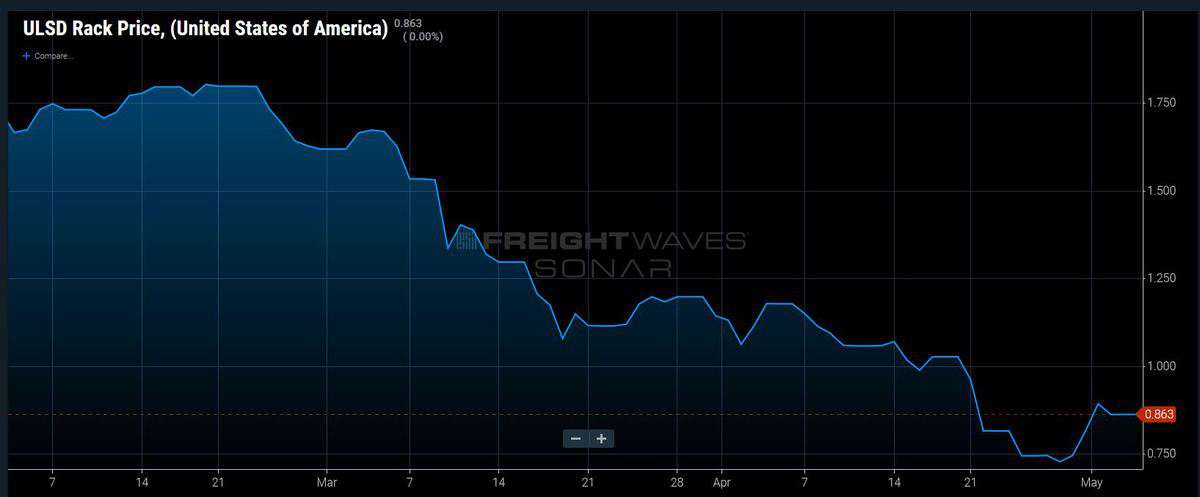
Sitton said that with the sharp fall-off in U.S. production, “in this case what was the right thing eight weeks ago is not the right thing today.”
The TRC hasn’t used its authority to shut in oil production since the ’70s. At one point, when Texas was the world’s dominant producer, the TRC essentially served the role that OPEC then filled for many years: ordering reductions in output to help keep global supply and demand in check.
Although Sitton was the force pushing prorationing, he said there is not an actual proposal. “We have not evaluated waste, and we’ve not done our calculations on how prorationing could have a positive effect on the economics,” he said. “It’s been a purely political discussion so that at this point we’re still not ready to act.”
The fall-off in activity in Texas has been sharp. The state’s land rig count most recently stood at 201, according to Baker Hughes. A year ago, it was 481, though those figures include wells drilling for natural gas.
While full state-by-state oil production data is not available yet, Texas’ production in February was 5.4 million barrels a day. That was up from a bit over 4 million b/d two years earlier.
Overall, U.S. production is down to 12.1 million b/d, according to the latest Energy Information Administration weekly data. It was recorded at 13.1 million b/d in two separate reports in late February and early March.
The global oil market was about 100 million b/d before the pandemic struck. Sitton said that in “another year or two,” when global demand returns to 90 million to 95 million b/d, “the country with the biggest loss in production will be the U.S.”
“We will be the biggest loser,” he added.
The broader issue raised by the now-dead plan for the TRC to require an output cut for the first time in roughly 50 years is what role government has to “support key industries’ infrastructure in the middle of a crisis.”
Sitton noted that it’s not that the oil industry is thinking it should go it alone. Rather, a lot of different parts of the industry are pursuing different strategies. Some companies that argued against prorationing have requested loans or other support from the federal government “so you’ve got different companies all over the map, and they’re arguing for their interest rather than the nation’s interest.”
The end result of that, Sitton said, will be that “it’s going to be the small, independent, privately owned companies, of which there are 2,000, and most of them will feel the pain.” They were the types of companies who supported prorationing, he added.
Texas’ neighbor to the north, Oklahoma, has allowed a backdoor way of restraining production. It has approved an emergency order that allows companies to maintain their rights to develop and produce from an individual property without jeopardizing their lease. The state’s Corporation Commission is also studying a proposal for a mandated shut-in like that Sitton had proposed for consideration.
Brokerage Compliance Symposium
The day before F3. Every compliance issue you face - fraud exposure, carrier liability, FMCSA rules, cargo theft, insurance gaps - navigated by attorneys and operators defining best practices in a changing industry.
F3 Awards Dinner
The night before F3. FreightTech100 companies honored. FreightTech 25 and Shipper of Choice winners revealed live. Cocktail reception into dinner and live music - 300 industry leaders in one purpose-built room.
F3: Future of Freight Festival
Industry-defining keynotes, rapid-fire technology demos, and industry leaders networking in experiences across Chattanooga - plus the inaugural F3 Awards Dinner featuring the FreightTech and Shipper of Choice reveals.
The day before F3. Every compliance issue you face - fraud exposure, carrier liability, FMCSA rules, cargo theft, insurance gaps - navigated by attorneys and operators defining best practices in a changing industry.
The Signal at Chattanooga Choo Choo • Chattanooga, TN Register NowThe night before F3. FreightTech100 companies honored. FreightTech 25 and Shipper of Choice winners revealed live. Cocktail reception into dinner and live music - 300 industry leaders in one purpose-built room.
The Signal at Chattanooga Choo Choo • Chattanooga, TN Register NowIndustry-defining keynotes, rapid-fire technology demos, and industry leaders networking in experiences across Chattanooga - plus the inaugural F3 Awards Dinner featuring the FreightTech and Shipper of Choice reveals.
The Signal at Chattanooga Choo Choo • Chattanooga, TN Register Now