




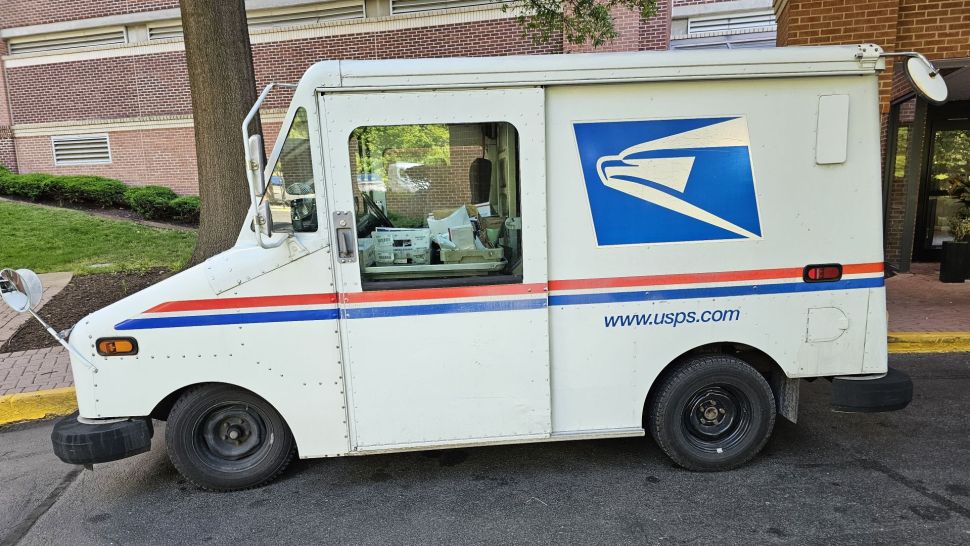
The U.S. Postal Service has staved off a 2027 shutdown by deferring payments to employee retirement funds and other accounting maneuvers, but the liquidity crisis will come to a head by early next decade without reforms that give the agency freedom to operate like a private enterprise and shed onerous statutory obligations, Postmaster General David Steiner told a Senate panel on Wednesday.
The nation’s mail operator is nearly $31 billion in debt, but only has $8.9 billion of unrestricted cash available as it continues to grapple with declining mail volumes, rising costs and significant capital investment needs, he said in prepared remarks to the Committee on Homeland Security and Government Affairs.
In March he warned the postal organization could be forced to shut down within 12 months, absent legislative relief.
The Postal Service now projects it will run out of cash between 2031 and the second half of 2034, once retiree health benefits premium payments come due and the health benefits fund is depleted. About 70% of the net loss comes from noncontrollable expenses.
“The bottom line is that we are out of cash. We are borrowing from our employees’ retirement funds to continue operations. I am not comfortable with that, our employees are not comfortable with that, and those of you in Congress should also not be comfortable with that,” Steiner said. “Our financial situation is dire and requires prompt consideration of legislation to ensure continuation of operations.”
As he did during an appearance before House lawmakers in March, Steiner presented a stark choice: allow the Postal Service to operate as a truly independent agency, free of government-imposed mandates or reimburse the USPS for having to provide universal service. Subsidizing universal mail delivery would allow the Postal Service to grow and help support a $2 trillion mailing industry that relies on the Postal Service, he added.
Harsh realities
Mail volume has dropped by more than half since its peak in 2000, while the number of addresses requiring service grows by 1 million annually and the workforce is about the same size as in the 1970s. At the current rate of 78 cents for a First-Class stamp, the lost volume represents $81 billion in potential revenue.
“This mismatch between our universal service mission, volume trends, and revenue limitations is why the business model and liquidity crisis facing the Postal Service requires prompt action from public policy makers to ensure the survival of a key part of our nation’s critical infrastructure,” the Postmaster General said.
The Postal Service Reform Act in 2022 increased transparency around postal delivery performance, ended overly burdensome retiree healthcare prefunding requirements, integrated Postal Service retirees health care with Medicare, and codified six-day delivery service, but did not address all non-cash balance sheet obligations.
Over the past five fiscal years the Postal Service has posted $9.7 billion in controllable losses, which critics say proves that the Delivering for America restructuring started under predecessor Louis DeJoy in 2021 is not working. Steiner argued that Congress has often tried to undermine modernization efforts, such as moving to a hub-and-spoke model — which enables handling packages on a system designed for mail, consolidating regional distribution centers, lowering service standards, and raising prices, but those efficiency measures aren’t enough to achieve financial stability.
“It is past time to have a public policy reckoning of what is an affordable set of universal service mandates for the Postal Service to either afford on its own, get reimbursed for, or shed,” Steiner said.
Other proposals to put the Postal Service on a stronger financial footing include curtailing the days of delivery service each week, closing thousands of money-losing post offices, substantially increasing the price of a First-Class stamp, investing its pension funds, and revising calculation for its Civil Service Retirement System obligation. The most immediate benefit would come from raising the Postal Service’s borrowing authority from $15 billion to $30 billion or $40 billion, which would give management breathing room to address other problems, Steiner said.
He blasted the Postal Regulatory Commission for regulating the Postal Service like a monopoly when it faces electronic or private delivery competition for every mail category. The PRC, for example, recently limited price increases to once a year, which would annually cost the Postal Service $700 million in lost revenue. Federal restrictions on managing workers compensation claims and shipping alcohol like competitors also cause financial harm, the postal chief said.
Since March, the Postal Service has imposed an 8% parcel surcharge to cover the rising cost of transportation, retained Amazon as a customer at about 80% of its previous volume, signed a major contract to provide DHL eCommerce with last-mile parcel delivery, and proposed raising First-Class stamp prices to 82 cents.
Click here for more FreightWaves/American Shipper stories by Eric Kulisch.
Write to Eric Kulisch at ekulisch@freightwaves.com.
RELATED STORIES:
Postal Service plans 8% surcharge as Iran war raises transport costs
US Postal Service on brink of financial collapse, chief tells Congress
Brokerage Compliance Symposium
The day before F3. Every compliance issue you face - fraud exposure, carrier liability, FMCSA rules, cargo theft, insurance gaps - navigated by attorneys and operators defining best practices in a changing industry.
F3 Awards Dinner
The night before F3. FreightTech100 companies honored. FreightTech 25 and Shipper of Choice winners revealed live. Cocktail reception into dinner and live music - 300 industry leaders in one purpose-built room.
F3: Future of Freight Festival
Industry-defining keynotes, rapid-fire technology demos, and industry leaders networking in experiences across Chattanooga - plus the inaugural F3 Awards Dinner featuring the FreightTech and Shipper of Choice reveals.
The day before F3. Every compliance issue you face - fraud exposure, carrier liability, FMCSA rules, cargo theft, insurance gaps - navigated by attorneys and operators defining best practices in a changing industry.
The Signal at Chattanooga Choo Choo • Chattanooga, TN Register NowThe night before F3. FreightTech100 companies honored. FreightTech 25 and Shipper of Choice winners revealed live. Cocktail reception into dinner and live music - 300 industry leaders in one purpose-built room.
The Signal at Chattanooga Choo Choo • Chattanooga, TN Register NowIndustry-defining keynotes, rapid-fire technology demos, and industry leaders networking in experiences across Chattanooga - plus the inaugural F3 Awards Dinner featuring the FreightTech and Shipper of Choice reveals.
The Signal at Chattanooga Choo Choo • Chattanooga, TN Register Now