For the second time in the last two years, the transportation of bread will be the focus of a Supreme Court case involving the rights of the drivers who deliver those loaves and other baked goods.
The case is also the second transportation-related case the Supreme Court has selected for review this term. It earlier agreed to address the question of broker liability and the so-called safety exemption under the Federal Aviation Administration Authorization Act, in a case which tangentially involves brokerage giant C.H. Robinson (NASDAQ: CHRW).
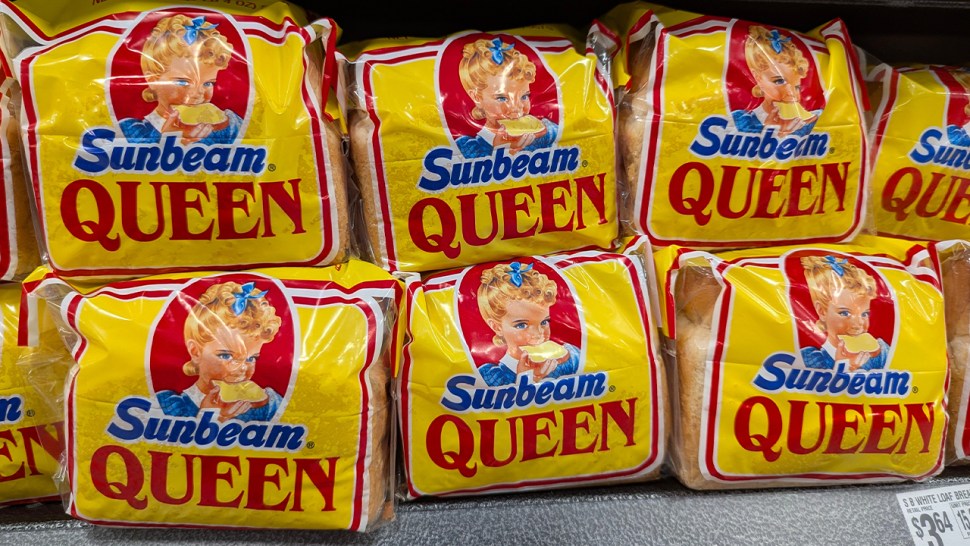
The Supreme Court on Monday granted certiorari in the case of Brock v. Flowers Foods, Inc. Flowers Foods is a commercial bakery with a wide range of well-known products, including Sunbeam and Wonder bread and Tastykake snacks.
There are similarities to the case of Bisonnette vs. LePage Bakeries, starting with the original defendant: LePage is a subsidiary of Flowers Foods (NYSE: FLO).
Parsing the meaning of the FAA
Both the Brock and Bisonnette cases turn on the same broad questions: under the Federal Arbitration Act (FAA), what constitutes a transportation worker and what constitutes interstate commerce?
The FAA, which governs arbitration agreements, exempts “contracts of employment of seamen, railroad employees, or any other class of workers engaged in foreign or interstate commerce.”
In both cases, LePage and Flowers Foods wanted courts to find that their respective drivers were engaged in work that did not fall under the FAA exemption. In Bisonnette, the question was whether the route drivers who delivered products from LePage Bakeries were transportation workers or bakery workers.
The distinction is important because by finding that the LePage drivers were in transportation and not baking, the court, in a unanimous decision, put those workers under the umbrella of the exemption that gave them the ability to avoid arbitration to settle disputes.
According to Cornell Law School’s Legal Information Institute, the FAA “protects the integrity of many arbitration agreements by deeming them valid, irrevocable, and enforceable. As a result of this law, courts do not have the authority to set aside arbitration awards if the arbitration agreement is valid.”
But if a worker is found to be in the exempt workers, such as those in transportation, the arbitration process can’t be mandated and aggrieved workers can turn to the courts with their issues.
Started out as an independent contractor issue
The initial complaint by Angelo Brock started out as a legal action alleging that Flowers Foods had misclassified him as an independent contractor and owed him various forms of compensation that he would have been entitled to had he been classified as an employee.
Brock had signed an arbitration agreement with Flowers Foods when he became a distributor. Because of that, Flowers Foods, according to recaps of earlier proceedings in court documents, sought to bring Brock’s complaint to arbitration and away from the federal court system.
But both the federal district court of Colorado and the 10th Circuit found Brock to be exempt under the FAA. Flowers Foods appealed to the Supreme Court, leading to the grant of certiorari.
The issue in the Flowers Foods case involves the short-haul nature of the last mile delivery drivers who bring the company’s products to retail outlets, such as Brock.
In a published commentary about the Supreme Court decision to grant certiorari to Flowers Foods, trucking-focused law firm Scopelitis noted that the question the Court will take up is whether final-mile drivers, who are not likely to cross state lines, “are nonetheless engaged in interstate commerce under Section 1 of the FAA.”
“The key dispute in Brock is whether final-mile delivery drivers who deliver goods locally and do not transport goods across state lines are nonetheless engaged in interstate commerce (under the FAA) because the goods they delivered have moved in interstate commerce,” Scopelitis said in its commentary.
The law firm noted that there are three federal circuit courts that have said such short-haul workers are involved in interstate commerce and can therefore rely on the FAA to avoid arbitration: the 1st, 9th and 10th circuit, site of the original Flowers Foods case. But there’s a split because the 5th and 11th circuits have found the opposite.
In its request for certiorari, attorneys for Flowers Foods noted that earlier cases on the issue of the FAA and transportation workers led to “narrow” rulings by the Supreme Court, with the justices “expressly reserving decision on the core issue that has has been driving litigation and dividing courts: whether local delivery drivers are ‘engaged in foreign or interstate commerce’ (citing precedent) when the goods they deliver traveled across state lines.”
Without that decision, “the question will spawn drawn-out litigation over what should be a simple threshold issue.”
Can’t overdo describing the significance
In an online commentary about the stakes in the Supreme Court review, the law firm of Duane Morris said the outcome of the case “cannot be overstated.”
In earlier cases such as Bissonnette, the court “dramatically expanded the reach of the transportation worker exemption making it increasingly difcult for employers to move to compel arbitration in class and collective actions brought by workers in logistics-adjacent positions,” a team of attorneys led by chair of the firm’s class action defense group, Gerald Maatman, said.
“If workers who engage in wholly intrastate commerce fall within the exemption’s reach, it may require a fundamental re-structuring of many employers’ arbitration programs,” Duane Morris attorneys said. “In contrast, if these workers and independent contractors are not exempt from the requirements of the FAA, then employers may finally be able to rest easy knowing that their arbitration defenses remain viable for at least a portion of their workforce.”
Prasad Sharma, a partner with Scopelitis, said in an interview with FreightWaves that companies often prefer the arbitration route to deal with employee legal actions “because there’s a little more predictability because the FAA preempts state laws that interfere with arbitration.”
And while some employees who are “personally happy with the efficiency and lower cost of arbitration,” the court system does open up the possibility of what starts with an individual dispute turning into a potentially more lucrative class action, Sharma said. If court action is precluded by an arbitration agreement, that road is foreclosed.
More articles by John Kingston
China expert Miller: why supply chain ‘choke points’ matter most
Trailer manufacturer Wabash’s nuclear verdict lawsuit settled
Brokerage Compliance Symposium
The day before F3. Every compliance issue you face - fraud exposure, carrier liability, FMCSA rules, cargo theft, insurance gaps - navigated by attorneys and operators defining best practices in a changing industry.
F3 Awards Dinner
The night before F3. FreightTech100 companies honored. FreightTech 25 and Shipper of Choice winners revealed live. Cocktail reception into dinner and live music - 300 industry leaders in one purpose-built room.
F3: Future of Freight Festival
Industry-defining keynotes, rapid-fire technology demos, and industry leaders networking in experiences across Chattanooga - plus the inaugural F3 Awards Dinner featuring the FreightTech and Shipper of Choice reveals.
The day before F3. Every compliance issue you face - fraud exposure, carrier liability, FMCSA rules, cargo theft, insurance gaps - navigated by attorneys and operators defining best practices in a changing industry.
The Signal at Chattanooga Choo Choo • Chattanooga, TN Register NowThe night before F3. FreightTech100 companies honored. FreightTech 25 and Shipper of Choice winners revealed live. Cocktail reception into dinner and live music - 300 industry leaders in one purpose-built room.
The Signal at Chattanooga Choo Choo • Chattanooga, TN Register NowIndustry-defining keynotes, rapid-fire technology demos, and industry leaders networking in experiences across Chattanooga - plus the inaugural F3 Awards Dinner featuring the FreightTech and Shipper of Choice reveals.
The Signal at Chattanooga Choo Choo • Chattanooga, TN Register Now