Drivers: rest breaks shouldn’t count against the HOS clock
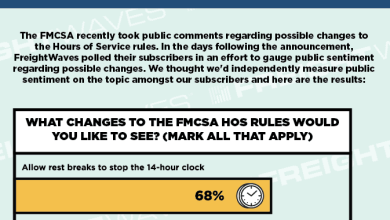
In an effort to give our subscriber base input on a hot topic – HOS changes – we decided to conduct a survey during the FMCSA open comment period. Check out what we found!
The FMCSA took public comments on possible changes to the hours of service rules. We polled our own subscribers to get their thoughts on what changes they’d like to see.
Groups representing livestock, bee and fish haulers in the nation have asked the Department of Transportation to extend their available driving time up to 15 hours a day, up from the current federally regulated 11 hours.
Under California law, drivers making their way through the Golden State are entitled to a 30-minute meal break for every five hours worked.
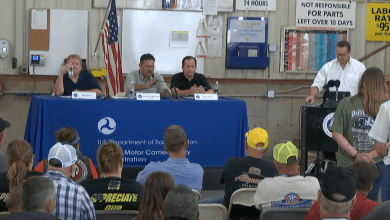
FMCSA Administrator Martinez and his officials listened to truck drivers and fleet owners as they asked for more flexibility in the hours of service. The usefulness of split sleeping and breaking up the mandatory 30 minute break were brought up most frequently.
Despite publicizing that hours-of-service (HOS) violations would be the focus of this year’s International Roadcheck, Commercial Vehicle Safety Alliance’s (CVSA) annual June event resulted in 43.7% of all drivers placed out of service done so because of HOS violations.
Mexico will enact a law regulating truck drivers’ hours of service this week. It is the first law of its kind in Mexico, as driving time has never been managed on the federal level before.
The Federal Motor Carrier Safety Administration is moving forward with plans to solicit public comment on current hours-of-service (HOS) regulations.
The trucking industry awaits rulings from the courts, and through legislation, regarding the status of drivers. How often will rest breaks take place, and will they be paid? How will drivers be defined as independent contractors? What will be the implications either way?
Waste Management Holdings has applied for an hours of service exemption, asking the Federal Motor Carrier Safety Administration to consider allowing its drivers to work extra hours without losing short-haul status.
The FMCSA has posted a new infographic on its website, which it says it plans to update monthly.
The new Trucker Path whitepaper finds that 70% of truckers have had to violate HOS, and 96% have parked in areas not designated for trucks. 48% spend an hour or more to find safe truck parking, driving time that does not translate into fleet revenues.
Every new regulatory regime—whether it’s deregulation, the introduction of hours of service, or the ELD mandate—prompts a fresh wave of creative destruction. Some business models thrive, while others go extinct.
Congress will decide on an amendment to a federal aviation bill that would curtail a state’s ability to set its own rules on HOS, which could end up creating problems for truck drivers.
The REST act would only make one significant change in the Hours of Service rule: to extend the day by three hours from its current top limit of 14 hours.
Rep. Babin introduced a bill that will overhaul the hours of service rules and if it passes it will end up making the industry safer.
Even with lower levels of automation, trucks could essentially work around the clock, but what will regulators do about the ELD hours-of-service rule?
We discuss our list of cities that made up our long-wait times for drivers and our methodology for how we came up with the list
Washington D.C., is often credited with killing the American truck driver and their ability to work. Now, we have ELD data to prove that, in-fact, Washington D.C. is where a drivers available hours go to die!
In today’s market carriers have more leverage than ever, and are going to start holding shippers accountable.