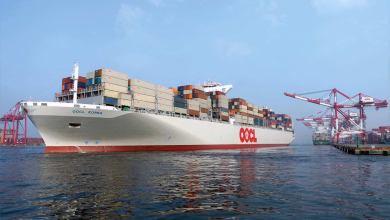
OOCL reports 7 percent revenue increase; cancels several Asia-Europe sailings for three months
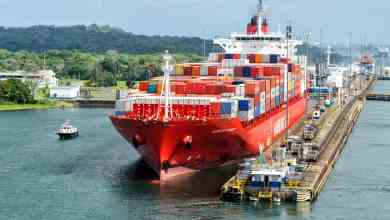
OOCL reported its second quarter 2019 earnings while also announcing that it was canceling several Asia-Europe sailings for a three-month period.

Chris Connor, the new president and CEO of the American Association of Port Authorities, is enthusiastic about advocating for the varied needs of its members.
In this commentary by Ekim Saribardak, he writes about new track and trace technologies that can revolutionize the shipment of ocean freight.
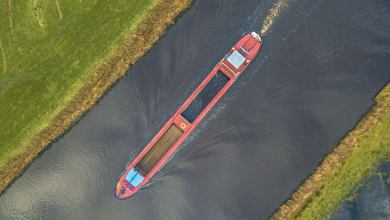
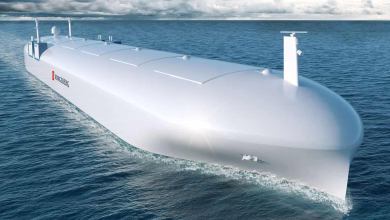
The Netherlands leads Europe in inland waterway transport, and to keep its dominance over roadways intact, it looks to invest heavily in autonomous shipping technology.
Cyber attacks are becoming all too common in the maritime sector, making it crucial for container lines to prevent data hacking and look to improve resilience.
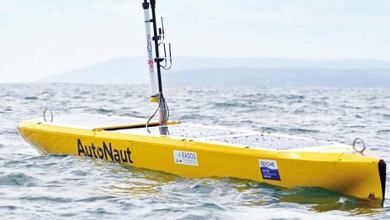
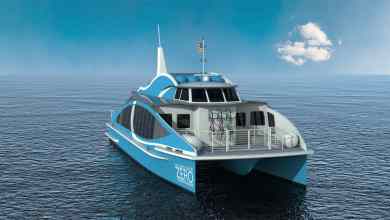
The maritime industry can be well-served with an unmanned vessel that can produce its own energy from the waves and through solar battery panels fixed on its roof.
Market expert writes about the latest tensions in the Mideast and how that might impact air and sea cargo, as well as supply chains.
Market expert Brian Aoaeh writes about the new Digital Shipping Container Alliance and why standards are important to industry. He also writes about why getting standards written and adopted is particularly difficult.
Market expert Henry Byers examines the U.S.-Chinese trade war and its impact on imports and the broader economy.
Market expert Brian Aoaeh’s article focuses on the current and upcoming maritime industry issues – IMO 2020, global warming, rising sea levels, etc. Read Brian’s take on how the maritime industry is meeting these challenges.
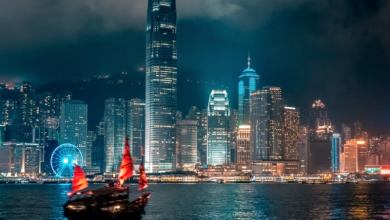
There has been a steep drop in the volume of box traffic handled at Hong Kong, one of the world’s busiest box ports. Containerized throughput at Hong Kong took a dive in the first three months of 2019 when compared to the first quarter of 2018, according to preliminary figures from the Hong Kong Marine Department. Box traffic was down, on average, by 10.2 percent in the first quarter of 2019 compared to the first quarter of 2018.
With widespread adoption and government backing, hydrogen fuel cells could be an economically viable alternative to bunker fuel in the maritime industry, especially after the IMO sulfur cap regulation kicks in by 2020.
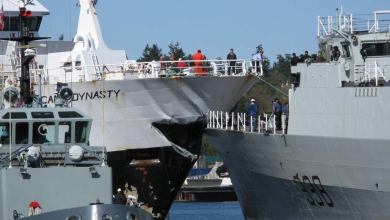
Israeli-based maritime startup Orca AI provides uses artificial intelligence and data analytics to prevent ships from colliding with obstacles while at sea.
China is the number one country for emerging logistics opportunities in 2019, according to the latest annual Agility Logistics Index, which surveys over 500 logistics professionals. The country also takes the top spot both for domestic and international emerging markets logistics opportunities. India was in second place. Countries in the Middle East and South East Asia showed strongly too.
International terminal mega-operator, DP World, has announced a solid set of results for 2018. Revenues, earnings before interest taxation depreciation and amortization (EBITDA), and net profit all substantially increased last year compared to 2017. Acquisitions and increased box volumes drove revenues and profits. DP World has announced investment plans for 2019.
Contracts on the S&P 500 Index fluctuated before nudging upward, with those on the Nasdaq and Dow Jones gauges following in line.
MatchBack Systems provides an innovative approach to manage shipping container costs and improve efficiency optimization through the use of matchbacks.
Expeditors should do well in a softening ocean freight market and a Panalpina deal wouldn’t necessarily be a bad thing.
V.Group has acquired Global Marine Travel (GMT) from Inchcape Shipping Services according to a V.Group press release. The acquisition will increase the scale of V.Group’s operations to offer global 24/7 travel services.
Container shipping line Maersk will move 16 containers on river Ganges (National Waterway-1) from Varanasi to Kolkata in India on February 12, marking the entry of commercial shipping players in India’s nascent inland water transport network.