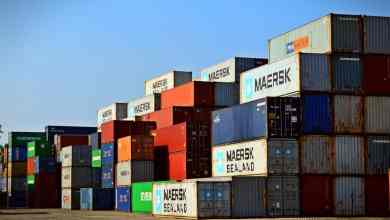
Connor to represent and promote a spectrum of ports
Chris Connor, the new president and CEO of the American Association of Port Authorities, is enthusiastic about advocating for the varied needs of its members.

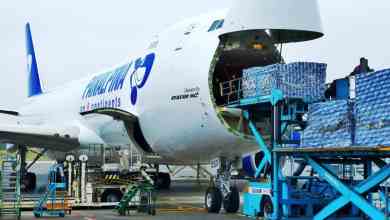
In this commentary by Ekim Saribardak, he writes about new track and trace technologies that can revolutionize the shipment of ocean freight.
Panalpina’s worse than expected results appear to be largely due to the company being picked off by its competitors as its customers wait to see how the merger with DSV shakes out.
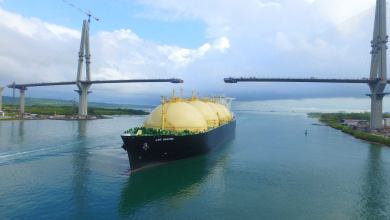
Ben Thrower recently visited the Panama Canal. He writes about the canal’s expansion and what that means to global trade and the maritime industry.
Capital Logistics is the newest member of the Blockchain in Transport Alliance (BiTA). Read about the company, as well as BiTA’s efforts to develop blockchain standards for transportation and logistics.
The U.S. fireworks supply comes primarily from China, and one company controls most of that trade. Read Market Expert Henry Byers’ fascinating article about fireworks!
Market expert Brian Aoaeh writes about the new Digital Shipping Container Alliance and why standards are important to industry. He also writes about why getting standards written and adopted is particularly difficult.
Nicholas Press, Founder and President of CEC Systems, explores the maritime industry’s problem with empty containers and explores potential solutions to deal with them.
Tanker companies like Euronav expect to see financial benefits from impending environmental regulations, which will change the type of fuel burned at sea and could eventually limit how fast ships can go.
At the same time Wall Street investors are shunning ship owners, European banks are pulling back on providing debt to ocean shipping. What are the short- and long-term implications for freight markets?
A top executive of the Panama Canal Authority outlines the prospects for LNG, LPG and crude/product tanker transits through the larger locks of the waterway.
Panalpina reported $0.82 (Swiss Francs, or CHF) per share in earnings for the first quarter of 2019 compared to $0.72 CHF for the same period last year.
Expeditors should do well in a softening ocean freight market and a Panalpina deal wouldn’t necessarily be a bad thing.
A solid quarter, year despite decelerating sequential net revenue.
Expeditors navigates around pricing pressure to post solid Q3 results.
FreightWaves spoke to IMSA CEO Corey Ranslem about the first install, the ARMS platform’s official launch at the end of October, and entering the cargo ship markets in 2019.
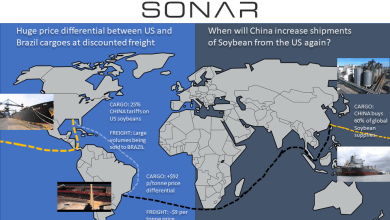
China imposed a 25% import duty on US soybean imports in July and a domestic shortage of beans is now resulting in Chinese traders paying a higher price for Brazilian beans than what domestic crushers are paying, leading to speculation that China could again increase shipments from the US.
High capacity, steady rise in oil prices, a weaker U.S. dollar and a dull spot market had sunken margins of shipping majors in Q1 2018.
The cost of acquiring transportation stayed below new revenues in serving customers.
China-U.S. ocean freight rates have been falling continuously for the record 32nd week, in the wake of the Chinese New Year and a continous surge in capacity.