




FreightWaves Staff
Tuesday, June 16, 2020
White Paper: Oil and Gas Industry Update
The coronavirus is not the only issue currently plaguing oil and gas companies.
The coronavirus is not the only issue currently plaguing oil and gas companies.

Oil exporting countries might lose upto 85% of income this year; big 3 automakers partially close plants; Amazon suspends shipment of non-essential items.
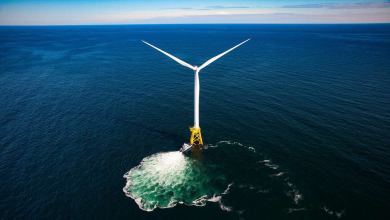
Brian Aoaeh writes about changes in the energy/fuel mix over the next 30 years in developed and developing economies.
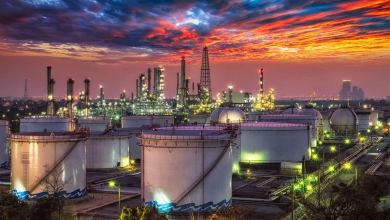
Oil and gas price forecasts were cut by major banks for 2020; global economic slowdown has hit steel production; Volkswagen looks to commercialize autonomous vehicles by 2025.
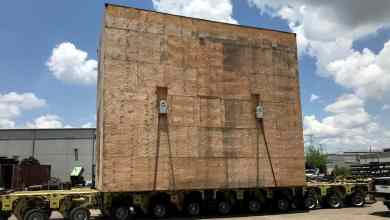
A pair of enormous crates carrying parts of a South Korea-bound drilling ship will be transported along highways through the Houston area over the next four days. According to Ronnie Smith, owner of Smith Specialized Logistics, it is one of the biggest moves by tractor-trailers ever in the Houston area, requiring a caravan of more […]

In the wake of Hurricane Barry, Brian Aoaeh writes about the disruption to supply chains that hurricanes and flooding can do. In particular, the state of Louisiana and its ports are critical to the U.S. agriculture and energy industries.

PetroChina now trades 82 percent lower than its historical high; Uber and Lyft drivers will no longer be contractors but employees; Waymo has clocked 10 billion miles in simulated driving.

Market expert Jim Blaze writes about the railroads’ transportation of fracking sand, as well as stone and gravel, aggregates and phosphates.
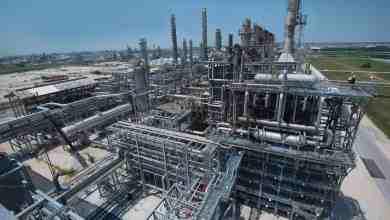
BP imagines a scenario where a plastics ban crushes demand for petchem feedstocks.
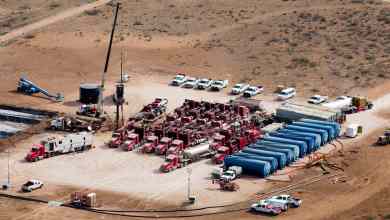
WTI’s recovery this quarter should accelerate production in the Permian Basin, driving further truckload demand.
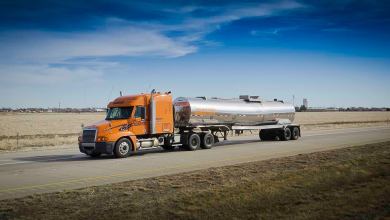
Lower WTI prices mean slower pipeline construction and more pressure on crude-by-truck.
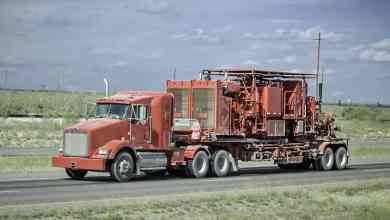
Spot flatbed lanes in the oil field are more volatile and priced at a premium to national averages. They’re closely correlated to fracking activity in the Permian Basin, which is why we keep a close eye on oil prices and production.

The November Market Update, presented in partnership with Convoy, featured FreightWaves CEO Craig Fuller and Chief Economist Ibrahiim Bayaan, who discussed macroeconomic data and trends in freight markets.
WITH THE U.S. OIL and natural gas market continuing to boom, and production of both rising, FreightWaves’ chief energy analyst Mike Mitchell has written a primer on what happens during the fracking process. Through it, you will be able to see the numerous necessary steps that requires a truck in the process to get done.

Barclays forecasts a drop in oil price; China is witnessing a historic fall in auto sales over stock market crash and U.S.-China trade war; banks are discussing on emergency financing to liquidate Sears.
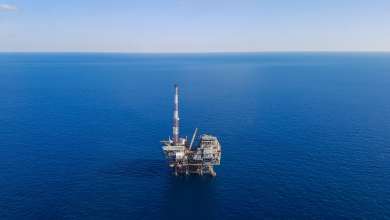
The United States – Mexico – Canada Agreement (USMCA) protects multinational oil and gas companies’ investments in Mexico from incoming President López Obrador.
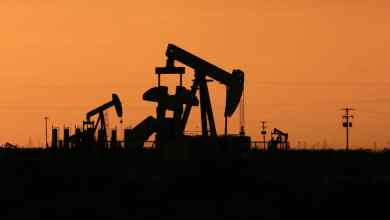
The U.S. has now risen to the top of the oil production list by extracting 10.9 million barrels per day (bpd) in August, but it needs to urgently address the pipeline bottlenecks across the Permian Basin to hold on to its numero uno status.

The acquisition will make Pilot Flying J one of the largest third-party crude hauling fleets in the country.

According to SONAR data, the real-time national average for diesel truck stop actual price per gallon has risen to $3.15.
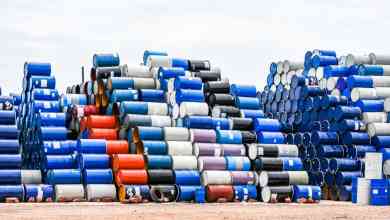
The Brent-WTI spread has widened considerably to $8.25, a bullish signal for demand for American oil exports and truckload miles.