




John Paul Hampstead
Thursday, March 28, 2019
Brokers, carriers, and Wall Street agree: freight volumes stagnant
Port container volumes, railroad volumes, and truckload volumes are all down year-over-year.
Port container volumes, railroad volumes, and truckload volumes are all down year-over-year.

On today’s episode, Nick Austin and Zach Strickland discuss how winter weather is impacting tender rejections and look at retail sales and ULSD rack prices.

Today on FreightWaves NOW, Nick Austin tells us what’s not going on in the weather, and Zach Strickland tells us what is going on with freight volumes, while cross comparing with tender rejections? With volumes at 2018 levels, why are carriers accepting virtually everything? We also look at market shares across the country. All this and more happening right NOW!

The weather outside is still frightful on the last day of February, but that isn’t stopping volumes from continuing a strong trend upwards. What does this mean for our tender rejection index however? Is it disrupting freight conditions, or are we still seeing things in relative balance? All this and more from Chief Meteorologist Nick Austin and Market Expert Zach Strickland today on FreightWaves NOW.

So far this February has been what we would expect. Does the normally slow month have any surprises up its sleeves?

Volumes and capacity remain flat through the first week of February. Has the freight market weathered the slowest part of the year?

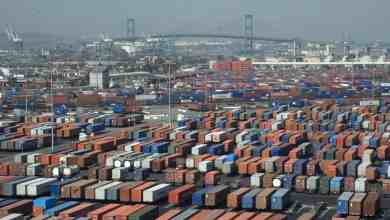
As we approach the holiday retail season, carriers and brokers have shifted their attention to the country’s major ports to capture upward volatility in trucking volumes.
Overall truckload volumes and spot rates are soft, but a huge wave of containers hit the West Coast in September, retail demand is strong, and additions to the national fleet of drivers have been marginal.

West Coast ports post strongest volumes ever; Norfolk Southern is moving to Atlanta; flatbed tender rejections stay down; expect electric trucks in 2020; pregnant XPO Logistics warehouse workers suffer miscarriages; E2open buys Inttra; Iraq produces more oil but can’t rebuild.

The Dow Jones Industrial Average plummeted today, posting its biggest loss since May 29; meanwhile the S&P 500 is on a losing streak that hasn’t been matched in upwards of 2 years.
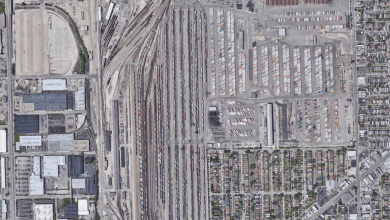
Intermodal tightness has pumped the hub of hubs, the Chicago freight market especially on lanes paralleling major railroads; meanwhile a minor heatwave in St. Louis may have been behind a massive surge in reefer turndowns.

This week in freight showed more of the same with continued stabilization, but history tells us this may not last for much longer.

The rate of rejected loads coming out of LA inched upward, signaling that the July ‘mellowing’ period may be over. Container rates from China to North America’s West Coast stayed elevated for the second week in a row, and containership idle capacity is at 1%.

Tesla wants to build a huge China plant to avoid tariffs; dry bulk carriers find favorable rate environment as countries re-source commodities; Honeywell adds an executive to reconfigure its supply chains; container rates from China to the North America spike as maritime lines take advantage of trade war fears.
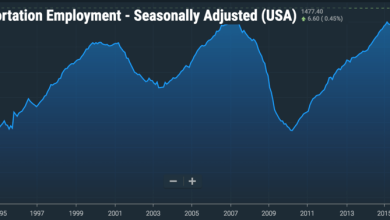
This morning, new SONAR indexes went live, giving a detailed look into load transmission acceptance by equipment type and length of all, and adding employment data for various transportation modes.
This morning, new SONAR indexes went live, giving a detailed look into tender rejections by equipment type and length of all, and adding employment data for various transportation modes.

Turndowns and spot rates are surging out of Atlanta on strong container volumes from Savannah and Georgia onion harvests. Capacity is so tight nationwide that even small movements in demand are having outsize effects on tender rejections and prices.

A magnesium fire in an automotive parts supplier caused F-150 production shutdowns in Dearborn, MI, and Kansas City, MO, earlier this month. The sudden drop-off in demand for freight in those two markets is reflected in our turndown indices.

Earnings season is here; UPS posts 13th quarter of double digit growth; Knight-Swift finds synergies; Maersk trials autonomous ships; the Mustang is the last Ford car left; Barclays and Goldman Sachs collab on data standards for derivatives and blockchain; Union Pacific beats the Street.
Trucking contract rate increases tamp down volatility; Nikola Motor Company returns deposits on truck orders; Hunter Harrison was one of the highest paid CEOs in 2017; Xi Jinping takes the stage to defend Chinese trade practices; container lines enter bid season with a weak hand.