Port of Los Angeles locks in ONE terminal for 30 more years
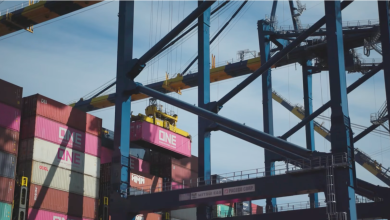
A 30-year lease extension with a key terminal operator clears the way for $200 million in zero-emission cargo equipment investments at the Port of Los Angeles.
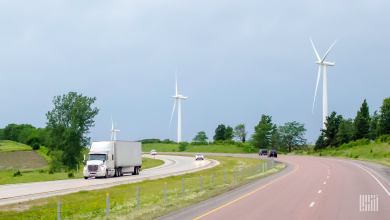
The busiest U.S. container port recognizes a local trucking provider for helping establish a “Green Truck Corridor” between the port and Mexico.
Despite progress, the port of Los Angeles-Long Beach said hurdles remain to achieving their goal of zero-emissions drayage by 2035.
A newsier-than-typical Advanced Clean Transportation Expo featured the first appearance by Tesla and a single stage gathering of legacy OEMs.
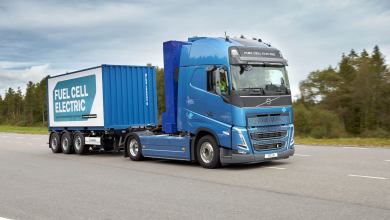
Volvo Group had scant interest in producing fuel cell trucks five years ago. Now they play a role in the pursuit of zero-emissions trucking.
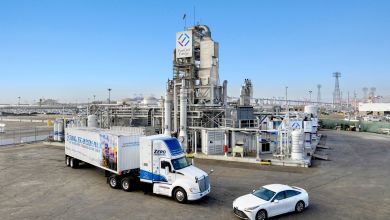
Using water emitted from fuel cells for a car wash is part of Toyota’s first all-renewable-energy vehicle processing center.
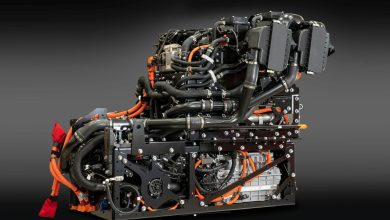
Toyota expects to deliver incentive-supported, Kentucky-produced heavy-duty fuel cell kits to U.S. customers this year.
Shyft Group’s Blue Arc electric delivery vehicle set a new benchmark for fuel efficiency, per the EPA.
The approach of Cummins Inc. to hydrogen-fueled internal combustion engines is very different from how and when it talks about most of its products.
Zero100 is educating industry professionals on not only how to recycle but to regenerate and use less in the first place.
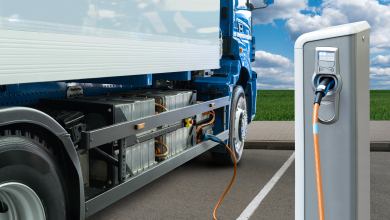
Forum Mobility, a startup in California, is focusing on zero-emission transportation by creating more charging facilities and offering EV trucking-as-a-service to drayage carriers.
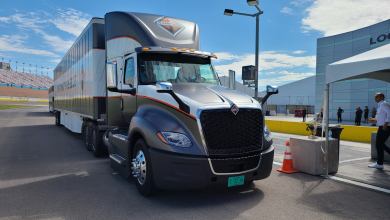
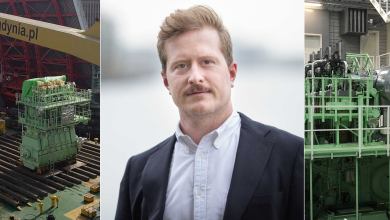
Navistar’s S13 integrated powertrain will be the truck manufacturer’s last internal combustion engine as the trucking industry decarbonizes.
AskWaves dives into the different sources of emissions for electric vehicles compared to fossil fuel-powered vehicles.
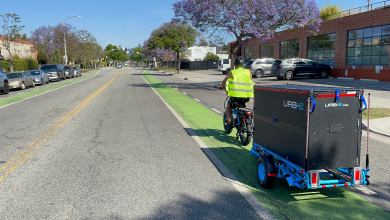
Urb-E, the e-cargo bike last-mile delivery company, has joined the Zero Emission Delivery Zone program in Santa Monica.
“Ranges for zero-emission trucks are improving over time with battery technology advancements,” said Yin Qiu, data scientist at Calstart.
Hyper rail systems could transport containers to and from ports quickly, according to WickedHyper’s CEO.
Green ammonia production emits no carbon dioxide, but it has major safety, cost and scaling hurdles to overcome.
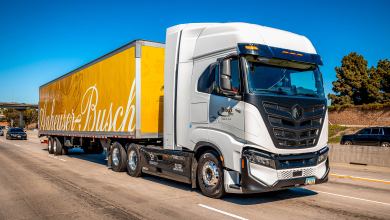
Nikola hydrogen-powered fuel cell trucks and BYD battery-electrics conducted beer runs to Los Angeles-area bars before Sunday’s Super Bowl.
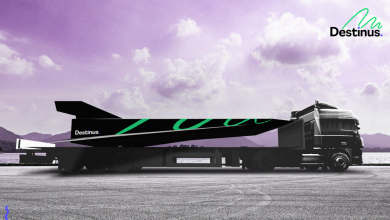
Near-space vehicle producer Destinus just secured $29 million to build out its autonomous, hydrogen-powered hypersonic cargo plane.
“A complete transition to ZET technology would not only help mitigate the impacts of climate change and poor air quality but could eventually lower total cost of ownership for fleets and create job growth in the U.S.,” the report said.