




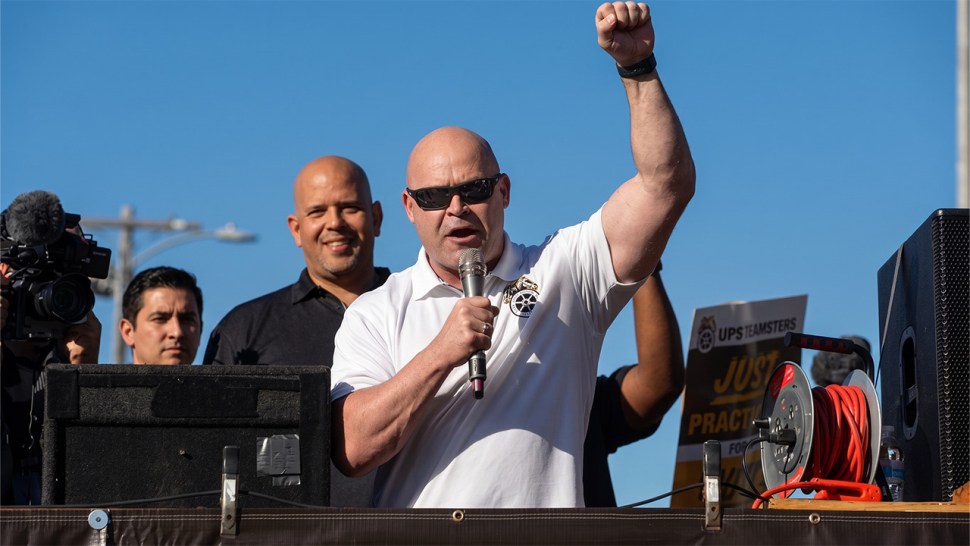
It’s two years until the contract between United Parcel Service and its 330,000 unionized drivers and package handlers is due for renewal, normally a time when labor-employer relationships are less contentious.
The Teamsters union is ready for war.
In a series of self-produced Teamsters podcasts starting in mid-July, President Sean O’Brien put UPS (NYSE: UPS) on notice that rank-and-file members will go on strike if the company doesn’t acquiesce to demands for even better terms than the rich contract currently in place, which he calls “historic” for its pay and benefits.
Among issues the union is prepared to strike over are expected attempts to roll back health and pension benefits, automation and deployment of autonomous trucks, and alleged outsourcing of last-mile delivery and supply chain functions to non-union subsidiaries.
Perhaps, the most unusual strike trigger is a new demand that all four union regions, which are governed by supplements to the national master agreement, be allowed to go on strike mid-contract if the parties remain deadlocked on how to resolve union grievances.
“It’s going to be a battle and we are probably going to strike UPS. I mean, we have to because they don’t respect us. They don’t do what they’re supposed to do on the obligation of the contract. They fight us on everything,” O’Brien said on a recent episode of the “Better Bad Ideas” podcast.
It’s no secret that the Teamsters and UPS don’t have good relations, but the level of animosity this far ahead of negotiations is striking.
Since union leaders lack their most powerful weapon — the strike — in the middle of a contract, tactical posturing and aggressive public rhetoric typically decline. Contracts are supposed to provide a period of operational stability for the company and workers, with union leaders shifting to enforcing what was already won rather than demanding new concessions. Mid-contract disputes are resolved through highly structured administrative procedures.
O’Brien also continued to disparage CEO Carol Tomé and her management team, saying they are out of touch with workers’ needs. The comments fit his gruff persona — O’Brien eagerly points out that his initials are SOB —but raise questions about whether any trust will be left by the start of negotiations to reach an accommodation.
“She makes $29 or $30 million per year and all she cares about is the bottom line and the balance sheet and the stockholders. She doesn’t care about the employees who have made this company successful for 70 years,” the Teamsters chief said in another episode. (The CEO’s total compensation in 2025, mostly from the value of stock awards, was actually $22.8 million, according to UPS securities filings.)
“This lady is fucking delusional. And I cannot wait to get to the bargaining table to address our members’ concerns, but also to hold this company accountable,” O’Brien said in taking offense at public statements on earnings calls crediting the company’s completed transformation plan, which involved a glide down in Amazon volume and reconfiguring the network, for enabling a return to profit growth.
“She doesn’t even mention the most important people that work for this company. That’s the rank and file members, the men and women who go there and sacrifice time away from their families, sacrifice their bodies.” he continued. “That is the biggest bunch of bullshit that I’ve ever heard in my life. … The company’s always been profitable. She didn’t bring it back. Our members are the ones that make this profitable.”
UPS van and truck drivers, and package handlers, ratified a five-year contract in August 2023. The Teamsters estimated the contract’s value at $30 billion.
The agreement included a $2.75-an-hour wage increase in the first year for full- and part-time workers, followed by smaller annual bumps, and 60 non-economic changes covering work conditions. By the time the contract ends, senior full-time drivers will earn approximately $170,000 a year in wages and benefits. Part- and full-time workers will get $7.50 more in hourly wages over the life of the contract. Existing part-time workers saw their wages immediately raised to $21 an hour, while new part-timers start at $21 an hour and advance to $23 an hour. The contract ended a two-tier driver wage system for doing the same work, bringing all junior drivers into seniority status.
The Teamsters plan to launch the next contract campaign in the fall of 2027, but is already drawing battle lines. What follows are extensive podcast excerpts in which O’Brien lays out how he plans to attack UPS, while motivating workers to prepare for a work stoppage.
The podcasts are important because they provide a window into the union leadership’s mindset ahead of contract negotiations that will have national economic and political implications. UPS delivers more than 16 million packages per day, about 17% of total domestic volume, and total global volume represents an estimated 5% to 6% of U.S. GDP. A strike could disrupt supply chains and operations for about 1.5 million business customers that rely on the company for package and freight delivery, especially leading into the peak shipping season and the holidays.
It’s also possible that UPS executives would welcome a strike as an opportunity to halt the upward spiral in labor costs, further raising prospects for a damaging shipping disruption.
“We are focused on running a safe, reliable and successful business that provides industry-leading service for our customers, creates opportunities for our people and positions UPS for long-term growth. The current agreement remains in place through July 31, 2028, and we remain committed to working with the Teamsters as we have for more than a century,” spokeswoman Gennevieve Bowman said in a statement to FreightWaves.
UPS says industry leading pay and benefits, including annual wage increases and cost-of-living adjustments, top driver pay of $45.75 an hour and part-time workers receiving healthcare coverage that costs them next to nothing — no premiums and low/no co-pays — prove that the contract is good for employees.
Some industry observers say UPS needs to take a strong stand against the union if it wants to bring costs closer to industry norms and still be relevant in the parcel delivery industry. Satish Jindel, the president of parcel analytics provider ShipMatrix, said during a recent presentation that a strike would allow UPS to break the union by hiring outside drivers at much lower cost, giving it a chance to regain dominance in last-mile delivery.
While streamlining the domestic parcel network has improved productivity, resulting in lower cost per piece, UPS is simultaneously relegating the parcel business to secondary importance by leaning into market segments that value the company’s end-to-end capabilities like complex healthcare, small-and-medium businesses, industrial and automotive, and B2B delivery. UPS has been promoting its strategic focus on premium segments for nearly two years, but the Aug. 31 announcement about reorganizing its operating model around full-service, global logistics solutions underscored that local, e-commerce parcel delivery was no longer a priority.
If that’s the case, will UPS care if frontline workers go on strike?
“This is crunch time for UPS and Teamsters. Their cost to serve remains extremely high. It’s an albatross for them. This is really going to be a seminal moment for UPS to try and change their business strategy,” said a former UPS executive who spent more than 20 years in a senior management role, on condition of anonymity to protect against potential backlash while still working in the freight industry.
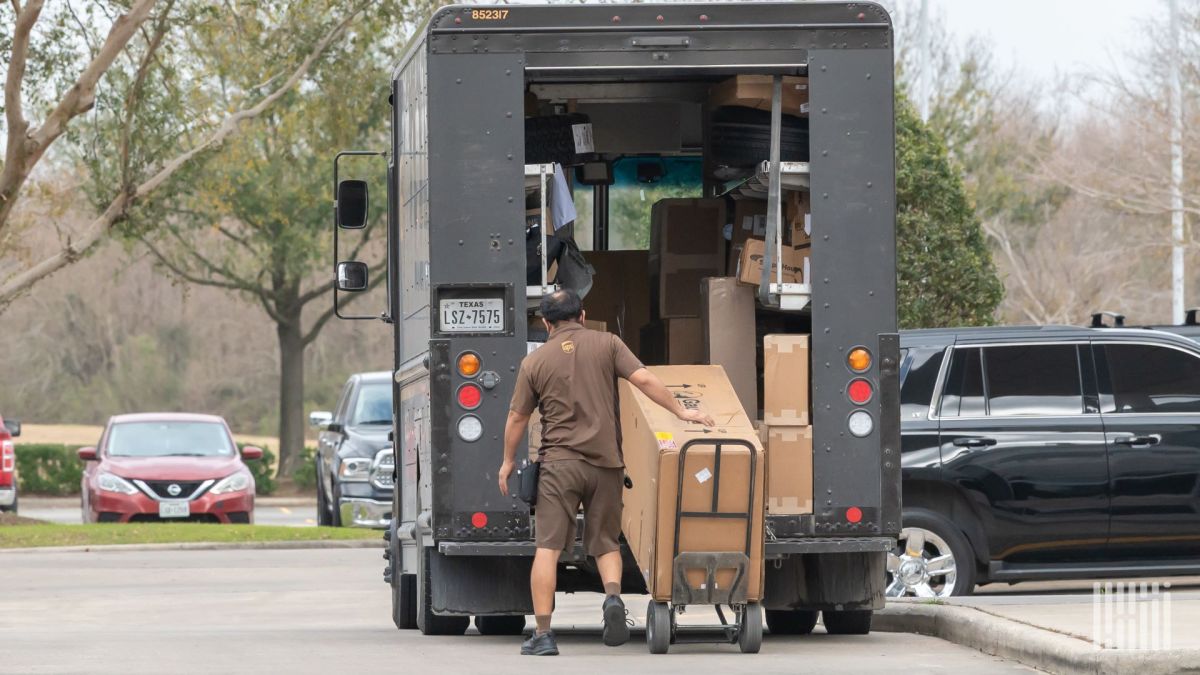
“Do you continue to slog along with a similar high cost structure, where you are the outlier, or do you really go to the mat, which would mean some sort of a work stoppage? I’m confident those types of conversations are taking place internally. What I don’t know is the level of willingness to take on that pain,” he said. “I can guarantee you they are thinking about it. What’s the breaking point?. How much can we tolerate?”
The last national strike at UPS was in 1997. The walkout shut down UPS for 15 days and cost the company more than $600 million in lost business, according to a New York Times story then.
“There was a tremendous hangover, both culturally and on the business side,” the FreightWaves source said. “The calculations on how quickly the business would come back after the strike were too ambitious. It took a long time for people to come back. And it led many shippers to decide never to single source again. They split their volume to avoid getting caught without options.”
UPS had $88.7 billion in revenue last year and the Teamsters insists it can afford to better compensate its workers. The company spent $1 billion on stock buybacks in 2025.
“The irony of the 2023 Teamsters victory is that while it secured $65/hour total compensation, it forced UPS to aggressively shrink its network, automate hubs and cut thousands of positions to preserve margins on lightweight B2C freight. They got their pound of flesh, but the Teamsters may have also mortgaged future union job growth in the process,” commented Richard Metzler, a well known logistics veteran with executive stints at FedEx, DHL, XPO and uShip.com, in response to the FreightWaves article about Jindel’s prediction.
In an interview last week, Jindel said UPS situation is different than 30 years ago, when a strike would be nearly impossible to manage. Today, UPS would easily be able to use Roadie and recruit replacement drivers from FedEx and a mass of low-cost alternative carriers that have sprouted in recent years.
A strike “will be painful for three months, but that at least will correct the illness. You have to amputate the leg to save the body. You already compromised the body with the last contract and this one will kill it. If they give in to the union they will have to remove their middle name. They won’t be a parcel carrier,” Jindel said.
Here are Sean O’Brien’s views in his own words on the “Better Bad Ideas” podcast, edited for length and flow:
Bad blood between UPS management and workers
— “You can never underestimate their trickery or foolery during these negotiations. We are going to have to fight hard to get what our members demand.”
—“We’re gonna go into this contract negotiations from a position of strength like we always do. But the one thing we’re gonna do differently is not take UPS at their word anymore because their word is no good. “We want to work together. But with UPS, you know, they’re suffering from a pandemic known as lie-abetes. What they say and what they do are two different things. And at the end of the day, when they get caught and they have to pay up, you know, it’s a different tune. So I cannot wait for 2028.”
—“UPS called me up recently and they said, ‘Hey, is there any way that you could help us organize FedEx or, you know, help us get some business?’ I’m like, maybe 10 or 12 years ago when you were growing, when you were hiring people, when you weren’t trying to eliminate jobs, when you weren’t subcontracting out of work. And it’s just funny. There’s no shame in their game.”
—“When she [Carol Tomé] recently was posed the question about what’s your feelings about 2028 and the negotiations with the Teamsters union, I felt her response was hilarious.
“Her response was, well, we’ve been partners for a long time, and I’m sure we’ll figure it out. Now, I don’t know about you, but if you’re a partner with someone, you work collectively and you talk about relationships, You talk about your husband, your wife. That’s your partner, your girlfriend, your fiance. Those are your partners. And you work together to be successful. You work together to solve problems. You work together to create opportunities. Now she thinks that this is truly a partnership. She’s sadly mistaken. When you are opening up businesses, buying businesses [Roadie, Happy Returns] to try and compete with the core business that has made you the success you have been for decades upon decades upon decades, that’s not a true partnership.
“We have partnerships with a lot of good employers throughout this country. We have partnerships where employers actually value the labor that their employees, our members provide to them…. There are a lot of good employers that we work with that cherish and value those relationships. UPS is not one of them.”
—“There was a time at UPS where they were actually [urging] our members to bring in what they called sales leads, where they were hungry to get new business, where they actually cared about the customer, where they actually cared about service. And I’ve got to tell you, it’s frightening to see the direction this company is going in. It’s frightening to see the lack of empathy from the CEO in the c-suite of UPS. And, you know, they have the balls to ask us, can we work together to try and level the playing field with our competition?
“Like, are you shitting me? You’ve done a good job of dismantling the relationship between the Teamsters, dismantling the morale at UPS. But yet you want to talk about partnerships? You wanna talk about working together? Look, 2028 is gonna be a very, very rough year for UPS.
“Look at who’s running a company. Look at how much money they’re making. Look at how much they’re not investing in their business. Look at the lack of urgency to capture new business and take a step back and realize that 2028 is gonna be the toughest year for UPS.”
—“They’ve launched a PR campaign over the last two weeks. And you’ve seen it in FreightWaves (a reference to the Aug. 11 story about Jindel’s 2028 contract prediction), where they’re out there pleading their case saying that the Teamsters are too rigid. The Teamsters should acquiesce because they are going to destroy the package delivery business. We’re not destroying the package delivery business. She’s destroying the package delivery business.”
—“I want to be clear. We don’t have one fucking partnership with UPS. None whatsoever. They’ve asked us to help them with legislation. They’ve been even deceitful in trying to give us information on FedEx to go organize a competition. Well, we don’t have the time and opportunity to do that because we’re so busy playing defense against a company that hasn’t lived up to their obligation of the contract. As far as we’re concerned, we’re not gonna allow anybody to negotiate jobs away from us.”
The likelihood of a strike
—“We’ve not been shy in telling UPS and the public that we will strike to get the best contract. We set the bar higher in 2023 and we have to achieve more in 2028.”
—“We’re going to have to strike. We have a very rich strike and defense fund. But what I would suggest to everybody who is at UPS right now is join your local credit union or bank and have a dedicated amount each week taken out because we are going to pay an enhanced strike benefit if and when we do strike UPS. But you have plenty of time right now to put aside additional funding so you’re not compromised financially.”
—“We have nothing to lose as a union. We are poised. We’re positioned. We’re gonna do exactly what we did the last time. We’re gonna have a contract campaign.”
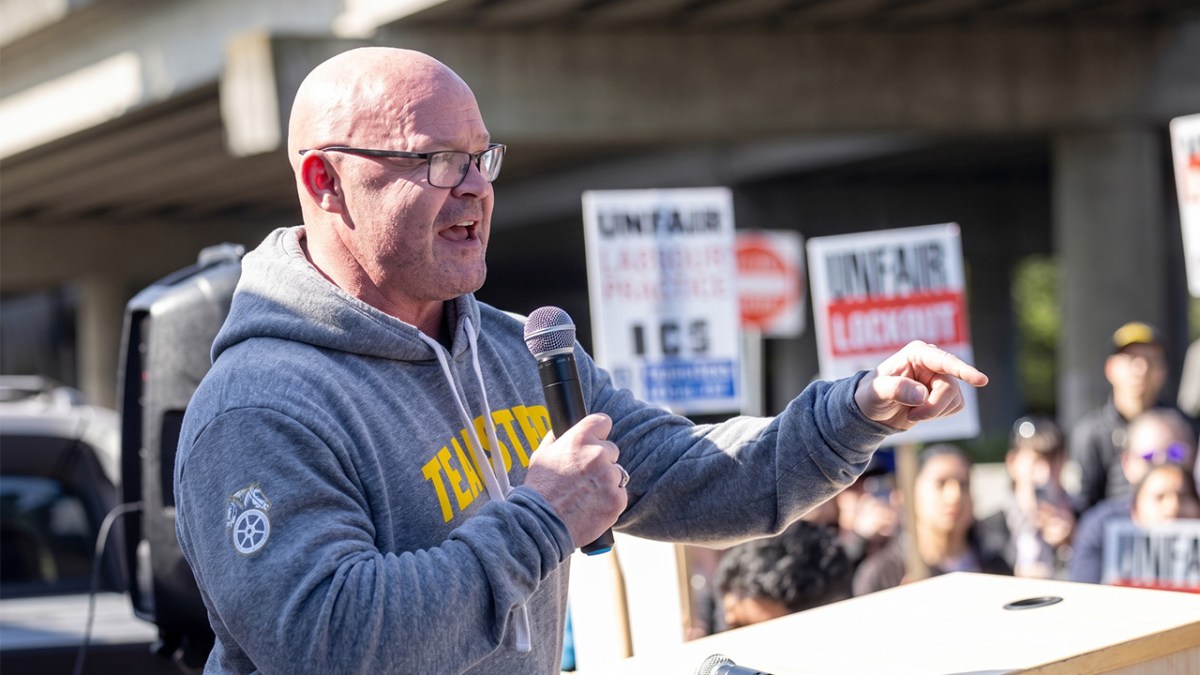
—“I am not optimistic of coming to a tentative agreement without striking UPS. I hope the stockholders in Wall Street listen to this, because if I’m a stockholder and I’m dependent upon UPS to earn dividends, it’s going to be some tough times for you.”
—“We’ve struck the last five years as a Teamsters union over 340 employers nationwide. We’ve extended picking lines to support our brothers and sisters in similar industries like Cisco, US Foods, and Republic Waste Management.”
Confrontation or compromise?
Listener’s Question: “Why is hostility the only platform? The Teamsters in the beginning started with a handshake agreement, but now the Teamsters talk trash the UPS all the time on any platform available. Customers read it, then they decide to bail. Imagine that. I wonder if you have considered how many customers would flock to the UPS if they actually acted like you like working with them under the rules they agreed to at negotiations.”
O’Brien: “That question is fucking definitely from a disgruntled UPS manager. No doubt. Absolutely no doubt. No union member in their right fucking mind would ask such a question. You know, if UPS did the right thing by their members, if they solved problems in a timely manner, if they adhered to the contract, then there’d be no complaints.
“It’d be a perfect world. However, UPS causes these problems. UPS chooses not to do the right things by their members. And if there’s consequences as a result of UPS’ bad behavior towards our members, so be it. And I would encourage all managers to get the fuck off Better Bad Ideas.”
The right to strike over deadlocked grievances
The grievance process under the contract has been a major Teamsters’ tool for forcing faster action on promised improvements or blocking UPS actions. But the union claims UPS consistently stonewalls potential resolutions to wear members down into accepting unfair conditions, such as alleged overtime abuses.
The Teamsters successfully used the rules to speed up air conditioning retrofits for 5,000 delivery vans in hot-weather states after two years of limited progress. In June, UPS met the deadline for upgrading 2,000 vehicles, with the remaining 3,000 scheduled for system installations by next summer. UPS also rescinded its driver buyout program in the Central region in response to strong opposition and then capped its nationwide voluntary separation offer at 7,500 drivers after the Teamsters pushed back hard on the grounds that buyouts improperly undercut the union as the workers’ bargaining representative.
Coordinated strike threats by UPS Teamsters in the Central Region and Chicago Local 705 last year led to grievance settlements in the Central Region and a first contract for UPS administrators and specialists in Chicago.
Most union contracts, including all UPS supplements with the exception of the Central Region, prohibit strikes during the life of the contract. But the UPS Central Region master contract supplement allows the union to strike when the sides reach an impasse. Grievances go through panels at the local level. If no agreement is reached, the issue gets kicked up to a national panel if it deals with union-wide issues, or it goes to arbitration if it concerns language in the local supplement. To trigger the right to strike, the deadlocked grievance must be over Central Region language, not national language.
The tool had never been used until O’Brien pulled the lever in 2025. When the sides couldn’t agree on a series of workplace issues, the Teamsters issued 72-hour strike notices at the Worldport air hub in Louisville, Kentucky, and two other locations, and prepared to extend picket lines to other air terminals. Management quickly settled the dispute, which centered on safety, seniority and subcontracting at a maintenance parts warehouse.
The 2023 collective bargaining agreement between the United Autoworkers and Stellantis included language giving the union the right to strike over product and investment commitments once a complaint has been taken through the grievance procedure.
O’Brien spoke extensively about strengthening grievance procedures in the upcoming contract:
— “UPS does not respond to time sensitive issues. And the only thing UPS understands is the threat of a strike.”
“UPS, true to their character, always tries to skirt their obligation under the contract. . . So, clearly we have a credible argument to have the right to strike in every single area, every single grievance procedure for deadlocked cases. That will get UPS to stop dragging their feet [on] grievances they know they should settle.”
—“We’re gonna demand the right to strike over deadlock grievances. . . It’s gonna be up to UPS how they want these negotiations to go. If they want them to go smooth, give us everything we want — we go away.”
—“We are going to be looking to achieve the right to strike in every single grievance procedure throughout this country to hold UPS accountable and make sure they have a sense of urgency to solve our problem.”
—“We want the right to strike over deadlocked grievances because right now there is such a backlog of grievances because UPS won’t settle anything. The only way to solve problems in an expedited manner is to have teeth in the grievance procedure that will allow us to strike over deadlocked grievances.”
On outsourcing
In November, the Teamsters said it would mount a campaign to gather evidence and stop UPS from funneling packages from its traditional delivery network to its Roadie subsidiary, which operates like an Uber for packages. Roadie’s digital platform connects independent drivers, who provide their own vehicles, with local retail stores fulfilling online orders for same-day delivery. Union officials accused UPS of subcontracting parcel deliveries to gig drivers working for Roadie, a violation of the 2023 collective bargaining agreement, to avoid paying overtime and skirt safety laws.
It also accused Happy Returns, another UPS company, of using independent contractors to handle e-commerce returns that would have gone through UPS Store counters and clerks.
Industry observers agree with UPS that Roadie handles same-day, store-to-front door shipment that never go through the company’s sortation network, as well as oversize items that don’t fit through automated parcel conveyors.
In the podcasts, O’Brien also said the union needs to organize UPS Supply Chain Solutions, the division responsible for global logistics and freight distribution. He also targeted MNX Global Logistics, a provider of time-critical radiopharmaceuticals and temperature-sensitive medical products that UPS Healthcare acquired in 2023.
—“Supply chain is where they divert all their non-union work. We’re going to demand that they turn them [Supply Chain and Roadie] over through neutrality or we put them into the [national] agreement. . . . Otherwise, you’re not going to get a contract.” (A neutrality agreement is a pact where an employer promises not to interfere with, or campaign against, a union organizing drive, allowing workers to unionize simply by signing authorization cards.)
“MNX delivers the same packages that we deliver through the UPS system. MNX was caught being inside the facilities with a brown uniform masquerading as a UPS employee. We have an arbitration claim going on right now.”
(UPS addressed the complaints about subcontracting in a previous statement: “We have several business units with different operating models to meet different customer needs. Our contract with the Teamsters requires that UPS drivers handle all deliveries for our small package business unit directly and we remain in compliance with the terms of our agreement. We address any disputes through our long-established grievance process.”)
Automation and autonomous trucks
—“They are going to push for automation. They’re going to push for more work with less people. This is going to be probably the toughest negotiations that the Teamsters has seen.
—“We’re going in there as a position of strength because they are no longer the powerhouse they once were. And we’re just gonna have to fight, fight, fight. We’re gonna make demands. I know for a fact we’re gonna demand no automation.”
—“AI, automation and the creation of new jobs is going to be paramount in these next negotiations.”
—“We’re gonna be fighting autonomous vehicles, where CEO Carol Tomé has been outspoken about having autonomous feeder trucks on our nation’s highways. But I got news for Carol Tomé. We are gonna fight it legislatively on a state level, state by state, like we’re doing in California right now, and other states.
Healthcare and other benefits
—“UPS members, full-time and part-time, have Cadillac health plans provided by union health and welfare funds paid for by the employer where our members pay nothing towards the cost of the premium. There are no hidden deductibles or anything else like that. We have the cream-of-the-crop medical. So, to protect that is gonna be paramount. Also, our members, both full time and part time, have the best pensions in the country.”
—“We need to continue to negotiate the highest paid wages in the industry; and protect, preserve and improve on any and all benefits.”
—“It’s not beneath UPS to try and attack those health and welfare, and pension funds. That’s definitely a strike issue we’re going to have to protect and improve.”
On part-time Workers
About 51% of UPS frontline employees work part time.
—“Before, there were part-timers who were making $13.50 to $14 per hour. It was ‘embarrassing’ for a Fortune 500 company with record profits when their part-time employees were on government-assistance programs. We made UPS bring the starting rate of pay to $21/hour, but also reward those long-term part-timers so their wages kept increasing. “They deserve the highest wages and benefits. The cost of living is going up, especially in big cities. We’re going to build on [the last contract] and get the most for our part-time workers.”
—“There is no doubt that we will be making a proposal to increase part time pensions at UPS.”
Click here for more FreightWaves/American Shipper stories by Eric Kulisch.
Write to Eric Kulisch at ekulisch@freightwaves.com.
RELATED STORIES:
UPS reorganization prioritizes global logistics over parcel delivery
UPS shift away from Amazon shows bigger payoff
Teamsters union to press UPS over Roadie use of gig drivers
UPS settles Teamsters grievances, averts strikes in multiple states
Brokerage Compliance Symposium
The day before F3. Every compliance issue you face - fraud exposure, carrier liability, FMCSA rules, cargo theft, insurance gaps - navigated by attorneys and operators defining best practices in a changing industry.
F3 Awards Dinner
The night before F3. FreightTech100 companies honored. FreightTech 25 and Shipper of Choice winners revealed live. Cocktail reception into dinner and live music - 300 industry leaders in one purpose-built room.
F3: Future of Freight Festival
Industry-defining keynotes, rapid-fire technology demos, and industry leaders networking in experiences across Chattanooga - plus the inaugural F3 Awards Dinner featuring the FreightTech and Shipper of Choice reveals.
The day before F3. Every compliance issue you face - fraud exposure, carrier liability, FMCSA rules, cargo theft, insurance gaps - navigated by attorneys and operators defining best practices in a changing industry.
The Signal at Chattanooga Choo Choo • Chattanooga, TN Register NowThe night before F3. FreightTech100 companies honored. FreightTech 25 and Shipper of Choice winners revealed live. Cocktail reception into dinner and live music - 300 industry leaders in one purpose-built room.
The Signal at Chattanooga Choo Choo • Chattanooga, TN Register NowIndustry-defining keynotes, rapid-fire technology demos, and industry leaders networking in experiences across Chattanooga - plus the inaugural F3 Awards Dinner featuring the FreightTech and Shipper of Choice reveals.
The Signal at Chattanooga Choo Choo • Chattanooga, TN Register Now