Overview of Current Issues in Truck Driver Training and Licensing
The trucking industry faces a critical safety crisis that has largely gone unnoticed by the American public. Each year, approximately 100,000 truck crashes occur on U.S. highways, resulting in roughly 5,000 fatalities annually. These alarming statistics point to serious flaws in the system that qualifies individuals to operate commercial vehicles weighing up to 80,000 pounds on our nation’s roads.
At the heart of this crisis lies a regulatory change implemented in February 2022 that fundamentally altered how Commercial Driver’s Licenses (CDLs) are issued. This change has enabled the proliferation of what industry experts call “CDL mills” – substandard training facilities that fail to adequately prepare drivers for the immense responsibility of operating commercial trucks.
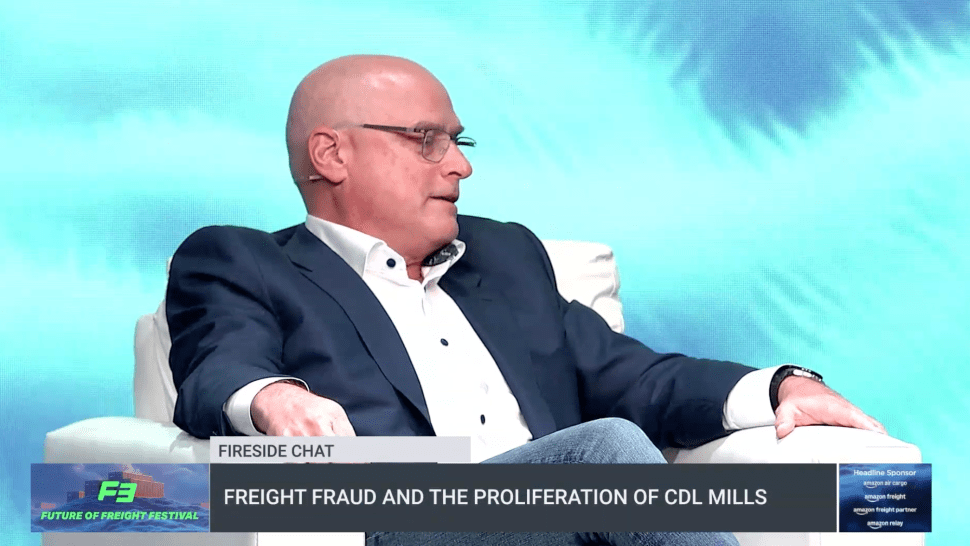
Video: Steve Gold spoke with Craig Fuller at F3 on how the entry-level driver training program created under Biden has made the trucking industry far less safe.
Background Information on Commercial Driver’s License Requirements
Historically, obtaining a CDL required rigorous training under state-licensed programs that emphasized safety, technical proficiency, and compliance with federal regulations. However, the landscape changed dramatically when the Federal Motor Carrier Safety Administration (FMCSA) introduced a self-certification database that allows virtually anyone to register as a CDL trainer without demonstrating proper qualifications or adhering to state licensing requirements.
This regulatory shift created two distinct paths to becoming a commercial truck driver:
- Traditional Path: Attending one of approximately 2,100 properly state-licensed CDL schools that provide comprehensive training programs
- Deregulated Path: Receiving minimal training from one of the over 32,000 self-registered “training providers” in the federal registry
The difference in training quality between these paths is substantial. Legitimate schools like 160 Driving Academy provide 160 hours of comprehensive training, while self-certified providers may offer as little as a few hours of orientation before sending drivers to obtain their licenses.
The Proliferation of CDL Mills and Their Impact
The term “CDL mill” refers to operations that exploit regulatory loopholes to rapidly process would-be drivers through minimal training before sending them to obtain their licenses. These operations have flourished under the current regulatory framework, which allows virtually any entity – from established carriers to small businesses with a single truck – to self-certify as training providers.
As Steve Gold, founder of 160 Driving Academy, explains: “The feds come in, they create this self-certification database, and you can register to be a CDL trainer at the federal level. And employers, if you’re an employer, you’re exempt. You don’t have to be licensed in the state. So there’s 32,000 registered federal training providers who can provide training for CDLs.”
The lack of oversight is particularly alarming. When asked what evidence these self-certified trainers must provide to demonstrate they’ve properly trained a driver, Gold was unequivocal: “You don’t do a damn thing.” This means someone could receive minimal instruction, or even just watch YouTube videos about truck operation, before being directed to a DMV to obtain a commercial license.
Some states have further exacerbated this problem by abandoning their own licensing standards in deference to federal guidelines. Indiana, for example, eliminated state oversight of truck driver training schools after the federal registry was implemented, essentially creating a regulatory vacuum.
Safety Concerns and Public Risk
The consequences of this deregulated approach to commercial driver training are severe and measurable. According to the National Highway Safety Administration, 2023 saw 153,472 highway truck accidents resulting in 5,472 fatalities – a shocking 40% increase from 2014 levels. Similar fatality levels continued into 2024.
These statistics translate to a disturbing reality: the odds of being killed by a commercial truck are approximately 20 times greater than dying in a commercial airline crash. This disparity highlights the stark difference in training standards between the aviation and trucking industries.
A particularly troubling incident occurred in Fort Pierce, Florida, where a driver who couldn’t speak or read English obtained a CDL and subsequently caused an accident that killed a family of three. This tragedy exemplifies the dangers posed by inadequate training and licensing standards.
Industry assessments further validate these concerns. When 160 Driving Academy evaluated experienced commercial drivers for large carriers, approximately half scored below 50% on proficiency tests – a failing grade that would typically disqualify them from employment with safety-conscious companies. However, these drivers often find work with smaller operators who may lack robust safety departments or evaluation processes.
Legislative and Regulatory Responses
In response to these alarming trends, some states have begun taking independent action. California, which ranks second nationally in highway fatalities caused by commercial trucks, unanimously passed legislation to eliminate substandard commercial driving schools. Florida and Colorado have issued cease-and-desist letters to unlicensed training facilities that attempt to circumvent state laws by claiming exemption under federal rules.
At the federal level, the Department of Transportation under Secretary Sean Duffy has recently taken steps to address related issues, particularly regarding non-domiciled CDLs. These are licenses issued to individuals who aren’t residents of the issuing state, which have raised additional safety concerns.
However, industry lobbying initially contributed to the deregulation of driver training requirements, based on claims of a perpetual driver shortage. This approach may have inadvertently compromised safety while also undermining the economic stability of the trucking industry by flooding the market with inadequately trained drivers.
The Path Forward: Enhancing Safety Through Proper Training
Addressing the proliferation of CDL mills requires a multifaceted approach combining federal oversight, state regulation, and industry commitment to higher standards. As Gold suggests, this isn’t an insurmountable challenge: “This is not a hard problem to fix.”
Potential solutions include:
- Strengthening the federal registry by requiring all training providers to demonstrate state licensing before certification
- Implementing robust enforcement mechanisms to ensure compliance with training standards
- Establishing clear penalties for entities that falsely attest to providing proper training
- Supporting state efforts to maintain or enhance their licensing requirements
The trucking industry plays a vital role in the American economy, with commercial drivers moving more than 70% of all freight across the country. These essential workers deserve proper training, and the public deserves the assurance that commercial vehicles are operated by qualified professionals.
By addressing the issue of CDL mills and substandard training, we can work toward reducing the alarming rate of truck-related accidents and fatalities while ensuring that commercial transportation remains both efficient and safe for all road users.
Brokerage Compliance Symposium
The day before F3. Every compliance issue you face - fraud exposure, carrier liability, FMCSA rules, cargo theft, insurance gaps - navigated by attorneys and operators defining best practices in a changing industry.
F3 Awards Dinner
The night before F3. FreightTech100 companies honored. FreightTech 25 and Shipper of Choice winners revealed live. Cocktail reception into dinner and live music - 300 industry leaders in one purpose-built room.
F3: Future of Freight Festival
Industry-defining keynotes, rapid-fire technology demos, and industry leaders networking in experiences across Chattanooga - plus the inaugural F3 Awards Dinner featuring the FreightTech and Shipper of Choice reveals.
The day before F3. Every compliance issue you face - fraud exposure, carrier liability, FMCSA rules, cargo theft, insurance gaps - navigated by attorneys and operators defining best practices in a changing industry.
The Signal at Chattanooga Choo Choo • Chattanooga, TN Register NowThe night before F3. FreightTech100 companies honored. FreightTech 25 and Shipper of Choice winners revealed live. Cocktail reception into dinner and live music - 300 industry leaders in one purpose-built room.
The Signal at Chattanooga Choo Choo • Chattanooga, TN Register NowIndustry-defining keynotes, rapid-fire technology demos, and industry leaders networking in experiences across Chattanooga - plus the inaugural F3 Awards Dinner featuring the FreightTech and Shipper of Choice reveals.
The Signal at Chattanooga Choo Choo • Chattanooga, TN Register Now