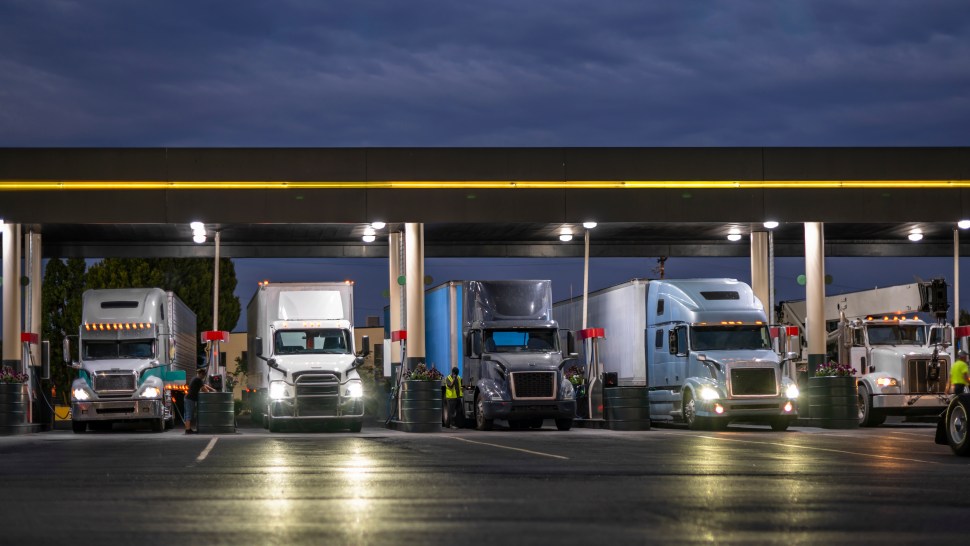

The transportation and logistics sector has proven its resilience through several major disruptions and supply chain upheavals including events like the pandemic, the blockage of the Suez Canal, the Russia-Ukraine War, but today’s operational realities present a new set of challenges that can’t be solved simply by adding more hands to the deck.
The traditional approach to scaling operations isn’t sustainable, if the last few holiday seasons are anything to go by. Between the annual delivery rush, evolving tariff regulations that require new documentation protocols, and persistent labor shortages, logistics companies are being squeezed from all sides while already dealing with thin margins.
What often goes unnoticed is that these challenges share a common denominator – manual processes and heavy document processes continue to create operational bottlenecks.
Consider the document journey in a typical international shipment:
Shipping operations, whether overseas or across state lines within the U.S., require managing a wide range of documentation, each with its own formats and regulatory requirements. International shipments add complexity with customs documentation, VAT forms, and country-specific tax declarations, while domestic interstate freight involves bills of lading, lumper receipts, proof of delivery, and carrier invoices. In both cases, requirements can vary by carrier, jurisdiction, and shipment type, making documentation management a consistent operational challenge.
The variation across these document types creates a ripple effect throughout an organization. A missing signature on a delivery receipt can delay payment. An error in customs documentation can hold up an entire shipment. These and any other missteps can have a cumulative impact on operational efficiency, which is significant.
Recent research from Deep Analysis reveals the scope of this challenge. In a survey of 300 T&L enterprises, the data paints a clear picture of an industry still heavily reliant on manual processes (and the costs associated with them).
Still Paper-Based in 2025
Despite widespread digital transformation efforts, 32% of T&L organizations still rely heavily on paper documentation, while only 43% have transitioned predominantly to digital formats. More telling: 43% of organizations still manage compliance documentation on paper, and 40% handle domestic transportation documents the same way.
The impact is measurable. A striking 82% of survey respondents reported that manual document processing has a heavy to extreme impact on their operational efficiency. The responses highlighted systemic issues:
- 51% cited high error rates in data entry
- 49% pointed to lack of standardization in document formats
- 49% noted time-consuming processing as a major hurdle
- 47% struggled with tracking document status
The Technology Gap
Even organizations using digital tools face obstacles. While business applications like Enterprise Resource Planning (ERP), Supply Chain Management (SCM), Transportation Management Systems (TMS), and Warehouse Management Systems (WMS) have become standard, their effectiveness depends entirely on data accuracy. And when that data originates from manual document processing, the errors compound.
Perhaps most revealing: 52% of respondents identified frequent scanning equipment malfunctions as a challenge, while 53% struggled with document compatibility issues. These are symptoms of trying to digitize fundamentally manual processes without addressing the underlying workflow.
The AI Opportunity
The good news is that many transportation and logistics companies recognize the potential. Over 70% of survey respondents expressed willingness to invest in AI-optimized systems, and those already using AI report significant improvements:
- 31% saw better decision-making capabilities
- 28% achieved measurable error reduction
- 37% experienced enhanced data quality
Still, adoption is in early stages. Only 13% of organizations have successfully integrated AI into day-to-day operations, and 32% have reached accelerated or transformational stages of implementation.
What’s holding companies back?
Data security concerns top the list at 54%, reflecting the sensitivity of shipment details, customer information, and payment records that flow through T&L operations.
Implementation costs concern 51% of respondents (particularly for smaller logistics firms with tight margins).
Integration with existing systems poses challenges for 47%, as many companies still rely on legacy TMS and ERP systems not built with AI capabilities in mind.
A Different Approach to Document Automation
This is where the conversation needs to shift. The future of logistics operations is going to require removing the document bottleneck that prevents organizations from scaling efficiently.
Hyperscience takes a fundamentally different approach to document processing. Rather than relying solely on Large Language Models (LLMs) that require massive datasets and ongoing fine-tuning, the platform uses machine learning as the foundation, with AI augmenting where it adds the most value.
This “ML-first” approach means the system can do the following:
- Handle document variation effectively, learning from each document type and format it encounters.
- Process documents accurately without requiring perfect digital copies or standardized formats.
- Adapt to new document types quickly, without extensive retraining or reconfiguration
- Achieve production-grade accuracy without months of data labeling, endless fine-tuning, or brittle rules and templates.
As a result, organizations can now automate document-intensive processes without ripping out their current technology stack.
Debunking the Job Displacement Myth
There is a pressing concern that appears in 44% of survey responses: potential job displacement.
The reality in transportation operations tells a different story than what many employees are anxious about. Organizations aren’t using automation to eliminate positions, in most cases. They’re automating tedious processes and redirecting human talent to higher-value work. Instead of data entry clerks spending hours manually transcribing bills of lading, they’re handling exception cases and working with customers to resolve issues that actually require human judgment.
As Ivan Ramirez, CTO at Hirschbach, puts it: “Hyperscience has empowered us to select the best-in-class solution to support the composable architecture vision we have for our technology stack.”
Successful logistics companies aren’t asking how they can replace people. They’re asking how to remove the bottlenecks preventing people from doing their best work.
Hirschbach, a major truckload carrier, faced the same challenges as many in the industry: mountains of paperwork, manual data entry creating delays and errors, and the need to scale operations without proportionally scaling headcount.
By implementing Hyperscience’s document automation platform, Hirschbach transformed their back-office operations. Documents that once required manual review and data entry now flow through automated processing, with the system handling variation in formats and flagging only genuine exceptions for human review.
Ready to Break the Bottleneck?
The transportation and logistics industry has weathered significant challenges over the past few years. But the next phase of growth won’t come from simply working harder or hiring more people to do the same manual tasks.
The competitive advantage will belong to organizations that remove the document bottleneck and free their operations to scale efficiently so that people can focus on work that actually requires human expertise.
Join Hyperscience for an upcoming webinar on AI Readiness in Transportation and Logistics, where you’ll be able to dive deeper into practical strategies for implementing document automation and gain additional insights from the Deep Analysis research. Learn how leading transportation companies are navigating this transition and get your questions answered by industry experts.
In an industry where margins are measured in percentages and delivery windows in hours, every document that moves faster through your system is a competitive advantage that can secure your success.
Click here to learn more about Hyperscience.
Brokerage Compliance Symposium
The day before F3. Every compliance issue you face - fraud exposure, carrier liability, FMCSA rules, cargo theft, insurance gaps - navigated by attorneys and operators defining best practices in a changing industry.
F3 Awards Dinner
The night before F3. FreightTech100 companies honored. FreightTech 25 and Shipper of Choice winners revealed live. Cocktail reception into dinner and live music - 300 industry leaders in one purpose-built room.
F3: Future of Freight Festival
Industry-defining keynotes, rapid-fire technology demos, and industry leaders networking in experiences across Chattanooga - plus the inaugural F3 Awards Dinner featuring the FreightTech and Shipper of Choice reveals.
The day before F3. Every compliance issue you face - fraud exposure, carrier liability, FMCSA rules, cargo theft, insurance gaps - navigated by attorneys and operators defining best practices in a changing industry.
The Signal at Chattanooga Choo Choo • Chattanooga, TN Register NowThe night before F3. FreightTech100 companies honored. FreightTech 25 and Shipper of Choice winners revealed live. Cocktail reception into dinner and live music - 300 industry leaders in one purpose-built room.
The Signal at Chattanooga Choo Choo • Chattanooga, TN Register NowIndustry-defining keynotes, rapid-fire technology demos, and industry leaders networking in experiences across Chattanooga - plus the inaugural F3 Awards Dinner featuring the FreightTech and Shipper of Choice reveals.
The Signal at Chattanooga Choo Choo • Chattanooga, TN Register Now