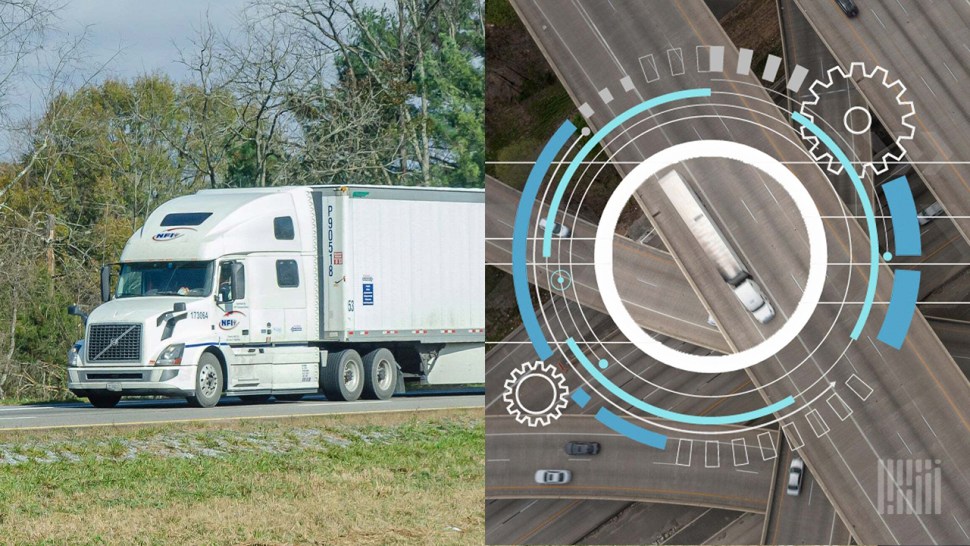
Transfix has reached a milestone in its transition from a freight brokerage to a freight technology provider with the first external adoption of its internally-developed TMS system for brokerages.
The company that has agreed to license the TMS is the same company that bought the brokerage: truckload carrier NFI.
In its prepared statement announcing the deal with NFI, Transfix made a bold declaration about the significance of the transaction. The deal, it said, “completes its transition from digital freight broker to pure-play freight technology company, focused on helping the industry unlock sustainable growth through connected, predictive, and data-driven solutions.”
Jonathan Salama, co-Founder and CEO of Transfix, said in an interview with FreightWaves that at the time the deal was signed with NFI, the agreement was that NFI’s brokerage unit would operate the Transfix TMS–which had been operated in its freight brokerage–for a year alongside its other TMS systems.
“And then we would revisit a year later what we want to do,” Salama said. It was going to take that test period, he added, because “technology wasn’t at the forefront of the acquisition. It was the brokerage.”
With that test having gone on now for about a year, Salama said, “they see how efficient it is.”
“This is a really unique and exciting opportunity to have built a product for the last 10 years and now going to market and sell it,” Salama said.
In the prepared statement announcing the deal, NFI CEO Sid Brown said the relationship with Transfix “underscores our commitment to this best-in-class technology.”
“After evaluating several TMS platforms in the market, there is no doubt that Transfix has built the clear leader,” Brown said. “The system’s intelligence, usability, and integration depth make it the natural platform for our freight brokerage business going forward.”
The TMS that Transfix offers has its roots back to 2013 when the digital brokerage was launched.
NFI at present is the only customer for the Transfix TMS. But Salama said there will be other deals signed “very soon.”
Looking first to the existing customer base
The current market for new sales of the TMS, Salama said, is the existing customer base for the cost model software that Transfix also offers. “The reaction from them has been that this is completely different from what’s in the market,” he said. “It actually does what it is supposed to do.”
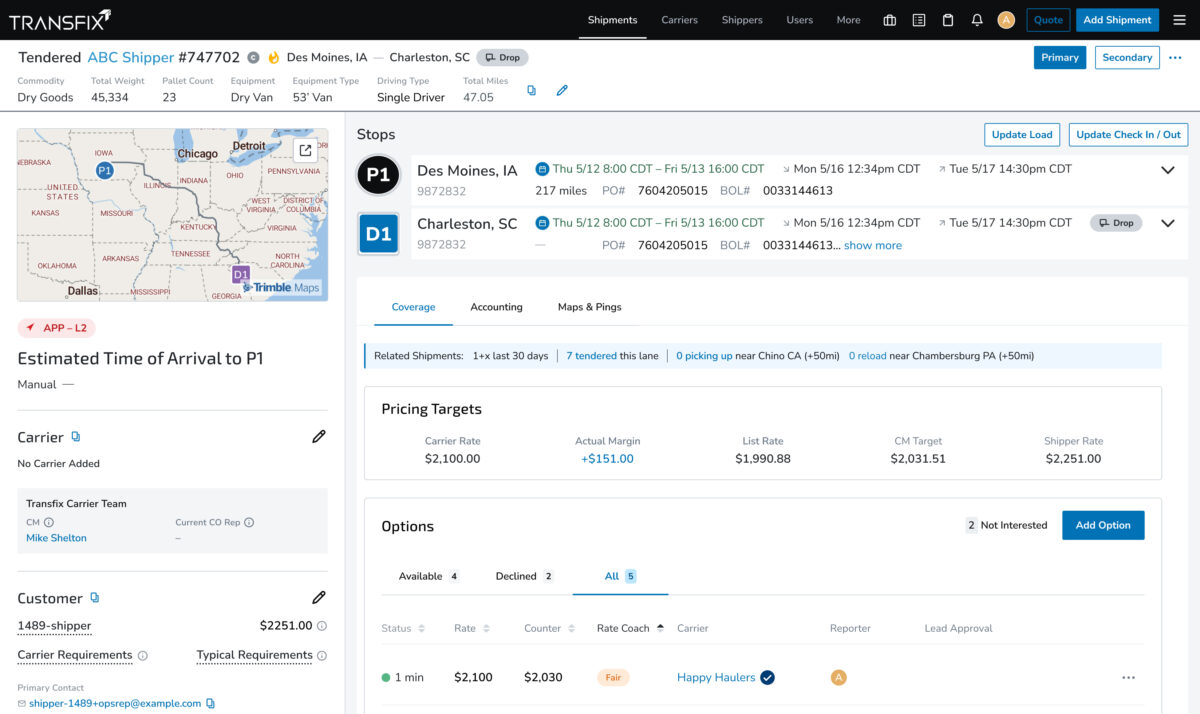
That cost model software offered by Transfix, Salama said, takes a broker’s data and “we’re able to predict your rate for spot or contract. We also provide a lot of tools to help you price your rate.”
It also is set up to work in tandem with the TMS software, he added.
Salama conceded that all TMS providers, including Transfix, are offering AI solutions in their systems. “The main difference is we were a broker, and we know what a broker needs to do,” Salama said.
It isn’t all AI
But AI isn’t the only tool for automation inside the TMS, he added. Earlier automation and machine learning processes are built into it as well. “All these steps that some TMS providers don’t even know exist are fully managed in our TMS, whether it’s with AI or not,” Salama said.
Whereas those in the freight tech field these days rush to announce their AI bonafides, Salama was somewhat more circumspect.
“I am really controlling when it comes to code and its quality,” he said. “AI codes really fast, but you need to make sure that every single line that comes into our software, even if AI is right, is being ready by somebody.”
He added that doing that “does not cost as much time as you think.”
In a post-interview email, a spokeswoman for Transfix said the only generative AI tool in the TMS is a load summarizer “that accounts for every single update, note, and task that belongs to one single load/shipment and gives you a clean status summary within seconds.”
But other tools are powered by automation, she said. These include scheduling, carrier machine and routing, a rate coach, an RFP manager and operations workflows.
For companies looking to transition to a new TMS, Salama said the time needed can be as short as a month. But he said the average would be between three to four months.
More articles by John Kingston
Strange bedfellows as states say brokers not protected under ‘safety exception’
Logistics startup founder loses appeal on conviction, 20-year sentence
Trucking credit metrics at BMO slide as the business gets smaller
Brokerage Compliance Symposium
The day before F3. Every compliance issue you face - fraud exposure, carrier liability, FMCSA rules, cargo theft, insurance gaps - navigated by attorneys and operators defining best practices in a changing industry.
F3 Awards Dinner
The night before F3. FreightTech100 companies honored. FreightTech 25 and Shipper of Choice winners revealed live. Cocktail reception into dinner and live music - 300 industry leaders in one purpose-built room.
F3: Future of Freight Festival
Industry-defining keynotes, rapid-fire technology demos, and industry leaders networking in experiences across Chattanooga - plus the inaugural F3 Awards Dinner featuring the FreightTech and Shipper of Choice reveals.
The day before F3. Every compliance issue you face - fraud exposure, carrier liability, FMCSA rules, cargo theft, insurance gaps - navigated by attorneys and operators defining best practices in a changing industry.
The Signal at Chattanooga Choo Choo • Chattanooga, TN Register NowThe night before F3. FreightTech100 companies honored. FreightTech 25 and Shipper of Choice winners revealed live. Cocktail reception into dinner and live music - 300 industry leaders in one purpose-built room.
The Signal at Chattanooga Choo Choo • Chattanooga, TN Register NowIndustry-defining keynotes, rapid-fire technology demos, and industry leaders networking in experiences across Chattanooga - plus the inaugural F3 Awards Dinner featuring the FreightTech and Shipper of Choice reveals.
The Signal at Chattanooga Choo Choo • Chattanooga, TN Register Now