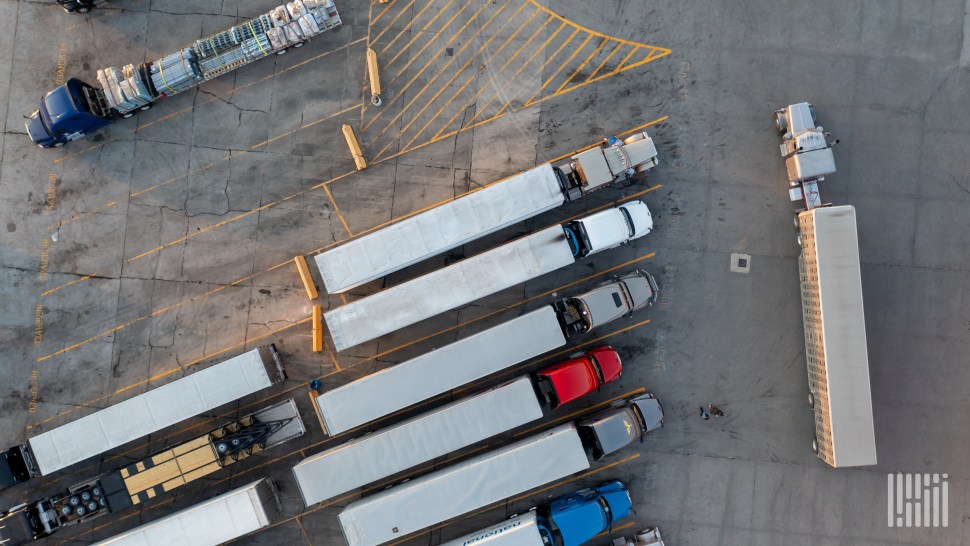
The typical January doldrums—a hangover from the frenetic November and December, when retailers rapidly replenish their inventories to maximize holiday sales—have stayed away from spoiling the U.S. trucking market so far.
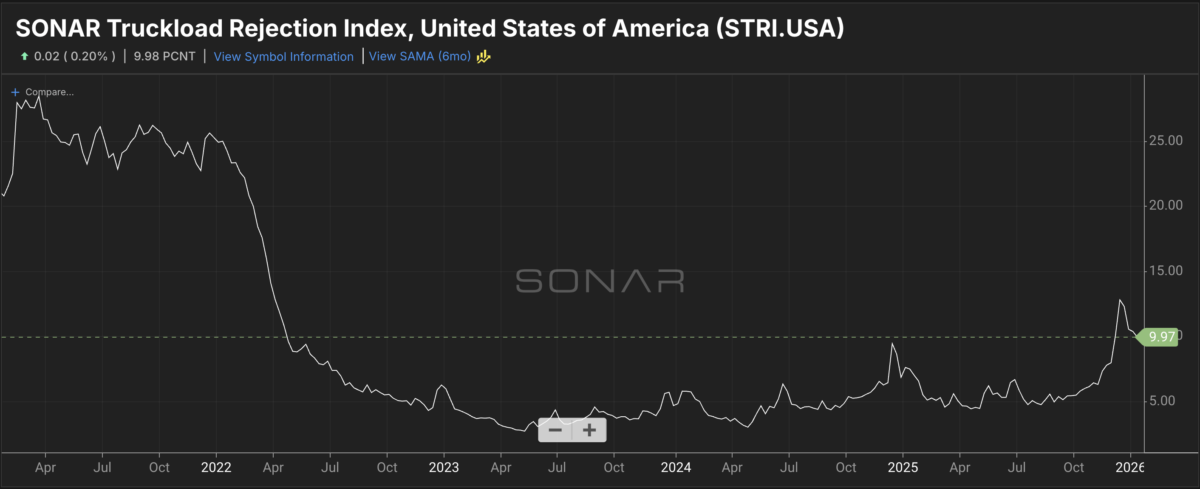
(Chart: SONAR. For more information about SONAR, click here)
Tender rejections, as measured by STRI.USA, remain at 9.97%, meaning that nearly one out of every ten truckload shipments tendered to a carrier is being rejected for lack of capacity or better rates elsewhere on the spot market. That’s a level higher than any experienced by the trucking industry in all of 2025, 2024, or 2023, and only matched in 2022 during the rapid come-down from COVID highs. Carriers are still rejecting enough freight to cause problems for shippers’ routing guides and put upward pressure on spot rates.
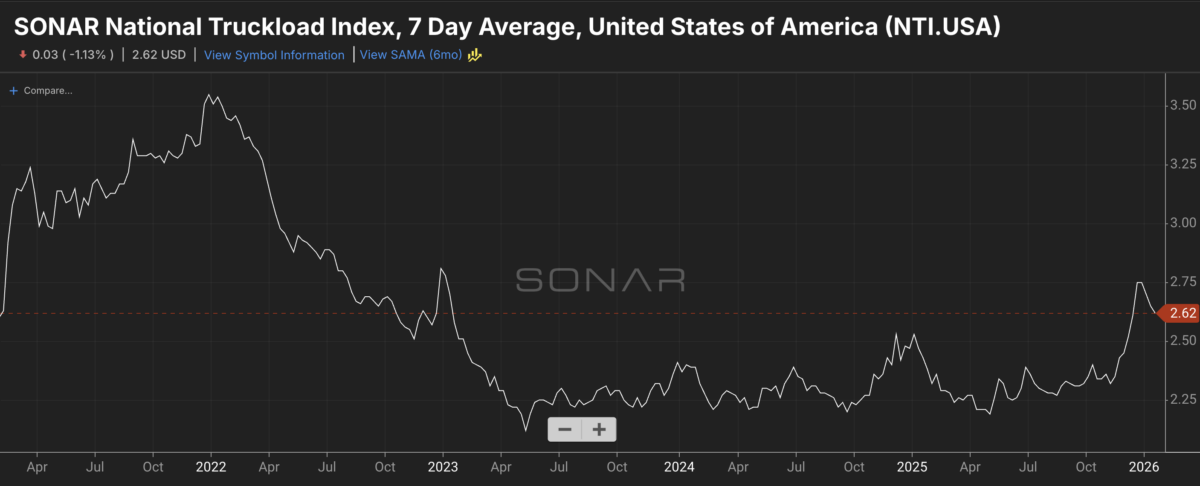
Truckload spot rates are also remaining elevated at $2.62/mile, inclusive of fuel. Rates have come down from their absolute peak at $2.76 on December 30, but they appear to be staying higher for longer, indicating that the trucking market’s balance of supply and demand is still healthy.
Of the major truckload markets, Chicago and Harrisburg seem to be having the most trouble covering outbound loads, with tender rejection rates of 9.51% and 9.45%, respectively, while Los Angeles is the loosest of the the big five with a rejection rate of 4.33%. Import activity is still relatively muted, and what freight is coming in is likely to be scooped up by the railroads, who grew their intermodal volumes by 2% last year (in a year when truckload volumes were negative), adding to 8% y/y growth in 2024.
There is some reason to think that shippers may shift their freight spend back to truckload in 2026. ISM survey results painted a picture of inventories contracting significantly faster than expected at the end of the year, causing the National Retail Federation to raise its expectations for imports. Consumer spending played a much larger role in the Q3 2025 impressive 4.3% growth GDP print than it did in Q2.
If inventories continue to contract at the same time that consumer spending surges, urgency and velocity will return to shipper transportation networks; intermodal rail will be increasingly forsaken for the shorter transit times, door-to-door service, and end-to-end visibility of truckload, and spot rates will go up.
It’s a big ‘if’, though, and there are other factors at play in 2026: a SCOTUS decision on tariffs could upend the math of international trade overnight and give importers far more confidence in their mid- to long-term business plans. But those are speculations.
For now, we know that trucking is staying tighter for longer, and rates are better than they’ve been in some years.
Brokerage Compliance Symposium
The day before F3. Every compliance issue you face - fraud exposure, carrier liability, FMCSA rules, cargo theft, insurance gaps - navigated by attorneys and operators defining best practices in a changing industry.
F3 Awards Dinner
The night before F3. FreightTech100 companies honored. FreightTech 25 and Shipper of Choice winners revealed live. Cocktail reception into dinner and live music - 300 industry leaders in one purpose-built room.
F3: Future of Freight Festival
Industry-defining keynotes, rapid-fire technology demos, and industry leaders networking in experiences across Chattanooga - plus the inaugural F3 Awards Dinner featuring the FreightTech and Shipper of Choice reveals.
The day before F3. Every compliance issue you face - fraud exposure, carrier liability, FMCSA rules, cargo theft, insurance gaps - navigated by attorneys and operators defining best practices in a changing industry.
The Signal at Chattanooga Choo Choo • Chattanooga, TN Register NowThe night before F3. FreightTech100 companies honored. FreightTech 25 and Shipper of Choice winners revealed live. Cocktail reception into dinner and live music - 300 industry leaders in one purpose-built room.
The Signal at Chattanooga Choo Choo • Chattanooga, TN Register NowIndustry-defining keynotes, rapid-fire technology demos, and industry leaders networking in experiences across Chattanooga - plus the inaugural F3 Awards Dinner featuring the FreightTech and Shipper of Choice reveals.
The Signal at Chattanooga Choo Choo • Chattanooga, TN Register Now