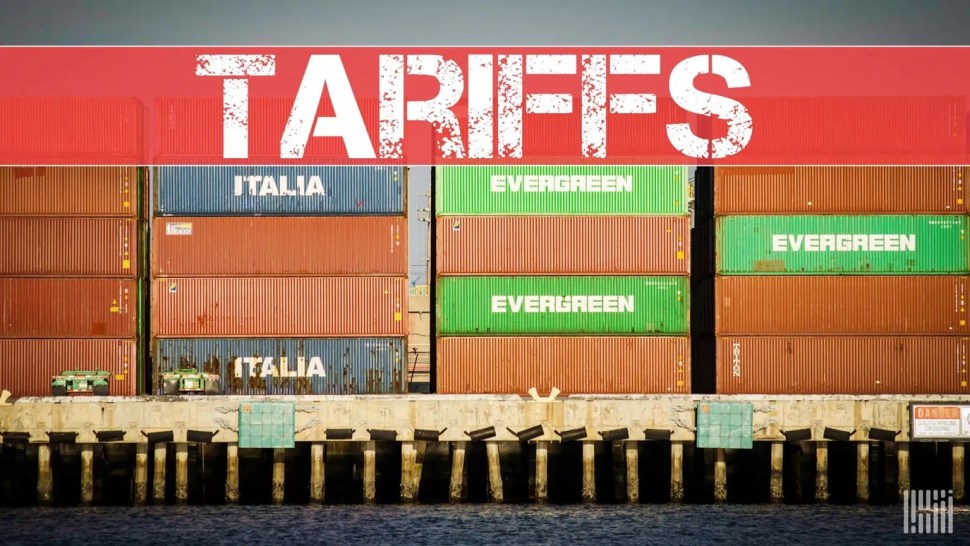
President Donald Trump said on Wednesday the U.S. has reached a “full and complete trade deal” with South Korea that includes a 15% tariff on imports from the Asian nation.
As part of the agreement, U.S. exports to South Korea will not face duties. South Korea will buy $100 billion in U.S. energy products and invest $350 billion into the U.S. shipbuilding sector, as well as production of semiconductors, secondary batteries and biotech products.
“I am pleased to announce that the United States of America has agreed to a Full and Complete Trade Deal with the Republic of Korea. The Deal is that South Korea will give to the United States $350 Billion Dollars for Investments owned and controlled by the United States, and selected by myself, as President,” Trump wrote on Truth Social.
The agreement between South Korea and the U.S. averts a steeper 25% import duty rate that would have started Friday, according to a letter Trump sent to Seoul on July 7.
South Korean President Lee Jae Myung, who took office June 4, said the trade deal will put his country on equal footing with other U.S. trade partners.
“Through this negotiations, the [South Korean] government has eliminated the uncertainties in the export environment and made it possible to compete on equal or superior conditions with major countries by adjusting the U.S. customs duties to lower or at the same level than the major anti-U.S. export competitors,” Lee wrote on Facebook Thursday.
“This agreement is the result of America’s understanding of manufacturing rebuilding and our willingness to expand our companies’ competitiveness in the American market.”
Related: No US trade deals with Mexico, China, Canada, as tariff deadline nears
South Korea is the eighth largest trading partner of the U.S., with two-way trade totaling an estimated $197.1 billion in 2024, according to the Office of the U.S. Trade Representative.
Exports from South Korea to the U.S. include cars and auto parts, semiconductors and electronics. U.S. exports to South Korea include oil and gas and industrial machinery.
South Korean automakers that export cars to the U.S. include the Hyundai Motor Group, and its affiliates Kia and Genesis. The country is also home to some of the world’s largest shipbuilders, including HD Hyundai Heavy Industries Co., Hanwha Ocean Co. and Samsung Heavy Industries Co.
With less than a day to go until the White House’s Friday tariff deadline, the trade policy landscape remains uncertain.
Trump said that he will not extend Friday’s deadline for his “reciprocal” tariffs on dozens of countries that do business with the U.S., including top trading partners Mexico, Canada and China.
The White House has so far announced framework deals with the European Union, the United Kingdom, Japan, Vietnam, Indonesia and the Philippines.
Brokerage Compliance Symposium
The day before F3. Every compliance issue you face - fraud exposure, carrier liability, FMCSA rules, cargo theft, insurance gaps - navigated by attorneys and operators defining best practices in a changing industry.
F3 Awards Dinner
The night before F3. FreightTech100 companies honored. FreightTech 25 and Shipper of Choice winners revealed live. Cocktail reception into dinner and live music - 300 industry leaders in one purpose-built room.
F3: Future of Freight Festival
Industry-defining keynotes, rapid-fire technology demos, and industry leaders networking in experiences across Chattanooga - plus the inaugural F3 Awards Dinner featuring the FreightTech and Shipper of Choice reveals.
The day before F3. Every compliance issue you face - fraud exposure, carrier liability, FMCSA rules, cargo theft, insurance gaps - navigated by attorneys and operators defining best practices in a changing industry.
The Signal at Chattanooga Choo Choo • Chattanooga, TN Register NowThe night before F3. FreightTech100 companies honored. FreightTech 25 and Shipper of Choice winners revealed live. Cocktail reception into dinner and live music - 300 industry leaders in one purpose-built room.
The Signal at Chattanooga Choo Choo • Chattanooga, TN Register NowIndustry-defining keynotes, rapid-fire technology demos, and industry leaders networking in experiences across Chattanooga - plus the inaugural F3 Awards Dinner featuring the FreightTech and Shipper of Choice reveals.
The Signal at Chattanooga Choo Choo • Chattanooga, TN Register Now