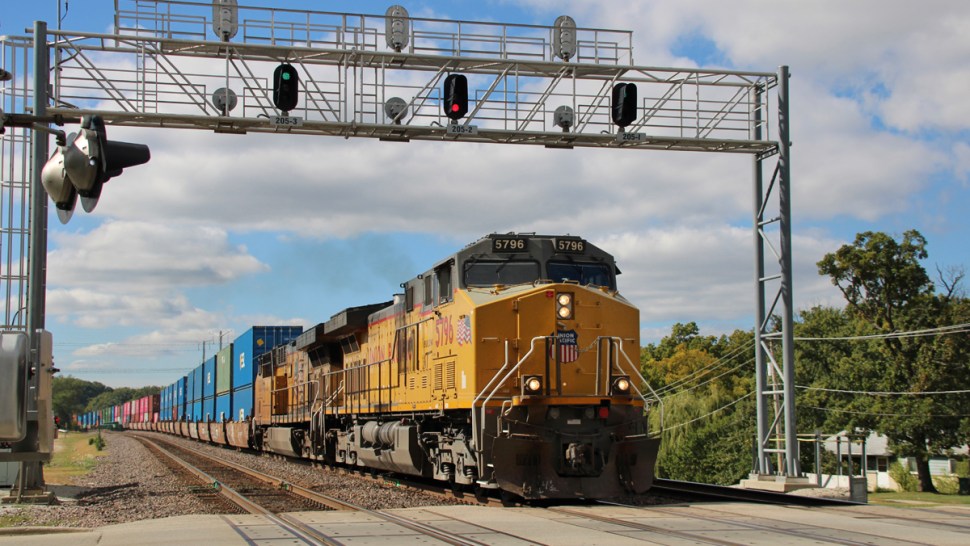
Union Pacific and Norfolk Southern now expect to file their merger application with federal regulators around Dec. 16, two weeks later than they had originally hoped.
UP Chief Executive Jim Vena told an investor conference on Tuesday that one of the contractors working on a section of the application needed additional time to finish before the massive document could be sent to the Surface Transportation Board.
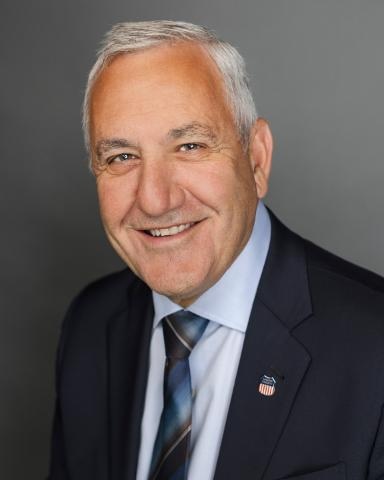
“We want to make sure that that final product is … exceptional so that when we give it to the STB that they’re comfortable that we’ve answered the questions and given them the information they want,” Vena said.
The application is expected to run more than 4,000 pages. It will detail the railroad’s growth projections and operating plan. Once it’s filed, the STB will have 30 days to accept the application or reject it as incomplete.
Other Class I railroads have intensified their opposition to the $85 billion merger in recent weeks, arguing that it will harm competition, lead to integration-related service problems, and damage the economy.
BNSF Railway also has asked federal regulators to scrutinize UP’s compliance with the conditions that were designed to preserve competition following UP’s 1996 acquisition of Southern Pacific. BNSF argues that UP (NYSE: UNP) has consistently sought to block its access to shippers who were once served by both UP and SP and that UP has prioritized dispatching of its own trains on lines where BNSF (NYSE: BRK-B) was granted trackage rights.
Vena said the opposition is a sign that other railroads see the advantages of a transcontinental UP system — and that they don’t want to have to compete against a railroad that can offer faster, more efficient single-line service from coast to coast.
“They understand what we’re going to be able to offer,” Vena said, “and they’re going, ‘How do we compete against that?’”
BNSF, Canadian National (NYSE: CNI), and CPKC (NYSE: CP) have all argued that railroads can grow through interline partnerships, rather than mergers. UP says alliances are temporary and cannot measure up against a merged railroad that controls shipments from origin to destination.
Vena spoke at the UBS Global Industrials and Transportation Conference.
Brokerage Compliance Symposium
The day before F3. Every compliance issue you face - fraud exposure, carrier liability, FMCSA rules, cargo theft, insurance gaps - navigated by attorneys and operators defining best practices in a changing industry.
F3 Awards Dinner
The night before F3. FreightTech100 companies honored. FreightTech 25 and Shipper of Choice winners revealed live. Cocktail reception into dinner and live music - 300 industry leaders in one purpose-built room.
F3: Future of Freight Festival
Industry-defining keynotes, rapid-fire technology demos, and industry leaders networking in experiences across Chattanooga - plus the inaugural F3 Awards Dinner featuring the FreightTech and Shipper of Choice reveals.
The day before F3. Every compliance issue you face - fraud exposure, carrier liability, FMCSA rules, cargo theft, insurance gaps - navigated by attorneys and operators defining best practices in a changing industry.
The Signal at Chattanooga Choo Choo • Chattanooga, TN Register NowThe night before F3. FreightTech100 companies honored. FreightTech 25 and Shipper of Choice winners revealed live. Cocktail reception into dinner and live music - 300 industry leaders in one purpose-built room.
The Signal at Chattanooga Choo Choo • Chattanooga, TN Register NowIndustry-defining keynotes, rapid-fire technology demos, and industry leaders networking in experiences across Chattanooga - plus the inaugural F3 Awards Dinner featuring the FreightTech and Shipper of Choice reveals.
The Signal at Chattanooga Choo Choo • Chattanooga, TN Register Now