




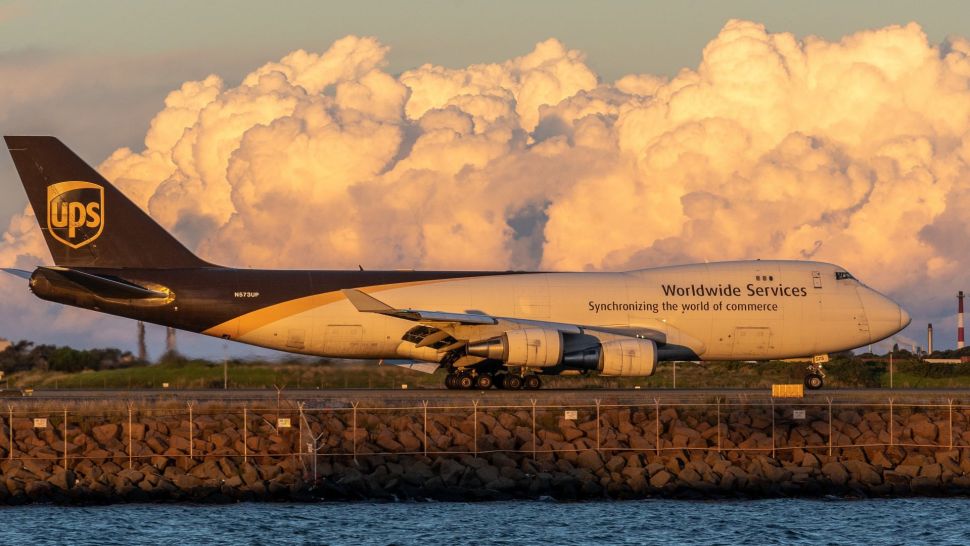
UPS has enhanced aircraft capacity and ground infrastructure in its intra-Asia air network to support growing regional demand for goods transport, while dialing back trans-Pacific service to the United States as consumers hesitate to make online purchases because of new tariffs.
The express parcel and logistics giant last week announced service upgrades to Australia and Vietnam.
A weekly route between UPS’s regional hub in Shenzhen, China, to Sydney, Australia, now operates five times per week and offers four times more capacity than before, improving delivery frequency from major Asian markets to Australia. UPS (NYSE: UPS) said delivery time from China, Hong Kong, Japan, Malaysia, Philippines, South Korea, Thailand and Vietnam to Australia is now two business days, one day faster than before, with next-business day delivery available for Friday pickups. In addition, exports to major Asian markets and imports from Europe will now arrive one day earlier.
UPS has also upgraded its Hanoi-Shenzhen route by deploying larger Boeing 747 freighters, doubling weekly cargo capacity to 570 tons. The upgrade supports growing demand from Vietnam to China, Hong Kong, Japan, Malaysia and Thailand. UPS customers in Vietnam can now benefit from next-business-day deliveries to China and Hong, the carrier said.
Industries requiring more airlift include healthcare, technology, industrial manufacturing and automotive, according to UPS.
“We continue to see strong momentum across Asia Pacific with intra-Asia trade staying resilient, even as businesses navigate an evolving global trade landscape,” said Wilfredo Ramos, president, UPS Asia Pacific, in a news release. “UPS is helping its customers strengthen their supply chains through greater flexibility, faster delivery, and deeper regional connectivity.”
The move to beef up air cargo capacity within Asia contrasts with flight reductions from Asia to the United States. The Trump administration’s 30% tariffs on Chinese-made goods and the elimination of a duty-free exemption for small-dollar B2C shipments caused UPS’s average daily volumes on the China-U.S. trade lane — the company’s most profitable shipping route — to drop 35% during May and June, CEO Carol Tomé said during a late July earnings presentation. Higher U.S. tariffs makes trade to other countries more attractive, with UPS exports from China to the rest of the world up 22.4%.
UPS adjusted by adding or canceling more than 100 flights on Asia, Europe and U.S. routes as customers shifted orders in response to changing tariffs. The integrator nearly doubled capacity between India and Europe to meet growing export demand between those regions.
Flight activity for the UPS Airlines fleet is down about 15% since the beginning of June, according to a research note from Barclay’s transportation analyst Brandon Oglenski.
FedEx similarly adjusted its air network after the imposition of tariffs on individual e-commerce orders caused U.S volumes from China to wane. Some freighter aircraft have been repositioned to the Asia-Europe lane, where e-commerce demand remains high.
The extra Australia and Vietnam flights follow other recent UPS investments in the Asia Pacific region. In Malaysia, UPS in May opened two new facilities at Senai International Airport — a package center and a bonded warehouse. The state of Johor is a large manufacturing region in southern Malaysia. The company also expanded service from the Japanese island of Kyushu to help businesses reach international markets.
Click here for more FreightWaves/American Shipper stories by Eric Kulisch.
Write to Eric Kulisch at ekulisch@freightwaves.com.
RELATED STORIES:
FedEx redeploys air fleet after US ends parcel tariff exemption
UPS posts tepid results amid tariff, restructuring challenges
Brokerage Compliance Symposium
The day before F3. Every compliance issue you face - fraud exposure, carrier liability, FMCSA rules, cargo theft, insurance gaps - navigated by attorneys and operators defining best practices in a changing industry.
F3 Awards Dinner
The night before F3. FreightTech100 companies honored. FreightTech 25 and Shipper of Choice winners revealed live. Cocktail reception into dinner and live music - 300 industry leaders in one purpose-built room.
F3: Future of Freight Festival
Industry-defining keynotes, rapid-fire technology demos, and industry leaders networking in experiences across Chattanooga - plus the inaugural F3 Awards Dinner featuring the FreightTech and Shipper of Choice reveals.
The day before F3. Every compliance issue you face - fraud exposure, carrier liability, FMCSA rules, cargo theft, insurance gaps - navigated by attorneys and operators defining best practices in a changing industry.
The Signal at Chattanooga Choo Choo • Chattanooga, TN Register NowThe night before F3. FreightTech100 companies honored. FreightTech 25 and Shipper of Choice winners revealed live. Cocktail reception into dinner and live music - 300 industry leaders in one purpose-built room.
The Signal at Chattanooga Choo Choo • Chattanooga, TN Register NowIndustry-defining keynotes, rapid-fire technology demos, and industry leaders networking in experiences across Chattanooga - plus the inaugural F3 Awards Dinner featuring the FreightTech and Shipper of Choice reveals.
The Signal at Chattanooga Choo Choo • Chattanooga, TN Register Now