




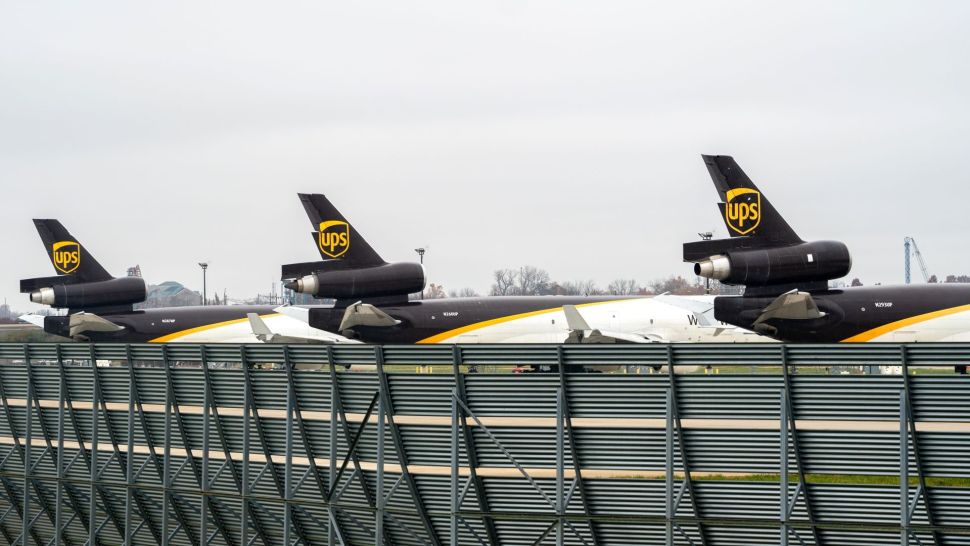
UPS has decided to permanently retire its fleet of 27 MD-11 aircraft and take a $137 million after-tax write off instead of returning the widebody freighters to service even if they are cleared to fly again by aviation authorities following the crash of one of its planes in early November.
The express delivery and logistics giant began a phased drawdown of the aging tri-engine aircraft two years ago, but said on Tuesday that it has accelerated the retirement plan and will replace the aircraft with more efficient twin-engine Boeing 767-300 cargo jets.
The MD-11s have been parked since Nov. 8, when the Federal Aviation Administration ordered UPS, FedEx and Western Global Airlines to ground their MD-11 fleets until inspections and any potential corrective steps can be completed in the wake of the fiery crash of UPS MD-11 in Louisville, Kentucky, that killed 15 people. Investigators are focusing on why the engine and engine pylon, which was discovered to have structural fatigue cracks, separated from the left wing as the plane moved down the runway.
UPS (NYSE: UPS) compensated for the loss of MD-11 capacity during the fourth-quarter peak season by repositioning some aircraft from other parts of the world to the United States, moving more packages by truck and leasing aircraft from partner airlines. The ability to meet demand with alternative capacity convinced management to discard the MD-11s, said Chief Financial Officer Brian Dykes during an earnings call with analysts.
“Over the next fifteen months, we expect to take delivery of 18 new Boeing 767 aircraft, with 15 expected to deliver this year. As new aircraft join our fleet, we will step down the leased aircraft and associated expenses. We believe these actions are consistent with building a more efficient global network positioned for growth, flexibility and profitability,” he said.
UPS incurred $50 million in extra costs for other airlines to supply and operate aircraft in the company’s network during the second-half of the fourth quarter and expects to spend $100 million on outsourced capacity this year, Dykes said. Most of the spending for outside airlift will occur in the first half of 2026, when five 767s are expected to be delivered by Boeing.
The MD-11 has a maximum payload of more than 207,000 pounds, with space for 26 containers on the main deck and 13 in the lower hold. The B767 is smaller, with a 132,000-pound payload capability and room for 24 large containers and seven lower-deck shipping units. It also has a shorter range.
FedEx has said it anticipates its fleet of MD-11 freighters to return to service sometime after March, but there has been little indication from regulators so far about the progress of inspections. Aviation analysts say it may not be worth bringing back the MD-11s if regulators determine that extensive repairs are required to make them safe.
Boeing issued a service bulletin 14 years ago in which it disclosed four previous separations of an attachment that helps hold engines to the MD-11’s wing, according to a National Transportation Safety Board report earlier this month.
(Correction: An earlier version of this story incorrectly said most of the spending on outside airlift will occur in the first half of 2025.)
Click here for more FreightWaves/American Shipper stories by Eric Kulisch.
Write to Eric Kulisch at ekulisch@freightwaves.com.
RELATED STORIES:
Brokerage Compliance Symposium
The day before F3. Every compliance issue you face - fraud exposure, carrier liability, FMCSA rules, cargo theft, insurance gaps - navigated by attorneys and operators defining best practices in a changing industry.
F3 Awards Dinner
The night before F3. FreightTech100 companies honored. FreightTech 25 and Shipper of Choice winners revealed live. Cocktail reception into dinner and live music - 300 industry leaders in one purpose-built room.
F3: Future of Freight Festival
Industry-defining keynotes, rapid-fire technology demos, and industry leaders networking in experiences across Chattanooga - plus the inaugural F3 Awards Dinner featuring the FreightTech and Shipper of Choice reveals.
The day before F3. Every compliance issue you face - fraud exposure, carrier liability, FMCSA rules, cargo theft, insurance gaps - navigated by attorneys and operators defining best practices in a changing industry.
The Signal at Chattanooga Choo Choo • Chattanooga, TN Register NowThe night before F3. FreightTech100 companies honored. FreightTech 25 and Shipper of Choice winners revealed live. Cocktail reception into dinner and live music - 300 industry leaders in one purpose-built room.
The Signal at Chattanooga Choo Choo • Chattanooga, TN Register NowIndustry-defining keynotes, rapid-fire technology demos, and industry leaders networking in experiences across Chattanooga - plus the inaugural F3 Awards Dinner featuring the FreightTech and Shipper of Choice reveals.
The Signal at Chattanooga Choo Choo • Chattanooga, TN Register Now