




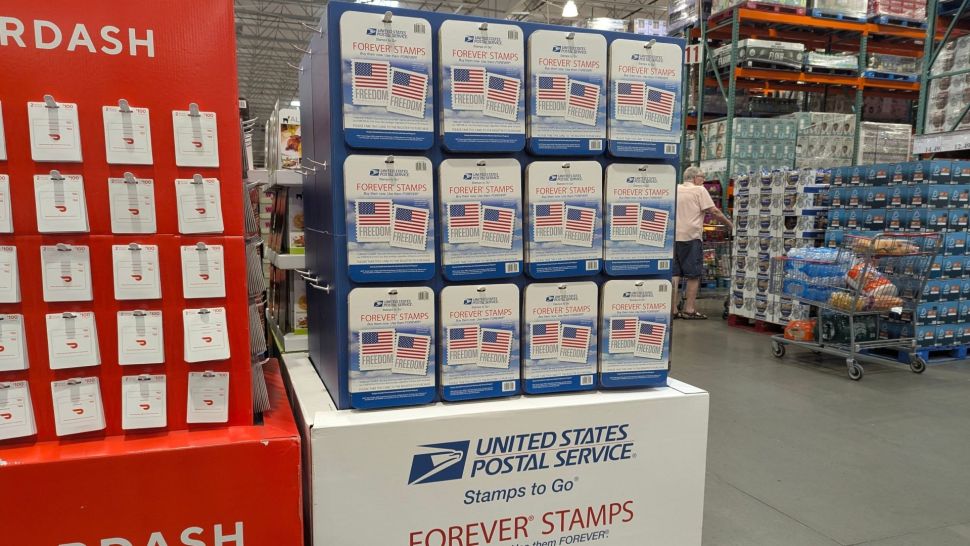
Direct mail advertisers and nonprofit organizations are welcoming the United States Postal Service’s decision Wednesday not to raise stamp prices in January, breaking a string of twice-yearly price hikes.
The Postal Service announced it won’t change the price of first-class mail at the start of 2026. In July, the agency increased stamp prices to 78 cents from 73 cents. Over the past five years, first-class mail and marketing mail prices have increased more than 50%, while periodicals went up 67%.
New Postmaster General David Steiner made the decision not to increase prices on monopoly mail products, which was approved by the organization’s board of governors. Large mailers urged Steiner when he took office last summer to stop raising stamp prices on a regular basis, saying direct mail was becoming unaffordable for some businesses and hurting USPS revenues.
“We continually strive to balance our pricing approach both to meet the revenue needs of the Postal Service and to deliver affordable offerings that reflect market conditions,” Steiner said in a news release. “We have therefore decided at this time to forgo a price change for First-Class Mail postage and other Market Dominant services until mid-year 2026.”
Under an inflation-based formula approved by the Postal Rate Commission the Postal Service had the authority to raise stamp prices in January by 1.3%.
“We appreciate the common-sense approach taken by Postmaster General David Steiner, which will help the agency retain some mail volume that has been eroding badly in recent years. The USPS is a network that relies on a critical mass of volume to fund its fixed costs. While rate moderation will not solve all its problems, we believe that it is a vital component of a comprehensive set of solutions for our nation’s indispensable mail service,” the Alliance of Nonprofit Mailers said in a statement.
The Postal Service lost $9.5 billion last year and was on track to lose about $7 billion for the fiscal year ended Sept. 30.
The USPS began the practice of raising prices every six months after the Postal Regulatory Commission granted the agency supra-inflationary rate authority in late 2020. Management has viewed the revenue from higher stamp prices as necessary to deal with annual losses and invest in parcel operations to keep up with private competitors. Earlier this year, at the urging of the Alliance of Nonprofit Mailers and other groups, the PRC began a review of its administrative decision to allow the extra rate authority. Under consideration is whether to limit pricing increases to once a year.
Mailers say semi-annual rate increases are very disruptive and costly for the mailing industry, rate-paying mailers, the USPS and regulators.
Write to Eric Kulisch at ekulisch@freightwaves.com.
Click here for more FreightWaves/American Shipper stories by Eric Kulisch.
RELATED STORIES:
Brokerage Compliance Symposium
The day before F3. Every compliance issue you face - fraud exposure, carrier liability, FMCSA rules, cargo theft, insurance gaps - navigated by attorneys and operators defining best practices in a changing industry.
F3 Awards Dinner
The night before F3. FreightTech100 companies honored. FreightTech 25 and Shipper of Choice winners revealed live. Cocktail reception into dinner and live music - 300 industry leaders in one purpose-built room.
F3: Future of Freight Festival
Industry-defining keynotes, rapid-fire technology demos, and industry leaders networking in experiences across Chattanooga - plus the inaugural F3 Awards Dinner featuring the FreightTech and Shipper of Choice reveals.
The day before F3. Every compliance issue you face - fraud exposure, carrier liability, FMCSA rules, cargo theft, insurance gaps - navigated by attorneys and operators defining best practices in a changing industry.
The Signal at Chattanooga Choo Choo • Chattanooga, TN Register NowThe night before F3. FreightTech100 companies honored. FreightTech 25 and Shipper of Choice winners revealed live. Cocktail reception into dinner and live music - 300 industry leaders in one purpose-built room.
The Signal at Chattanooga Choo Choo • Chattanooga, TN Register NowIndustry-defining keynotes, rapid-fire technology demos, and industry leaders networking in experiences across Chattanooga - plus the inaugural F3 Awards Dinner featuring the FreightTech and Shipper of Choice reveals.
The Signal at Chattanooga Choo Choo • Chattanooga, TN Register Now