
The transportation market has been shedding excess capacity since 2022, and shippers will finally start feeling the effects of a tighter market this year. After years of carrier attrition and dwindling equipment orders, the buffer that once absorbed sudden demand spikes has all but disappeared.
As capacity shrinks quarter over quarter, shippers are watching spot rates climb by double digits. For many of these companies, the question is no longer about whether or not to secure dedicated capacity. It is about how quickly they can do so.
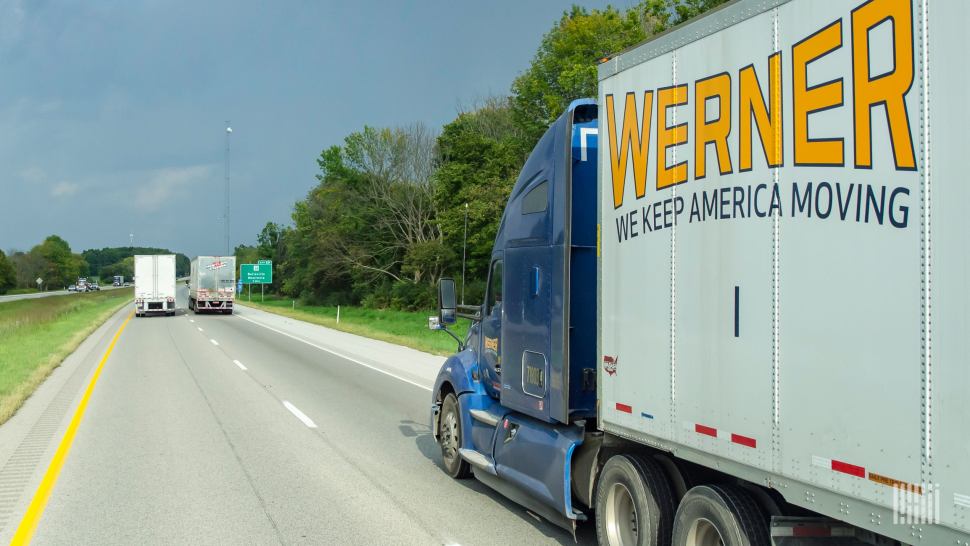
This market recalibration has prompted a fundamental shift in how logistics leaders think about their supply chains. Werner®, for example, has strategically pivoted to meet this moment, moving away from more volatile market segments and toward more stable, long-term growth.
Dedicated operations now make up more than 50% of total revenue for Werner. Through the integration of its recent FirstFleet acquisition, the company has solidified its position as a top five Dedicated provider, offering what a Werner representative calls a “flight to quality” that safeguards shippers against 2026 market volatility.
Guaranteeing capacity and compliance
The challenge facing shippers today extends beyond simply finding available trucks. With aging assets being retired and new environmental mandates driving up costs for older units, standard capacity has become both more expensive and less reliable.
A dedicated fleet model ensures access to modern, fuel-efficient equipment at a time when such assets are increasingly scarce.
According to a Werner representative, a dedicated model serves as a financial hedge during this volatile recovery. It allows companies to lock in service levels and costs, transforming transportation from a volatile variable into a predictable line item. This predictability matters when budgeting cycles and customer commitments extend months into the future, despite quickly evolving market conditions.
The FirstFleet acquisition adds significant scale to Werner’s dedicated footprint. It has positioned itself to offer the kind of guaranteed capacity that becomes increasingly valuable as the broader market tightens.
In today’s market, capacity means nothing without compliance. Shippers need to know they are working with a compliant, vetted and safe operation capable of meeting heightened federal oversight requirements.
The driver pool has thinned considerably under stricter CDL issuance rules and Drug and Alcohol Clearinghouse enforcement. A dedicated fleet provides what Werner describes as a compliance buffer, ensuring that freight is not left stranded when a carrier fails a snap audit or loses drivers to new regulatory hurdles.
Today’s customers have also raised their expectations. They do not simply want deliveries. They want them within precise and flexible windows. Guaranteed capacity allows shippers to shift from static strategies to adaptable ones, meeting this new standard for high-velocity fulfillment even during promotional peaks or seasonal surges.
Werner backs this reliability with its EDGE® technology platform, which now powers nearly 90% of Dedicated trips. The platform provides the digital transparency required for compliance in this environment, creating what the company calls a “safe harbor” of capacity that is tech-forward and dependable.
Predictive maintenance and risk mitigation
Safety has evolved from a legal checkbox to a profit protection strategy. High-performing fleets now operate on predictive rather than reactive data models.
By deploying IoT sensor networks and AI-powered telematics, dedicated fleets can forecast mechanical failures before they occur. This transition from calendar-based to condition-based maintenance eliminates the 11th-hour breakdowns that create supply chain ripples and require costly emergency repairs. A truck that never breaks down unexpectedly is worth considerably more than one that arrives on time most of the time.
The financial calculus extends to insurance and litigation. With rising premiums and the continued threat of nuclear verdicts reshaping risk profiles across the industry, data transparency has become essential. Shippers benefit from partnering with fleets that document proactive risk identification practices. This approach lowers direct insurance costs and protects brand reputation when litigation becomes unavoidable.
Drivers as brand ambassadors
In an era when digital transactions dominate commerce, the driver is often the only physical touchpoint between a brand and its customer. This reality has transformed driver quality from an operational concern into a brand strategy consideration.
Dedicated drivers are not simply hauling cargo. They are trained on company specific standard operating procedures, acquiring institutional knowledge that allows them to navigate complex delivery sites and handle specialized equipment with professionalism that a revolving door of spot market drivers cannot replicate.
Low turnover stands as a hallmark of dedicated fleets. When a driver knows a customer’s specific requirements – from where to park to handle paperwork – errors decrease, and service continuity improves. This builds what amounts to a service moat, enhancing long-term customer loyalty.
A Werner representative emphasized that driver longevity sits at the core of the Dedicated model. Through the FirstFleet acquisition, Werner added a driver pool with an average tenure of 17 years. That deep-rooted experience ensures the face of a shipper’s brand is a seasoned professional who understands the nuances of their specific delivery ecosystem.
Specialized solutions for different verticals
Certain industries operate on production cadences where a 30-minute delay can halt an entire project or leave a service bay sitting empty. Standard logistics solutions often fail these shippers at the moments that matter most.
Delivering to unpaved and active construction sites requires more than a standard dry van. Dedicated fleets provide specialized equipment like flatbeds, moffetts and cranes, with drivers who are experts in site-specific safety and offloading protocols. Materials arrive on time and are placed exactly where construction crews need them.
In the automotive aftermarket, the window of delivery is dictated by a service bay’s schedule rather than a clock. Dedicated fleets provide the high level of trust required for unattended overnight delivery, ensuring that critical auto parts reach dealerships and repair shops while the city is asleep. This proximity-based model allows technicians to walk into a fully stocked shop each morning, eliminating the downtime of waiting for parts and protecting the efficiency of high-velocity repair cycles.
Werner is intentionally focusing on these “resilient categories,” including grocery, automotive, manufacturing and home improvement. By increasing network density in specific verticals, the company provides the specialized equipment and localized expertise necessary to handle what it calls the most “un-standard” deliveries in the supply chain.
Dedicated capacity has become the new currency for reliability in a market defined by scarcity and volatility. For shippers, the choice is increasingly clear: Partner with a dependable fleet or accept the operational and financial risks of competing for diminishing spot capacity.
The long-term value proposition centers on predictability. By locking in service levels and costs with a dedicated provider, companies can transform transportation from a source of quarterly surprises into a stable foundation for growth. In a year when so much remains uncertain, stability may prove the most valuable asset of all.
Brokerage Compliance Symposium
The day before F3. Every compliance issue you face - fraud exposure, carrier liability, FMCSA rules, cargo theft, insurance gaps - navigated by attorneys and operators defining best practices in a changing industry.
F3 Awards Dinner
The night before F3. FreightTech100 companies honored. FreightTech 25 and Shipper of Choice winners revealed live. Cocktail reception into dinner and live music - 300 industry leaders in one purpose-built room.
F3: Future of Freight Festival
Industry-defining keynotes, rapid-fire technology demos, and industry leaders networking in experiences across Chattanooga - plus the inaugural F3 Awards Dinner featuring the FreightTech and Shipper of Choice reveals.
The day before F3. Every compliance issue you face - fraud exposure, carrier liability, FMCSA rules, cargo theft, insurance gaps - navigated by attorneys and operators defining best practices in a changing industry.
The Signal at Chattanooga Choo Choo • Chattanooga, TN Register NowThe night before F3. FreightTech100 companies honored. FreightTech 25 and Shipper of Choice winners revealed live. Cocktail reception into dinner and live music - 300 industry leaders in one purpose-built room.
The Signal at Chattanooga Choo Choo • Chattanooga, TN Register NowIndustry-defining keynotes, rapid-fire technology demos, and industry leaders networking in experiences across Chattanooga - plus the inaugural F3 Awards Dinner featuring the FreightTech and Shipper of Choice reveals.
The Signal at Chattanooga Choo Choo • Chattanooga, TN Register Now