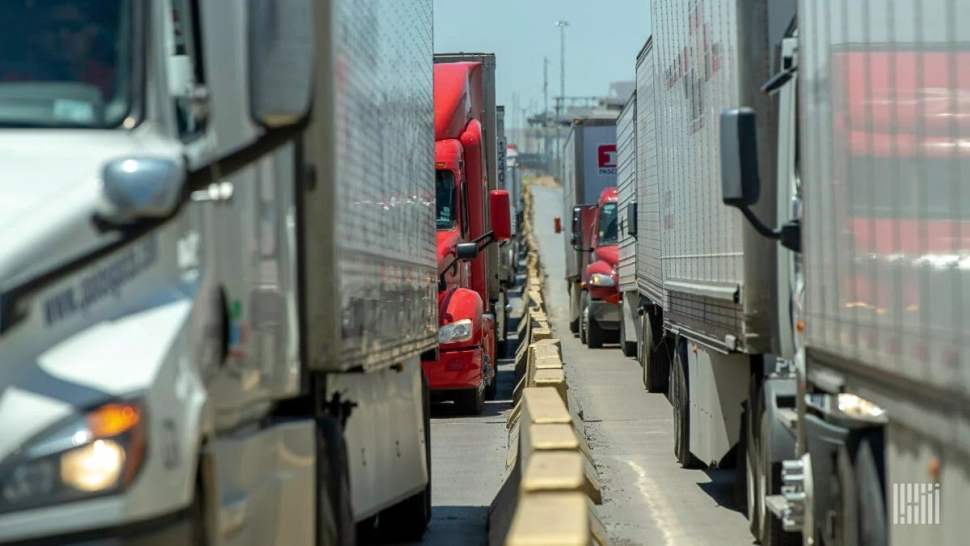
Massive highway blockades by farmers and truck drivers swept across Mexico on Monday, disrupting traffic in more than 20 states and raising the prospect of significant delays for cargo, cross-border freight and port operations.
The nationwide mobilization — led by ANTAC, the National Front for the Rescue of the Countryside (FNRCM) and the Movimiento Agrícola Campesino (MAC) — began before dawn and quickly clogged major routes including Mexico City–Toluca, Mexico City–Puebla, Mexico City–Querétaro, and corridors in Chihuahua, Sinaloa, Zacatecas, San Luis Potosí and the State of Mexico, according to La Jornada and El Pais.
Truckers say they are protesting increasing highway violence, including cargo theft, robberies and police extortion. ANTAC leaders report 54 to 70 truck robberies per day, while also accusing state, municipal and even National Guard personnel of participating in corruption at roadside stops, according to N+.
Farmers said they are demanding higher support prices for crops such as corn and beans and opposing reforms to the National Water Law.
Brokerage giant C.H. Robinson (Nasdaq: CHRW) said it has already seen freight flows rerouting around the blockades, including northbound traffic shifting between ports of entry in the Juárez–El Paso region. The company put out an advisory for its clients.
“The full impact remains uncertain and depends on how long the blockades persist. Historically, we’ve seen similar events cause transit delays of 4–8 hours and customs delays of 2–4 hours,” Veronica González, director of North American surface transportation, Mexico at C.H. Robinson, told FreightWaves in an email. “We’re already seeing traffic patterns shift — carriers that planned to use the Bridge of the Americas are rerouting through other ports in the Juarez–El Paso area, including Santa Teresa and Zaragoza. These diversions are creating congestion, but freight continues to move as of this morning.”
González said the company began activating contingency plans late last week in anticipation of Monday’s unrest.
In western Mexico, protesters blocked multiple toll plazas in Michoacán — including Panindícuaro, Santa Casilda, Zinapécuaro, Vista Hermosa and Ecuandureo — as part of a broader campaign demanding safer highways for the movement of goods and agricultural products.
Federal operators reported additional intermittent closures on routes such as Cuernavaca–Acapulco and the Mexico–Querétaro highway.
Logistics chokepoints were also hit. In Manzanillo — Mexico’s busiest Pacific container port — protest disruptions temporarily halted customs operations before activities resumed midday under pressure from customs agents.
The federal government has urged protest leaders to end the demonstrations, insisting that dialogue has remained open. González said they are monitoring the blockades and advising clients on how to proceed.
“The situation is very fluid, so we’re monitoring it closely and keeping an open line of communication with customers. This isn’t the first cross-border disruption this month, and it likely won’t be the last,” she said. “Our teams are experts at thinking outside the box and creating supply chain strategies to mitigate delays. One food and beverage customer chose to hold shipments altogether today, others expedited freight over the weekend, and some are exploring intra-Mexico or cross-border air freight options to maintain continuity — especially those with just-in-time automotive supply chains.”
Related: Cross-border boom collides with rising security risks
Brokerage Compliance Symposium
The day before F3. Every compliance issue you face - fraud exposure, carrier liability, FMCSA rules, cargo theft, insurance gaps - navigated by attorneys and operators defining best practices in a changing industry.
F3 Awards Dinner
The night before F3. FreightTech100 companies honored. FreightTech 25 and Shipper of Choice winners revealed live. Cocktail reception into dinner and live music - 300 industry leaders in one purpose-built room.
F3: Future of Freight Festival
Industry-defining keynotes, rapid-fire technology demos, and industry leaders networking in experiences across Chattanooga - plus the inaugural F3 Awards Dinner featuring the FreightTech and Shipper of Choice reveals.
The day before F3. Every compliance issue you face - fraud exposure, carrier liability, FMCSA rules, cargo theft, insurance gaps - navigated by attorneys and operators defining best practices in a changing industry.
The Signal at Chattanooga Choo Choo • Chattanooga, TN Register NowThe night before F3. FreightTech100 companies honored. FreightTech 25 and Shipper of Choice winners revealed live. Cocktail reception into dinner and live music - 300 industry leaders in one purpose-built room.
The Signal at Chattanooga Choo Choo • Chattanooga, TN Register NowIndustry-defining keynotes, rapid-fire technology demos, and industry leaders networking in experiences across Chattanooga - plus the inaugural F3 Awards Dinner featuring the FreightTech and Shipper of Choice reveals.
The Signal at Chattanooga Choo Choo • Chattanooga, TN Register Now