A San Francisco tile showroom lost nearly $200,000 in merchandise after falling victim to a sophisticated cargo fraud scheme that impersonated global engineering firm AECOM, underscoring growing risks for small and midsize shippers amid rising freight theft nationwide.
Claudia Visona, who runs Galleria Tile, a third-generation, women-owned business, said fraudsters posing as AECOM purchasing managers used falsified paperwork, fake logistics companies and standard Net-30 payment terms to move two high-value shipments across the country before disappearing.
“They sent W-9s, credit references — everything checked out,” Visona told FreightWaves. “They had LinkedIn profiles. The website looked real. There was nothing obvious that said this wasn’t legitimate.”
According to Visona, the scammers initially placed a rush order for about 25,000 square feet of porcelain tile, which was shipped to a storage facility in Baltimore. Although uneasy, she said repeated online checks continued to show legitimate information tied to the buyer.
Her concern escalated after she encountered a suspicious automated phone line and hired a private investigator in Maryland to verify the order. The investigator found trucks still delivering to the same storage facility, with drivers claiming they were hauling freight for AECOM. Attempts to confirm the order at AECOM’s actual Baltimore office were unsuccessful.
Despite lingering doubts, Visona said the fraudsters placed a second order — 41,000 square feet of luxury vinyl plank — promising to pay both invoices once the shipment was delivered.
“That’s when everything unraveled,” she said.
When Visona called the buyer and the delivery contact after the second shipment arrived, she said the voices on the phone did not match the identities shown on LinkedIn profiles.
“That was the moment I knew I’d been duped,” Visona said.
The combined cost of the stolen materials totaled about $174,000, she said — a devastating loss for a company that employs just three people and sells roughly $150,000 in product per month.
But the damage went far beyond the balance sheet.
“I don’t trust anyone anymore,” Visona said. “It shattered my view of how these systems work. I was always taught to trust authorities — and they weren’t there when I needed them.”
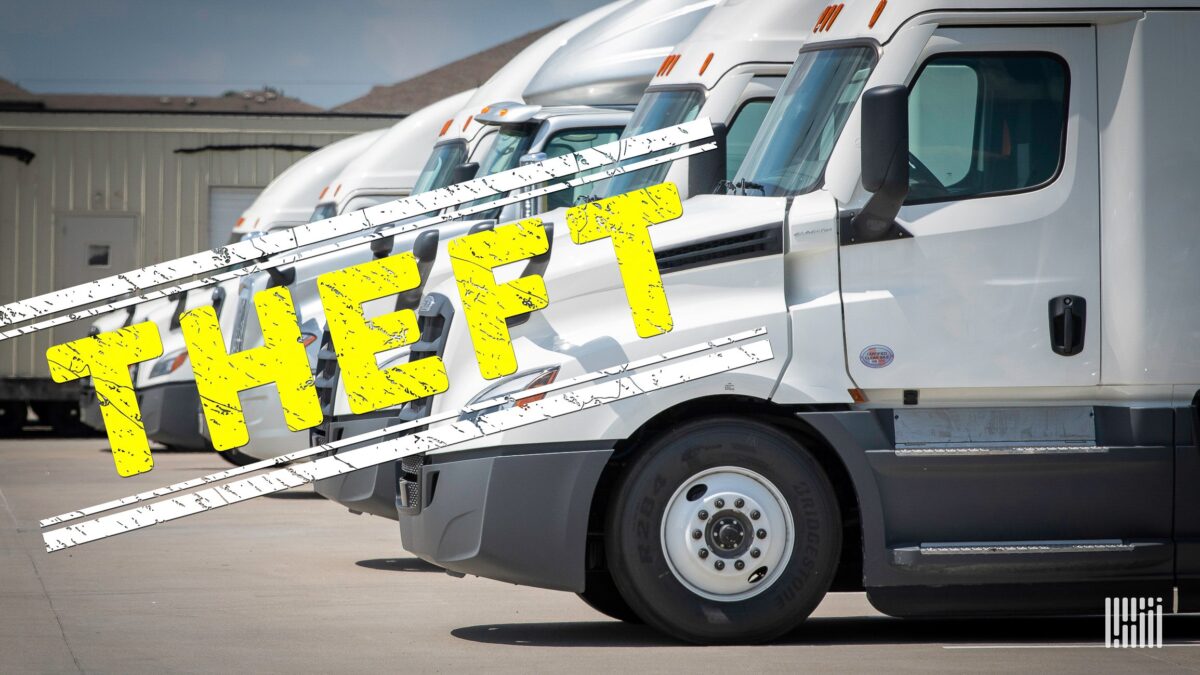
Through 2025, CargoNet’s quarterly data show steady incident counts (772 thefts in the third-quarter), even as criminals increasingly target high-value goods and adapt their tactics.
Supply chain security firm Overhaul reported a 29% increase in U.S. cargo theft in the third quarter compared to the year prior, with electronics and food/beverage among the most commonly targeted goods.
Cargo theft across North America has evolved from traditional trailer break-ins to sophisticated schemes, even using artificial intelligence, social engineering and marketplace reselling to move stolen goods faster than ever before, Danny Ramon, director of intelligence and response at supply chain risk firm Overhaul told FreightWaves
“Criminals have realized they can commit theft without ever touching the freight,” Ramon said during a FreightWaves interview in October. “They’re lowering their physical risk and scaling operations digitally — sometimes pulling off multiple thefts a day.”
Ramon said organized cargo networks are increasingly adopting AI-generated voices and synthetic identities to bypass verification calls or create fake carrier profiles.
In California, Visona said she filed reports with San Francisco police, contacted Maryland authorities, reached out to federal agencies including the Federal Trade Commission and Immigration and Customs Enforcement, and sought help from freight companies — with little response for weeks.
Using photographs, license plate data and delivery records gathered by her investigator, Visona said she ultimately identified an individual receiving the stolen goods and uncovered what she believes is a large, organized cargo theft ring operating along the East Coast.
The case gained traction only after another victim called 911 while a suspect was unloading freight at a public storage facility in Baltimore, she said. That arrest led to contact from the FBI, which informed her that multiple suspects had been federally indicted in a broader investigation involving hundreds of victims and millions of dollars in stolen cargo.
Visona said she is now listed in the FBI’s victim portal, though none of the individuals charged so far are directly tied to her shipments.
She alleges the group used public storage facilities, fake logistics companies and identity theft to move goods — including appliances, generators and construction materials — before reselling them domestically or exporting them overseas.
“They’ve been doing this for so long they don’t even hide it,” Visona said. “It’s all online — Facebook, TikTok. You can track where they go just by their reviews.”
Industry experts say theft by deception — where criminals obtain freight through fraudulent documentation rather than force — is one of the fastest-growing forms of cargo crime, particularly as freight payment terms stretch and verification gaps persist.
For Visona, the experience has forced permanent changes to how she does business.
“Everything now requires a deposit — no exceptions,” she said. “We check everything. But once the order leaves, it’s out of my hands. That’s what people don’t understand.”
Despite the setback, Visona said she is determined to keep the business alive — even if it means working without commissions and doubling sales.
“I’m not going to let them take this away from me,” she said. “This store is my family’s legacy. Most small businesses wouldn’t survive this. I’m going to make it — but it shouldn’t be this hard.”
Brokerage Compliance Symposium
The day before F3. Every compliance issue you face - fraud exposure, carrier liability, FMCSA rules, cargo theft, insurance gaps - navigated by attorneys and operators defining best practices in a changing industry.
F3 Awards Dinner
The night before F3. FreightTech100 companies honored. FreightTech 25 and Shipper of Choice winners revealed live. Cocktail reception into dinner and live music - 300 industry leaders in one purpose-built room.
F3: Future of Freight Festival
Industry-defining keynotes, rapid-fire technology demos, and industry leaders networking in experiences across Chattanooga - plus the inaugural F3 Awards Dinner featuring the FreightTech and Shipper of Choice reveals.
The day before F3. Every compliance issue you face - fraud exposure, carrier liability, FMCSA rules, cargo theft, insurance gaps - navigated by attorneys and operators defining best practices in a changing industry.
The Signal at Chattanooga Choo Choo • Chattanooga, TN Register NowThe night before F3. FreightTech100 companies honored. FreightTech 25 and Shipper of Choice winners revealed live. Cocktail reception into dinner and live music - 300 industry leaders in one purpose-built room.
The Signal at Chattanooga Choo Choo • Chattanooga, TN Register NowIndustry-defining keynotes, rapid-fire technology demos, and industry leaders networking in experiences across Chattanooga - plus the inaugural F3 Awards Dinner featuring the FreightTech and Shipper of Choice reveals.
The Signal at Chattanooga Choo Choo • Chattanooga, TN Register Now