




Cargo is the first group at Alaska Airlines to fully integrate operations with Hawaiian Airlines since the September 2024 acquisition, with combined booking systems and a unified sales approach to help acquire freight customers as it uses the merger to expand internationally for the first time, the company said Thursday.
Alaska Air Group (NYSE: ALK) gave the update in its fourth quarter earnings report, which showed cargo revenue increased 11% year over year to $146 million. Legacy Hawaiian operations gained 11.6%, while legacy Alaska Airlines Cargo revenue grew 5%. Full year cargo revenue was $549 million, up 19% year over year.
Hawaiian results include revenue from flying 10 Airbus A330-300 freighter aircraft for Amazon’s logistics network. The final two aircraft were delivered and entered service last summer.
The streamlining of two cargo systems and teams was completed in January, according to the financial presentation.
The Hawaiian merger has helped cargo performance on the top end and with margins, while creating new growth opportunities, said Chief Operating Officer Jason Berry, during a conference call with analysts on Friday.
“We’re seeing good momentum on all sides. We just actually got to a single selling platform earlier this month and that’s really . . . making it a lot simpler for our customers on the cargo side to book with us,” he said.
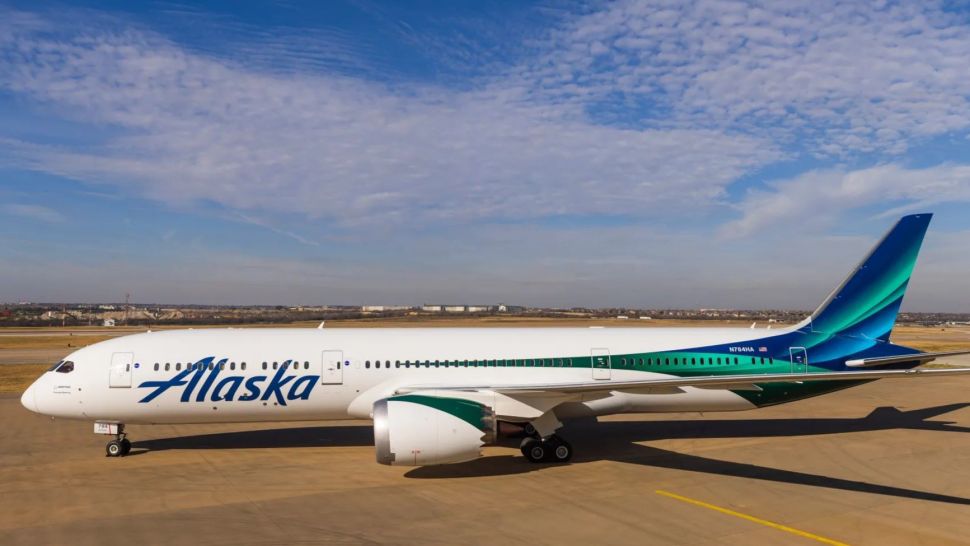
Alaska Airlines began operating from its Seattle hub to Tokyo and Seoul, South Korea, last year using Airbus A330-200 passenger jets from Hawaiian’s fleet. The carrier added Boeing 787-9 Dreamliners to the Tokyo route this month, increasing passenger and cargo capacity.
All systems, personnel and processes are nearly in place to support the launch of cargo operations to London Heathrow airport and Rome in the spring, management said in the earnings presentation. Alaska is scheduled to begin passenger service to those cities utilizing Boeing 787-9 widebody jets acquired in the Hawaiian deal, with cargo moving in the belly hold.
Management said it expects to complete integration for passenger booking systems in late April.
In January, Alaska Airlines also began offering its GoldStreak package express shipping service in the Hawaiian Islands, spokeswoman Tricia Bruckbauer confirmed. GoldStreak offers guaranteed next-available flight service within the United States for urgent shipments such as documents, medical and pharmaceutical supplies, and critical replacement parts.
Alaska Air’s international expansion enables it to offer shipping service to global freight forwarders for the first time and the company will work to funnel cargo from around Europe to the footholds there, said Ian Morgan, vice president of cargo, in comments published in Alaska Air Cargo’s newsletter last month.
“Almost every country with an air carrier flies to London, so we will be able to connect with even more carriers from an interline perspective, expanding our reach far beyond London. In the same way, we won’t just sell Rome, we’ll sell beyond Rome. And we’ll sell from other points into Rome and into London to come into Alaska Air Cargo’s network in the U.S. It’s all part of growing our global presence,” he said.
Integrating the Alaska and Hawaiian cargo operations took a lot of work. Other accomplishments last year included co-locating cargo teams in Seattle, New York (JFK), Hawaii and Portland, Oregon, to create a single drop-off point for shippers.
Corporate results
Overall, Alaska Air Group’s results were much better than analysts expected, with adjusted earnings per share of 43 cents after previous guidance of 10 cents per share. Management had to navigate a company IT outage and the 40-day government shutdown, which clipped $30 million from income, during the quarter. A second IT outage earlier in the year contributed to lower earnings for the full year.
Revenue grew 3% to $3.6 billion year over year, while adjusted net income declined from $125 million to $50 million. Adjusted full-year net income was down more than half to $395 million.
Management pointed to a possible first-quarter loss due to high West Coast fuel prices related to volatile refinery capacity, but envisions solid results for the rest of the year behind strong demand, new international routes, and cost synergies associated with the Hawaiian merger.
During the fourth quarter, the company secured a single operating certificate for Alaska and its new subsidiary, but continues to operate Hawaiian as a separate brand.
Click here for more FreightWaves stories by Eric Kulisch.
RECOMMENDED READING:
Alaska Airlines gains cargo momentum from Hawaiian integration
Northern Air Cargo challenges Alaska Airlines on Seattle-Anchorage route
Brokerage Compliance Symposium
The day before F3. Every compliance issue you face - fraud exposure, carrier liability, FMCSA rules, cargo theft, insurance gaps - navigated by attorneys and operators defining best practices in a changing industry.
F3 Awards Dinner
The night before F3. FreightTech100 companies honored. FreightTech 25 and Shipper of Choice winners revealed live. Cocktail reception into dinner and live music - 300 industry leaders in one purpose-built room.
F3: Future of Freight Festival
Industry-defining keynotes, rapid-fire technology demos, and industry leaders networking in experiences across Chattanooga - plus the inaugural F3 Awards Dinner featuring the FreightTech and Shipper of Choice reveals.
The day before F3. Every compliance issue you face - fraud exposure, carrier liability, FMCSA rules, cargo theft, insurance gaps - navigated by attorneys and operators defining best practices in a changing industry.
The Signal at Chattanooga Choo Choo • Chattanooga, TN Register NowThe night before F3. FreightTech100 companies honored. FreightTech 25 and Shipper of Choice winners revealed live. Cocktail reception into dinner and live music - 300 industry leaders in one purpose-built room.
The Signal at Chattanooga Choo Choo • Chattanooga, TN Register NowIndustry-defining keynotes, rapid-fire technology demos, and industry leaders networking in experiences across Chattanooga - plus the inaugural F3 Awards Dinner featuring the FreightTech and Shipper of Choice reveals.
The Signal at Chattanooga Choo Choo • Chattanooga, TN Register Now