




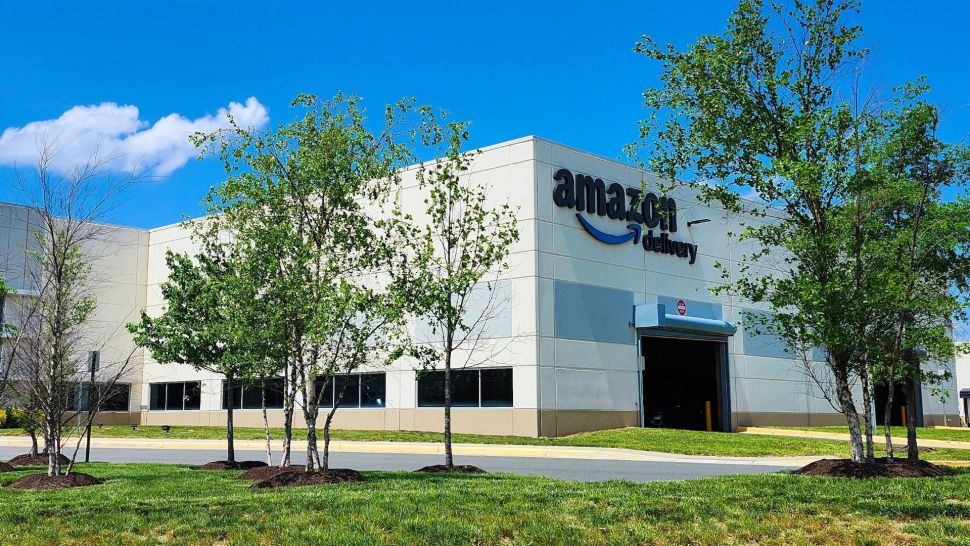
Amazon has indefinitely closed a large fulfillment center in Little Rock, Arkansas, after discovering major structural flaws that make it unsafe in the event of an earthquake, or other seismic activity.
The retail juggernaut confirmed in a statement shared with FreightWaves that the distribution center, located at the city’s inland port complex, didn’t comply with regulations for withstanding seismic activity.
“After conducting a full review with outside experts, we’ve determined that the structural engineering firm that designed the LIT1 building made errors in the initial design of the facility and the building requires significant structural repairs to meet seismic codes and ensure the safety of our team members,” Amazon said. “There’s no safe way to keep the building open during these repairs, and we’re left with no choice but to shut it down, which unfortunately impacts our entire team at LIT1. We’re working to support our teammates in either finding a new role at Amazon or another company and offering a transitional period with 90 days of full pay and six months of existing medical benefits, as well as a dedicated support team on the ground. We’ll also provide severance to those who aren’t able to find a new role at Amazon.”
The Arkansas Democrat & Gazette first reported the warehouse closure. It said that Santec, a Canadian professional services and engineering firm, was the building’s structural engineer. Seismic activity is rare, but Little Rock sits along a 150-mile fault line that triggered three major earthquakes in the early 1800s, according to the paper.
Amazon (NASDAQ: AMZN) employs more than 2,000 people, not including part-time workers, at the 3.6 millions square foot LIT1 fulfillment center, which has been closed since Oct. 22.
Another Amazon warehouse is currently under construction at the Port of Little Rock and expected to open in 2027.
East Coast network tuned up
Meanwhile, two other warehouse closures are part of a routine readjustment of the retailer’s logistics footprint. Amazon in the past three years has focused on trimming excess capacity built up during the e-commerce boom earlier this decade and optimizing its network for same-day delivery. A big part strategy involves having more local and regional facilities rather than fulfilling orders from fewer national hubs.
Amazon plans to close its warehouse in Sterling, Virginia, outside Washington, D.C., on January 30, and lay off 247 workers, according to a notice filed with the Virginia Department of Workforce Development and Advancement. The Washington Business Journal first reported on the shutdown decision.
“We’re always evaluating our network to make sure it fits our business needs and to improve the experience for our employees, customers, and partners. As part of that effort, we may close older sites, enhance existing facilities, or open new sites, and we weigh a variety of factors when deciding where to develop future sites or maintain a presence,” said spokesperson Amber Plunkeet in a statement.
She said that Amazon made the decision to close the Loudoun County facility because the lease was expiring and the company’s logistics footprint in Northern Virginia has grown significantly in recent years.
Employees were notified of the closure in May and nearly 125 have taken opportunities to transfer to other logistics facilities or AWS data centers in the area.
Last summer, Amazon closed a delivery station in Bensalem, Pennsylvania, that employed about 100 workers. They were given the option to transfer to 10 other facilities in the area. Amazon leased the building in 2020 during the height of the Covid online shopping boom, but has since opened several new, custom-built facilities in and around Bucks County, Plunkett explained. The Bucks County Courier Times previously reported on the closure.
Click here for more FreightWaves stories by Eric Kulisch.
Sign up for the biweekly PostalMag newsletter The Delivery here.
RECOMMENDED READING:
Brokerage Compliance Symposium
The day before F3. Every compliance issue you face - fraud exposure, carrier liability, FMCSA rules, cargo theft, insurance gaps - navigated by attorneys and operators defining best practices in a changing industry.
F3 Awards Dinner
The night before F3. FreightTech100 companies honored. FreightTech 25 and Shipper of Choice winners revealed live. Cocktail reception into dinner and live music - 300 industry leaders in one purpose-built room.
F3: Future of Freight Festival
Industry-defining keynotes, rapid-fire technology demos, and industry leaders networking in experiences across Chattanooga - plus the inaugural F3 Awards Dinner featuring the FreightTech and Shipper of Choice reveals.
The day before F3. Every compliance issue you face - fraud exposure, carrier liability, FMCSA rules, cargo theft, insurance gaps - navigated by attorneys and operators defining best practices in a changing industry.
The Signal at Chattanooga Choo Choo • Chattanooga, TN Register NowThe night before F3. FreightTech100 companies honored. FreightTech 25 and Shipper of Choice winners revealed live. Cocktail reception into dinner and live music - 300 industry leaders in one purpose-built room.
The Signal at Chattanooga Choo Choo • Chattanooga, TN Register NowIndustry-defining keynotes, rapid-fire technology demos, and industry leaders networking in experiences across Chattanooga - plus the inaugural F3 Awards Dinner featuring the FreightTech and Shipper of Choice reveals.
The Signal at Chattanooga Choo Choo • Chattanooga, TN Register Now