




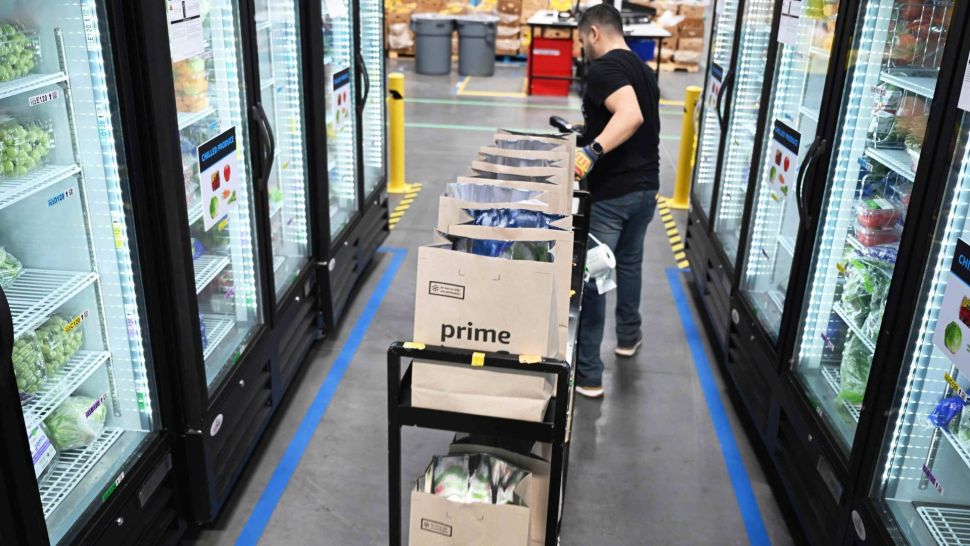
Amazon has expanded same-day delivery for fresh groceries to more than 1,000 cities and towns, with plans to again expand the service offering to over 2,300 areas across the United States by year-end, the retailer announced Wednesday.
The spread of temperature-controlled last-mile delivery means Amazon (NASDAQ: AMZN) has perfected its system for efficiency across a wider footprint and will help it compete with other retailers that offer fresh grocery delivery, according to analysts.
Prime members with access to fresh delivery will have the option to order produce, dairy, meat, seafood, baked goods, and frozen foods, alongside the millions of items such as everyday household essentials, electronics, fashion, home and garden, and more already available for same-day delivery on Amazon.com.
Amazon protects perishable goods with refrigerated rooms in its warehouses and insulated bags during delivery.
Early adoption of same-day delivery for perishable groceries like bananas and ice cream in regions like Phoenix; Orlando, Florida; and Kansas City, Missouri, proved its popularity and prompted Amazon to offer the service in more places. Amazon says many customers who buy perishables shop twice as often with same-day delivery service compared to those who don’t purchase fresh food. Among the cities with new same-day grocery delivery are Raleigh, North Carolina; Milwaukee; Tampa, Florida; and Columbus, Ohio.
For Prime members, same-day delivery is free for orders over $25 in most cities. If an order doesn’t meet the minimum, members can still choose same-day delivery for a $2.99 fee. For customers without a Prime membership, the service is available with a $12.99 fee, regardless of order size.
“We’re continuously innovating to make grocery shopping simpler, faster, and more affordable for our customers, especially Prime members,” said Doug Herrington, CEO of Worldwide Amazon Stores, in a news release. “By introducing fresh groceries into our Same-Day Delivery service, we’re creating a quick and easy experience for customers. They can order milk alongside electronics; oranges, apples, and potatoes with a mystery novel; and frozen pizza at the same time as tools for their next home improvement project — and check out with one cart and have everything delivered to their doorstep within hours.”
The popularity of online grocery delivery is spurring customers to turn more often to Amazon Fresh and Whole Foods Market for in-store needs, Amazon said.
Amazon generated over $100 billion in gross sales of groceries and household essentials in 2024, not including sales from Whole Foods Market and Amazon Fresh.
The big picture
Bank of America said Amazon’s push into fresh grocery suggests that Amazon has improved its grocery delivery model to the point where it is ready to deploy fresh delivery at scale without harming profit margins. Amazon perishables delivery poses a potential long-term competitive risk to Instacart, analyst Juston Post said in a client note.
Online penetration of the $941 billion grocery market is only 13.4% of total spending, according to research from Incisiv. Bank of America estimates there is a $90 billion revenue opportunity in grocery delivery.
“Fresh fresh grocery has been a significant missing piece in Amazon’s offering vs. competitors, such as Walmart and Target. With better grocery capabilities, Amazon should see important customer frequency benefits and potential lock-in with weekly grocery shopping not achievable in other verticals. We expect Amazon to refine and improve its grocery selection over time,” Post said.
Amazon is taking advantage of its advanced logistics network and online platform to upsize its grocery business without having to compete head-to-head with other grocery retailers by building stores, Brittain Ladd, a supply chain and e-commerce logistics consultant who spent three years at Amazon, said on LinkedIn. The losers in an Amazon grocery expansion are Kroger, Albertsons, Instacart, DoorDash, Uber and Target, he said.
“Amazon will first maximize the potential of Amazon.com and their logistics network to grow their grocery business before they consider opening more stores,” he wrote.
Click here for more FreightWaves/American Shipper stories by Eric Kulisch.
RELATED READING:
Brokerage Compliance Symposium
The day before F3. Every compliance issue you face - fraud exposure, carrier liability, FMCSA rules, cargo theft, insurance gaps - navigated by attorneys and operators defining best practices in a changing industry.
F3 Awards Dinner
The night before F3. FreightTech100 companies honored. FreightTech 25 and Shipper of Choice winners revealed live. Cocktail reception into dinner and live music - 300 industry leaders in one purpose-built room.
F3: Future of Freight Festival
Industry-defining keynotes, rapid-fire technology demos, and industry leaders networking in experiences across Chattanooga - plus the inaugural F3 Awards Dinner featuring the FreightTech and Shipper of Choice reveals.
The day before F3. Every compliance issue you face - fraud exposure, carrier liability, FMCSA rules, cargo theft, insurance gaps - navigated by attorneys and operators defining best practices in a changing industry.
The Signal at Chattanooga Choo Choo • Chattanooga, TN Register NowThe night before F3. FreightTech100 companies honored. FreightTech 25 and Shipper of Choice winners revealed live. Cocktail reception into dinner and live music - 300 industry leaders in one purpose-built room.
The Signal at Chattanooga Choo Choo • Chattanooga, TN Register NowIndustry-defining keynotes, rapid-fire technology demos, and industry leaders networking in experiences across Chattanooga - plus the inaugural F3 Awards Dinner featuring the FreightTech and Shipper of Choice reveals.
The Signal at Chattanooga Choo Choo • Chattanooga, TN Register Now