




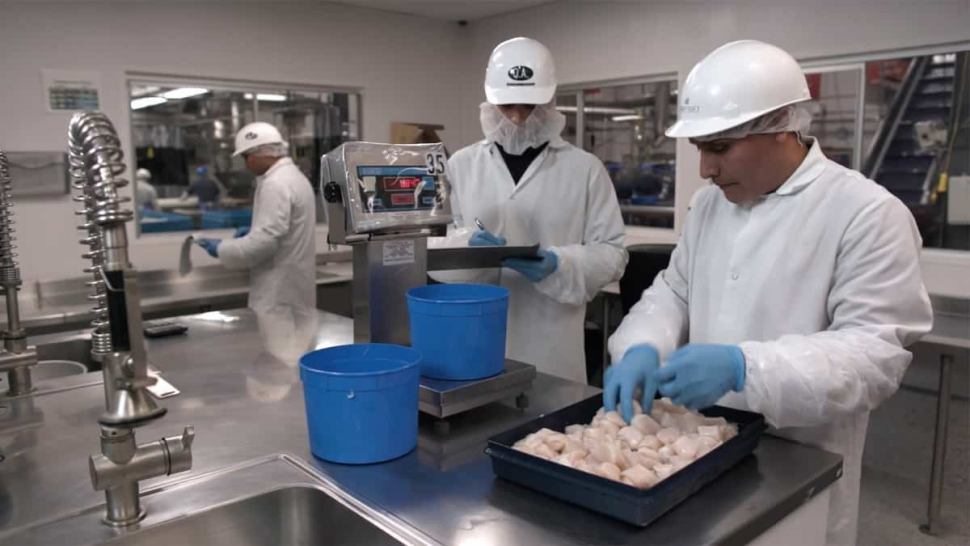
The IBM Food Trust platform signed a partnership with Raw Seafoods on October 17, bringing in blockchain-based traceability possibilities to the seafood supply chain that includes stakeholders like fisheries, distributors, retailers and restaurateurs. Of the different niche segments within supply chains, the seafood industry stands to gain a great deal from visibility into its product movement, as it remains one of the most counterfeited products within the food supply chain.
Earlier this year, a study by ocean-protection foundation Oceana found that one in every five seafood products tested were mislabeled – making 20% of all seafood in the supply chain at any given moment fraudulent. Oceana’s sample set ranged over 400 samples collected from 250 locations in 24 states and the District of Columbia.
The study found that mislabeling is an issue across the spectrum, right from the place where the fish is caught to the consumer-facing restaurants. Mislabeling is a rampant problem at the rear end of the supply chain, with Oceana finding 26% of restaurants and 24% of smaller markets selling mislabelled products, compared to the much-lower 12% of supermarkets that were found guilty of this practice.
In this context, the IBM Food Trust’s association with Raw Seafoods will help digitalize the supply chain for scallops sourced from the Atlantic Sea Scallop Fishery. The IBM Food Trust is a platform that caters to global food supply chains, leveraging blockchain technology to provide visibility and foster accountability between key stakeholders through an immutable record of food system data.
The chain of data starts from the minute the scallop fleets bring the catch on deck, with the fleet captain scribing details of the scallops onto the blockchain platform. This helps the rest of the stakeholders in the supply chain to accurately identify the quality, nature and volume of scallops harvested.
“The platform will also track when the boat landed portside, and when each scallop lot was hand graded, selected, packed and shipped to its final destination. This information, as well as images and video, is uploaded via satellite to a distributed ledger while still offshore. Once it is uploaded, this information is then available to permissioned parties, including distributors, suppliers, retailers, and their customers at point of sale,” said IBM in its statement.
In the U.S., roughly 80% of all the country’s seafood is imported, which makes tracking a necessity to ascertain the quality of products finding its way to American consumers. IBM believes that providing people with a way to understand where their seafood is coming from would help prop up the consumer numbers, which currently is less than favorable.
Though dietary guidelines recommend that people consume two servings of seafood every week, studies conducted by the U.S. Department of Agriculture estimated that about 80 to 90% of all U.S. consumers do not meet their seafood requirements. IBM points to the lack of trust among consumers and the widespread prevalence of food fraud and blatant mislabelling as primary factors for this low seafood patronage.
More specifically, having visibility into scallop fishing ultimately helps with creating sustainable fisheries – a necessity considering that the scallop population was nearly driven to a point where they could not replenish themselves due to overfishing. Keeping a tab on the volume of scallops fished annually will ensure the well-being of the fisheries, and also assist the Port of New Bedford, Massachusetts, in maintaining its position as the most valuable fishing port in the U.S.
At the receiving end of the supply chain are the seafood retailers and restaurateurs – with Santa Monica Seafoods and TAPS Fish House & Brewery looking to sell and serve scallops sourced through the IBM Food Trust platform.
“This data will help us forge a more direct and fruitful partnership with the captains and crew that are harvesting the seafood we serve,” said Tom Hope, director of food and beverage at TAPS Fish House & Brewery. “Not only will the data help us be more strategic as a business, we think customers are going to love it.”
F3: Future of Freight Festival
Industry-defining keynotes, rapid-fire technology demos, and industry leaders networking in experiences across Chattanooga - plus the inaugural F3 Awards Dinner featuring the FreightTech and Shipper of Choice reveals.
Industry-defining keynotes, rapid-fire technology demos, and industry leaders networking in experiences across Chattanooga - plus the inaugural F3 Awards Dinner featuring the FreightTech and Shipper of Choice reveals.
The Signal at Chattanooga Choo Choo • Chattanooga, TN Register Now