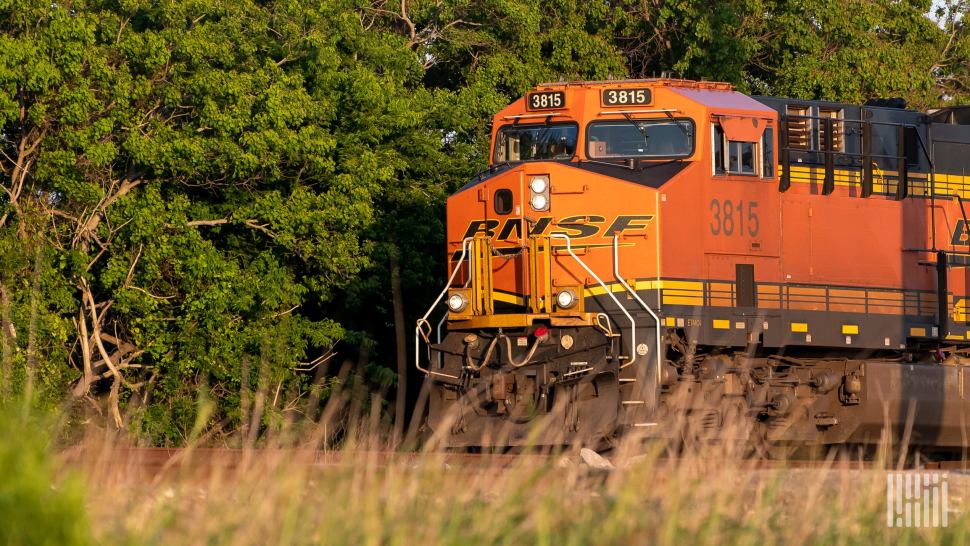
At least one rival railroad is doubling down on its opposition to the transcontinental merger of Union Pacific and Norfolk Southern after the companies filed their former application with federal regulators Friday.
“While we are still reviewing the [Surface Transportation Board] filing and will have more to say soon, what we have seen so far does not change BNSF’s opposition to the proposed merger,” said Chief Executive Katie Farmer, in a statement. “The transaction poses a significant threat to the U.S. economy and the American consumer through its long-term competitive harms. It would leave shippers with fewer options – driving higher rates and ultimately higher prices for consumers.
“This didn’t begin with customers asking for this merger, and the claimed public benefits appear to accrue primarily to shareholders. Past mergers demonstrate the risk of serious service failures with destructive impacts to customers, the U.S. rail network and the American economy.”
Both UP (NYSE: UNP) and NS (NYSE: NSC) say the tie-up will speed freight across their network by eliminating handoffs between railroads at busy interchanges such as Chicago and St. Louis. The merger will improve operations and lower costs for shippers who will only have to deal with paperwork for one railroad.
But some shippers are wary that the deal will concentrate too much pricing power with one carrier, leading to higher rates and major service meltdowns that accompanied past mergers. BNSF earlier dismissed speculation that it would pursue a merger with CSX (NASDAQ: CSX); the railroad dropped a similar agreement with Canadian National (NYSE: CNI) in 2000 after regulators intervened.
“This is precisely why the STB strengthened its merger rules: applicants must now prove their deal will not only preserve but enhance competition; that it serves the public interest, and its purported benefits can’t be delivered through partnerships,” Farmer said. “BNSF (NYSE: BRK-B) is confident that UP has not met these requirements. UP has a long history of making promises in past mergers that they back away from once they’ve secured approval. BNSF remains focused on achieving these same benefits through partnership and collaboration which results in streamlined service, and greater operational flexibility – delivering real, immediate benefits to customers.”
Subscribe to FreightWaves’ Rail e-newsletter and get the latest insights on rail freight right in your inbox.
Find more articles by Stuart Chirls here.
Related coverage:
Union Pacific and Norfolk Southern file historic rail merger application
‘Application day’ nears for UP-NS rail merger
Brokerage Compliance Symposium
The day before F3. Every compliance issue you face - fraud exposure, carrier liability, FMCSA rules, cargo theft, insurance gaps - navigated by attorneys and operators defining best practices in a changing industry.
F3 Awards Dinner
The night before F3. FreightTech100 companies honored. FreightTech 25 and Shipper of Choice winners revealed live. Cocktail reception into dinner and live music - 300 industry leaders in one purpose-built room.
F3: Future of Freight Festival
Industry-defining keynotes, rapid-fire technology demos, and industry leaders networking in experiences across Chattanooga - plus the inaugural F3 Awards Dinner featuring the FreightTech and Shipper of Choice reveals.
The day before F3. Every compliance issue you face - fraud exposure, carrier liability, FMCSA rules, cargo theft, insurance gaps - navigated by attorneys and operators defining best practices in a changing industry.
The Signal at Chattanooga Choo Choo • Chattanooga, TN Register NowThe night before F3. FreightTech100 companies honored. FreightTech 25 and Shipper of Choice winners revealed live. Cocktail reception into dinner and live music - 300 industry leaders in one purpose-built room.
The Signal at Chattanooga Choo Choo • Chattanooga, TN Register NowIndustry-defining keynotes, rapid-fire technology demos, and industry leaders networking in experiences across Chattanooga - plus the inaugural F3 Awards Dinner featuring the FreightTech and Shipper of Choice reveals.
The Signal at Chattanooga Choo Choo • Chattanooga, TN Register Now