




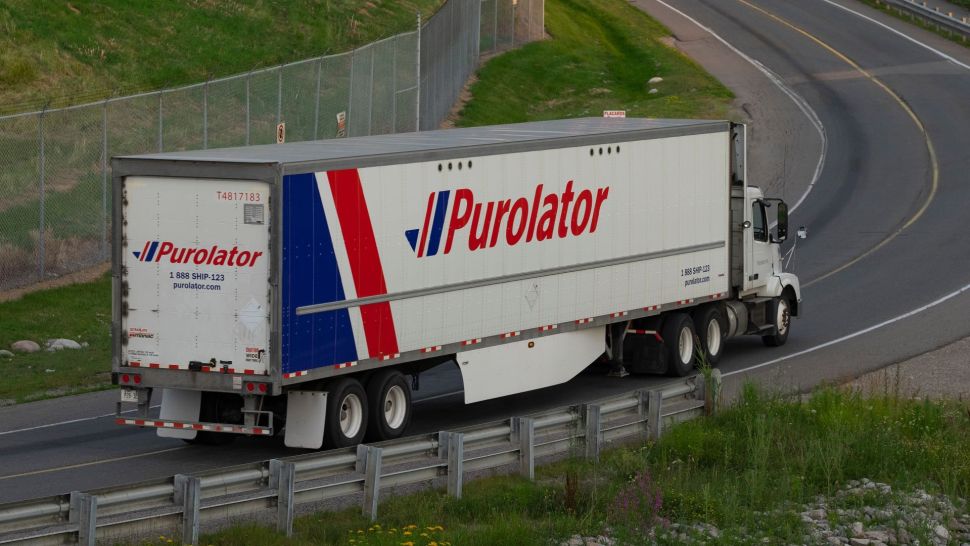
Purolator, Canada’s largest overnight parcel carrier, has acquired Livingston International, the country’s largest customs brokerage, to create a vertically integrated logistics service supplier for cross-border trade.
Purolator announced Tuesday afternoon that it had finalized the deal with Livingston’s owner, Platinum Equity, which bought the company in 2019. Terms were not disclosed.
The integrated freight, package and logistics provider, which is 91% owned by Canada Post, said the combination was made in response to the growing scrutiny by governments of international supply chains, including the application of tariffs, and to create a one-stop shop for transportation and compliance. Purolator International, the freight forwarding division, is based in Jericho, New York.
Trade with the United States became more fraught when President Donald Trump took office last month. He backed down Monday on imposing a 25% tariff on Canadian goods for 30 days after the Canadian government agreed to address U.S. concerns about border security.
Livingston provides a range of international trade services, but its bread and butter is handling formal processes, including document filing and payments, involved in clearing goods through customs authorities on behalf of importers and exporters. It supports shipping activity around the world but is heavily focused on cross-border trade with the United States. It also has a significant trade consulting practice.
Livingston is an intermediary for more than 30,000 businesses and has been a Purolator customer for more than 30 years. With more than 2,700 employees, it is the third-largest customs filer in the U.S.
“Strategically, this transaction represents a generational opportunity to acquire a highly complementary and growing international business with a proven track record of success,” said Purolator President and CEO John Ferguson in a news release. “With these broader capabilities and increased breadth, we can offer more choice and greater flexibility to current and future customers.”
Livingston’s existing leadership team will continue to manage its operations, Purolator said.
Tom Gould, a trade compliance expert who runs a customs consulting firm in Seattle, said Purolator will need to invest in Livingston’s brokerage business and treat it as a profit center if the integration of the two companies is to succeed.
Many freight forwarders own brokerage divisions but are used to a more transactional world where customers often switch vendors for a lower shipment price, whereas customs brokerage is more of a partnership.
“You’ve heard the phrase, ‘You date your forwarder, but you marry your broker.’ Companies like Livingston are brokers first. They build long-term relationships based on the customs brokerage business and sell freight as an add-on service,” Gould said in an email exchange. “Many of the larger forwarders sell freight first and brokerage is an add-on service. They simply chase freight deals year after year. If Purolator purchased Livingston to sell freight to their customers, then they will have a difficult time.”
Purolator is facing challenges similar to those at express carriers FedEx and UPS with declining parcel volumes as customers migrate from premium to cheaper options. Domestically it has to compete with Canada Post, which offers less expensive service with good reliability.
Click here for more FreightWaves/American Shipper articles by Eric Kulisch.
Write to Eric Kulisch at ekulisch@freightwaves.com.
RECOMMENDED READING:
Purolator replacing 70-year-old freighters in Canada with ATR72-500
Brokerage Compliance Symposium
The day before F3. Every compliance issue you face - fraud exposure, carrier liability, FMCSA rules, cargo theft, insurance gaps - navigated by attorneys and operators defining best practices in a changing industry.
F3 Awards Dinner
The night before F3. FreightTech100 companies honored. FreightTech 25 and Shipper of Choice winners revealed live. Cocktail reception into dinner and live music - 300 industry leaders in one purpose-built room.
F3: Future of Freight Festival
Industry-defining keynotes, rapid-fire technology demos, and industry leaders networking in experiences across Chattanooga - plus the inaugural F3 Awards Dinner featuring the FreightTech and Shipper of Choice reveals.
The day before F3. Every compliance issue you face - fraud exposure, carrier liability, FMCSA rules, cargo theft, insurance gaps - navigated by attorneys and operators defining best practices in a changing industry.
The Signal at Chattanooga Choo Choo • Chattanooga, TN Register NowThe night before F3. FreightTech100 companies honored. FreightTech 25 and Shipper of Choice winners revealed live. Cocktail reception into dinner and live music - 300 industry leaders in one purpose-built room.
The Signal at Chattanooga Choo Choo • Chattanooga, TN Register NowIndustry-defining keynotes, rapid-fire technology demos, and industry leaders networking in experiences across Chattanooga - plus the inaugural F3 Awards Dinner featuring the FreightTech and Shipper of Choice reveals.
The Signal at Chattanooga Choo Choo • Chattanooga, TN Register Now