Purchasing Managers Index drops; shipment volumes next?
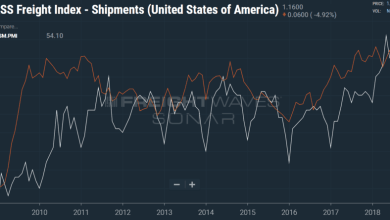
The falling Purchasing Managers Index tends to be correlated with the general freight market, the Cass Freight Shipment Index illustrates this. Is it time for carriers to pull back?
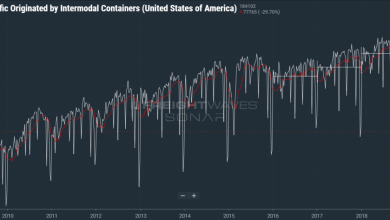
Record intermodal shipments on the rail for the second year in a row has deep implication for the trucking market into 2019. Trucking will benefit, at least partially, from Norfolk Southern’s latest decision.
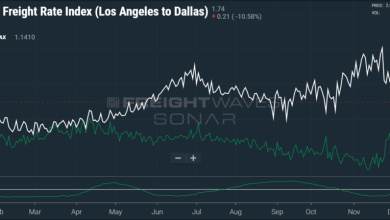
Carriers lower rates heading to the West Coast this year as inbound container volumes flood the ports.
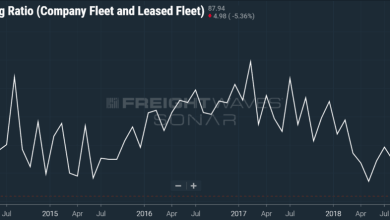
Carrier operating ratios continue to fall in October with a less volatile freight market.
The freight market has softened significantly in the last few months, but it is not due to a drastic reduction in volume.
The big oil news of the week was OPEC deciding to cut production in an attempt to stop the price of oil from dropping further. Carriers should be happy with this in the long run but gained a short term boost to margins in the meantime.
The spot market has been cooling over the past several months, but the players seem more uncertain than ever.
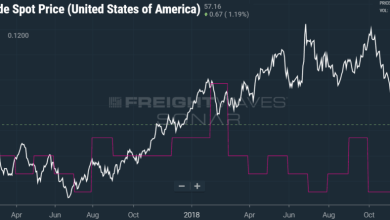
The benchmark price of domestic crude oil has dropped by 25% since early October. Historically, that would be a great thing for truckers, but with carriers operating more efficient trucks and oil production tied into the freight economy more than ever, it could be a warning sign for the broader freight market.
With the Thanksgiving holiday approaching, drivers are spending less time on the road and more time at home. This is shrinking the availability of capacity in the market.
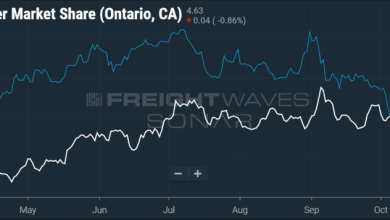
The Ontario, California market now has the edge over Atlanta as its OTMS value sits at 4.63% of the total outbound load volume in the U.S. according to SONAR data.
Ontario California has toppled the Atlanta market, the reigning capital of freight volume in the country. Surging volume is to blame. How long will the elevated volume last?
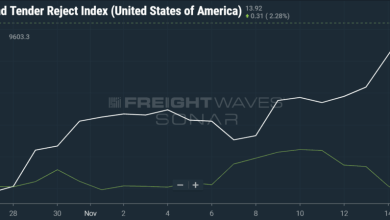
Lead times increasing are a sign that shippers are taking capacity shortages seriously. Carriers and brokers that depend on spot market freight are left wanting.
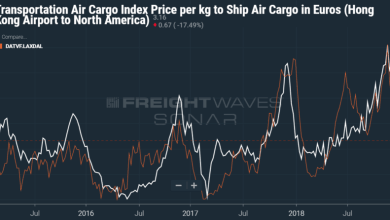
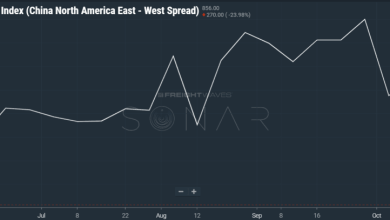
East coast bound containers from China are getting a pre-holiday discount as shippers increase volume to North America in front of tariff increases.
Demand for flatbeds always drop off this time of year, but is this a sign of a broader industrial slowdown?
Outbound tender volumes have shot up 26% out of the Savannah market as the Southeast deals with hurricane Michael
Trucking volumes have dropped by 6% since the beggining of the month of October. Is this an indication that the market is slowing or is it a normal seasonal pattern?
Since the ELD hard mandate went into effect, the trucking market has added 4% more truck capacity
Hurricane Florence has practically shutdown any outbound trucking activity out of the North Carolina coastal market
Charlotte and Atlanta see outsized inbound volumes as carriers move relief suppies into staging areas
Truckers are not singing the blues in Memphis (except on Beale Street): It’s currently the number one headhaul market in the U.S.