Cash burn saddles digital portal Freightos as shipping market sinks
Freight reservation aggregator Freightos issued its first earnings report as a public company. Reducing losses continues to be a challenge in a difficult economy.
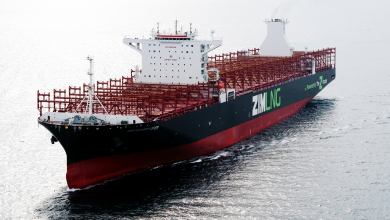

Shipping line Zim could face net losses in the quarters ahead, yet it has a hefty cash cushion to soften the blow.
With virtually no new ships on order and demand strengthening, the tanker business seems poised for a bull run.
A CERAWeek panel on the shipping industry complying with IMO 2050 focused on hydrogen but in an undetermined form.
U.S. businesses overshot in 2022, importing way more than they needed. The hangover is in full swing, depressing 2023 imports.
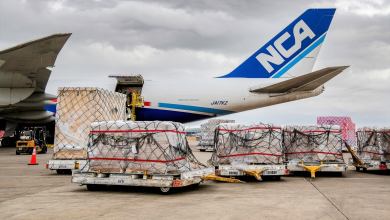
Shipping line NYK says operating Nippon Cargo Airlines is too expensive and plans to sell it to another Japanese carrier.
Supply chain issues are in the rearview mirror for Fed inflation policy, but for importers, there’s still room for improvement.
Container lines are unable to prop up rates because they haven’t culled enough capacity to compensate for weak demand.
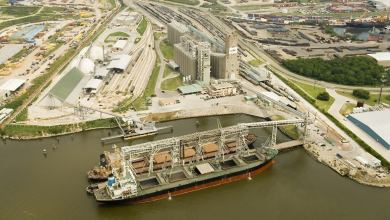
This week in Borderlands: Houston export terminal lets Temco capitalize on grain demand; $10M FAST lanes completed at World Trade Bridge; Spearpoint Logistics to open distribution hub in Texas; and Port Houston’s terminal container yards receive upgrade.
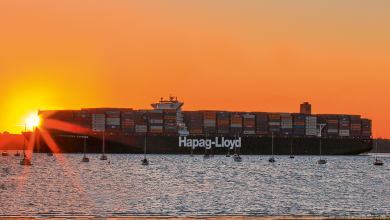
Shipping lines like Hapag-Lloyd have suffered sharp rate falls from the peak, but they’re nowhere near financial distress.
Kuehne + Nagel had a highly profitable year in 2022 despite macroeconomic headwinds, but results fell considerably in the fourth quarter along with transport demand.
Charter rates are far below the peak but higher than pre-COVID as liners continue to sign new container-ship leases.
The Port of Virginia says it’s nearly done with its channel deepening project, which will enable the port to allow for two-way traffic of ultra-large container vessels.
Despite lower demand for transportation, repealing the ocean carriers’ antitrust immunity is still in play on Capitol Hill.
In-transit visibility options have skyrocketed over the past several years, making it easier than ever to track a shipment’s en route movements. The same cannot be said, however, for terminal visibility.
Larger crude tankers are moving more U.S. exports on shorter voyages to Europe as long-haul volumes to China stagnate.
After a year of sanctions and “self sanctions,” shipping cargoes caught in the crossfire continue to find their way to buyers.
Last year’s peak retail season stands apart from previous years in that there wasn’t much of a “peak” at all.
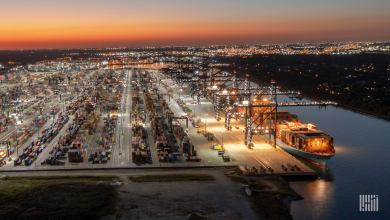
Cargo flow remained constant at ports in Houston and Corpus Christi, Texas, but slowed slightly in New Orleans.
New Alphaliner data highlights the enormity of new container shipping capacity that’s poised for delivery.