




Tony Mulvey
Monday, July 29, 2024
Late July cool-off
Spot rates have retreated off their recent high, but remain elevated compared to the rest of the year while demand and rejection rates are following seasonal trends.
Spot rates have retreated off their recent high, but remain elevated compared to the rest of the year while demand and rejection rates are following seasonal trends.

Why are truckload spot and contract rates moving in opposite directions, and what does that mean for the future?
The freight market is appearing to stabilize at higher levels after the Fourth of July, setting up for a better second half of 2024.

FreightWaves’ State of Freight webinar suggests we’ll see more trucking companies leave the market in 2024, creating more equilibrium between shippers and carriers.

What should we make of an extraordinary example of history repeating itself?
The freight market was more reactive to the Fourth of July holiday than the year prior, but capacity has been quick to return to the road.

The international shipping market has once again destabilized, with no real signs of relief.

The Southeast’s capacity issues do not appear to be originating from increasing demand, at least not from the region itself.

Maritime import demand for the U.S. is as strong as it has ever been, second only to the pandemic boom. What does this mean for the upcoming peak season, and how does it affect domestic transportation?
Volumes, rejection rates and spot rates remain elevated, setting the stage for the summer months.

The freight market has not turned strongly yet, but some historical patterns may help map when it will.
Volumes, rejection rates and spot rates remain elevated following the Memorial Day holiday, setting the stage for the summer months.

The industry-leading SONAR data platform announces a number of new releases and enhancements live at the Future of Supply Chain.

The June State of Freight discussion took place live at the Future of Supply Chain event in Atlanta.

The State of Freight webinar for May sees a key benchmark turn higher; is this the bottom?

The wide range of spot and contract rates being offered may help trigger a strong market shift later in the year.

Mother’s Day tightness has returned to the Florida refrigerated freight markets, but this year is different.
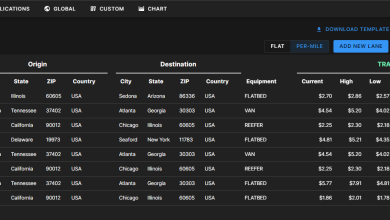
SONAR, the leader in freight market intelligence, today announces the availability of flatbed pricing data directly within the user interface of its Market Dashboard+ application.

In competitive lanes, loads shift from rail to road.

Demand pattern shifts are invisible in an oversupplied freight market, which may lead to problems once supply-and-demand conditions become more balanced.