




Michael Rudolph
Friday, March 10, 2023
The calm before the storm
Market conditions will likely become a bit more favorable before they get much worse.
Market conditions will likely become a bit more favorable before they get much worse.
Strangely enough, tender volumes are abiding by seasonal trends.

Perhaps the biggest question of 2023 for domestic trucking is when will the surplus of capacity fade to a point that prices stop falling. One data point provides deeper insight than simply a count of drivers or tractors.
Strangely enough, tender volumes are abiding by seasonal trends. The first quarter of 2022 was unusually active as shippers tried to get ahead of disruptions to capacity, which historically tightens in the spring.
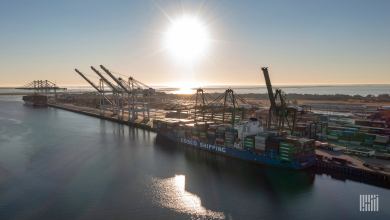
Lunar New Year normally brings a slow shipping period for imports, but the lead-in period was also lackluster. With many companies calling for a return to seasonal patterns later in the year, just how close are we to that being a reality?
With the inflation-squeezed consumer running through their discretionary budgets, freight demand is in a precarious state.

Many people get hung up on trying to figure out how much capacity is readily available in trucking when they should be more focused on monitoring demand trends.
Consumers’ appetite for discretionary spending has been usurped in favor of squirreling away income into personal savings.

FreightWaves, the leading price reporting agency to the North American freight market and provider of high-frequency global supply chain data, boosted year-over-year revenue growth in the fourth quarter.

There are encouraging signs that demand is returning to the U.S. trucking market, based on high-frequency truckload volume data from FreightWaves SONAR.

Are supply chains already manifesting significant changes in domestic transportation patterns?

A FreightWaves webinar featuring CEO Craig Fuller looked at the current state of the freight market.
Volumes have continued their recovery from the winter holiday season with a surge in pent-up freight demand unleashed into the market. Naturally, since last week’s data was affected by holiday noise, the Outbound Tender Volume Index (OTVI) faces some absurdly easy comps on a weekly basis. Even still, accepted tender volumes remain below their levels of 2021 and ’22 for the time being.

FreightWaves has announced that its TRAC spot rates have been integrated into FreightFriend, a truckload procurement platform.

Inventory growth in December is not a great sign for carriers who are expecting the market to bottom this winter.

Early freight data and channel checks would suggest the freight market could be stabilizing and clearer skies are ahead.
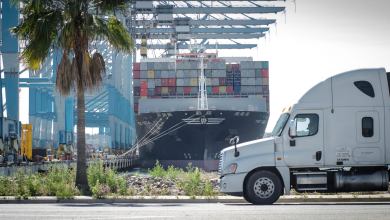
What conclusions can we draw from the relationship between imports and trucking?
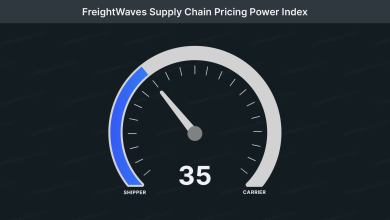
Volumes have continued their recovery from the winter holiday season with a surge in pent-up freight demand unleashed into the market. Naturally, since last week’s data was affected by holiday noise, the Outbound Tender Volume Index (OTVI) faces some absurdly easy comps on a weekly basis. Even still, accepted tender volumes remain below their levels of 2021 and ’22 for the time being.

Truckload carriers nearly auto-accepted load requests during the holidays. While this may look like a blessing to shippers, the implications are not great.
For all intents and purposes, the month of December has only three weeks of freight activity, as the final week from Christmas to New Year’s is effectively null. In years prior, freight demand has fallen throughout the month before bottoming out in that final week. So far, December looks to be following seasonal trends, which is to say that, while shippers’ activity is winding down, this movement is not alarming by itself. Rather, the gap in freight demand between 2022 and ’21 (or even ’20) is the main symptom of current ailments.