




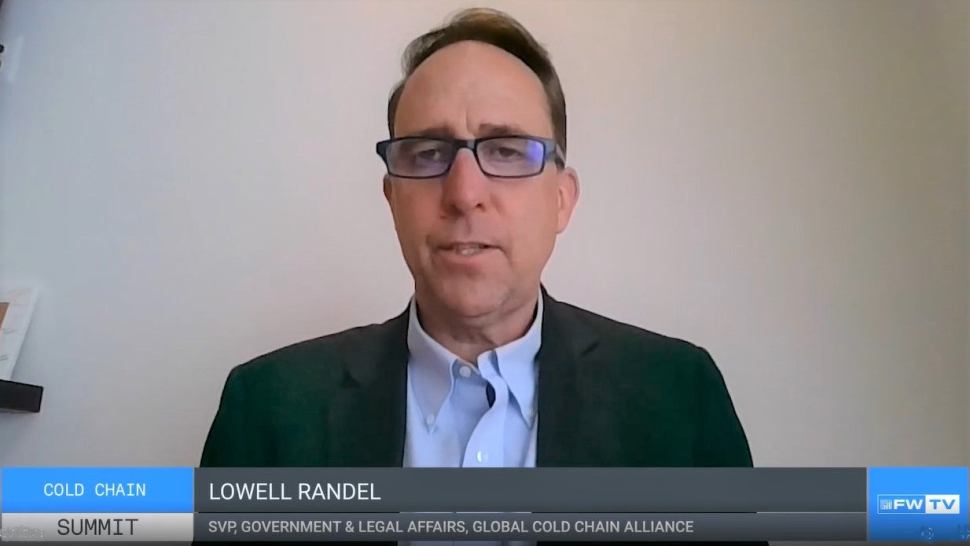
This fireside chat recap is from FreightWaves’ Cold Chain Summit.
FIRESIDE CHAT TOPIC: Regulatory pressures of the global supply chain
DETAILS: The Global Cold Chain Alliance (GCCA) represents 1,300 companies in over 85 countries that are involved in the cold chain industry. Lowell Randel, GCCA’s senior vice president for government and legal affairs, talks about regulations and policy issues affecting the industry, including new transportation data requirements, truck driver recruitment, and the government’s role in alleviating congestion in the supply chain.
SPEAKER: Lowell Randel, senior vice president, government and legal affairs, Global Cold Chain Alliance
BIO: For the past 12 years, Randel has been responsible for advancing the cold chain industry’s interests with government officials and helping GCCA members deal with regulatory compliance. Prior to joining the association, Randel served as deputy assistant secretary for congressional relations at the U.S. Department of Agriculture. In this role, Randel worked closely with the secretary of agriculture and across all USDA agencies to coordinate legislative policy and functioned as a primary contact between the department and Congress.
KEY QUOTES FROM LOWELL RANDEL:
“One of the top issues I hear from members is labor availability — whether that’s truck drivers, warehouse workers, manufacturing plant workers — it is pervasive across the whole economy. As a result, we have to be creative as an industry, but we also can look to our policymakers for some of that creativity as well … including expanding the driver pool by allowing those 18-21 to haul freight across state lines.”
“Our members in particular have been disadvantaged by inappropriate application of demurrage and detention. In some cases you may have an order for 10 containers that are supposed to come on Monday but don’t come at all, and then you get 50 on Wednesday that you can’t process — but then you’re still on the hook for demurrage and detention charges [from railroads and ocean carriers].”
Finding ways to make sure our infrastructure is ready for the future is critically important. A concern is, how do we pay for it, and are there ways to accomplish this without increasing taxes on an industry that has been working so hard to keep the food supply chain going through the pandemic?”
Brokerage Compliance Symposium
The day before F3. Every compliance issue you face - fraud exposure, carrier liability, FMCSA rules, cargo theft, insurance gaps - navigated by attorneys and operators defining best practices in a changing industry.
F3 Awards Dinner
The night before F3. FreightTech100 companies honored. FreightTech 25 and Shipper of Choice winners revealed live. Cocktail reception into dinner and live music - 300 industry leaders in one purpose-built room.
F3: Future of Freight Festival
Industry-defining keynotes, rapid-fire technology demos, and industry leaders networking in experiences across Chattanooga - plus the inaugural F3 Awards Dinner featuring the FreightTech and Shipper of Choice reveals.
The day before F3. Every compliance issue you face - fraud exposure, carrier liability, FMCSA rules, cargo theft, insurance gaps - navigated by attorneys and operators defining best practices in a changing industry.
The Signal at Chattanooga Choo Choo • Chattanooga, TN Register NowThe night before F3. FreightTech100 companies honored. FreightTech 25 and Shipper of Choice winners revealed live. Cocktail reception into dinner and live music - 300 industry leaders in one purpose-built room.
The Signal at Chattanooga Choo Choo • Chattanooga, TN Register NowIndustry-defining keynotes, rapid-fire technology demos, and industry leaders networking in experiences across Chattanooga - plus the inaugural F3 Awards Dinner featuring the FreightTech and Shipper of Choice reveals.
The Signal at Chattanooga Choo Choo • Chattanooga, TN Register Now