




The views expressed here are solely those of the author and do not necessarily represent the views of FreightWaves or its affiliates. This is part two of best practices to optimizing supply chains. Part one published on March 23, 2020. You can read it here.
Yesterday, I wrote about how shipping smarter and buying smarter can improve efforts to optimize the supply chain. Today I will take a look at the how network analysis/site location, partnership and talent affects that process. These items provide more depth to Part 1. The perspective remains from the shipper’s side.
Network analysis/site location
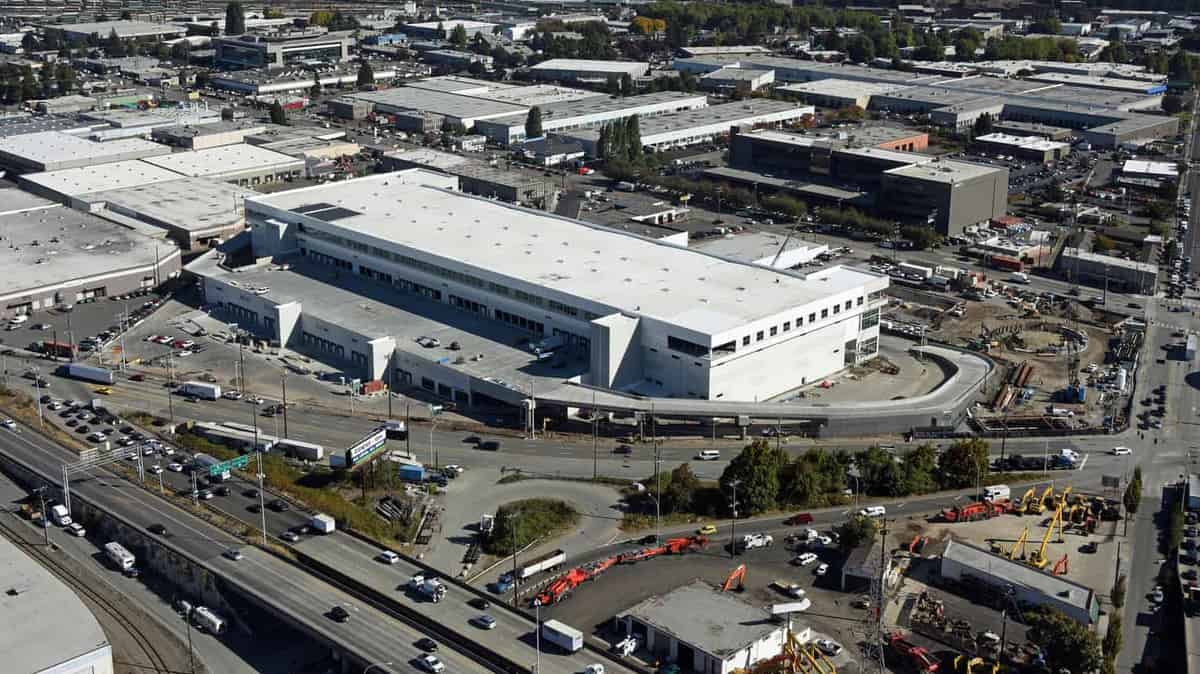
Distribution and fulfillment centers must be properly located in each region of the world to ensure optimum supply chain performance. This aspect is possibly the most important strategic planning piece of shipping smarter. Speed, weight/volume, and distance dictate cost, so you want to have the right configuration to balance inbound and outbound activity. Plotting this out can be expensive and complicated, but it can be vastly simplified with a logic first approach.
There are only about 15 distribution hub areas in the U.S., so there is no point in working through vectors to arrive at a perfect site that happens to be in the middle of a cornfield or swamp. It’s also true that top management often has a prejudice for or against specific locations. Once you narrow it down, you can proceed to evaluate the best locations by building a working model from actual transactions.
“Past is a prologue” for modeling supply chains. Products typically originate in set locations, so mapping their source from U.S. points or other country origins is a straightforward task using ocean, airfreight, intermodal, and truck resources. Then map your customer demand locations. Service levels heavily influence decisions to be made. Committing to a range from one-day to five-day delivery by product group makes a huge difference. Same-day delivery has recently come into the conversation, but this generally applies to specific products in major metro areas. If this is your criteria, you are likely on a wholly separate and costly track.
Location analysis
One- to five-day customer delivery operations have fundamental variables, including cost of warehousing and cost of duplicate inventory. It is impossible to locate the exact amount of inventory in multiple locations, so there will be excess inventory, and it will need to be cross shipped to different regions at times. Different areas of the country are more expensive to operate in than others. It is massively expensive to carry inventory in too many locations, so finding the minimum number of warehouse locations is imperative.
Your model for transport costs should utilize real rates extended out against actual weights and service requirements using small package, LTL, and full truck services. The rate negotiation process is a separate exercise because you want to compare apples to apples for shipment rating. Destination consolidation opportunities should be considered in each scenario. The baseline cost scenario may have been good or bad at allowing the same customer shipments to be tendered together.
My comments assume the use of third-party warehouses instead of buying and building your own facilities. Economic incentives and operating efficiencies will accrue to the owners of the warehouse who employ the labor force. These will flow through to the total cost of service and can be quantified as part of a comprehensive study.
The output from a functional network analysis should tell you where to put your warehouses within a logical radius. It is a separate process to locate the actual vendors that provide warehouse services within each area that can meet service level agreements. Qualified competitors can be compared and negotiated with to arrive at the best partner(s). Companies sometimes choose a warehouse provider before they choose a location and even ask them to perform the analysis. If so, what you are really getting is their effort to funnel your goods into the location that supports their optimization rather than yours. This can be a backward approach.
Locating DCs to serve EMEA is a similar task to the U.S. model, but requires important adjustments. Europe is not the same as the U.S., and factors like geography, language, and availability of services must be accounted for. Do you need a separate DC for the U.K. and Ireland? Are the products the same for different regions and countries? Are there duty considerations for shipping outside the EU? Can end of quarter crunches be supported in eastern and southern Europe? How will you service the Middle East and Africa?
DC locating in Asia requires knowledge of which countries may require dedicated services and import/export duty assessment rules. Australia/New Zealand, India, and China are separate geographic markets. Japan is akin to the U.K. as a distinct market, while Hong Kong and Singapore are popular DC locations due to their financial rules. The basics of speed, weight/volume and distance are still what dictate cost, so the process is similar to evaluating sites in the U.S. and EMEA.

Partnership
The phrase partnership can mean different things to parties engaged in a shipper/freight service supplier relationship. Is being a partner the path to vastly superior performance for shippers or is it merely a means for vendors to charge more? More integration can be accomplished through partnership, but does that mean long-term contracts where pricing is unteathered? Bid processes that are conducted every year, two years or three years can still be highly effective in establishing a good partnership.
Consider that some modes of transport are commodity-driven and some are more specialized, making it more difficult to change vendors, thereby justifying longer contracts. Conducting a bid process does not necessarily mean changing vendors, but it requires that the vendor re-earn the partnership.
It is important to have milestones for implementation and integration activities. Many shippers have related experiences where integration activities do not seem to ramp up until the final year or months of a long-term contract. What are the remedies if this takes place? What if your company is not devoting resources? It is vital to have upper management sponsorship within your company that parallels senior executive sponsorship within your freight service partner.
We recommend that operational and systems changes be engineered using a plug-and-play method to enable changing vendors if poor basic service performance and/or pricing level standards motivate hiring a new vendor. Shippers cannot afford to be held hostage if things break down.
Good partnerships are really about people, rather than strictly words in a contract. Shippers need to look at the stability of the individuals who execute the details. Will your supplier’s top management continue to support commitments and will day-to-day contacts remain the same? Do you like, respect and trust the people you will be working with? If an arbitrary decision comes down the management tree, will your key service provider people be willing to “fight city hall” for you? Turnover is a fact of businesss relationships whether people move to other companies or are transferred internally. Who do you go to if this takes place? Consider what happens if your company experiences changes in leadership or if new dynamics emerge in your company’s operations.

Talent
Success in sports or business can only be achieved by developing a good base of talented professionals. We suggest companies that ship and provide shipping services take advantage of the individuals coming out of universities and community colleges. You can get the inside track on the best people by offering internships and supporting local programs.
Take the trouble to communicate the game plan to all levels of your workforce. The current generation will find this highly motivational, especially if they can offer a degree of input. This approach and ongoing training will upgrade your team and promote talent retention.
Conclusion
Shipping smarter, buying smarter, network analysis/site location, partnership and enhanced talent will optimize usage of freight services. Don’t be shy about touting your success in these areas to upper management with stats and updates. Managing upward is the key to gaining their ongoing support and layering on additional improvements.
I welcome any and all thoughts and perspectives.
Phil Ramsdale owns and operates Transport Solutions LLC based in Long Beach California, which assists shippers with improving their efficiency. Phil is active with CSULB’s Operations and Supply Chain Management program and with CSCMP. He cane be reached through his LinkedIn profile: https://www.linkedin.com/in/phil-ramsdale-0b09122/
Brokerage Compliance Symposium
The day before F3. Every compliance issue you face - fraud exposure, carrier liability, FMCSA rules, cargo theft, insurance gaps - navigated by attorneys and operators defining best practices in a changing industry.
F3 Awards Dinner
The night before F3. FreightTech100 companies honored. FreightTech 25 and Shipper of Choice winners revealed live. Cocktail reception into dinner and live music - 300 industry leaders in one purpose-built room.
F3: Future of Freight Festival
Industry-defining keynotes, rapid-fire technology demos, and industry leaders networking in experiences across Chattanooga - plus the inaugural F3 Awards Dinner featuring the FreightTech and Shipper of Choice reveals.
The day before F3. Every compliance issue you face - fraud exposure, carrier liability, FMCSA rules, cargo theft, insurance gaps - navigated by attorneys and operators defining best practices in a changing industry.
The Signal at Chattanooga Choo Choo • Chattanooga, TN Register NowThe night before F3. FreightTech100 companies honored. FreightTech 25 and Shipper of Choice winners revealed live. Cocktail reception into dinner and live music - 300 industry leaders in one purpose-built room.
The Signal at Chattanooga Choo Choo • Chattanooga, TN Register NowIndustry-defining keynotes, rapid-fire technology demos, and industry leaders networking in experiences across Chattanooga - plus the inaugural F3 Awards Dinner featuring the FreightTech and Shipper of Choice reveals.
The Signal at Chattanooga Choo Choo • Chattanooga, TN Register Now