Last week, SONAR released a new dashboard within the Container Atlas application, titled Maritime Trade Console.
This is the latest of the dashboards added to SONAR and, like the others, is intended to enhance SONAR’s usability and is powered by Google Looker. It includes details on ocean data that haven’t been released elsewhere, as bookings and US Customs data are broken down into detail.
The best way for SONAR users to understand it is not to read this blog, but to poke around the app. The Maritime Trade Console can be found at the top of SONAR under Applications / Other Applications / Container Atlas – the Maritime Trade Console is the fourth tab at the top.

(Chart: SONAR Maritime Trade Console)
Use Case #1: Know who is most exposed to tariffs
Tariffs remain a moving target, and that uncertainty is part of the rationale for why we are rolling out the Maritime Trade Console now.
Two examples that come to mind immediately are imports from India and furniture.
Last month, I wrote a blog titled, People still have to sit, and other furniture observations from SONAR, following the announcement that furniture tariffs would be forthcoming. It illustrates the utility of the Maritime Trade Console makes it easy to assess potential impacts on a particular shipper vertical, such as furniture.
By using the Maritime Trade Console, I could easily detail:
- Where furniture is sourced
- Which US ports are most impacted
- The shippers and consignees most exposed to furniture
- The ocean carriers most exposed to furniture
I anticipate that investment analysts will find value in those breakdowns as they assess the impact of geopolitical events.
Data on imports from India to the U.S. can be used as an example of how the Maritime Trade Console enhances the product. SONAR could already quantify the drop in ocean booking volume in response to tariffs – the chart below shows booking volume from India to the US. The Maritime Trade Console takes that further to show which ports, shippers, consignees, and ocean carriers are most impacted.
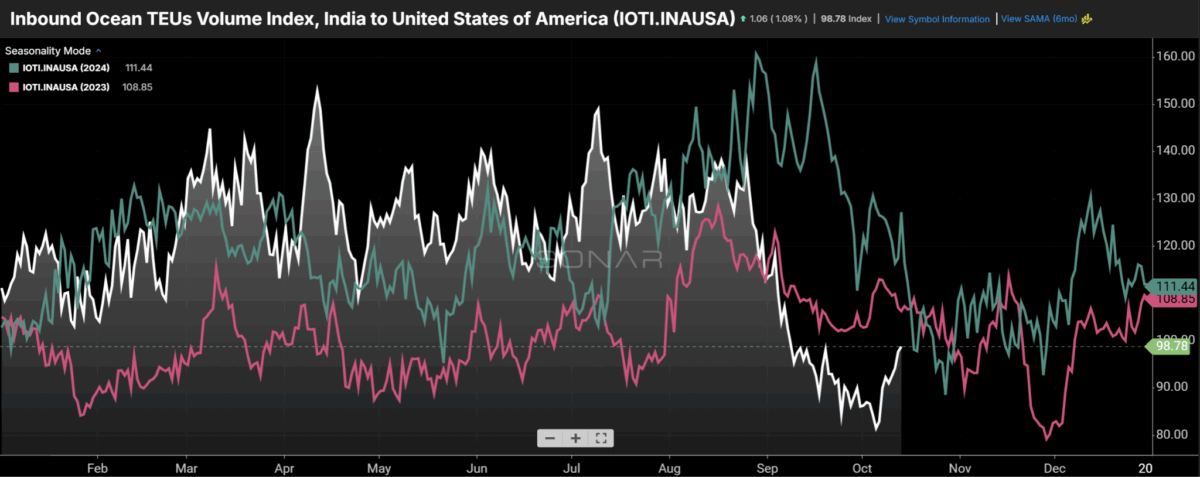
Bookings volume of imports from India to the U.S. has dropped sharply in response to tariff increases. (Chart: SONAR)
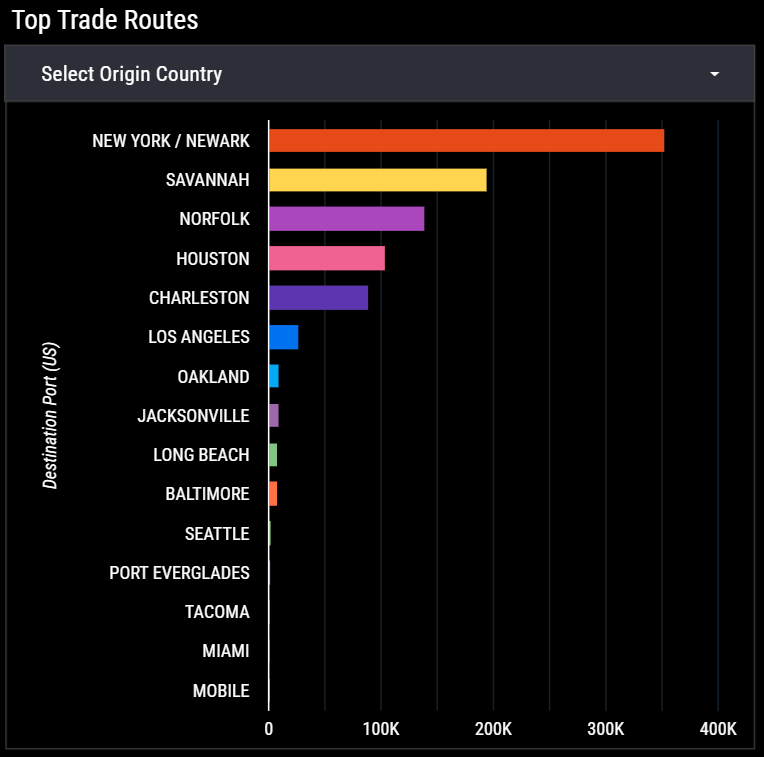
When sorting by the India-to-US trade lane only, the Maritime Trade Console shows that the East Coast ports are the ones most impacted by tariffs imposed on imports from India. (Chart: SONAR)
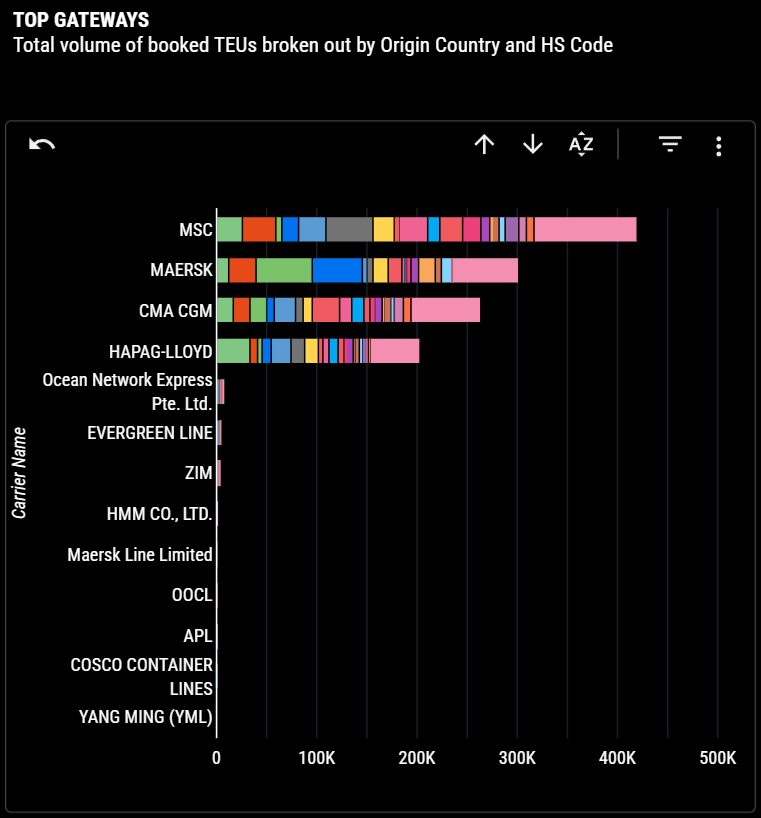
The Maritime Trade Console also shows which ocean carriers are most impacted by the India-to-the-US trade lane. The different colors in the bars represent different shipper verticals. (Chart: SONAR)
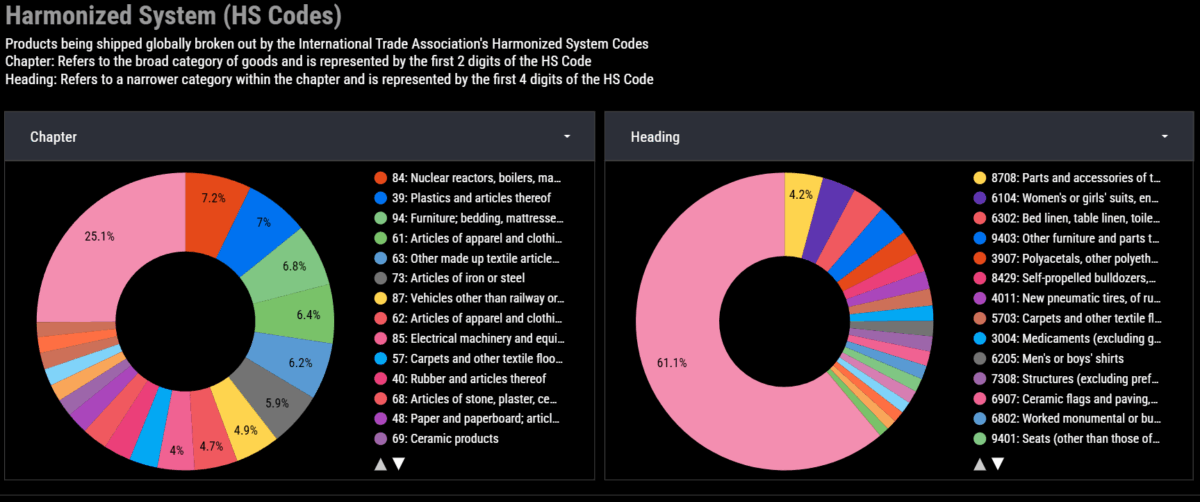
The Maritime Trade Console also shows which industries are most impacted, which include clothing and textiles, and also industrial equipment and components. (Chart: SONAR)
Use Case #2: Benchmarking by shipper vertical and/or geography
Shippers are best served by data that pertains to their industry specifically. Especially during volatile times, what’s happening with high-value and low-value shipments can differ greatly. For instance, relatively high-value imports from India might be able to withstand the current tariffs, but low-value imports will not.
The Maritime Trade Console allows shippers to benchmark the quality of the service they are receiving from carriers, for their industry only. For instance, the Maritime Trade Console provides visibility into the TEU Rejection Rate, which includes containers rejected because of blank sailings and also those that are being rolled to subsequent sailings. It also shows the average lead time between booking and departure date, and average transit times.
The charts above pertain only to apparel made in India to be imported into the US. Consistent with expectations, bookings and the ocean rejection rate have fallen sharply as tariffs have risen. (Chart: SONAR)
Use case #3: Business development
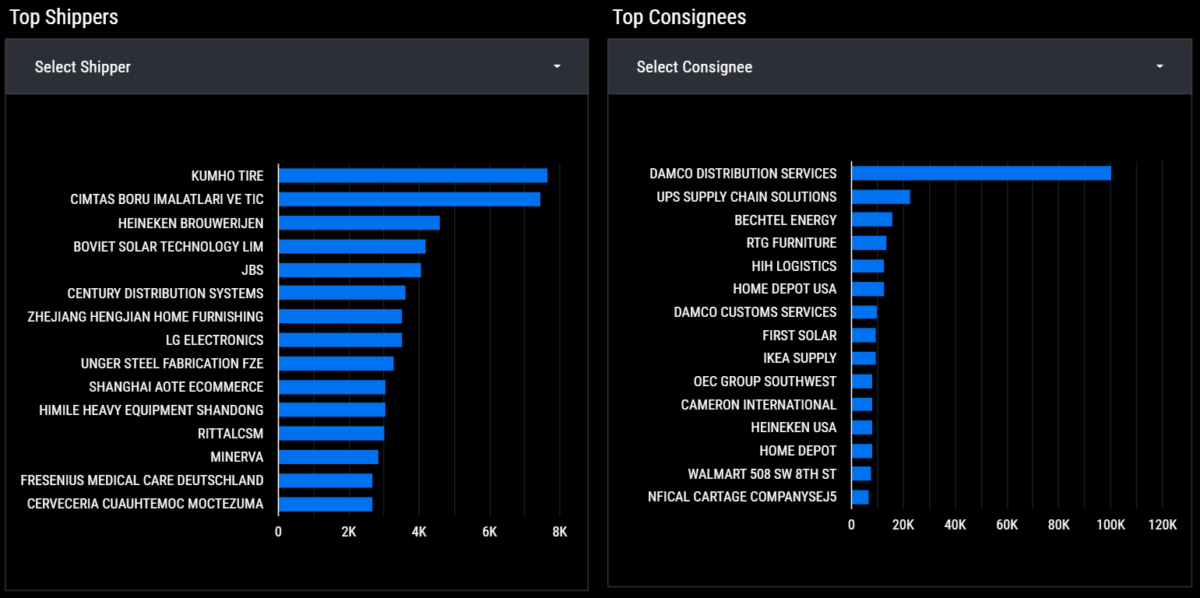
The Maritime Trade Console names names. That is, it provides the names of the largest shippers, consignees, and ocean carriers moving containers, sorted by shipper vertical and/or ocean origin/destination/trade lane. That information is valuable to railroads, port authorities, and drayage companies as they market their services. For example, a company that owns warehousing space in Dallas may want to call on shippers and consignees that use the Port of Houston in an effort to pick up volume that might otherwise be warehoused closer to the port.
The example below is a list of top shippers and consignees importing containers through the Port of Houston. Companies that serve that region should have this as a targeted customer list. (Chart: SONAR)
Brokerage Compliance Symposium
The day before F3. Every compliance issue you face - fraud exposure, carrier liability, FMCSA rules, cargo theft, insurance gaps - navigated by attorneys and operators defining best practices in a changing industry.
F3 Awards Dinner
The night before F3. FreightTech100 companies honored. FreightTech 25 and Shipper of Choice winners revealed live. Cocktail reception into dinner and live music - 300 industry leaders in one purpose-built room.
F3: Future of Freight Festival
Industry-defining keynotes, rapid-fire technology demos, and industry leaders networking in experiences across Chattanooga - plus the inaugural F3 Awards Dinner featuring the FreightTech and Shipper of Choice reveals.
The day before F3. Every compliance issue you face - fraud exposure, carrier liability, FMCSA rules, cargo theft, insurance gaps - navigated by attorneys and operators defining best practices in a changing industry.
The Signal at Chattanooga Choo Choo • Chattanooga, TN Register NowThe night before F3. FreightTech100 companies honored. FreightTech 25 and Shipper of Choice winners revealed live. Cocktail reception into dinner and live music - 300 industry leaders in one purpose-built room.
The Signal at Chattanooga Choo Choo • Chattanooga, TN Register NowIndustry-defining keynotes, rapid-fire technology demos, and industry leaders networking in experiences across Chattanooga - plus the inaugural F3 Awards Dinner featuring the FreightTech and Shipper of Choice reveals.
The Signal at Chattanooga Choo Choo • Chattanooga, TN Register Now