An analysis of the Federal Motor Carrier Safety Administration’s latest blitz—English Language Proficiency (ELP) violations—reveals that law enforcement is chasing its own tail. The states most aggressively enforcing the law are a distinct group from the states domiciling the offending carriers, contributing to a situation where carriers routinely resume operations without English-speaking drivers, despite multiple violations.
Since June 25, 2025, 13,257 ELP out-of-service violations have been issued, spanning a 31-week enforcement window.
Yes, 13,257 is a staggering number, and it’s fueled attention-grabbing headlines. ”We’ve removed 11,000+ truck drivers from the roads!” The framing suggests decisive enforcement and immediate results, but it obscures reality.
Nearly 60% of all ELP violations trace back to carriers domiciled in just five states: Texas, Florida, Illinois, California, and Ohio. What really matters isn’t the total in the headlines. The more important questions are not how many violations were written, but where they were written, where the carriers involved are based, and whether the same companies continue to appear in the data.
Inspection State vs. Carrier Home State
To understand what is actually happening, enforcement activity must be separated from the carrier’s domicile.
When viewed side by side, we can see that ELP enforcement is quite uneven. A relatively small number of states are doing most of the inspecting, while a different set of states account for a disproportionate share of the carriers being cited.
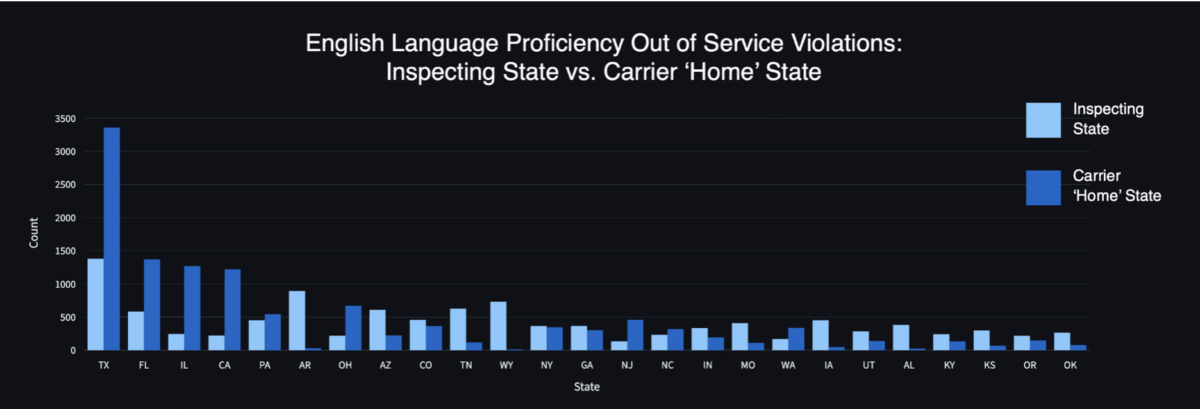
Illinois and California stand out. Both states issue few ELP violations, yet carriers domiciled in those states appear repeatedly in ELP out-of-service counts nationwide.
Texas provides a clearer example. If we look at the total number of violations issued, Texas appears to be performing well with 1,381 violations. But on the carrier side, Texas-domiciled carriers account for 3,357 ELP violations nationwide, more than twice as many as the state has issued.
Some states are enforcing ELP at the roadside. Others are exporting the problem. Which brings us to the question, how often are states issuing ELP violations to out-of-state carriers?
Out-of-State Offenders
The states enforcing ELP most aggressively are often not the states where the cited drivers and carriers are based. The key metric here is Out-of-State Rate, which measures the share of a state’s ELP violations issued to carriers domiciled elsewhere.
In Wyoming, 99% of ELP violations involve out-of-state carriers. Arkansas comes in second at 98.5%, with Tennessee at 95.7%. These states rarely cite their own trucking companies and drivers. Instead, they are catching trucks attempting to move through their states.
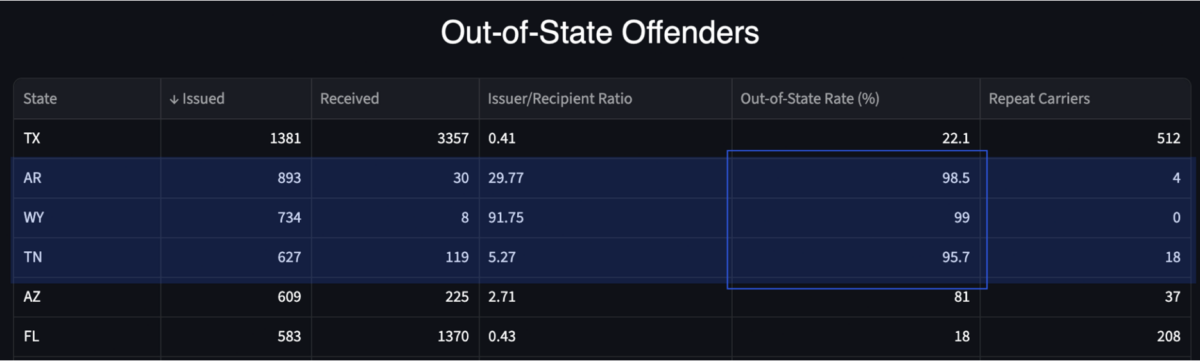
Texas again illustrates the contrast. Its out-of-state rate is significantly lower, not because violations are rare, but because many of the carriers involved are based there. Texas-domiciled carriers account for thousands of ELP violations nationwide, even though Texas conducts far fewer inspections itself.
The data shows that enforcement is happening, but is it stopping the behavior from repeating? If drivers are being “removed from the roads,” as the headlines suggest, are the inspectors encountering different trucking companies and drivers each time, or the same ones over and over?
Repeat Offenders
The greatest frustration with ELP enforcement is that it is treated as a temporary inconvenience or a time-out, rather than “removal from the truck.” Inspection data provides reason to question whether that perception is unfounded.
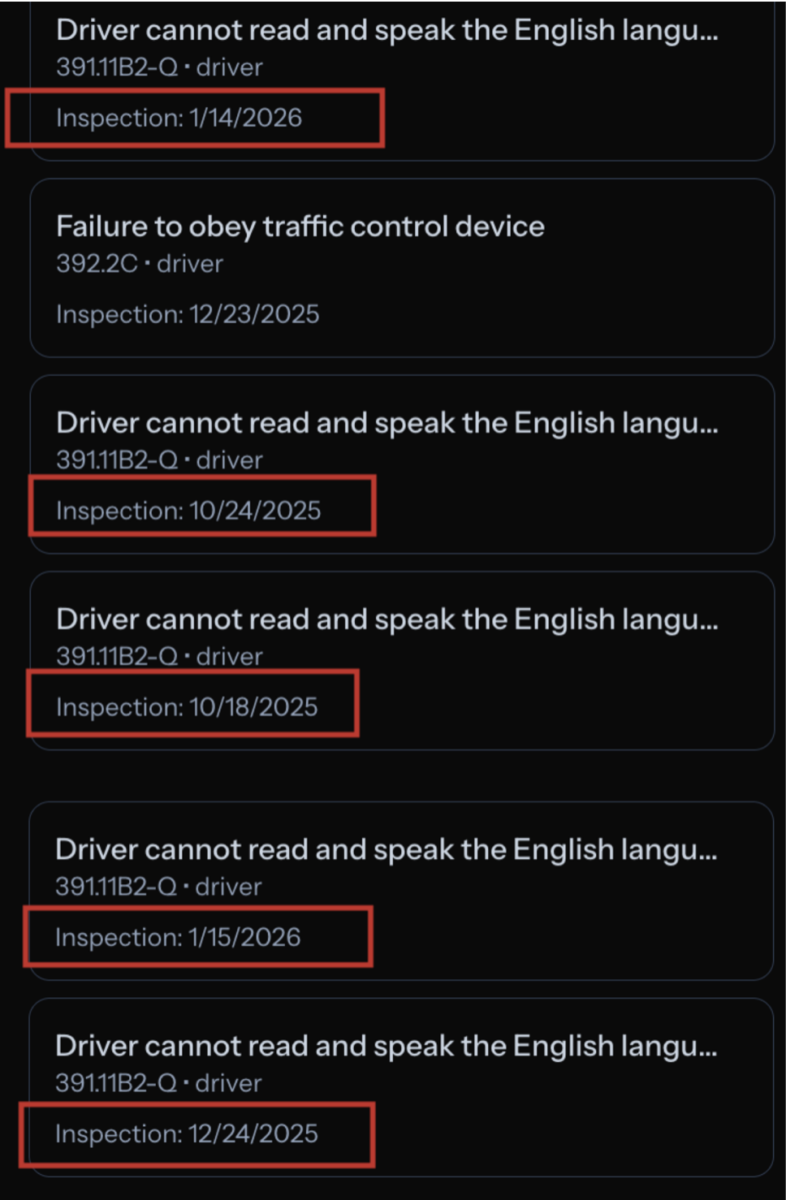
In one documented case, the same truck was inspected and placed out of service five times within a three-month period. Inspection records do not identify the driver, so it’s not possible to confirm whether the same individual was operating the vehicle each time. What can be confirmed is that the same truck repeatedly returned to the road and was repeatedly placed out of service.
When ELP violations are grouped by carrier, we see similar patterns. Multiple companies appear again and again. This repetition raises legitimate questions about whether current enforcement mechanisms are changing behavior or merely documenting it.
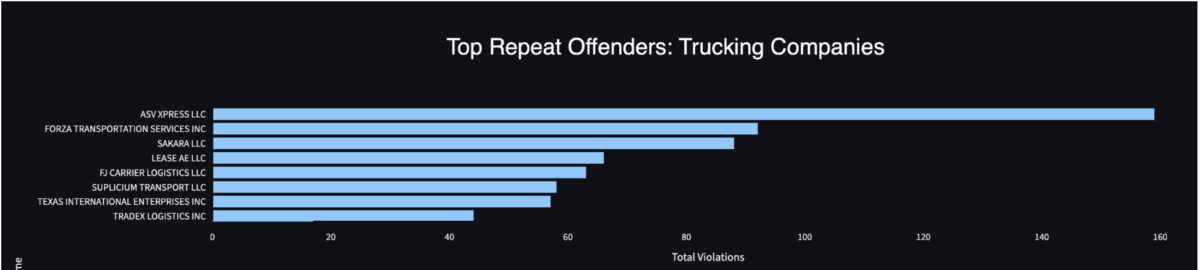
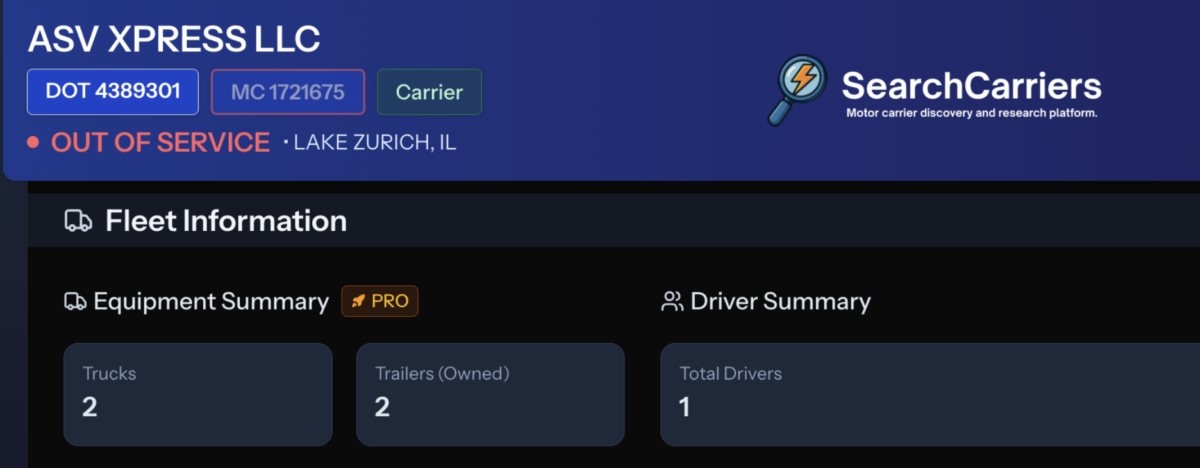
Repetition alone is concerning. Comparing those repeat violations to the fleet information carriers report to the USDOT/FMCSA makes the situation harder to reconcile.
One carrier accumulated 159 ELP out-of-service violations, yet reported only two trucks and one driver on its USDOT record.
Another accumulated 88 violations while reporting two trucks and two drivers.
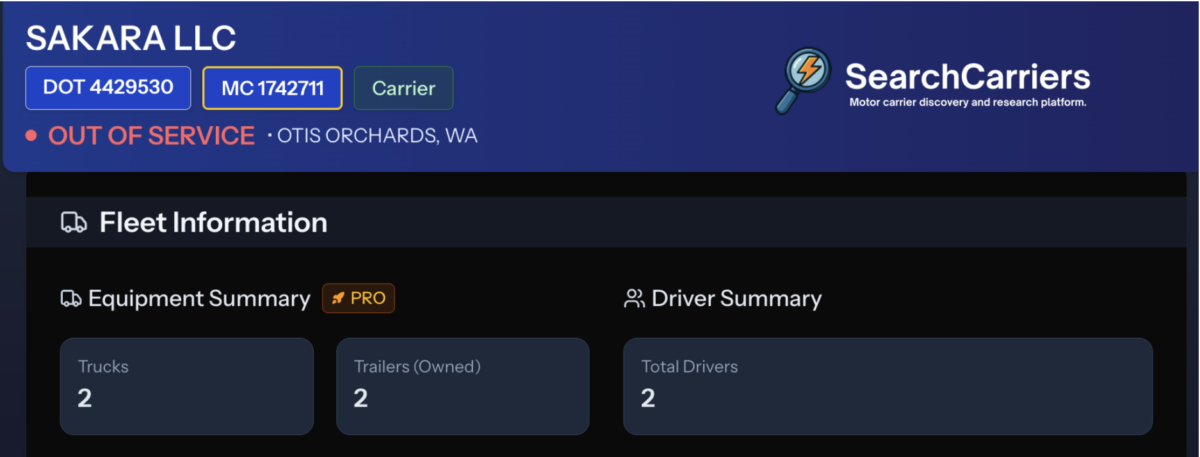
In both cases, these violations occurred over a three-month period.
That leaves us with limited explanations. Either the two drivers generated an extraordinary volume of violations in an unusually short time, or the information reported to federal regulators does not reflect what was operating on the road.
Neither explanation is reassuring. As the kids would say, the math isn’t mathing here.
Unanswered Questions
The patterns in the ELP data are difficult to ignore. A small number of states account for most enforcement activity. A different group of states consistently appears as the home base for cited carriers. And a subset of carriers continues to show up repeatedly, even when their reported fleet sizes make absolutely no sense.
The headline totals suggest real action, but the data suggest something much more complicated.
How long do repeat offenders get to run the highways before meaningful action is taken? What happens after a carrier has already been cited once, twice, or twenty-seven times? And when a carrier is finally placed out of service, does the operation actually stop, or will they just tape on a new USDOT number and keep trucking?
Until enforcement, carrier oversight, and fleet reporting align more closely with what’s really happening on our highways, these violations will continue to accumulate.
And the math will keep not mathing.
Brokerage Compliance Symposium
The day before F3. Every compliance issue you face - fraud exposure, carrier liability, FMCSA rules, cargo theft, insurance gaps - navigated by attorneys and operators defining best practices in a changing industry.
F3 Awards Dinner
The night before F3. FreightTech100 companies honored. FreightTech 25 and Shipper of Choice winners revealed live. Cocktail reception into dinner and live music - 300 industry leaders in one purpose-built room.
F3: Future of Freight Festival
Industry-defining keynotes, rapid-fire technology demos, and industry leaders networking in experiences across Chattanooga - plus the inaugural F3 Awards Dinner featuring the FreightTech and Shipper of Choice reveals.
The day before F3. Every compliance issue you face - fraud exposure, carrier liability, FMCSA rules, cargo theft, insurance gaps - navigated by attorneys and operators defining best practices in a changing industry.
The Signal at Chattanooga Choo Choo • Chattanooga, TN Register NowThe night before F3. FreightTech100 companies honored. FreightTech 25 and Shipper of Choice winners revealed live. Cocktail reception into dinner and live music - 300 industry leaders in one purpose-built room.
The Signal at Chattanooga Choo Choo • Chattanooga, TN Register NowIndustry-defining keynotes, rapid-fire technology demos, and industry leaders networking in experiences across Chattanooga - plus the inaugural F3 Awards Dinner featuring the FreightTech and Shipper of Choice reveals.
The Signal at Chattanooga Choo Choo • Chattanooga, TN Register Now