




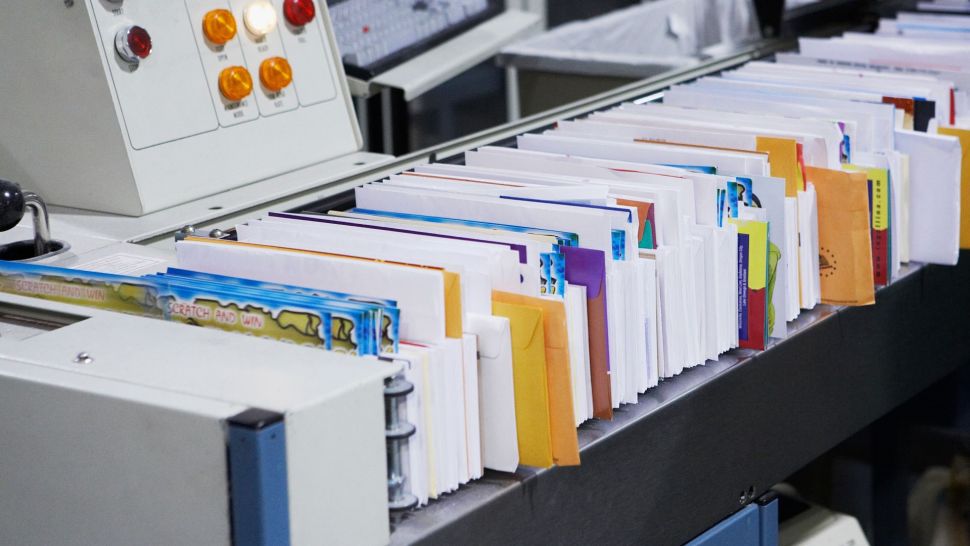
A capital markets reform bill passed by the House on Thursday includes a provision that would allow electronic delivery to become the default mechanism for providing certain regulatory documents to investors, further reducing the amount of physical mail handled by the financially beleagured U.S. Postal Service.
The legislation is the latest example of the federal government cutting into the Postal Service’s core business.
Section 205 of the INVEST Act directs the Securities and Exchange Commission to finalize a rule, within a year of enactment, permitting investment companies to switch to electronic-only delivery for financial information that is legally required to be sent to clients in hardcopy form. Customers would be able to opt to receive paper documents if they want.
The SEC currently allows electronic delivery of certain documents if a registered institution provides notice that the information is available electronically and clients voluntarily opt in.
Proponents said modernizing disclosure requirements makes the financial system more efficient, reduces waste and is more secure from theft than physical mail.
“Electronic delivery provides a more widely accessible, cost-effective, and speedy means of conveying and receiving information than paper delivery. Using electronic delivery to communicate with investors also creates opportunities for the industry to provide dynamic, real-time information rather than static data, making it easier for consumers to find information at the level of detail they prefer,” the Investment Company Institute said in a news release.
Mass marketers and print-industry suppliers oppose the measure, saying it threatens jobs and revenue in the direct mail sector, as well as for the U.S. Postal Service.
Many older Americans are less comfortable with technology and may prefer paper documents because they have trouble navigating digital platforms. The opt-out process for paper delivery may add complexity for seniors, Mackay Mitchell Envelope company said in a LinkedIn post. E-delivery isn’t a practical solution for households in rural areas without reliable high-speed Internet, it added.
The measure, which has yet to be considered by the Senate, “would also have a significant detrimental impact on the U.S. Postal Service in terms of decreased revenue and volume at a time it can ill afford such a loss. For nonprofit mailers, anything that further weakens the Postal Service’s ability to provide an affordable means to communicate with donors, members, and other Americans could have a severe impact,” said Kathleen Siviter, executive director of the Alliance of Nonprofit Mailers, in a letter to members.
The Postal Service had an operating loss of $2.8 billion during the fiscal year ended Sept. 30, with first-class mail volumes down 5%.
Paper communications remain one of the most secure channels. Requiring digital document transmission increases exposure to cyberattacks, identity theft, and data breaches, Siviter argued.
“Digital disclosure does not equal comprehension. Paper ensures critical financial information is actually seen, read, and retained — not buried in inboxes or spam folders. Digital-only systems fail during outages, disasters, or cyber events. Paper provides a necessary backup that keeps information moving when systems go down,” the letter said.
In October, the Social Security Administration stopped sending paper checks to retired beneficiaries in response to a presidential executive order designed to modernize payment systems, save administrative costs, and reduce fraud and identity theft across the government. The SSA said the transition only affects a small group of people who have not yet switched to electronic payment methods. Less than 1% of beneficiaries currently get paper checks.
According to the U.S. Department of the Treasury, issuing a paper check costs about 50 cents, while an electronic funds transfer costs less than 15 cents. The shift could save the federal government millions of dollars annually.
Paper checks are 16 times more likely to be lost or stolen compared to electronic payments, increasing the risk of fraud, the SSA says on its website.
Click here for more FreightWaves stories by Eric Kulisch.
Sign up for the biweekly PostalMag newsletter The Delivery here.
RECOMMENDED READING:
Brokerage Compliance Symposium
The day before F3. Every compliance issue you face - fraud exposure, carrier liability, FMCSA rules, cargo theft, insurance gaps - navigated by attorneys and operators defining best practices in a changing industry.
F3 Awards Dinner
The night before F3. FreightTech100 companies honored. FreightTech 25 and Shipper of Choice winners revealed live. Cocktail reception into dinner and live music - 300 industry leaders in one purpose-built room.
F3: Future of Freight Festival
Industry-defining keynotes, rapid-fire technology demos, and industry leaders networking in experiences across Chattanooga - plus the inaugural F3 Awards Dinner featuring the FreightTech and Shipper of Choice reveals.
The day before F3. Every compliance issue you face - fraud exposure, carrier liability, FMCSA rules, cargo theft, insurance gaps - navigated by attorneys and operators defining best practices in a changing industry.
The Signal at Chattanooga Choo Choo • Chattanooga, TN Register NowThe night before F3. FreightTech100 companies honored. FreightTech 25 and Shipper of Choice winners revealed live. Cocktail reception into dinner and live music - 300 industry leaders in one purpose-built room.
The Signal at Chattanooga Choo Choo • Chattanooga, TN Register NowIndustry-defining keynotes, rapid-fire technology demos, and industry leaders networking in experiences across Chattanooga - plus the inaugural F3 Awards Dinner featuring the FreightTech and Shipper of Choice reveals.
The Signal at Chattanooga Choo Choo • Chattanooga, TN Register Now