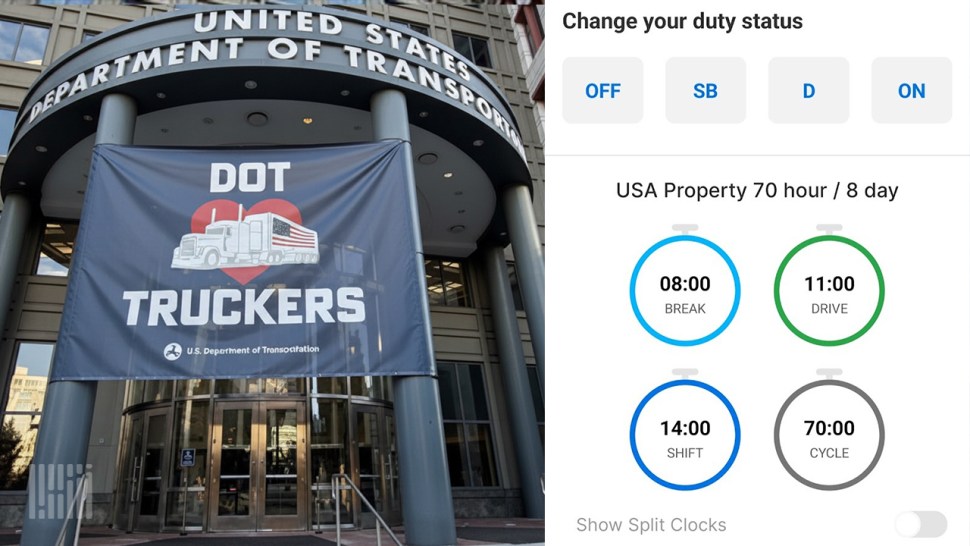
The Federal Motor Carrier Safety Administration announced Monday what they’re calling a “complete overhaul” of the Electronic Logging Device approval process, implementing pre-publication vetting that should have existed from day one of the 2017 mandate.
This announcement comes three years after a Triton Logistics truck, operating under a fraudulent ghost driver scheme managed from Lithuania, killed three people on I-64 near Williamsburg, Virginia. It comes after FMCSA has revoked 308 devices from the approved list. And it comes after roadside inspectors report encountering ELD fraud “every shift, at least once or twice.”
Better late than never, but tell that to the families of Jontae Russell, X’zavier Evans, and Montia Bouie.
At 1:36 a.m. on December 16, 2022, truck driver Daniel Cramer slammed his Triton Logistics truck into a party bus at 65 mph with cruise control engaged. The collision was so violent it separated the bus’s roof and sidewalls from the chassis, ejecting all 23 passengers across multiple lanes. Three men died. Twenty others were injured.
According to Cramer’s RoadStar ELD, everything was legal. The electronic record showed proper hours-of-service compliance, with driving time split between him and a co-driver. Virginia State Police were initially told that Cramer had just dropped off his co-driver at a truck stop before the crash.
It was all fabricated.
The alleged co-driver had been fired eight days before the crash. When NTSB investigators tracked him down, he’d never met Cramer, had never been in the truck with him, and had never driven long-distance trips for Triton. He was a local driver who didn’t even routinely use an ELD.
Cramer had been driving for seven consecutive days, accumulating about 75 hours on duty in the week before the crash. He exceeded the 14-hour rule four times, the 11-hour rule three times, and the 70-hour weekly limit by more than four hours. None of this appeared in his official ELD record.
The NTSB investigation revealed Triton’s systematic fraud operation, managed from the company’s Hours of Service department based in Lithuania.
When drivers reached their 11-hour limit, they’d call Triton’s Lithuanian HOS department by cell phone. Lithuanian personnel would log the driver out of the ELD system and create a login for a fictitious co-driver, often using variations of the real driver’s information or data from former employees. This opened another 11-hour driving window under the fake identity.
Drivers were coached on what to tell roadside inspectors. The standard story: they’d just dropped off their co-driver at a truck stop for a family emergency.
NTSB’s technical analysis revealed the sophistication. In Cramer’s case, both driver and co-driver had identical driver’s license numbers and issuing state. The logins were nearly identical. Most damning: the codriver account showed activity during periods when the supposed individual was already terminated.
Between December 16 and December 19, after the crash, Triton modified the alleged codriver’s license information, changing it from an Alabama license matching the real driver to a Virginia license before uploading data to FMCSA’s system. This post-crash manipulation suggests the company knew the original data wouldn’t withstand scrutiny.
The Self-Certification Problem
Triton used RoadStar LLC as its ELD provider, a company that was self-certified and listed on FMCSA’s approved device list. This is the fundamental problem the new vetting process attempts to address.
Under the current system in place since 2017, ELD manufacturers self-certify that their devices meet the voluminous technical specifications outlined in 49 CFR Part 395, Subpart B, Appendix A. No independent testing. No government field trials. No third-party verification before devices hit the market.
Manufacturers essentially grade their own homework, certifying under “penalty of perjury” that their products are compliant. FMCSA adds them to the registry with minimal verification.
Appendix A is a comprehensive technical blueprint running dozens of pages covering engine synchronization protocols, automatic duty status recording, geo-location accuracy, data integrity protocols with event sequence identifiers and checksums, and standardized transfer and display requirements.
How’d that work out? As of today, 308 devices sit on the revoked list. FMCSA only revoked 70 of them. The other 238 were “self-revoked” by manufacturers who apparently figured out their own products didn’t actually work as advertised.
What the Current System Can’t Detect
The Triton case exposes the real vulnerability. The problem isn’t just device functionality. It’s the lack of audit capabilities that would detect systematic fraud.
Current ELD regulations don’t require tracking of crucial data entry information. Who creates driver logins? When the login information is modified. Who makes changes to active driver lists? When false entries are created or altered.
Without comprehensive audit logs, these fraudulent operations are nearly impossible to detect until someone dies and NTSB investigators start pulling systems apart.
Three Years Later, RoadStar Finally Gets Revoked
On January 8, 2025, three years after RoadStar’s system enabled Triton’s ghost driver fraud that killed three people, FMCSA finally took action. The agency revoked RoadStar Solutions from its approved list for “failure to meet minimum requirements.”
For the families of Jontae Russell, X’zavier Evans, and Montia Bouie, this represents justice delayed and accountability deferred.
RoadStar appears to operate under multiple business names, with “United ELD” also removed the same day under the same corporate umbrella. Industry observers note that revoked ELD providers routinely rebrand and continue operations under new identities.
Of the 296 ELDs currently on the revoked list, only 55 were removed by federal action. The remaining 241 were “self-revoked” by manufacturers, suggesting most problematic devices are only pulled when companies voluntarily admit non-compliance.
The Broader Fraud Epidemic
Commercial Vehicle Safety Alliance officials confirm that ELD fraud isn’t limited to Triton. Roadside inspectors encounter similar schemes “every shift, at least once or twice.”
Ghost driver creation, where companies create fictional codriver accounts to double available driving hours. Back-office manipulation, where carriers edit ELD records from their offices and changes don’t appear as edits to roadside inspectors. Third-party fraud services, where an underground industry openly solicits motor carriers to modify electronic logs illegally.
The New Four-Tier Vetting System
FMCSA’s announced overhaul creates four application categories for ELD approval.
- Category 1, approved, means the application met all requirements.
- Category 2, information requested, means the application is pending further information.
- Category 3, further review, means additional internal assessment is needed.
- Category 4, denied, means the application doesn’t meet required standards.
Key features include initial review verification of contact information, technical specifications and device images. Fraud detection cross-checking new applications against active, inactive, revoked and in-process lists. And actual pre-publication vetting before devices appear on the registry.
The agency stated that under the previous system, it was easier to register non-compliant devices or re-register devices that had been revoked, leading to repeated revocations and costly replacements for carriers.
Translation: scammers kept coming back with the same junk under different names.
What This Actually Fixes and What It Doesn’t
The new process should reduce the most egregious abuses. Devices that make it onto the registry will have faced more scrutiny upfront. Cross-checking should catch known bad actors who try to re-register under new names.
But here’s the uncomfortable reality. FMCSA still isn’t field-testing these devices. They lack the resources, staffing and budget to verify every ELD model in real-world conditions independently.
What FMCSA is doing now is enhanced paperwork review. They’re checking documentation more carefully, looking for fraud patterns, and creating bureaucratic hurdles that might deter the most egregious bad actors.
But fundamentally, this remains a documentation-based approval process, not a testing-based one. The actual functionality still depends heavily on the manufacturer’s honesty and technical competence.
The real vulnerability isn’t just non-compliant devices. It’s devices that are technically compliant but designed to allow manipulation. You can verify that a device meets the proper technical specifications on paper, but detecting hidden backdoors or edit functions requires actual adversarial testing, which the agency still isn’t resourced to conduct.
In virtually every other safety-critical transportation system, aircraft components, railroad signals, pipeline safety equipment, you need third-party certification from qualified testing organizations. Not so with ELDs.
The Missing Audit Requirements
Following the Triton investigation, the NTSB recommended that FMCSA mandate comprehensive audit logs tracking the date and time of driver logins, who logged drivers in, the names of anyone who edited logs, driver’s license numbers, and active driver list changes.
The new vetting process announced Monday doesn’t address this recommendation at all. FMCSA is improving how it checks devices before approval, but not changing what those devices are required to track once deployed.
That means the next Triton-style fraud operation will still be possible as long as the device meets basic technical specifications. The ghost drivers from Lithuania may have disappeared from Triton’s current operations, but the regulatory framework that enabled their existence remains largely unchanged.
Triton’s Slap on the Wrist
FMCSA’s enforcement response to Triton’s systematic fraud has been woefully inadequate. After conducting a post-crash compliance review, the agency fined Triton $36,170, roughly the cost of the truck involved in the crash. The company received a conditional safety rating that still allows it to operate. FMCSA took no criminal referral action despite clear evidence of systematic regulatory fraud managed from a foreign country.
Compare this to the Beam Brothers case in Mt. Crawford, where a similar hours-of-service fraud scheme resulted in criminal arrests. What happened to accountability here?
What Carriers Need to Know
If you’re a carrier who bought an ELD in good faith only to have it later revoked, you know exactly how expensive this problem is. Hardware costs. Installation labor. Driver training. Operational disruption.
The new process should reduce that risk. But carriers still need to maintain their own due diligence. Don’t assume FMCSA approval means bulletproof compliance. Research the manufacturer. Check their track record. Talk to other carriers using their systems.
Have a contingency plan. Even with better vetting, devices will still get revoked. Know how you’ll respond if your ELD gets pulled from the registry. Verify registration status regularly. FMCSA updates the registered device list frequently. Check the registry at a minimum every quarter.
Document everything. If your device gets revoked, you’ll need to prove you were operating in good faith with an approved system at the time.
The new ELD vetting process is better than the old one; that’s not saying much. The old one was essentially non-existent. Carriers should see fewer obviously non-compliant devices making it onto the registry. The fraud-detection cross-checking should catch repeat offenders trying to game the system.
This remains a documentation review process, not a true third-party certification with independent testing. More importantly, the new vetting process doesn’t address the audit-trail requirements NTSB recommended following the Triton investigation.
This announcement arrives eight years after the ELD mandate took effect and after hundreds of devices have been revoked, costing carriers collectively tens of millions. It comes three years after a Lithuanian-managed ghost driver scheme killed three people in Virginia. It comes after FMCSA fined the responsible carrier $36,170 and allowed them to continue operating.
Until the consequences for ELD fraud include criminal prosecution of executives and financial penalties that threaten corporate survival, carriers will continue treating safety regulations as suggestions rather than requirements.
Better late than never but three young men died because Triton Logistics systematically defrauded federal safety regulations with help from Lithuanians managing phantom drivers. The regulatory framework that enabled their existence remains largely unchanged.
That means more families will join the ranks of those devastated by preventable commercial vehicle crashes.
Brokerage Compliance Symposium
The day before F3. Every compliance issue you face - fraud exposure, carrier liability, FMCSA rules, cargo theft, insurance gaps - navigated by attorneys and operators defining best practices in a changing industry.
F3 Awards Dinner
The night before F3. FreightTech100 companies honored. FreightTech 25 and Shipper of Choice winners revealed live. Cocktail reception into dinner and live music - 300 industry leaders in one purpose-built room.
F3: Future of Freight Festival
Industry-defining keynotes, rapid-fire technology demos, and industry leaders networking in experiences across Chattanooga - plus the inaugural F3 Awards Dinner featuring the FreightTech and Shipper of Choice reveals.
The day before F3. Every compliance issue you face - fraud exposure, carrier liability, FMCSA rules, cargo theft, insurance gaps - navigated by attorneys and operators defining best practices in a changing industry.
The Signal at Chattanooga Choo Choo • Chattanooga, TN Register NowThe night before F3. FreightTech100 companies honored. FreightTech 25 and Shipper of Choice winners revealed live. Cocktail reception into dinner and live music - 300 industry leaders in one purpose-built room.
The Signal at Chattanooga Choo Choo • Chattanooga, TN Register NowIndustry-defining keynotes, rapid-fire technology demos, and industry leaders networking in experiences across Chattanooga - plus the inaugural F3 Awards Dinner featuring the FreightTech and Shipper of Choice reveals.
The Signal at Chattanooga Choo Choo • Chattanooga, TN Register Now