




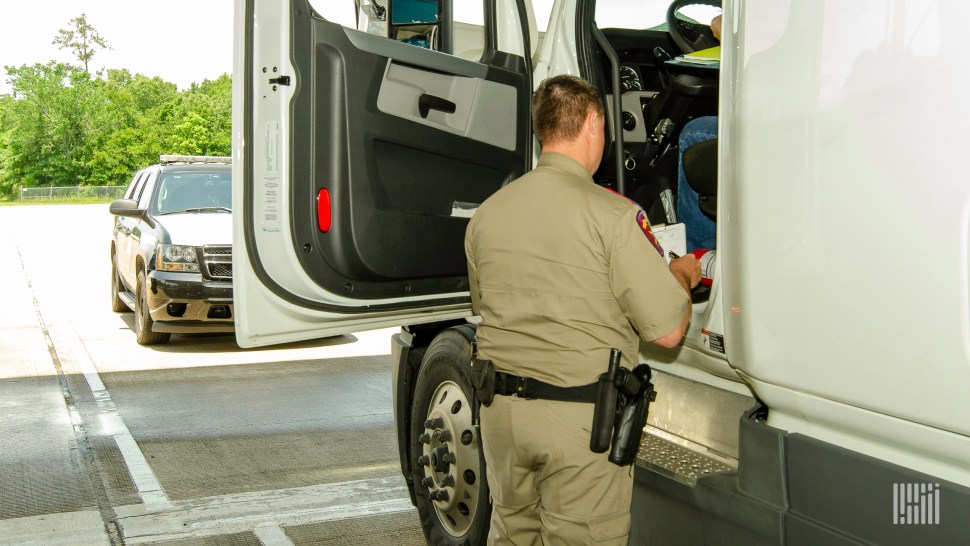
WASHINGTON — A change in policy this week by the Trump administration placing truck drivers out of service for violating English proficiency regulations was followed up on Friday by new legislation that, if passed, would codify the new policy into law.
Introduced in the House by U.S. Rep. Dave Taylor, R-Ohio, the bill, to be called Connor’s Law, is named after Connor Dzion, an 18-year old killed in Florida in 2017 by a distracted truck driver unable to read warning signs alerting to upcoming traffic.
Taylor will formally announce the legislation next week, according to his office.
The Small Business in Transportation Coalition (SBTC), which lobbies on behalf of small-business truckers and owner-operators, petitioned to get the bill introduced on behalf of a group of grass-roots trucking organizations.
“This is a big win for public safety, for truckers who share the road with other truck drivers, and the motoring public alike,” said SBTC Executive Director James Lamb in a press release.
“We applaud Congressman Taylor, all co-sponsors, and the House Transportation and Infrastructure Committee for their commitment and leadership in moving forward with SBTC’s proposed common sense, life-saving legislation to make the roads safe again.”
SBTC’s partners pushing for the legislation include American Truckers United, National Owner Operators Association, Past Time for a Change, Professional Trucking Association Group, United Coalition of American Drivers and United Truckers of America.
The Owner-Operator Independent Drivers Association and the American Trucking Associations also support the bill, Taylor’s office confirmed.
According to a draft of the bill, to get a commercial driver’s license – in addition to passing driving tests and being able to provide certification of successfully completing driver training – an individual must be able to “read and speak the English language sufficiently to converse with the general public, understand highway traffic signs and signals in the English language, respond to official inquiries, and make entries on reports and records.”
A person operating a commercial motor vehicle and determined by an enforcement officer to be noncompliant with federal English proficiency laws “shall be declared out of service,” the bill states.
Related articles:
Brokerage Compliance Symposium
The day before F3. Every compliance issue you face - fraud exposure, carrier liability, FMCSA rules, cargo theft, insurance gaps - navigated by attorneys and operators defining best practices in a changing industry.
F3 Awards Dinner
The night before F3. FreightTech100 companies honored. FreightTech 25 and Shipper of Choice winners revealed live. Cocktail reception into dinner and live music - 300 industry leaders in one purpose-built room.
F3: Future of Freight Festival
Industry-defining keynotes, rapid-fire technology demos, and industry leaders networking in experiences across Chattanooga - plus the inaugural F3 Awards Dinner featuring the FreightTech and Shipper of Choice reveals.
The day before F3. Every compliance issue you face - fraud exposure, carrier liability, FMCSA rules, cargo theft, insurance gaps - navigated by attorneys and operators defining best practices in a changing industry.
The Signal at Chattanooga Choo Choo • Chattanooga, TN Register NowThe night before F3. FreightTech100 companies honored. FreightTech 25 and Shipper of Choice winners revealed live. Cocktail reception into dinner and live music - 300 industry leaders in one purpose-built room.
The Signal at Chattanooga Choo Choo • Chattanooga, TN Register NowIndustry-defining keynotes, rapid-fire technology demos, and industry leaders networking in experiences across Chattanooga - plus the inaugural F3 Awards Dinner featuring the FreightTech and Shipper of Choice reveals.
The Signal at Chattanooga Choo Choo • Chattanooga, TN Register Now