




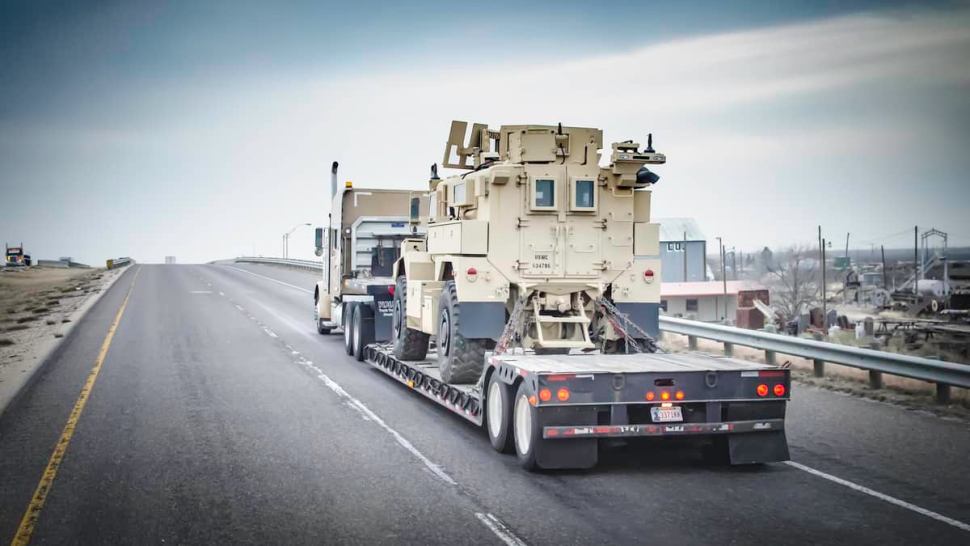

Military equipment shipping methods are similar to those of common commercial freight. However, the stakes are much greater when highly-sensitive, potentially classified commodities are involved. Bob McGhee, AIT’s director of government and aerospace operations, detailed the special arrangements required to meet the shipping demands of the U.S. military on a recent episode of Government and Aerospace Briefing presented by AIT Worldwide Logistics.
When shipping over-the-road, employing specialized ground transport equipment is essential. McGhee suggested that it’s not a good idea to mix military goods with commercial less-than-truckload (LTL) freight. He instead recommends using hot shots and exclusive-use vehicles for government shipments.
When it comes to shipping military goods internationally, commercial air carriers are often used because the military lacks the air capacity to move all of its freight. It is important, though, to choose the right carrier for the job.
“You don’t want to use proscribed countries or carriers,” McGhee said. “You aren’t allowed to use carriers forbidden by the U.S. government to carry military goods on their aircraft or route shipments through countries not so friendly to the United States.”
McGhee stressed that acquiring extensive knowledge of the destination is a crucial step before conducting any operation.
“Make sure to align yourself with proper strategic business partners that know those countries and understand their traditions and customs regulations,” McGhee said. “U.S. freight forwarders should also review the compliance regulations and export documentation requirements to make sure their paperwork is in order, and they have right compliance so the cargo can be moved properly into those countries.”
McGhee expects military shipping to hold steady due to government spending increases and routine equipment upgrades. He said the military will continue to purchase U.S.-based goods and rely on defense contractors to replace worn out and destroyed components around the world.
On the other hand, McGhee believes aerospace shipping will remain a challenge as the airline industry struggles to recover from pandemic-related shutdowns. Aerospace shipping will continue to focus on deliveries for maintenance, repair and overhaul (MRO) companies that are replacing older aircraft parts and upgrading engines to achieve better fuel efficiency.
F3: Future of Freight Festival
Industry-defining keynotes, rapid-fire technology demos, and industry leaders networking in experiences across Chattanooga - plus the inaugural F3 Awards Dinner featuring the FreightTech and Shipper of Choice reveals.
Industry-defining keynotes, rapid-fire technology demos, and industry leaders networking in experiences across Chattanooga - plus the inaugural F3 Awards Dinner featuring the FreightTech and Shipper of Choice reveals.
The Signal at Chattanooga Choo Choo • Chattanooga, TN Register Now