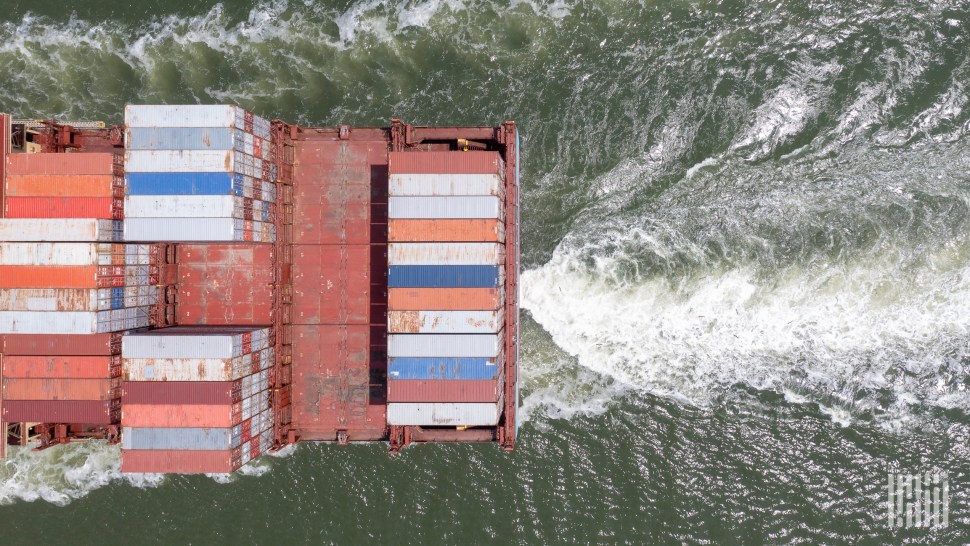
In a clear sign that the Trump administration’s tariffs are beginning to impact global trade, ocean container bookings from China to the United States have dropped sharply in recent weeks. Data from SONAR’s Container Atlas reveals that daily bookings on this crucial trade route have plummeted 25% compared to the same period last year, signaling a potential seismic shift in trans-Pacific trade patterns.
Container Atlas, which captures data on container movements at the point of booking, often more than a week before vessels depart, shows that the impact of the tariffs is already being felt in the supply chain. This leading indicator suggests that the full effects of the trade dispute have yet to materialize in current shipping volumes, as the average lead time between booking and sailing stands at nine days.
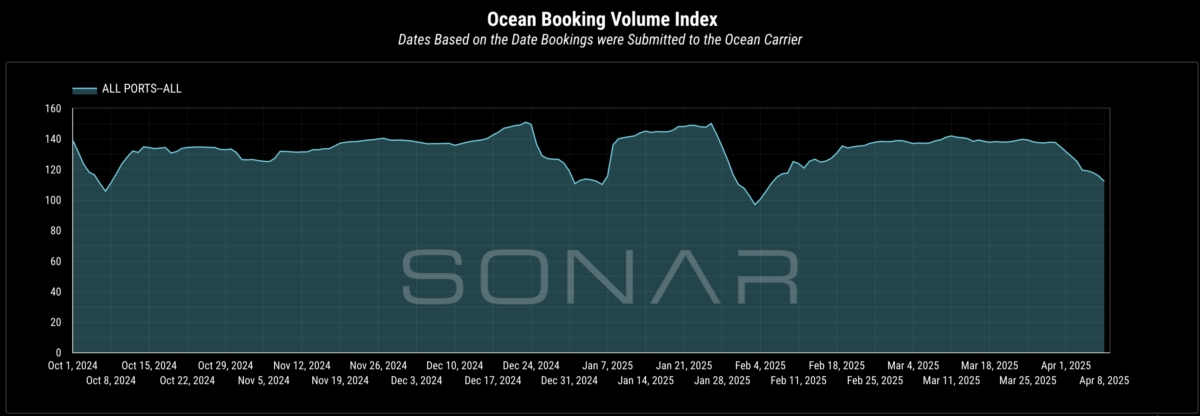
(This chart displays global ocean container bookings from all origins to all destinations. Chart: SONAR. To learn more about SONAR, click here.)
The downturn is not limited to the China-U.S. route. Global ocean container bookings have also seen a significant decline, falling 18.4% between March 30 and April 8. Current booking levels are now running 13% below those seen in 2024, a reversal from that year’s growth.
It’s reasonable to attribute most of this sudden drop to the Trump administration’s aggressive tariff policy, including the recently imposed 104% tariff on Chinese imports. The opportunity for importers to “pull forward” inventory – a strategy employed to avoid tariffs by importing goods earlier than usual – has now passed, leaving many businesses grappling with the new economic reality.
In a typical year, eastbound trans-Pacific container volumes experience a surge prior to the Lunar New Year, followed by a sharp drop-off and a gradual recovery leading up to peak season in August and September. However, this year’s pattern has already been disrupted by the escalating trade tensions between the United States and China.
According to Container Atlas data, daily ocean container bookings from China to the U.S. reached their zenith on March 19 but have since fallen by a staggering 31%. This dramatic decline underscores the immediate and tangible impact of the tariffs on trade flows.
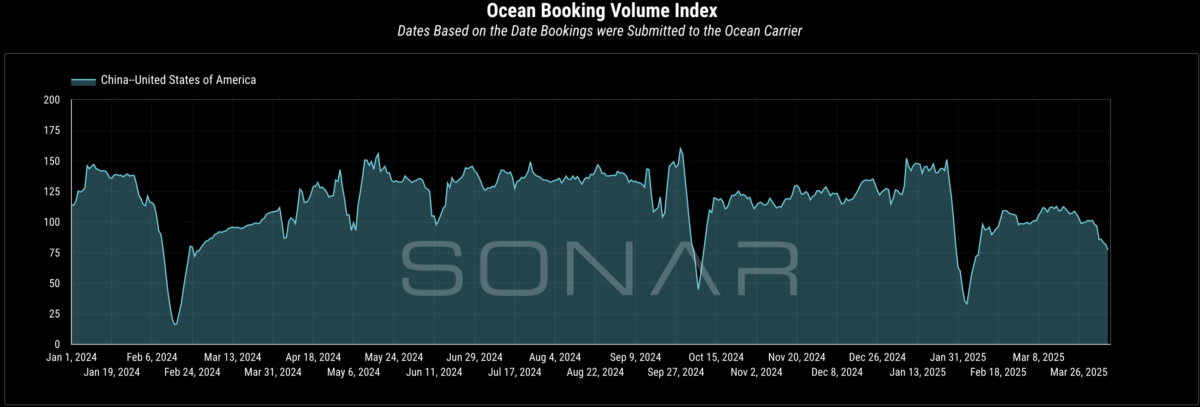
(The Ocean Booking Volume Index dates volumes to the day when the bookings were made. Chart: SONAR. To learn more about SONAR, click here.)
Some importers have temporarily halted inbound shipments as they reassess their strategies in light of the new tariff regime. These pauses may be transient as companies work to navigate the changing economic landscape. However, for businesses whose models rely heavily on specific goods targeted by the Trump administration’s tariffs, the effects could be more enduring.
The current data presents a complex picture. While it clearly demonstrates that the tariffs have had an immediate and significant impact on ocean container bookings, particularly from China to the United States, it’s too early to determine the long-term implications. Industry observers are watching to learn how much of the current drop can be attributed to temporary, strategic pauses in imports as supply chain teams regroup, versus more permanent economic shifts.
This sudden downturn in container bookings comes after a period of heightened activity in 2024, during which many importers accelerated shipments in anticipation of potential tariff increases. This pull-forward effect contributed to the robust container volumes seen last year but has now given way to a sharp contraction as the new tariffs take effect.
The ripple effects of this decline in container bookings are likely to be felt throughout the global supply chain. Shipping lines may need to adjust their capacity and routing strategies, while ports and logistics providers could face reduced activity. Moreover, the impact on consumer prices and product availability in the United States remains to be seen, as importers grapple with higher costs and potential supply disruptions.
Brokerage Compliance Symposium
The day before F3. Every compliance issue you face - fraud exposure, carrier liability, FMCSA rules, cargo theft, insurance gaps - navigated by attorneys and operators defining best practices in a changing industry.
F3 Awards Dinner
The night before F3. FreightTech100 companies honored. FreightTech 25 and Shipper of Choice winners revealed live. Cocktail reception into dinner and live music - 300 industry leaders in one purpose-built room.
F3: Future of Freight Festival
Industry-defining keynotes, rapid-fire technology demos, and industry leaders networking in experiences across Chattanooga - plus the inaugural F3 Awards Dinner featuring the FreightTech and Shipper of Choice reveals.
The day before F3. Every compliance issue you face - fraud exposure, carrier liability, FMCSA rules, cargo theft, insurance gaps - navigated by attorneys and operators defining best practices in a changing industry.
The Signal at Chattanooga Choo Choo • Chattanooga, TN Register NowThe night before F3. FreightTech100 companies honored. FreightTech 25 and Shipper of Choice winners revealed live. Cocktail reception into dinner and live music - 300 industry leaders in one purpose-built room.
The Signal at Chattanooga Choo Choo • Chattanooga, TN Register NowIndustry-defining keynotes, rapid-fire technology demos, and industry leaders networking in experiences across Chattanooga - plus the inaugural F3 Awards Dinner featuring the FreightTech and Shipper of Choice reveals.
The Signal at Chattanooga Choo Choo • Chattanooga, TN Register Now