The U.S. Department of Transportation (DOT) faces persistent hurdles in enhancing safety across the nation’s roads and rails, according to a new report from the Office of Inspector General (OIG). Released on January 6, 2026, the “DOT’s Fiscal Year 2026 Top Management Challenges” document highlights key areas where the agency must prioritize actions to reduce fatalities and injuries while protecting transportation workers and the public. With a focus on surface transportation safety—a critical concern for the freight industry—this year’s assessment underscores both progress and gaps in oversight, particularly relevant to trucking and rail operations.
The report, mandated by the Reports Consolidation Act of 2000, evaluates DOT’s challenges based on criteria like safety impacts, vulnerabilities, fiscal accountability, and the agency’s capacity for change. Among the eight top challenges identified, surface transportation safety stands out, especially given the freight sector’s reliance on highways and railroads for efficient goods movement. OIG notes that while motor vehicle fatalities have declined, DOT must do more to measure the effectiveness of its initiatives and strengthen regulatory enforcement.
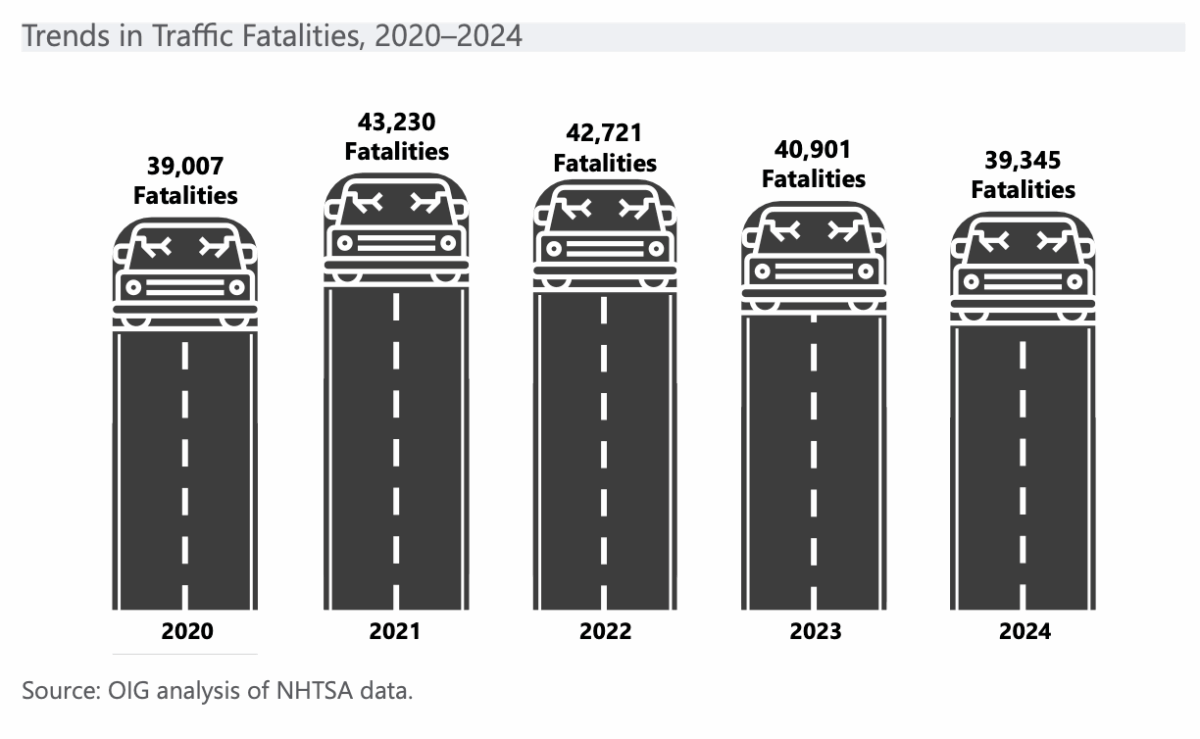
From 2021 to 2024, motor vehicle traffic fatalities dropped by 9 percent, from 43,230 to an estimated 39,345, per National Highway Traffic Safety Administration (NHTSA) data analyzed by OIG. This reduction is a positive trend, but the report cautions that fatalities remain alarmingly high. “DOT is dedicated to making the U.S. transportation system the safest in the world,” the OIG states, yet it “faces challenges in prioritizing actions to further improve highway safety and reduce fatalities as well as protecting transportation workers and travelers.”
For the trucking industry, which moves over 70 percent of U.S. freight by value, these challenges hit close to home. OIG emphasizes the need for DOT to establish methods for measuring the impact of recent priority actions aimed at curbing roadway deaths and serious injuries. This includes bolstering NHTSA’s Special Crash Investigations Program, which collects data to drive vehicle safety improvements. The program has been criticized for inadequate procedures, with OIG issuing three open recommendations in a July 2025 audit to address these shortcomings.
Additionally, the report calls for enhanced oversight of the Motor Carrier Safety Assistance Program (MCSAP), which provides grants to states for commercial vehicle safety enforcement. DOT should hold states more accountable for prioritizing Commercial Vehicle Safety Plan goals and improving performance tracking. This is vital for freight carriers, as inconsistent state-level enforcement can lead to uneven safety standards, increasing risks for drivers and potentially disrupting supply chains.
Rail safety also receives significant attention, aligning with the growing role of intermodal freight. The Federal Railroad Administration (FRA), whose top priority is safety, enforces hours-of-service, fatigue management, and roadway worker protection regulations to prevent accidents. However, human factor-caused train accidents have risen since 2016, though they improved by 17.1 percent in 2024 compared to 2023. The rate of train accidents per million train miles trended upward from 2016 to 2023 before dropping 13.4 percent from 2023 to 2024.
OIG urges FRA to target its limited resources more effectively to ensure railroad compliance. “Despite these requirements, the number of human factor-caused train accidents has increased,” the report notes, highlighting the need for better inspection and data collection processes. Recent audits, such as one from May 2025 on roadway worker protection, resulted in 13 recommendations, with six still open.
Protecting transportation workers and the public is another key pillar. For truckers, DOT’s initiatives include expanding safe truck parking, a perennial issue amid driver shortages and hours-of-service rules. The agency issued guidance on State Freight Plan requirements and awarded grants, like nearly $25 million to West Virginia, to increase parking capacity. However, the OIG stresses that DOT must evaluate these plans rigorously and oversee fund usage to ensure they deliver tangible benefits, such as reducing fatigue-related crashes.
In transit, which intersects with freight through urban logistics, the Federal Transit Administration (FTA) oversees safety at rail systems via its State Safety Oversight program. Concerns with the New York City Transit Authority prompted DOT to request performance data on safety measures. OIG’s August 2025 audit recommended improvements in FTA’s oversight, quality control, and data management, with five recommendations pending.
The report isn’t all critique; it acknowledges progress. In June 2025, the Federal Motor Carrier Safety Administration (FMCSA) implemented a Medical Examiner’s Certification Integration rule to enhance the integrity of commercial driver licensing. Additionally, the inspector general found that the Federal Railroad Administration has closed 23 of 32 recommendations from audits on hours-of-service and fatigue management. These steps could reduce fraud and improve safety in freight operations.
OIG’s investigative work further illustrates risks, including a Texas indictment of a former motor carrier owner for conspiracy and fraud related to obstructing an FMCSA investigation into a driver’s death. Such cases underscore the need for robust enforcement to prevent illegal operations that endanger lives and inflate costs for compliant carriers.
For the freight industry, these findings signal opportunities and imperatives. As e-commerce and just-in-time logistics demand faster, safer transport, addressing these challenges could lower accident rates, reduce insurance premiums, and boost efficiency. However, ongoing staffing shortages and resource constraints at DOT agencies like FMCSA and FRA may hinder progress without targeted interventions.
The full report, authored by Deputy Inspector General Mitch Behm, will be included in DOT’s Annual Financial Report. Industry stakeholders can access it via the OIG website and track recommendation status on their dashboard. For more details on surface transportation audits, contact Assistant Inspector General Tiffany Mostert at (202) 366-0625.
Brokerage Compliance Symposium
The day before F3. Every compliance issue you face - fraud exposure, carrier liability, FMCSA rules, cargo theft, insurance gaps - navigated by attorneys and operators defining best practices in a changing industry.
F3 Awards Dinner
The night before F3. FreightTech100 companies honored. FreightTech 25 and Shipper of Choice winners revealed live. Cocktail reception into dinner and live music - 300 industry leaders in one purpose-built room.
F3: Future of Freight Festival
Industry-defining keynotes, rapid-fire technology demos, and industry leaders networking in experiences across Chattanooga - plus the inaugural F3 Awards Dinner featuring the FreightTech and Shipper of Choice reveals.
The day before F3. Every compliance issue you face - fraud exposure, carrier liability, FMCSA rules, cargo theft, insurance gaps - navigated by attorneys and operators defining best practices in a changing industry.
The Signal at Chattanooga Choo Choo • Chattanooga, TN Register NowThe night before F3. FreightTech100 companies honored. FreightTech 25 and Shipper of Choice winners revealed live. Cocktail reception into dinner and live music - 300 industry leaders in one purpose-built room.
The Signal at Chattanooga Choo Choo • Chattanooga, TN Register NowIndustry-defining keynotes, rapid-fire technology demos, and industry leaders networking in experiences across Chattanooga - plus the inaugural F3 Awards Dinner featuring the FreightTech and Shipper of Choice reveals.
The Signal at Chattanooga Choo Choo • Chattanooga, TN Register Now