September Cass data shows freight cycle ‘starting to flatten out’

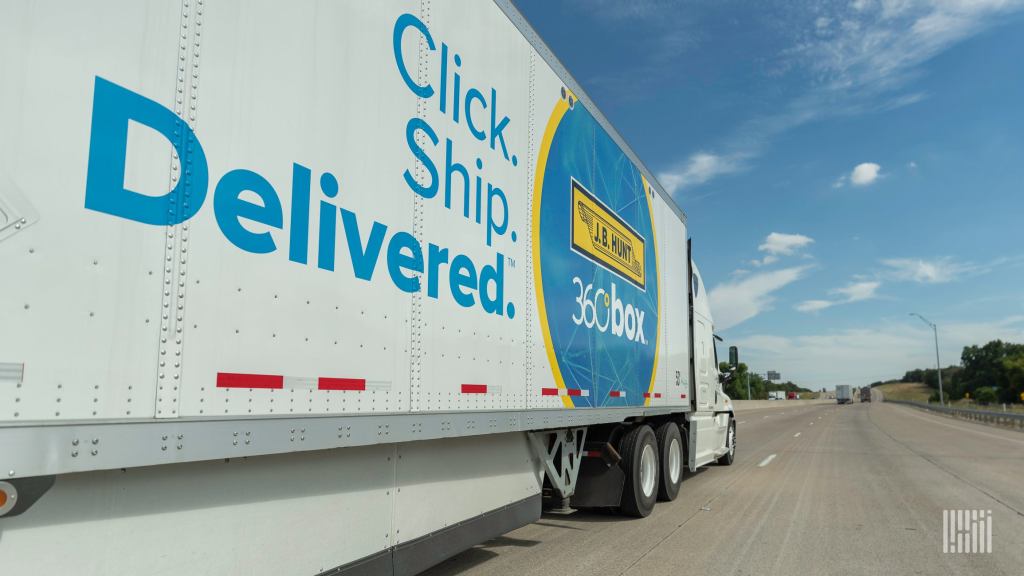
A white trailer being pulled by a white tractor on a highway

Volumes ticked higher again in September while total freight expenditures declined, according to a Wednesday report from Cass Information Systems.

The shipments subindex of the Cass Freight Index increased 1.7% from August, which was up 0.8% from July. Compared to 2022, the index was down 6.3% in September, which was an improvement from the 10.6% year-over-year (y/y) decline logged in the prior month.

Peak season “is off to a muted start with a slightly improving trend, as expected,” said ACT Research’s Tim Denoyer. “We continue to expect modest y/y growth in consumer spending this holiday season, driven by the acceleration in real disposable incomes, and the ongoing strong labor market.”

He said normal seasonal patterns through the rest of October would result in a 7% y/y decline in shipments for the month, implying a 2% decline from September.

September 2023
y/y

2-year

m/m

m/m (SA)
Shipments-6.3%-1.8%1.7%1.7%
Expenditures-25.4%-9.6%-0.2%-1.6%
TL Linehaul Index-9.1%-5.6%0.5%NM
Table: Cass Information Systems. SA (seasonally adjusted)

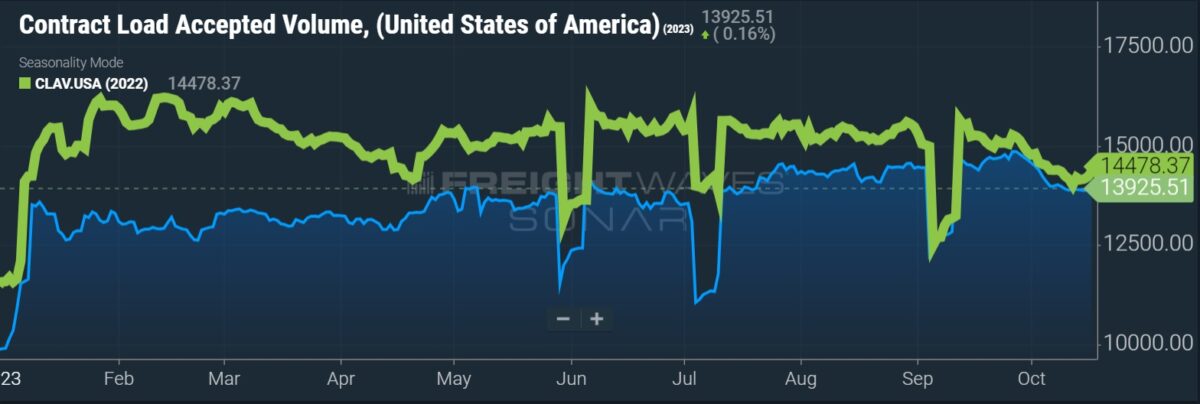
Chart: (SONAR: CLAV.USA) The Contract Load Accepted Volume Index measures accepted load volumes moving under contractual agreements. It excludes all rejected tenders. CLAV.USA is closing in on year-ago levels. To learn more about FreightWaves SONAR, click here.

Freight expenditures captured on Cass’ freight payments platform in September fell 1.6% seasonally adjusted from the prior month and were off 25.4% y/y. With a modest increase in shipments and a modest decline in expenditures, actual freight rates were likely off 3.3% sequentially. This metric for “market-driven” rates has now declined 1.2% sequentially on average over the last 18 months.

The expenditures subindex includes fuel surcharges and accessorial fees. There is additional volatility in the data set as it includes all modes, meaning changes in mix will impact the readings. Truckload freight accounts for more than half of the freight spend at Cass.

The expenditures subindex has been down approximately 25% y/y in each of the last four months. Compared to the September 2021 reading, it’s down 9.6%.

Soft freight volumes and excess capacity have placed downward pressure on rates, which the report said is “likely to deliver savings to shippers this holiday season.” Shifts in truckload spot rates are usually indicative of a market inflection. Spot rates have bobbled along what may be a bottom for the bulk of the year as fundamentals remain loose.

Normal seasonality moving forward is likely to produce an 18% decline in the expenditures data set this year with a 11% decline expected in the first half of 2024.

Chart: (SONAR: NTIL.USA). The National Truckload Index (linehaul only – NTIL) is based on an average of booked spot dry van loads from 250,000 lanes. The NTIL is a seven-day moving average of linehaul spot rates excluding fuel. Spot rates are still 16% lower y/y.

Cass’ truckload linehaul index, which excludes fuel and accessorials, ticked up 0.5% sequentially in September, reversing a decline of an equal amount in August. This was the first sequential increase since May 2022.

The index was down 9.1% y/y, which was the smallest decline since February.

“The small increase is more likely a pause than a trend change, but reinforces some anecdotes (also noted in this report last month) of fleets addressing accepted but unacceptable rates. While not likely widespread, this suggests rates are nearing their lows,” Denoyer said.

He said the y/y declines in the TL linehaul data will likely continue to slow even if there are modest sequential declines moving forward.

“With both the shipments component of the Cass Freight Index and the Cass Truckload Linehaul Index rising sequentially this month, the freight cycle is at least starting to flatten out, with smaller y/y declines,” Denoyer concluded. “We continue to expect the freight cycle to turn once capacity tightens, but early signs of 2024 equipment production suggest that may be a while.”

Data used in the Cass indexes is derived from freight bills paid by Cass (NASDAQ: CASS), a provider of payment management solutions. Cass processes $44 billion in freight payables annually on behalf of customers.

More FreightWaves articles by Todd Maiden

CN to split chief operating officer role into 2

Canadian Class I railway CN is modifying the way the company leads its operations as part of a broader push to make the railway “more modern.”

The railway will now have a chief network operating officer, Patrick Whitehead, as well as a chief field operating officer, Derek Taylor, according to a Wednesday release. Whitehead and Taylor will assume these roles on Nov. 15. Existing COO Ed Harris is moving into a consulting role and will stay with the railway through March 31, 2024.

CN (NYSE: CNI) says the change is part of its broader effort to build its network while also responding to day-to-day events. Whitehead will lead the network operations, mechanical, engineering and corporate safety teams, as well as CN’s two operations training centers, while Taylor will lead CN’s transportation and intermodal operations, according to CN.

Whitehead will be based at CN’s operational center in Edmonton, Alberta, while Taylor will be based in Chicago. Both will also spend time at CN’s headquarters in Montreal.

“The innovative structure will help drive a greater intensity in delivering profitable growth through the cost-effective expansion of CN’s network infrastructure, where needed, and ongoing improvements to customer service as the Company sells into its capacity,” CN said. “It will also allow for the simultaneous refinement of CN’s long-term fleet plan, reflecting the Company’s decarbonization ambitions, and the continued deployment of operating technologies to enhance safety and efficiency.”

CN also said the railway is striving to be an employer of choice “by becoming more modern, innovative, and reflective of the diversity of the communities in which it operates.”

“These appointments are the next evolution of our ‘Make the Plan, Run the Plan, Sell the Plan’ operating model,” President and CEO Tracy Robinson said in the release. CN describes the change as Whitehead making the plan and Taylor running the plan. “With this new structure and leadership in place, we are well-positioned to achieve the sustainable, profitable growth outlined in our 2024-2026 plan. I want to thank Ed for his significant contribution to CN and to the railroad industry over the last 50 years and for his collaboration in imagining and developing the evolution of the operating team structure. Pat and Derek were privileged to learn directly from him.”

Whitehead, 48, has over 30 years of experience in the industry and spent over 25 years in management positions in transportation and mechanical operations. Prior to joining CN in 2021, Whitehead was vice president of transportation for eastern U.S. Class I railroad Norfolk Southern (NYSE: NSC) and also served as NS’ vice president of network operations.

Taylor, 46, joined CN as a management trainee in 2000 and progressed through leadership roles with the railway. He most recently served as CN’s senior vice president of transportation.

CN will report its third-quarter 2023 financial results next Tuesday after markets close.

Subscribe to FreightWaves’ e-newsletters and get the latest insights on freight right in your inbox.

Click here for more FreightWaves articles by Joanna Marsh.

Flock Freight CRO Orlando Baeza departs after 8-month tenure

Eight months after Orlando Baeza was promoted from chief marketing officer to chief revenue officer, Flock Freight confirmed Tuesday that it has parted ways with Baeza, as well as seven employees from the FreightTech company’s social and creative teams who worked for him.

“Over a year ago, we made a significant investment in bringing the Flock brand to life, and while the work was exceptional, we ultimately saw a better opportunity to reorient our growth investments and plan to expand the outbound sales staff by 15 as quickly as possible, said Oren Zaslansky, founder and CEO, in a statement to FreightWaves. “As with all startups, we are constantly fine-tuning our go-to-market strategy — it is both expected and responsible.”

Baeza was hired as chief marketing officer for Flock Freight in April 2022. He spearheaded the company’s rebranding efforts, including a multimillion-dollar ad campaign, Define Your Load, which featured “Blue’s Clues” star Steve Burns. Flock’s ad campaign, designed to quantify inefficiencies in the supply chain, was developed and produced with Maximum Effort, the marketing and production agency founded by George Dewey and Ryan Reynolds.

@flockfreight

Steve, the world owes you a f**kload of thanks for your investigative journalism 🕵️‍♂️ #fyp #steveburns

♬ original sound – Flock

Before joining Flock Freight, Baeza focused on high-growth technology companies, previously serving as CMO for technology startups BuzzFeed and Kajabi, as well as marketing initiatives for brands like Nike, Adidas, Paramount and Activision.

As of publication Wednesday, Baeza had not responded to FreightWaves’ request seeking comment.

Flock Freight, which is headquartered in Encinitas, California, with a second office in Chicago, has had to make some tough decisions in the volatile freight environment.

In a recent article published by FreightWaves, Flock announced a string of strategic partnerships, which it said have aided the company’s ability to expand its pool of partial shipments. In September, Flock Freight announced a multiyear integration partnership with TMS provider e2open, giving its shipper customers access to freight pooling technology.

It’s unclear who will fill the CRO position.

Do you have a news tip or story to share? Send me an email or message me @cage_writer on X, formerly known as Twitter. Your name will not be used without your permission.

Flock Freight sees growth in pooling rates, potential of future scale
40-year-old Montana trucking company, freight brokerage shutters operations
Truckers: Shuttered Sunset Logistics still owes final paychecks, escrow
Judge rules TQL owes thousands of former employees overtime pay

2023 Shipper of Choice profile: Univar Solutions

The Shipper of Choice award, presented by FreightWaves and sponsored by TriumphPay, recognizes the manufacturers, distributors and retailers that do the best job of keeping the American economy moving by fighting driver detention, providing accessible facilities and understanding what it takes to remove inefficiencies from the supply chain.

Among the top 25 Shippers of Choice for 2023 is … Univar Solutions.

Founded in 1924, Univar Solutions is a global chemical and ingredients distributor. In addition to the U.S., the Downers Grove, Illinois-based company has operations in Canada, Latin America, Europe, the Middle East and Africa.

On Aug. 1, private equity firm Apollo completed its acquisition of Univar Solutions. The purchase includes a minority investment from a wholly owned subsidiary of the Abu Dhabi Investment Authority.

About Univar Solutions


Headquarters:Downers Grove, Illinois
2022 net sales:$11.5 billion
2022 net income:$545.3 million
Shipper of Choice history:First appearance

Why Univar Solutions is a Shipper of Choice

As a chemicals distributor, Univar Solutions purchases large quantities such as barge loads, rail cars and full truckloads from chemical producers, then breaks them down to repackage, market, sell and distribute to customers from over 100 distribution centers around the country.

In addition to the company’s privately owned trucking fleet, those customers also rely on Univar Solutions’ third-party truckload and LTL carriers. “They are carrier- and driver-focused, and work consistently to make working with them easier,” according to one of the company’s third-party carriers.

Being selected as a FreightWaves Shipper of Choice “is quite an honor” the company stated.

“For us, it’s about having long-term strategic partnerships with carriers,” a company spokesperson told FreightWaves. “The freight markets have their ups and downs, with rate advantages shifting back and forth from shipper to carrier. But we keep our carriers whole when times are rough so that they stick with us when the market shifts the other way.”

Because the company has such a large private fleet — over 1,000 trucks — Univar Solutions has a heightened perspective of what it takes to keep drivers happy and productive.

“That’s why even though third-party drivers might not wear the same uniforms that our drivers do, we treat them with the same dignity and respect, and as an extension of our own employees,” according to the spokesperson.

Also, the need to be extremely safety-focused as a handler of hazardous materials requires that Univar Solutions set high standards for its carrier approval process, according to the company. That includes certifications from the Environmental Protection Agency’s SmartWay and the American Chemistry Council’s Responsible Care programs.

About Shipper of Choice sponsor TriumphPay

TriumphPay is the transportation industry’s premier payment network, trusted by leading shippers, brokers, factors and carriers. Its innovative and highly automated fintech payment solution brings cost savings and efficiencies to antiquated transportation payment processes for network participants. Integrated financing options leverage the strength of TriumphPay’s parent bank and can provide liquidity and cash flow visibility.

TriumphPay is a division of Triumph Financial, Inc. (NASDAQ: TFIN).

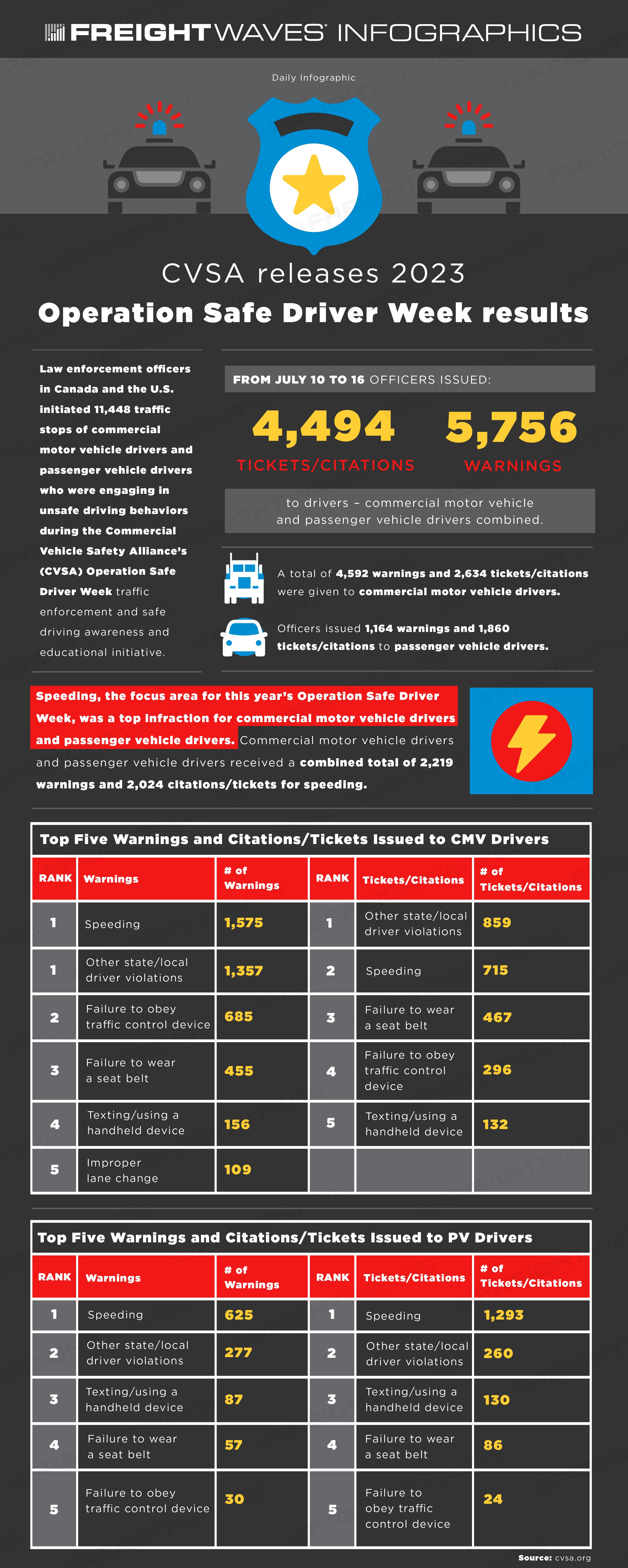
Daily Infographic: CVSA releases 2023 Operation Safe Driver Week results


To view more FreightWaves infographics, click here

Chinese manufacturer investing $5B to expand production in Mexico 

China-based Lingong Machinery Group (LGMG) is building a manufacturing facility and industrial park in Mexico’s northern state of Nuevo Leon that will generate $5 billion in investments.

Monday’s announcement from LGMG is one of the latest expansions of Chinese investments in Mexico, especially in the state of Nuevo Leon, which is situated about 140 miles from the U.S.-Mexico port of entry in Laredo, Texas.

Trina Solar, a China-based solar panel producer, will invest up to $1 billion for a new factory in Nuevo Leon, while Japan-based Kawasaki Heavy Industries will invest $200 million to set up a production plant in the state, Mexican authorities announced in recent days.

The LGMG project includes a 25-acre industrial park that will house the company’s plant, as well as the development of three “clusters” to draw more foreign investments in manufacturing, warehousing and logistics, and business support services.

LGMG will build its factory and industrial park near the Mexican city of Monterrey. The company, which manufactures construction and transportation machinery, moved its North American headquarters to Dallas last year. 

“[Monterrey’s] excellent transportation and logistics infrastructure, along with its strategic proximity to the United States, make it an ideal location for international trade and investment,” LGMG said in a news release. “[The] clusters will provide a one-stop service environment for overseas investment, with a primary focus on energy, heavy industry, automobile manufacturing, and new materials industries.”

Samuel Garcia, governor of Nuevo Leon, said in a post on social media platform X that about 120 enterprises have already expressed interest in joining the LGMG project and creating more than 7,000 local jobs.

“Six months ago, we made the big announcement that Tesla, the largest electric car manufacturer in the world, was going to build the largest factory in the world, twice the size of the one in Austin in … Nuevo Leon,” Garcia said. “We are going to announce that another $5 billion is coming to Nuevo Leon, just as important and big as Tesla. Today we closed the agreement for LGMG to go to Nuevo Leon, the epicenter of nearshoring and the best place to invest.”

In March, electric vehicle maker Tesla announced plans to build a $5 billion assembly plant near Monterrey, where the company could reportedly produce an entry-level EV line of vehicles.

Foreign direct investment (FDI) into Mexico reached a record $40 billion in 2022, according to fDi Markets. In the first half of 2023, FDI in Mexico increased by 40% compared to the same period in 2022, led by automotive and industrial manufacturing projects.

Mexico continues to benefit from nearshoring, in which manufacturing companies move production closer to their end consumers, according to investment firm Morgan Stanley.

“Nearshoring has the potential to boost the growth of Mexican manufacturing exports to the U.S., from $455 billion today to an estimated $609 billion in the next five years,” Morgan Stanley said in a recent report titled “Mexico is Poised to Ride the Nearshoring Wave.” 

“If U.S. manufacturing is to be less dependent on China, we think the path will be via Mexico,” Morgan Stanley Research equity analyst Nikolaj Lippmann said in the research report. “Nearshoring is expected to be a long and sustained race that could help build new ecosystems in Mexico’s existing manufacturing hubs.”

Other analysts said China is using Mexico to bypass tariffs while rerouting exports to the U.S. 

David Rees, a senior emerging markets economist at London-based asset management firm Schroders, said in a recent report that China’s trade balance with Mexico has recently risen by about 1% of gross domestic product during a period of time when China has had weak bilateral trade with the U.S.

“It appears that Chinese firms are rerouting exports via third parties in order to circumvent tariffs and sanctions imposed by the U.S. government in recent years,” Rees said. “While China’s share of bilateral trade with the U.S. has fallen, its share of the global export market has not. … China’s exports to other countries in Asia and Mexico itself have increased markedly in recent years, just as US imports from those countries have also grown strongly. This is consistent with a re-routing of trade via third parties in order to rebadge shipments and avoid trade sanctions.”

How could the turmoil in Congress hurt the freight economy?

Click for more FreightWaves articles by Noi Mahoney.

More articles by Noi Mahoney

Texas resumes cargo truck inspections at Laredo port of entry

Mexican president blames Texas-run inspections for border delays

Border bottleneck continues, creating huge delays for truckers

Activist investor looks to unseat Forward Air board, CEO

Activist investor Ancora Holdings Group joined the fray Tuesday, voicing opposition to Forward Air’s planned merger with Omni Logistics.

The firm said the deal is too expensive, adds a significant amount of leverage and was “intentionally structured to avoid a pre-closing shareholder vote,” in an appearance at 13D Monitor Active-Passive Summit in New York City.

An announced deal price of $3.2 billion includes only $150 million in cash, requiring Forward (NASDAQ: FWRD) to fund the remainder of the transaction with debt and equity. The terms call for Omni’s stakeholders to receive a 37.7% equity stake in aggregate with Forward assuming the company’s $1.4 billion in net debt.

Ancora said that implies Forward is paying 18 times last 12-months adjusted earnings before interest taxes, depreciation and amortization for Omni (30 times on an unadjusted basis) and that combined net leverage will exceed 4 times. The company, however, has outlined $125 million in cost and revenue synergies that reduces those multiples significantly.

The transaction is currently held up in a Tennessee court awaiting a decision on a temporary injunction, which could clear the path to a hearing to determine if Forward’s shareholders will get to vote on the deal. A decision is expected by Oct. 26.

The court first issued a temporary restraining order at the end of September.

The three plaintiffs in the motion are former Forward employees, including its former chief financial officer, Rodney Bell. Among other things, the complaint said Tennessee law requires a shareholder vote as the deal structure will result in the transfer all of Forward’s assets and exceed more than 20% dilution to existing shareholders.

Forward said the transaction was structured appropriately and it doesn’t require a vote. In court filings, it said the assets will remain under its control throughout the process and that a less-than-20% equity stake will be allocated at closing. After closing, shareholders will be given the opportunity to vote on converting nonvoting preferred stock into common voting shares.

Ancora said the structure will “effectively coerce shareholders to vote in favor of conversion.”

If the shares aren’t converted, a steep dividend will be paid to the holders. If converted, Omni’s stakeholders will control a 38% voting block. Ancora referred to the setup as “self-entrenchment” as that voting block is also required to vote in favor of board-nominated directors in future elections. Ancora also took issue with Omni stakeholders getting four seats on Forward’s board.

The firm said it would push for a special meeting of shareholders to replace the board and the company’s chairman, president and CEO, Tom Schmitt, if the court rules a shareholder vote is required. It also said it will “review all options available for holding the Board and management accountable.”

Even if the court rules in favor of the company, Ancora said the board could still be unseated at a special meeting before a conversion vote on the preferred shares is held.

Shares of Forward gapped more than 40% lower following the deal’s announcement. The stock closed Tuesday up 4% on the day but still 30% off a pre-deal closing price of $110.  

Ancora said the stock could trade above $100 within the next six months if shareholders are able to reject the deal and the board and CEO are ousted. It laid out a base case of $140 to $145 over the “immediate-term,” which includes margin initiatives, selling noncore assets and repurchasing shares.  

The activist investor has had success changing Forward’s direction in the past. The group leveraged a 5% equity stake to land two board seats in 2021.

Concerned with the company’s lagging valuation, which it claimed was tied to a continued diversification into lower-margin businesses, Ancora started accumulating shares as well as support from other shareholders.

However, Ancora’s current influence is unknown as it unwound that position in 2022 and its former founder, Scott Niswonger, who was designated to one of its board seats, resigned from the board the day the Omni deal was announced. The firm’s other designated director chose not to run for re-election earlier this year.

“We believe the merits of the plaintiffs’ lawsuit are strong and believe there is a high degree of probability that the Court will rule in their favor requiring Forward Air to hold a pre-closing shareholder vote on the Omni acquisition,” Ancora’s presentation stated.

Other investors have also expressed displeasure with the deal.

ClearBridge Investments, a 4% holder of Forward, wrote an open letter asking the company to cancel the transaction, and recent court documents showed institutional holder P. Schoenfeld Asset Management said the company went to “great length to deprive Forward Air common stockholders of their legally mandated voting rights,” among other complaints.

“Forward is aware of Ancora’s presentation today,” a spokesperson with the company told FreightWaves. “We are in regular communication with all of our investors and actively consider their views on the company’s strategy and progress. Our Board of Directors and management team are committed to driving long-term value for our shareholders, employees, and customers and are focused on taking actions that enable us to deliver on this objective.”

More FreightWaves articles by Todd Maiden

Year-on-year gain in J.B. Hunt intermodal volumes highlight of overall weak quarter

(Note: an earlier edition of this story attributed a quote to TD Cowen’s Jason Seidl. It was actually from Amit Mehrotra’s team at Deutsche Bank.)

J.B. Hunt’s intermodal segment, the largest revenue producer in the company, showed year-on-year volume growth in the third quarter ending Sept. 30, a rare sign of upturn in an otherwise tough quarter.

While revenue was down compared to the corresponding quarter in 2022, volumes were up 1% year on year, an increase that received both an internal and external notice in looking for positives in the quarterly earnings.

In a quick email blast after the earnings were released Tuesday, Amit Mehrotra of Deutsche Bank said his team was “encouraged by the return to intermodal volume growth,” but that “we need to see more to offset the pressure on pricing and cost inflation.”

On the earnings call with analysts, Darren Field, the executive vice president of the intermodal division at J.B. Hunt (NASDAQ: JBHT), said the inventory destocking that the company believes is at the root of the freight recession “started to moderate in June.” Volume growth was down 1% in July, up 1% and August and up 4% in September, when Field said the company had “the largest intermodal volume week in our history.”

Volume increases have come in both the company’s transcontinental and Eastern network, Field said. “We believe this is driven by the overall market but also we believe we are taking market share with our strong service that is outperforming the competition.”  

J.B. Hunt President Shelley Simpson echoed Field on the question of destocking. “We see further evidence of this trend,” she said.  

The day after the call, Mehrotra’s team followed up with an observation that “we…are focused on volume, which we consider to be the leading indicator of profits and margin given JBHT’s longer cycle pricing framework. And we are encouraged in this regard. We note JBHT’s volume was up 1.2% year over year and up 3.9% sequentially. While these numbers aren’t spectacular on the surface, they mask increased momentum as the quarter progressed. “

Looking past the growth in intermodal volume, which rose to 521,221 loads from 515,178 loads a year ago, revenue declined 15.3% and revenue per load dropped 16.3% to $2,984 from $3,565.

Intermodal’s revenue was 49% of the company’s total revenue.

Mehrotra called J.B. Hunt’s failure to meet the overall forecast performance a “decent-sized miss,” but said there were “some positive leading indicators that may mute the negative reaction in shares.” He said the company’s earnings per share, excluding a lower tax rate, was close to $1.66 per share, compared to a consensus of $1.80 or more.

As for the company’s bottom line, net earnings were $187.43 million, down from $269.4 million a year ago, a drop of 40.4%. Total revenue, excluding fuel, was $2.69 billion, down 14.9%.  Post-market trading in J.B. Hunt was decidedly negative. At 6:05 p.m. EDT Tuesday, the stock was down $7.51 from the earlier Tuesday close to $188.50, a drop of 3.83%. The price of the company’s stock has been relatively strong. In the last 52 weeks, it is up about 18.2%, and in the last three months, the increase has been near 6.9%. But it is down from its 52-week high of $209.21 recorded Aug. 4.

Seeking Alpha said the $3.16 billion revenue for the quarter at J.B. Hunt — a figure that includes fuel surcharge revenue — missed forecasts by $40 million.

With the intermodal segment turning in an operating ratio of 91.8%, deteriorating from 88.2% a year ago despite the small increase in volume, Field was asked about whether that signals a bottom in the quarter.

Field said the answer to that question “depends on what happens with our customers’ volumes.” 

“But if everything were to remain equal and we can onboard more volume and there’s no economic recession we’re faced with, yes, it can be the bottom. But there’s so many external factors that are going to influence that,” he said. 

But when asked about the signals for the fourth quarter, Field was more bullish. He said the J.B. Hunt intermodal operations “continue to bring equipment out of storage. None has gone back in and demand remains really, really strong, just as it was throughout September.”

It was the company’s brokerage unit, which operates as Integrated Capacity Solutions, that took some of the most significant hits during the quarter. The number of loads handled by ICS dropped to 163,745, down from 262,803, a decline of 37.7%. Revenue per load fell to $1,820 from $2,189, a decline of 16.8%. The gross profit margin fell to 12.8% from 14.2%. 

Operating income fell to a loss of $9.4 million, compared to an operating profit a year ago of $13.4 million. 

Revenue that flowed through J.B. Hunt 360, the company’s digital offering, fell a whopping 56.9%, down to $168.5 million from $391.1 million.

Cutbacks in the company’s brokerage operations, as has been seen in numerous logistics companies, was evident in a head count decline to 680 from 1,002.

Dedicated also was cited by Mehrotra as an underachiever in the quarter though the outright numbers were not particularly weak. Operating income declined to $102.4 million, down from $107.1 million. Revenue declined a relatively modest 4.1%.  

Operating income for all segments was down from a year ago. Intermodal’s operating income fell 41% to $128 million while its operating ratio weakened to 91.8% from 88.2%. Dedicated’s OR stayed flat at 88.5% while its operating income dropped 4.4%. 

Truckload operating income dropped to $7.7 million, down from $14.9 million, while its OR rose to 96.1% from 93.7%.

On other issues, in response to an analyst question, Nick Hobbs, COO and president of contract services, said, “Solid drivers are still hard to find,” though he added that “they’re much more available than they have been.”

Hobbs added, “We still have pockets in different areas that are tight, and the driver wages are not going anywhere. They’re staying up.”

That lack of weakness in driver pay could be seen in the salaries, wages and employee benefits line in the company’s earnings. At $803.2 million, it was down from $887.7 million a year ago. But that expense line was 25.4% of revenue this quarter and just 23.1% a year ago.  

More articles by John Kingston

Once again, California tells a court AB5 isn’t disrupting trucking in the state 

CARB sets up unit to help fleets navigate California’s Clean Fleets rule

California Supreme Court to review rulings on constitutionality of Prop 22

United Airlines’ cargo gain undermined by low rates

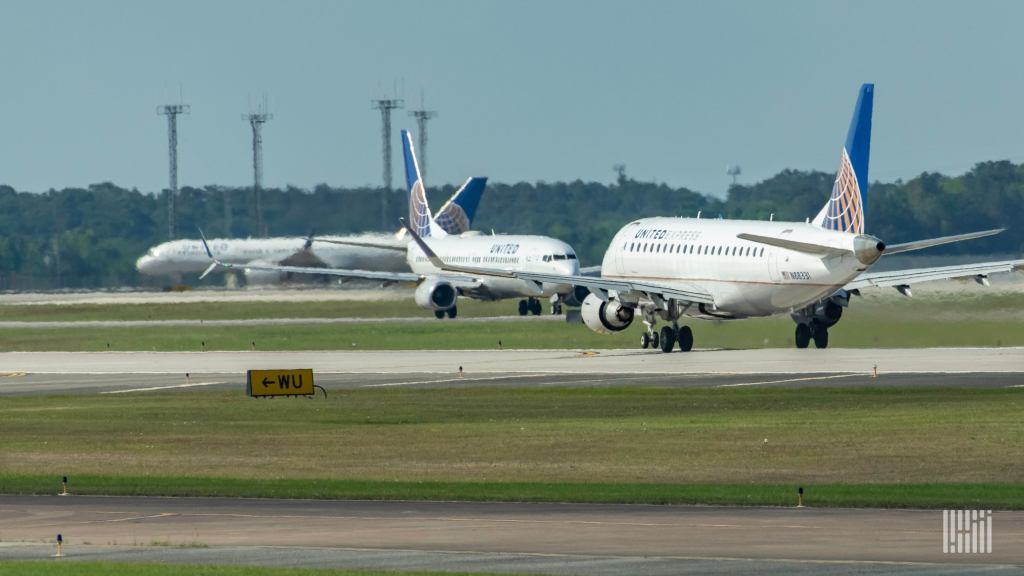
Blue-tailed United Airlines planes on the taxiway.

(Editor’s Note: This article was updated at Oct. 20, 2023, 7:30 ET)

United Airlines saw cargo revenue drop 33% year over year in the third quarter to $333 million, as the weak air cargo market continued to take a toll on the top line for freight. 

The contraction in cargo sales was hardly noticed by investors on Tuesday as United punched its way to a $1.1 billion profit ($3.65 earnings per share) on record third-quarter revenue of $14.5 billion, beating analysts’ estimates.

There was a disconnect between United Airlines’ (NASDAQ: UAL) cargo revenue and its volumes. Cargo ton miles – a measure of volume times distance flown that helps set pricing – actually increased 4.5% from the year-ago period to 766 million. And a spokesperson said United carried the most tonnage ever for a third quarter. The deterioration in revenue is most likely explained by the plunge in shipping rates across the sector due to abundant capacity and tepid transport demand in the sector.

United Airlines said cargo revenue was $1.1 billion for the nine-month period through September, a drop of 35.7% from the same period a year ago. 

United’s cargo performance tracked with that of Delta Air Lines, which saw cargo revenue fall 36%. Delta’s cargo revenue was half as much as generated by United for the first three quarters of the year. American Airlines reports earnings on Thursday and is expected to have results similar to Delta and United.

Cargo revenue was better against the $282 million in the third quarter of 2019, prior to the COVID crisis.

The results are in line with an air cargo market that has seen overall volumes fall by 8% to 10% since March 2022, finally hitting bottom in the late summer. Airfreight shipping prices have been 40% to 50% lower than last year for most of the year. Although the market has stopped declining, there are few signs of year-over-year growth at a time that is normally the busiest shipping season of the year. The market was falling last year in the second half and there was no peak season bump.

United operates the largest widebody passenger fleet of any U.S. passenger carrier, giving it plenty of space to market for cargo.

The company said it continued to experience strong travel demand, which produced record profits for international business. During the quarter, United’s pilots ratified a new four-year labor deal, which will increase pilot wages about 40%. The extra labor costs and higher fuel prices could weigh on earnings in the fourth quarter, as could the suspension of flights to Tel Aviv because of the Israel-Hamas war in Gaza.

More FreightWaves/American Shipper stories by Eric Kulisch.

Subscribe to the American Shipper Air newsletter.

RELATED NEWS:

Uptick in airfreight rates creates mirage of market recovery

Delta Air Lines cargo revenue drops 36% on slow freight demand

Shipping line earnings preview: A mix of black, red and very red ink

a photo of a container shipping vessel

The shipping rate rebound that began this summer is over. Financial analysts covering shipping line stocks are slashing their forecasts.

Even so, many liner companies are expected to post at least some profits for the third quarter of this year — and all of them are still sitting on historically large cash hoards. Today’s liner companies are like Powerball winners who’ve just taken big pay cuts at their day jobs.

“Container shipping companies are awash with cash and therefore we think they are under no pressure to cut capacity,” said Deutsche Bank analyst Andy Chu in a research note earlier this month.

“As we see no signs of this changing near term, we think this will likely result in freight rates continuing to be under pressure,” said Chu, who downgraded stocks of Maersk and Hapag Lloyd from “hold” to “sell.” Denmark’s Maersk and Germany’s Hapag-Lloyd are the world’s second- and fifth-largest carriers, respectively.

According to Jefferies analyst Omar Nokta, “Spot freight rates surged across the mainlines in July and August but quickly fell back to loss-making levels in September and have held mostly flat for the past several weeks. Overall earnings are likely to come down,” he said in a third-quarter earnings outlook released Monday.

chart of shipping spot rates
Spot rate in USD per FEU. Blue line: China-East Coast. Green line: China-West Coast. (Chart: FreightWaves SONAR)

Nokta has repeatedly cut his earnings forecast for Israel-based Zim (NYSE: ZIM) as this year has progressed. He still expects Maersk and Hapag-Lloyd to post profits in the third quarter, but he foresees a sea of red for Zim, the world’s 10th-largest ocean carrier.

Nokta now forecasts that Zim will lose $1.83 per share in Q3 2023, equating to an adjusted net loss of $220 million. He expects the company to lose $647 million in full-year 2023, versus the Bloomberg consensus estimate for a full-year loss of $641 million.

Still some positives amid market gloom

Indicators from other ocean carriers are not quite as grim. 

China’s Cosco Group, the world’s fourth largest liner operator, announced preliminary results showing net income of 6.33 billion yuan ($866 million) for Q3 2023. That’s down 44% from second-quarter profits of $1.54 billion, but it’s still six times more than Cosco’s net income in Q3 2019, pre-COVID.

Cosco subsidiary OOCL published its Q3 2023 revenue-per-container statistics this month. While its numbers continue to decline, the pace of that decline has eased.

(Chart: FreightWaves based on OOCL financial filings)

Hong Kong-based OOCL had $2,635 in revenue per forty-foot equivalent unit in the trans-Pacific trade during Q3 2023, relatively flat (down 2%) versus the second quarter.

Globally, OOCL’s revenue per TEU came in at $1,887 per FEU, down 11% from Q2 2023, driven by a 26% plunge in the trans-Atlantic lane. OOCL’s global average revenue per FEU was essentially unchanged (up 2%) versus Q3 2019, pre-COVID.

Taiwan’s Evergreen, the world’s seventh-largest carrier, discloses monthly operating revenues prior to releasing its quarterly financials. It had operating revenues of 72.8 billion New Taiwan dollars ($2.25 billion) in Q3 2023, up 8% from the second quarter of this year.

Evergreen’s Q3 2023 revenues are up 46% versus revenues in the same period in 2019. However, most of that gain is due to a larger fleet. Evergreen’s fleet capacity has increased 31% since Jan. 1, 2020, according to data from Alphaliner.

(Chart: FreightWaves based on Evergreen financial filings)

Hawaii-based niche carrier Matson (NYSE: MATX) is expected to pre-release Q3 results in the coming days. Matson has consistently reported above-market rates for its premium trans-Pacific service and has successfully wooed some shippers away from air cargo. If its stock price is any indication, investors expect Matson to continue to outperform.

Matson’s shares were only a few dollars shy of their 52-week high on Tuesday. According to data from Koyfin, which adjusts share pricing to account for dividends, Matson’s stock is up 45% year to date (YTD).

That is better than most shipping stocks, including those in tanker and gas shipping segments where rates are highly profitable, and is triple the rise of the S&P 500 index. Matson’s share action is the mirror opposite of Zim’s, which is down 44% YTD.

(Chart: Koyfin)

Click for more articles by Greg Miller