Port inspection leads to $10M counterfeit Nike, Adidas seizure in California
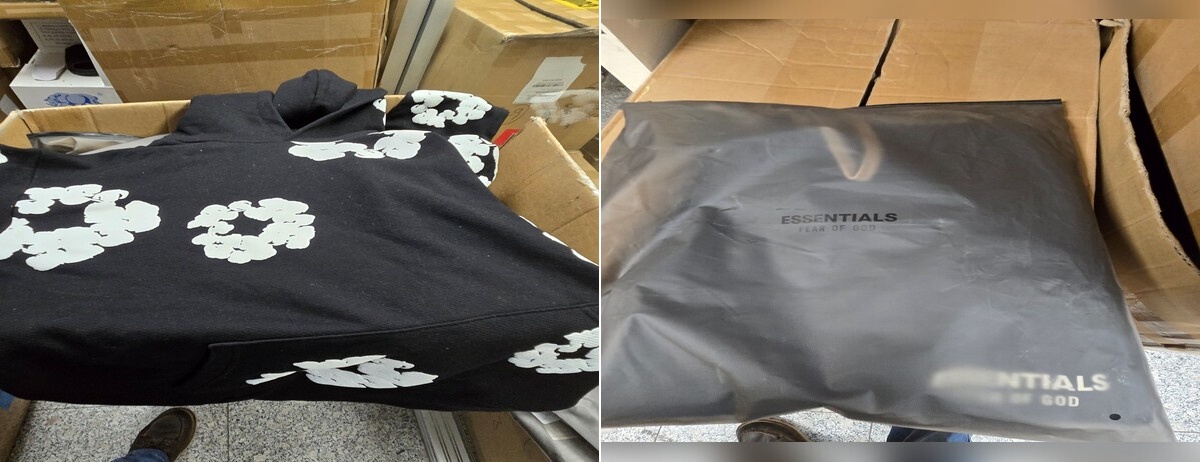
Los Angeles County investigators seized counterfeit merchandise worth an estimated $10 million from a California warehouse. The Aug. 25 search uncovered 25,898 items bearing Nike, Adidas and other trademarks. Deputies targeted a commercial property within Arcadia’s 11600 block of Goldring Road. No arrests followed the operation.
The Los Angeles County Sheriff’s Department announced the seizure Sept. 1. Its Counterfeit and Piracy Enforcement Team handled the investigation with unnamed federal agents. Authorities identified the business owner as an outstanding suspect. The case remains active.
Port inspection identifies destination
CAPE received information about a bulk shipment during early August. Authorities had intercepted and inspected the cargo at an unidentified port of entry. Examiners determined that its contents included large quantities of counterfeit streetwear. Shipping information listed the Arcadia property as the destination.
Investigators later obtained a warrant for the commercial location. Deputies and federal special agents executed that order Aug. 25. Their operation recovered thousands of products carrying protected brand names. LASD placed the estimated retail value near $10 million.
Counterfeit apparel was among the 25,898 items seized from an Arcadia, California, warehouse. (Photo: Los Angeles County Sheriff’s Department)
Shipment details remain unclear
LASD did not identify the port, federal agency, cargo origin or transportation mode. Available information does not confirm whether authorities conducted a controlled delivery. The department described $10 million as the merchandise’s estimated retail value. FreightWaves requested additional details but had not received a response before publication.
CAPE investigates businesses and individuals connected with counterfeit merchandise throughout Los Angeles County. The unit focuses on manufacturing, sales and distribution. Team members also work alongside patrol stations, detectives and outside agencies. Their responsibilities include identifying pirated products and referring cases for prosecution.
During the past year, CAPE conducted approximately 25 searches across the county. Those operations recovered roughly 200,000 counterfeit items. LASD estimated their combined retail value between $15 million and $25 million. The unit also monitors major events where sellers may distribute unauthorized merchandise.
Why it matters
Counterfeit products move through the same ports, warehouses and transportation networks used by legitimate cargo. Logistics companies need verified customers, accurate shipping records and clear escalation procedures before accepting questionable freight.
Northeast port breaks ground on $3.2 million in new upgrades
The Maine Port Authority and MaineDOT are funding a $3.2 million project to modernize the International Marine Terminal’s container yard, storage, and access systems.
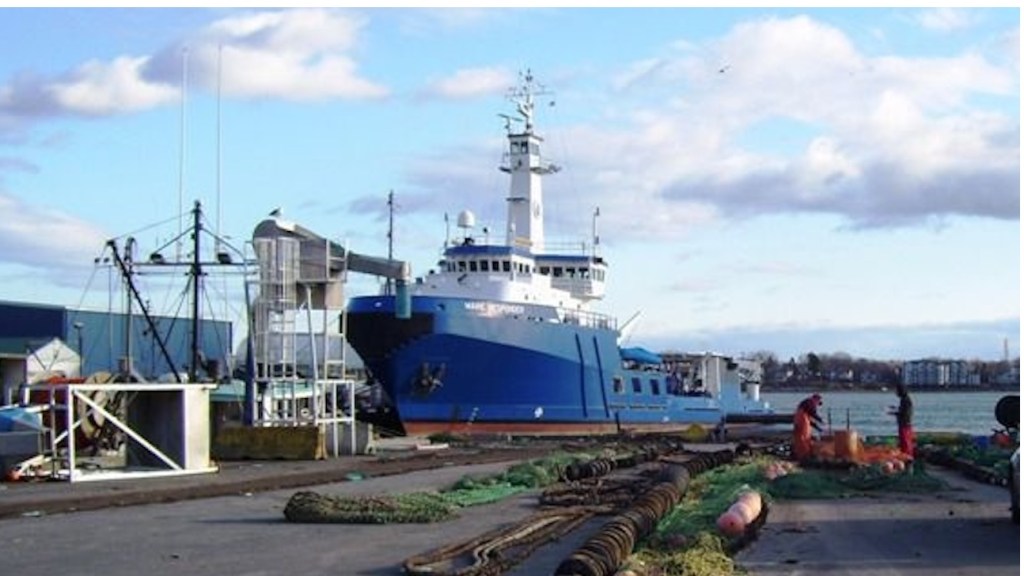
Construction is underway at the International Marine Terminal at the Port of Portland in Maine.
The state Department of Transportation said that the Maine Port Authority is advancing a $3.2-million Maritime Administration (Marad) Port Infrastructure Development Program project supported by matching funds by MaineDOT to modernize Portland’s container yard, refrigerated-container storage, and terminal access systems.
The project moves IMT toward a better-connected, electrically supported refrigerated logistics platform: ship-to-yard, yard-to-cold store, and, where a shipper’s network permits, rail or truck onward.
Work includes full-depth pavement reconstruction, improved stormwater drainage, enhanced safety and security features, and new bi-fold speed gates at Gate 1. Construction began on August 17, the DOT said in a social media post.
The project is expected to be complete in October.
FitzMark’s latest broker acquisition adds trade show logistics capabilities
Freight broker FitzMark announced it has acquired United Transportation Services, a broker specializing in trade show logistics.
Founded in 1998, Aurora, Colorado-based UTS is a full-service 3PL focused on the retail and hospitality industries. It provides dry van, refrigerated, flatbed and specialty truckload transportation as well as packaging, warehousing and white-glove delivery services.
Financial terms of the transaction were not disclosed. The deal closed on Tuesday.
“Today marks an exciting new chapter— with the national support and strength of the FitzMark platform, we look forward to expanding capacity and service offerings while growing our shipper community together,” said Bruce Parsons, CEO and president of UTS.
Indianapolis-based FitzMark provides brokerage services and a proprietary TMS to more than 3,000 shippers and 25,000 carriers. The company is backed by private equity firm Calera Capital.
The deal marks 11 acquisitions for FitzMark since opening in 2006.
“We are excited and fortunate to welcome Bruce and the UTS team to FitzMark,” said Scott Fitzgerald, FitzMark founder and CEO, in a news release. “UTS and FitzMark have built businesses around many similar core values and we look forward to supporting UTS as it continues to grow.”
Why it matters? FitzMark’s acquisition of UTS diversifies its 3PL portfolio by integrating high-touch trade show logistics and expanded warehousing services. This strategic move marks FitzMark’s 11th acquisition since 2006, highlighting a broader industry trend of scaling through consolidation.
AI Cuts Gate Dwell to 30 Seconds as Eagle Grows 350%
AI gate automation cut dwell times to under 30 seconds while EAIGLE posted 350% year-over-year growth. CEO Amir Hoss explains how the company uses existing security cameras and computer vision to automate gate, yard and dock workflows.
On site at a live facility, Hoss breaks down how EAIGLE went from a customer problem to a fully automated, paperless gate and yard operation. He also explains why the next growth phase matters for carriers, shippers and warehouse operators trying to move trucks through the yard faster.
#GateAutomation #YardManagement #SupplyChainAI
EAIGLE, an automation company focused on gate-to-dock logistics, has closed a growth funding round on the heels of 350% year-over-year revenue growth, CEO and founder Amir Hoss said in an interview with FreightWaves. The company’s computer vision platform reduces gate dwell times that previously ranged from 7.5 to 18 minutes down to under 30 seconds — and sometimes under one minute — by tapping into camera infrastructure that facilities already own.
The technology matters to carriers, brokers, and shippers because gate congestion and yard opacity have long been among the most stubborn inefficiencies in distribution operations. EAIGLE’s system automates the full check-in and check-out process, validates bills of lading, purchase orders, appointments, and USDOT numbers in real time, and feeds clean data directly into yard management, warehouse management, and transportation management systems via APIs.
At one active facility where Hoss spoke — a site processing roughly 1,100 trucks per day across two gates and four lanes — EAIGLE replaced 18 full-time staff across three shifts with a fully unmanned, paperless operation. “We didn’t validate here, we just log,” Hoss recalled a security guard telling him five or six years ago, a dynamic he said rendered downstream YMS data unreliable. “It becomes garbage in and garbage out,” he said.
“The bar is really high because you own that responsibility of initiating the high accuracy and complete data capture and validation for the rest of the systems in the supply chain ecosystem of each one of the operational customers.”
EAIGLE markets two products. Automated Vehicle Access Control (AVAC™) handles gate check-in and check-out using camera-based validation. YardSight™ uses cameras mounted on light poles, exterior walls, and shunt trucks to scan the yard continuously and update the YMS in real time through API connections — with some high-pace manufacturing customers, such as automotive facilities, requiring updates every four minutes or fewer to sustain dock efficiency.
The platform also functions as a theft-deterrent layer. Hoss said EAIGLE stops an average of two to three cargo theft attempts per month at high-theft distribution centers by flagging mismatched or expired BOLs, BOLs issued for a different facility, and carriers with prior theft history visible through USDOT data. He cited rising empty-trailer theft as a growing concern, noting that fake or outdated paperwork is the most common vector for unauthorized loads leaving a yard.
Looking ahead, Hoss said the company has a product announcement coming within two weeks and is fielding requests for faster expansion across North America and internationally. Within months, he added, certain EAIGLE customers will begin testing autonomous truck acceptance into fully automated yards — a step toward an operation where, in his words, “neither the truck nor the shunt truck nor the yard itself is operated” by humans, with people handling only exceptions and edge cases. EAIGLE has deployed its autonomous gate and yard platform across facilities in the U.S., Canada, and Europe.
EAIGLE’s AI platform cuts gate dwell from up to 18 minutes to under 30 seconds using existing camera infrastructure, replacing up to 18 full-time gate staff per facility.
The company posted 350% year-over-year growth and closed a growth funding round, with international expansion and a product announcement expected within two weeks.
Real-time BOL, PO, and USDOT validation stops an average of 2–3 cargo theft attempts per month at high-theft distribution centers.
This Summary is generated thanks to a transcription of the interview, for the full interview please enjoy the video above.
New truck blitzes uncover thousands of safety violations, place 99 drivers out of service
Texas authorities placed nearly half of the commercial vehicles inspected during a recent enforcement operation in the Permian Basin out of service, part of a series of truck-safety initiatives conducted across six states.
The Texas Department of Public Safety conducted 351 commercial vehicle inspections in Mentone, an oilfield community in Loving County near the New Mexico border.
Inspectors documented 1,935 violations — an average of 5.5 violations per inspection — and placed 167 vehicles and 34 drivers out of service.
The 47.6% vehicle out-of-service rate was the highest reported among recent operations in Arizona, Florida, Pennsylvania, Georgia, Indiana and Texas.
Equipment problems accounted for 1,557 of the Texas violations. Inspectors also identified 138 weight violations, 97 registration violations, 57 federal driver violations, 17 hazardous-materials violations and six oversize violations.
Authorities issued 46 citations for the weight violations and awarded four Commercial Vehicle Safety Alliance inspection decals.
The enforcement activity comes as state and local agencies continue concentrating inspections along heavily traveled freight routes, including Interstate 40 in Arizona, Interstate 4 in Florida and Interstate 74 near the Indiana-Ohio state line.
Authorities placed at least 99 drivers out of service during the recent enforcement actions:
Arizona: 59
Texas: 34
Pennsylvania: 4
Florida: 1
Georgia: 1
Indiana reported eight out-of-service violations but did not specify whether they involved drivers or vehicles, so those were excluded from the total.
Arizona operation produces 1,042 violations
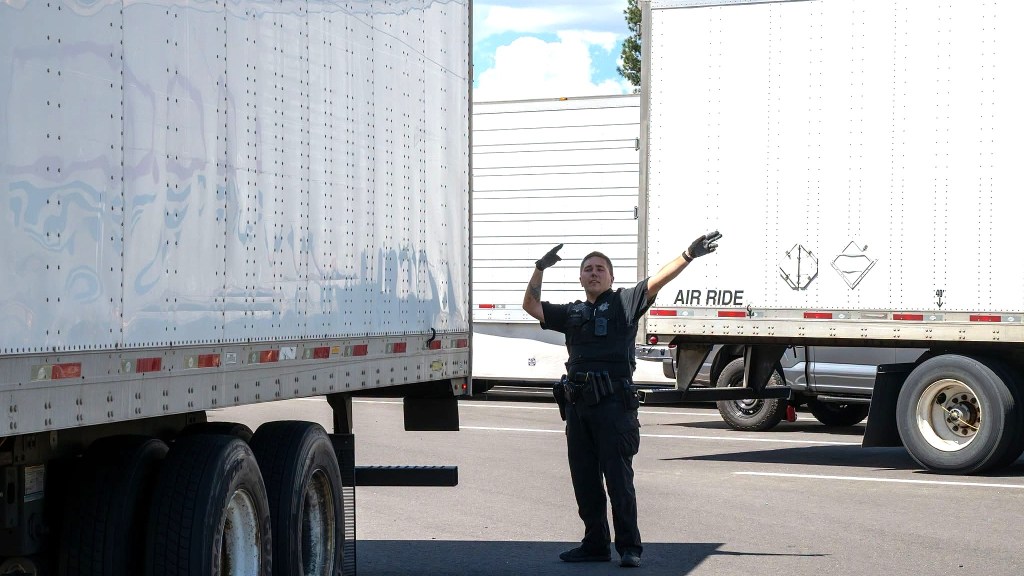
The Arizona Department of Public Safety and Arizona Department of Transportation conducted a four-day Arrive Alive Arizona enforcement detail from Aug. 24-27 along I-40 near Flagstaff.
The initiative was held in support of CVSA’s Brake Safety Week.
Troopers and ADOT Enforcement and Compliance Division personnel conducted 309 inspections, weighed 516 commercial vehicles and documented 1,042 violations.
Authorities placed 60 vehicles and 59 drivers out of service after discovering 161 out-of-service violations. Two drivers were arrested on suspicion of driving under the influence, while three drivers were cited for drug-related violations and placed out of service.
The Arizona Trucking Association also hosted a safety event Aug. 26 in Phoenix attended by 58 people. DPS personnel discussed inspection procedures, brake violations, distracted driving and common safety problems, while Cummins representatives presented information about disc and drum brake components and maintenance.
Florida authorities target I-4 compliance
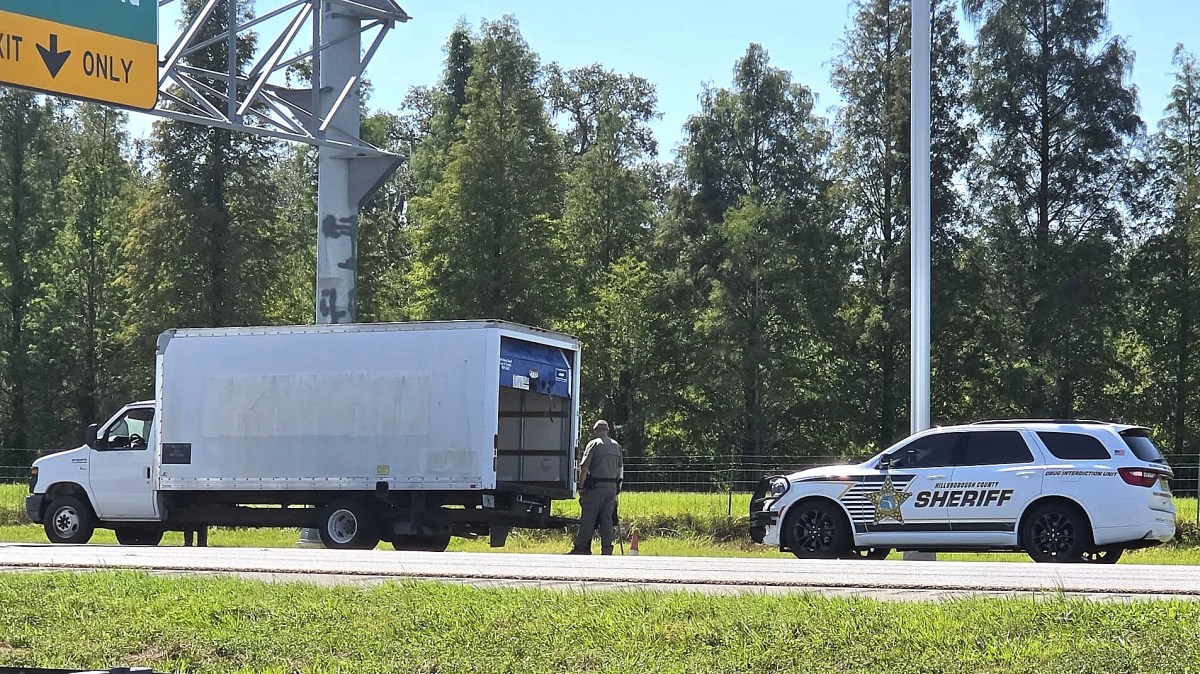
The Hillsborough County Sheriff’s Office Drug Interdiction Unit partnered with the Florida Highway Patrol’s commercial vehicle enforcement personnel Aug. 26 to check compliance with weigh-station and vehicle-safety requirements along I-4.
Authorities conducted 45 traffic stops and 21 inspections. Officers searched 12 commercial vehicles, issued seven citations and 38 warnings, and placed one driver out of service.
The Hillsborough County Sheriff’s Office Drug Interdiction Unit conducted a commercial vehicle enforcement operation on Aug. 26 resulting in 45 traffic stops and 21 inspections. (Photo: Hillsborough County Sheriff’s Office)
Pennsylvania officers issue 58 citations
Motor Carrier Safety Assistance Program officers with the Newtown Township Police Department conducted commercial vehicle enforcement throughout August.
Officers issued 58 citations and 72 warnings, placed four drivers and four commercial vehicles out of service, and made one arrest.
The department said the inspections were intended to identify unsafe equipment, impaired or unqualified drivers and other violations before they contribute to crashes.
Georgia checkpoint produces DUI arrests
The Smyrna Police Department and Georgia Department of Public Safety Commercial Vehicle Enforcement conducted a traffic-safety checkpoint along Windy Hill Road from approximately 10 p.m. Aug. 26 until 12:45 a.m. Aug. 27.
Smyrna police issued 41 citations and made 11 arrests, including four for DUI, six for unlicensed driving and one for driving with a suspended license. Officers also impounded seven vehicles and conducted five K-9 deployments.
Georgia commercial vehicle enforcement officers conducted 20 vehicle inspections, issued 16 citations and 15 warnings, impounded four vehicles and placed one driver out of service.
The arrest and impoundment figures reported by Smyrna police covered the broader checkpoint and were not limited to commercial vehicle operators.
Indiana operation results in seven arrests
Indiana State Police troopers conducted a targeted commercial vehicle patrol Aug. 31 along I-74 at the West Harrison Weigh Station near the Indiana-Ohio border in Dearborn County.
Troopers from the Versailles Post and Commercial Motor Vehicle Division conducted 94 inspections and identified eight out-of-service violations. Authorities issued seven traffic citations and 43 warnings, performed three police services and made seven arrests.
The agency did not provide a breakdown of the alleged offenses associated with the arrests.
Recent commercial vehicle enforcement actions
State/region
Date or period
Scope
Citations and warnings
Out-of-service results
Arrests and other actions
Arizona — I-40 near Flagstaff
Aug. 24-27
309 inspections; 516 vehicles weighed; 1,042 total violations
1,557 equipment, 138 weight and 97 registration violations
Georgia — Smyrna/Windy Hill Road
Aug. 26-27
20 commercial vehicle inspections during broader traffic checkpoint
CVE: 16 citations and 15 warnings; Smyrna police: 41 citations
One commercial driver
CVE impounded four vehicles; Smyrna police made 11 arrests and impounded seven vehicles
Indiana — I-74/West Harrison
Aug. 31
94 inspections
Seven citations; 43 warnings
Eight OOS violations; agency did not specify drivers versus vehicles
Seven arrests; three police services
Why it matters: Carriers operating through major freight corridors face heightened exposure to inspections that can sideline drivers and equipment and disrupt shipments.
Trans-Pacific spot rates reach new highs on resilient demand, port congestion
Trans-Pacific container freight rates rose to new highs last week, supported by peak-season demand that has remained unexpectedly firm despite beginning earlier than usual in May.
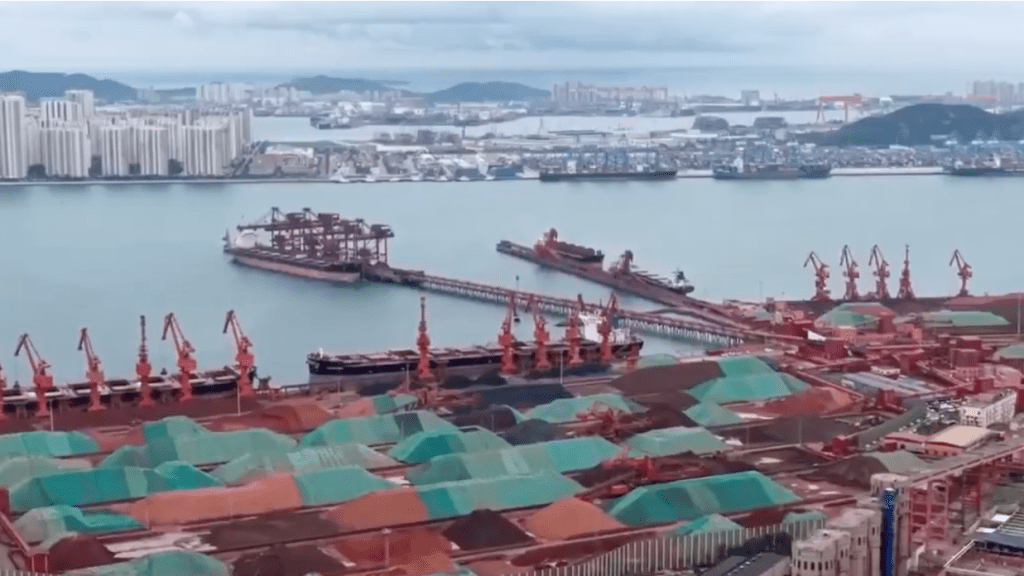
Persistent congestion at major Asian ports, following a series of typhoons, is also tightening effective vessel capacity and helping sustain rates on both trans-pacific and Asia-Europe trades.
Asia-U.S. West Coast prices increased 2% to $7,621 per forty foot unit, according to SONAR data contributor Freightos (NASDAQ: CRGO). Asia-East Coast rates increased 2% to $9,791.
Demand may have benefited from the absence of additional tariff increases in July, reducing one potential source of disruption to U.S.-bound imports, wrote Freightos analyst Judah Levine, in an update. Increased ocean shipments of data-center hardware also appear to be supporting volumes, while reports that tariff refunds have allowed some retailers to lower prices could be improving expectations for consumer demand.
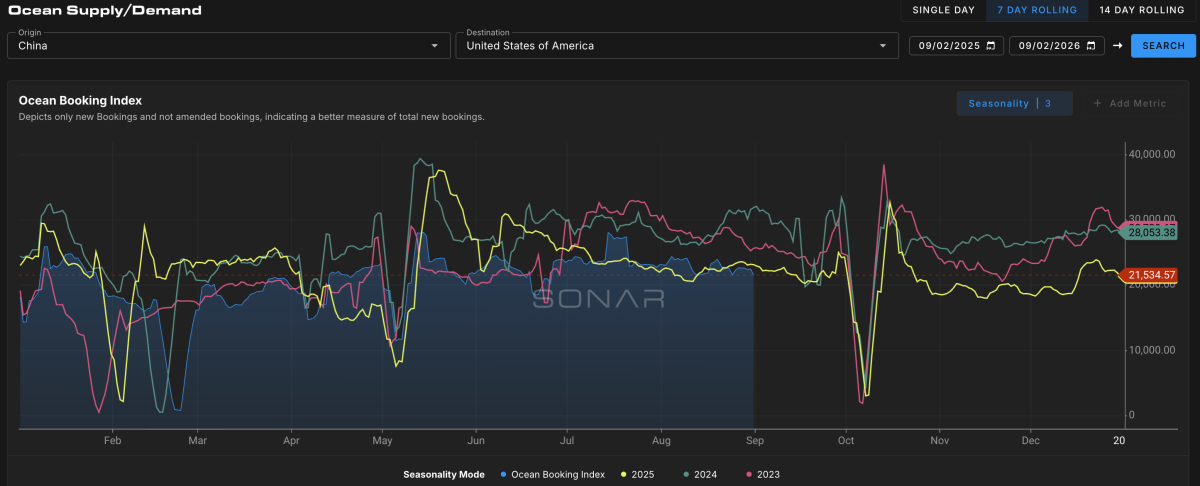
SONAR‘s Ocean Booking Index currently trails indices from 2023-2025.
Ocean carriers are adding some trans-Pacific capacity in September, ahead of scheduled blank sailings around China’s Golden Week holiday period. The additions could provide limited near-term relief, but planned service withdrawals later in the month may again restrict available space, Levine said.
Some carriers are also considering low-water surcharges for Panama Canal transits. If implemented, those charges could place added upward pressure on rates to the U.S. East Coast, particularly for services that depend on the canal rather than routing through the Suez Canal or around Africa.
Typhoons deepen Far East disruption
A succession of typhoons since mid-July has created severe and continuing disruption at Chinese and regional Asian ports. The most recent storm forced closures at ports including Shanghai and Ningbo, adding to congestion that carriers have described as increasingly difficult to unwind.
The congestion has led some carriers to omit port calls, reroute cargo through transshipment hubs and adjust vessel rotations. Those measures can protect schedule integrity in the short term but also displace cargo and compound backlogs across the network, said Levine.
The resulting constraints on effective capacity have become a significant support for freight rates, even as demand conditions differ by trade lane.
Asia-Europe rates retreat but remain elevated
Asia-North Europe prices have declined by more than $1,000 per FEU from their July peak, while rates to the Mediterranean have fallen by more than $2,000 per FEU. The pullback reflects cooling demand on the Asia-Europe trade after the earlier summer surge.
Even so, both lanes remain roughly 40% to 70% above pre-peak May levels. Continued Asia port congestion, along with disruption at regional transshipment hubs, appears to be preventing a sharper correction in spot pricing.
Transatlantic market firms on capacity reductions
Freightos data shows trans-Atlantic container rates increased by about $400 per FEU over the past two weeks as carriers reduced available capacity. Carriers have announced additional September rate increases, though market observers remain skeptical that the full increases will hold in a trade where demand has generally been less supportive than on the trans-Pacific.
The direction of rates through the remainder of September will depend on whether Far East port congestion eases, the scale of Golden Week blank sailings and whether carriers can maintain capacity discipline as the traditional peak-shipping period progresses.
Ceva Logistics sued over theft of employee records during data breach
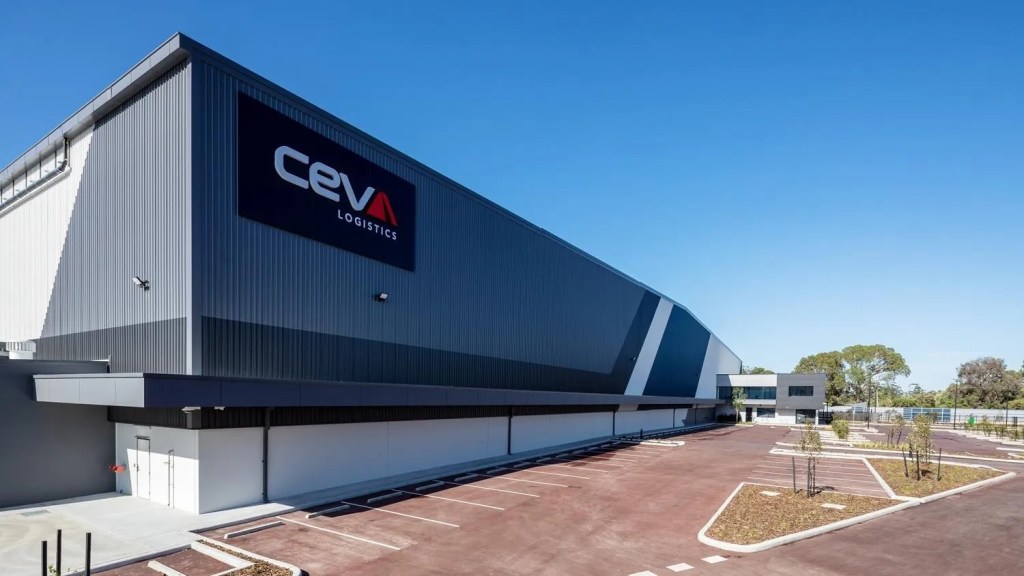
A former employee has filed a class action lawsuit against Ceva Logistics, alleging the freight giant failed to protect highly sensitive personal information stolen during a recent cyberattack that impacted operations in Europe.
Hackers gained access to Ceva Logistics systems and data in late July, which disrupted operations at eight warehouses that provide store replenishment and e-commerce fulfillment for retailers in the Netherlands and other European countries, as FreightWaves reported. The legal action suggests that customers were not the only ones affected by the data breach.
Why It Matters: France-based Ceva is one of the largest third-party logistics providers, with more than 1,000 warehouses worldwide. Last year the company generated $18.3 billion in revenue.
Kevin Krupa, a former employee, sued Ceva Logistics late last month in U.S. District Court for the Southern District of Texas, in Houston, where Ceva’s U.S. headquarters is located.
The complaint alleges that the personal information of employees, including bank account details and social security numbers, was stolen during the cyber intrusion, which never would have happened had the company taken appropriate precautions following a similar incident a year earlier.
The CoinbaseCartel initiated a ransomware attack on Ceva Logistics in September 2025, according to SOCRadar, a cyber intelligence platform. Ceva did not publicly disclose the incident. In November, Bryant Duke, Ceva’s vice president of IT infrastructure Americas announced his departure on LinkedIn. Susanne Shustein, global chief information officer, informed friends and colleagues on the social media site in March that she had left the company. The departure of two IT leaders so close together is unusual.
During the summer, parent company CMA CGM Group moved Mathieu Friedberg from CEO of Ceva to executive vice president of transformation and cyber at CMA CGM. The transfer to oversee cybersecurity implies the parent company believes the cyber threat is not isolated to Ceva Logistics and extends across the enterprise, said an a source inside the company who did not want to be identified because of concerns about retaliation.
“Cybercriminals were able to breach Defendant’s systems because Defendant failed to adequately train its employees on cybersecurity and failed to maintain reasonable security safeguards or protocols to protect the Class’s private information . . . rendering [employees] easy targets,” Krupa said in the claim.
The filing also claims Ceva has not formally notified employees about the breach, preventing them from trying to mitigate use of their personal information to commit fraud.
Krupa said he experienced fraudulent activity on his credit card and was forced to cancel the card, and also suffered an increase in spam and scam phone calls.
The complaint asks the court to grant class action status, saying that at least 100 employees have been harmed and that the number of affected persons could extend into the thousands.
The suit seeks at least $5 million in compensation and damages for Ceva’s alleged negligence, breach of implied contract, and unjust enrichment
“Instead of providing a reasonable level of security, or retention policies, that would have prevented the data breach, Defendant instead calculated to avoid its data security obligations at the expense of Plaintiff and Class Members by utilizing cheaper, ineffective security measures. Plaintiff and Class Members, on the other hand, suffered as a direct and proximate result of Defendant’s failure to provide the requisite security,” the filing said.
Healthcare sector attacked
In related news, pharmaceutical distribution giant McKesson Corp., last week confirmed in a government filing that it had discovered a cybersecurity incident affecting its information systems. In a statement on Friday, it said hackers broke into third-party data servers and removed sensitive customer data within two business units, and that the company expected “intermittent service degradation.” Employee data was also stolen.
Tech site Bleeping Computer said the ShinyHunter hacker group is demanding $55 million in ransom to not publicly release the private data.
McKesson is the latest healthcare or medical device maker to be victimized this year by cyber criminals that extort companies into paying ransoms to keep data from being released. Boston Scientific was the target of a cyberattack last month that knocked much of its network offline.
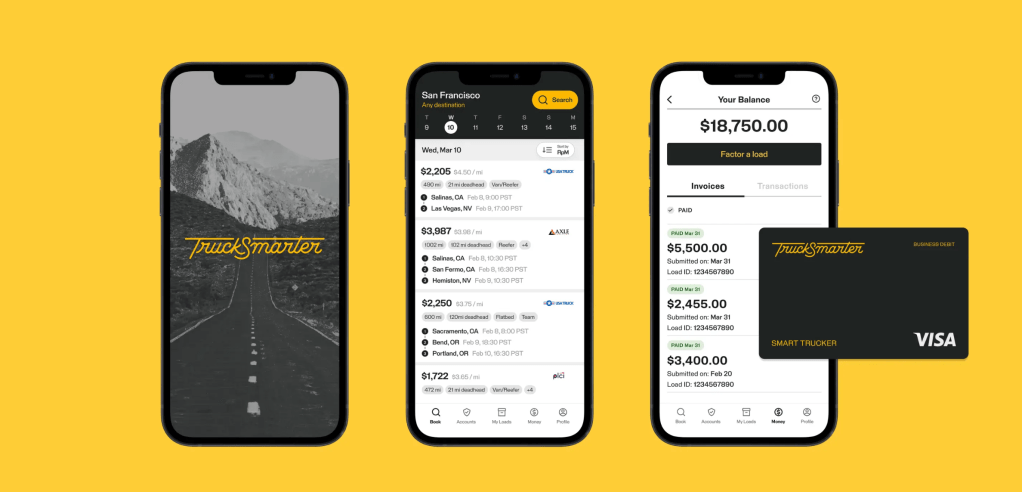
TruckSmarter announced on Tuesday that it has been acquired and that its driver app, Dispatch, shuts down on Friday, September 4.
The scale is what makes this more than a routine startup wind-down. More than 500,000 carriers have used the TruckSmarter platform, which included a free load board alongside the paid Dispatch product. Dispatch was an AI chat interface that let a driver ask for freight in plain language and had software agents handle the bidding and booking, rather than making the driver work a traditional load board.
Automated replies from the company indicated that active Dispatch subscriptions are canceled Friday, and that invoices paid within the previous 30 days will be refunded within seven business days of cancellation. Co-founder and chief executive Dan Kao posted a message inside the app thanking users for five years of trust, and drivers and trucking groups spread screenshots of it across social media.
One thing has been ruled out. OTR Solutions, which bought TruckSmarter’s factoring and banking division in November 2025, told FreightWaves it did not acquire the remaining business.
So a company that raised money twelve months ago is gone by Friday, and nobody will say who bought it. That combination has a name in technology, even if no one involved here has used it.
TruckSmarter has been acquired and is shutting down the TruckSmarter app. Email just in:
"All,
TruckSmarter is being acquired. As part of this transition, we will be shutting down the TruckSmarter app this Friday, September 4.
An acquihire is an acquisition where the buyer’s real objective is the team rather than the business. The purchase price is justified by the engineers, product people and founders who come along with it, not by the revenue, the customers or the product they built.
The word is a compression of acquisition and hire, and the mechanics are closer to hiring than to buying. A company that wants twenty experienced AI engineers can spend eighteen months recruiting them one at a time, competing against every other firm in the market, or it can buy the company those engineers already work at and get the whole team on day one, already functional, already used to working together. The second path is faster and often cheaper per head.
What happens next is the part that matters to users. In a conventional acquisition, the buyer wants the product and keeps it running, because the customers are the asset. In an acquihire, the product is frequently shut down within weeks, because the product was never the point. Maintaining software the buyer does not want costs money, invites support obligations and distracts the team the buyer just paid for. Killing it is the rational move.
Structurally, these deals take a few forms. Sometimes the buyer purchases the whole company and immediately winds down operations. Sometimes it buys the intellectual property and separately extends offers to the staff, leaving an empty corporate shell behind for the investors to dissolve. Sometimes it licenses the technology and hires the team, a structure that has become more common in the last two years partly because it draws less regulatory attention than an outright acquisition.
Why Companies on Both Sides Say Yes
The buyer’s logic is straightforward. Talent in a hot technical field is scarce and slow to assemble. Buying an intact team removes recruiting risk, cultural assembly time and the chance that a competitor gets there first. If that team has spent years building in a specific industry, the buyer also acquires domain knowledge that does not come from a resume. Engineers who have spent five years learning how freight brokerage actually works are not interchangeable with engineers who have not.
The seller’s logic is less obvious and more instructive.
Venture-backed companies raise money against a promise of large outcomes. When growth stalls, when the market shifts, or when the capital required to reach the next milestone exceeds what investors will commit, the realistic options narrow fast. A company can shut down and return whatever cash remains, which pays nobody and ends careers. It can sell at a price below what it raised, which often wipes out common shareholders and employees. Or it can find a buyer who values the team enough to make the transaction worth doing.
Acquihires frequently pay investors a fraction of what they put in, sometimes just their money back, occasionally less. But they get the employees hired, often with retention packages attached, and they let the founders land somewhere rather than nowhere. For a board looking at a company that is running out of room, that outcome beats the alternatives.
None of this involves anyone behaving badly. It is a rational resolution to a situation with no good options. It is simply a resolution built around the interests of investors, founders and employees, and the users of the product are not parties to it.
Why This One Looks Like an Acquihire
Every observable detail of this transaction points the same direction, and it is not the direction of a buyer who wanted a freight platform.
Start with the product. A company that buys a working load board and dispatch tool used by 500,000 carriers has bought a distribution channel, and the first instinct of any buyer holding that asset is to keep it running while deciding what to do with it. Dispatch is being switched off inside a week. That is not the behavior of an acquirer who valued the software.
Then the users. There is no migration path, no partner handoff, no sunset period of the kind a buyer arranges when it hopes to convert an inherited customer base onto something else. Subscriptions are simply being canceled and refunded. A buyer who wanted those carriers would not be paying money back to walk them out the door.
Then the silence. The acquiring company has not been named, and no purchase price has been disclosed. Buyers stay anonymous when they have no interest in inheriting the seller’s customer relationships or the expectations that come attached to them. A company acquiring a beloved trucking app to grow with it announces itself, because the announcement is part of the value.
And finally the asset that is left. TruckSmarter sold off its factoring and banking division in November 2025 and spent the following year concentrating on AI tools for drivers, funded by a raise explicitly earmarked for research, development and talent. Strip out the product and the customers and what remains is a San Francisco engineering team with a year of applied AI work in freight behind it. That is the single most sought-after asset class in technology right now, and it is exactly what an acquihire is designed to capture.
Put plainly, an acquihire is the explanation that requires the fewest additional assumptions, and the alternatives all require you to believe a buyer paid for something it then immediately destroyed.
That said, the public record does not confirm it. Neither TruckSmarter nor FreightWaves has used the word, no one has described what the buyer wanted, and this remains inference drawn from the shape of the deal rather than reporting on its terms. Two things would settle it: disclosure of the acquirer, or TruckSmarter engineers surfacing at a single new employer over the coming weeks. That second signal tends to appear on professional networking profiles within about a month, and it is the one worth watching.
The Timeline Is the Uncomfortable Part
TruckSmarter was founded in 2021 in San Francisco by Kao, who came from DoorDash and Uber Freight, and Paolo Bernasconi, who came from Plaid. It raised a Series A in 2021 and a $25 million Series B in 2022 led by Thrive Capital, with participation from Bain Capital Ventures, Founders Fund and Andreessen Horowitz. A debt facility followed in 2024.
In September 2025, the company raised $16 million in equity led by Socium Ventures, an investment firm backed by Cox Enterprises, with the earlier investors participating. The stated purpose was research, development and talent, and the round was announced alongside the launch of Dispatch. Kao told FreightWaves at the time that the company had asked itself during annual planning whether load boards would still exist in five years, and had not been able to answer yes with confidence.
Two months later, in November 2025, TruckSmarter sold its factoring and banking division to OTR Solutions. Kao described the move as concentrating fully on software and AI tools. OTR’s chief executive, Fritz Owens, said the transition would be seamless for factoring clients, and by all available accounts it was.
That divestiture looked at the time like focus. In hindsight it also removed the part of the business that generated predictable revenue from a working capital product carriers actually pay for, leaving a company whose remaining value rested on an AI product roughly a year old.
Twelve months from a funding round to a shutdown is fast. It does not indicate fraud or incompetence. It indicates that something in the plan did not work at the speed the capital required.
What Carriers Should Do Before Friday
If you used the platform, treat the rest of this week as a deadline rather than a suggestion.
Export everything you can still reach. Load history, rate confirmations, broker contacts, payment records, any document you might need for a customer dispute, an insurance claim, an audit or your tax return. Once the servers go down, that data may be unavailable permanently, and no one is obligated to keep it for you. Screenshots are better than nothing.
Check your billing. Subscriptions are being canceled Friday and payments made in the last 30 days are supposed to be refunded within seven business days. Put a reminder on your calendar for two weeks out and verify the money actually appeared. If you paid by card and it does not arrive, your card issuer’s dispute process is the next step, and those windows have time limits.
Rebuild your freight sourcing before Friday, not after. If Dispatch was finding and booking your loads, you need working alternatives running before the lights go out, not Monday morning when you have no capacity committed. That means active accounts on whatever load boards you plan to use and, more durably, direct conversations with the brokers and shippers you have moved freight for.
Then look at the rest of your stack and ask a harder question. Which other tools in your operation are free or venture-subsidized, and what happens to your week if one of them disappears on four days notice? A tool you do not pay for is a tool with no contract behind it. That is not a reason to avoid free software. It is a reason to know which parts of your business would stop working without it.
Why It Matters
An acquihire resolves the interests of investors, founders and employees, and the people using the product are not parties to that negotiation, which is why 500,000 carriers are getting four days notice on a tool some of them built a workweek around. The lesson is not to avoid early-stage software, which is often better than the incumbents, but to know which parts of your operation would stop working if a vendor switched off on a Wednesday afternoon.
Motive targets fleet repair costs with AI maintenance
There are two records every fleet that runs its own shop has: what was reported by the truck on the road, and what gets written up by the technician in the bay. An evergreen challenge is that these records don’t always match. Motive built its newest product on the premise that closing that gap is the cheapest way left to hold down fleet repair costs.
The company recently announced Motive Maintenance to tackle this. It’s an AI-powered system that pulls fault codes, inspection defects, work orders and repair spend into the same platform that already holds its customers’ telematics and fuel card data.
Rising carrier costs are behind the timing. Carriers’ average marginal cost reached $2.336 per mile in 2025, the highest in the history of the report, according to the American Transportation Research Institute’s 2026 Analysis of the Operational Costs of Trucking. Maintenance and repair climbed 8.6% year over year in that dataset, an additional 2 cents per mile, and the category is up 45% since 2019, according to Fleet Maintenance. Only tolls, up 13.2%, rose faster last year. Non-fuel costs hit $1.854 per mile, breaking the $1.78 record the Motive report cites from 2024. Fuel is the number carriers argue about, and maintenance is the one compounding underneath it.
That pressure originates in the parts market. Parts costs rose 3.7% year over year in the fourth quarter of 2025 while labor slipped 0.4%, according to the most recent Decisiv/TMC Parts & Labor Service Benchmark Report. Parts are up 23.8% since early 2020 in the same dataset.
The Motive report puts the average annual repair and maintenance bill for a heavy-duty truck in the United States at $16,192, a number built on ATRI’s 2024 figures. That baseline is already stale by a year of 8.6% growth.
Motive’s own research, conducted with FreightWaves Research in the second quarter of 2026, drilled down on where fleets are feeling the squeeze. Rising maintenance and repair costs ranked as the leading operational challenge for 80% of respondents, with driver recruitment and retention at 60% and fuel cost management and fraud prevention at 50% among the other major concerns. Only 13% described their fleet technology systems as well-integrated and sharing data automatically across platforms.
“In general when you look at what is top of mind for fleets, it’s very clear that maintenance is coming out as the top topic primarily because of rising repair costs,” said Sriteja Kolluri, who leads the maintenance product at Motive, in an interview with FreightWaves. “One of the important data points there is how many of them have well-integrated systems that actually communicate data automatically. That answer is only 13%, which means a huge number of fleets have disconnected systems or spreadsheets that they use and they don’t talk to each other.”
Where Fleet Repair Costs Actually Hide
The money disappears in the gap between planned work and emergency work. Reactive repairs run three to nine times the cost of planned preventive maintenance, according to the Decisiv/TMC service benchmark data. FleetNet America breakdown data was also cited in the report.
Kolluri gave an example of the top end of that range using a 1,000-truck fleet.
“If you actually calculate that for a fleet with a thousand vehicles, with almost $760 a day and almost 8 to 9 days of breakdown per vehicle, that’s almost $4 million that they spend in downtime,” he said.
Those inputs come from that FleetNet America and TMC roadside maintenance data: 8.7 days of unplanned downtime per vehicle per year, at $448 to $760 per day in lost productivity.
From Cryptic Fault Code to Work Order
Before this release, a critical fault code produced an alert in one system, and the shop work got scheduled in another.
“You have a vehicle that’s on the road which has broken down, or there’s a critical fault code that has just occurred. Today, before this release, that data is just an alert that goes to the fleet manager,” Kolluri said. “With this, what happens is that alert basically translates into a work order that the maintenance shop can actually prioritize. So that’s basically the bridge that we’re building here.”
The translation of fault codes matters just as much as the routing. A fault code arrives as a string only a technician can read, and Motive’s diagnostics convert it into plain language with a severity ranking attached. Now a description, instead of a code, determines whether a truck comes in today or later.
Kolluri drew a distinction on the Motive Card, the company’s fleet fuel card. It does not pay the repair bill.
“The Motive Card basically gives you the fuel spend data. Then with work orders you’re actually capturing the maintenance data as well. So both put together basically gives you your accurate cost per mile per asset,” he said.
The Prediction Problem Is an Integration Problem
Two-thirds of respondents, 67%, said they struggle to predict which vehicles are at risk of failure or unplanned downtime. That’s the single most-cited pain point in the study. The adoption data shows how far the maintenance tooling lags the problem. AI-driven driver safety monitoring is in production at 88% of the fleets that answered the question, while predictive or condition-based maintenance sits at 20% adoption, with 60% not using it at all. Lack of internal expertise or IT resources was the most-cited barrier to getting more value out of AI, at 33%.
Manual work fills the space the integrations leave open. Roughly 29% of respondents estimated their teams spend 11 to 20 hours a week re-keying telematics data into maintenance software, reconciling fuel transactions and updating inspection records, and another 29% said they have never tracked the number at all.
“The data already exists out there. [DVIR] inspections exist, fault codes exist, your schedules exist, but nobody’s actually bringing all that information together and giving you a complete picture of your fleet health,” Kolluri said. “It’s difficult for fleets to do health monitoring when you have to download all this data from different systems and do VLOOKUPs and whatnot.”
TCO Was Always Tribal Knowledge
The visibility problem hits hardest when determining the total cost of ownership. Difficulty tracking true per-vehicle cost of ownership affected 67% of respondents, and a single dashboard showing per-vehicle TCO across every spend category was the top requested fix at 40%. More than half, 53%, said lowering total maintenance and repair costs per vehicle would do more for profitability over the next 12 to 24 months than any other change.
Without that number, the repair-or-replace decision runs on tribal knowledge and a service manager’s memory.
“When a vehicle breaks down, do I need to replace it or do I need to repair it. This is again another important piece that comes in with the TCO visibility coming in. 67% of the fleets actually are not able to bring this data together in time,” Kolluri said.
Maintenance is Motive’s seventh product on the platform, and it is available now in the United States and Canada. Motive’s 2026 ROI report put the average vehicle uptime gain across respondents at 18%.
For the fleets buying it, the test is whether the paper trail changes the invoice.
“Before Motive Maintenance, what happened on the road and what happened in the shop were two separate records,” said Luke Crawley, fleet manager at H&R Agri-Power. “Rather than paying emergency rates when something fails, we’ll be able to fix issues early, run higher uptime, save hundreds of hours a week, and spend far less to keep our fleet moving.”
One complaint exposed $800K Texas grain theft spanning 176 loads
Texas investigators linked an organized theft case to 176 grain loads weighing approximately 9.12 million pounds. The inquiry now covers more than 200 confirmed or potentially stolen shipments. Authorities value the agricultural product under examination above $800,000. Three men face criminal charges, while additional arrests remain possible.
The case began March 11 after Guadalupe County deputies received a complaint from Barbarossa Road. Witness accounts and evidence pointed toward a wider network operating across Texas. Investigators accuse participants of removing loaded semi-trailers without authorization from various facilities. The state agriculture department joined March 26 and supplied specialized knowledge throughout the expanding inquiry.
Records revealed a wider operation
Texas Department of Agriculture personnel reviewed inventories, scale tickets, storage documents, handling files and financial materials. Those comparisons helped trace cargo movements through several locations and jurisdictions. Regulators also identified potentially affected facilities, transactions and individual loads. Their work supported criminal efforts led by the Guadalupe County Sheriff’s Office.
Commissioner Sid Miller called the case “an alleged organized operation targeting Texas agriculture on a massive scale.” He credited agency employees with helping law enforcement “follow the trail.” “Grain sitting in a bin represents months of work and enormous investment,” the official stated. “That kind of specialized knowledge matters,” according to Miller.
The sheriff’s office coordinated work among several local and state partners. Participants included TDA, Texas DPS and authorities from Navarro, Ellis, Williamson, Frio and Guadalupe counties. Taylor police also assisted with the investigation. Officials continue seeking reports involving additional agricultural thefts.
Three men face charges
Authorities arrested Larry Regalado, 57, of New Braunfels. Ricky Regalado, 52, lives in Smiley. Pablo Franco Jr., 46, comes from Atascosa County. Each faces charges involving property theft, organized criminal activity and stolen grain.
The announcement does not identify affected commodities, businesses, destinations or recovered property. Officials provided no carrier names, USDOT numbers, license plates or vehicle identification numbers. Investigators never explained whether participants supplied tractors or used fraudulent documents. Authorities have not disclosed how the product entered resale markets.
Why it matters
The investigation shows how one reported theft can reveal coordinated activity spanning multiple jurisdictions. Transportation professionals should understand how load records helped authorities connect 176 incidents.
CFCO perspective
In my opinion, CFCO training could help facilities strengthen controls against unauthorized pickups. A repeatable verification process can expose mismatched companies, drivers, credentials or shipment details before release.